Monsoon Diseases in Plants: Causes, Symptoms, Prevention & Effective Home Solutions
A complete guide on common monsoon diseases in plants, why they spread during the rainy season, early symptoms to identify them, and simple natural treatments suitable for Indian home gardeners.
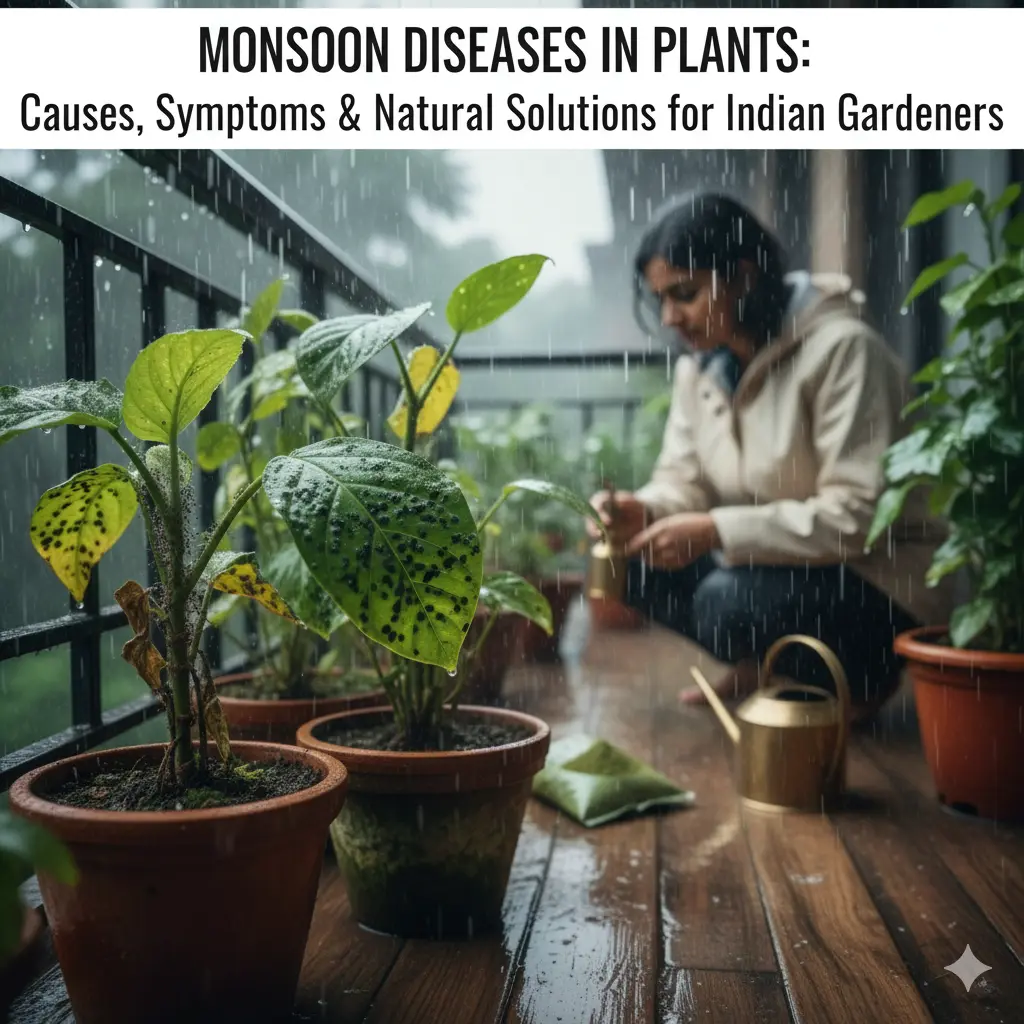
Monsoon Diseases in Plants: Complete Guide for Indian Gardeners
The monsoon season is a blessing for plants. Fresh rainwater boosts growth, the air becomes cleaner, and outdoor gardens look greener than ever. But at the same time, this season brings the highest risk of plant diseases. Excess humidity, continuous rainfall, damp soil, and low sunlight create the perfect environment for fungus, bacteria, and fast-growing pests. This is why most gardeners in India struggle to keep their plants healthy during the rainy months.
To help you protect your plants, this detailed guide explains the most common monsoon diseases in plants, early symptoms, practical solutions, and natural remedies you can easily use at home.
Why Plants Get Diseases During Monsoon
The rainy season completely changes the environment around your plants. Some changes are helpful, but others create perfect conditions for infections. Let’s look at what makes monsoon risky for plants:
- High humidity: Moist air prevents leaves from drying, which allows fungal spores to grow rapidly.
- Excess moisture: Soil remains wet for longer, making roots weak and prone to rot.
- Low sunlight: Cloudy days reduce photosynthesis and weaken immunity.
- Rapid pest breeding: Many insects multiply faster in humid weather.
- Poor airflow: Dense plant arrangements trap moisture and allow infections to spread.
When all these conditions combine, plants become vulnerable to different types of monsoon diseases.
Common Monsoon Diseases in Plants
Here are the plant diseases that appear most frequently during monsoon in India.
1. Powdery Mildew
This is one of the easiest monsoon diseases to identify because it looks like someone sprinkled white flour on your plant leaves.
Caused by: Fungal spores
Symptoms:
- White or grey powder covering leaves
- Leaves turning yellow or dry
- Slow or stunted plant growth
Solution: Mix 1 teaspoon baking soda + 1 litre water + 4–5 drops mild soap and spray once a week.
This simple remedy works quickly in Indian weather conditions.
2. Root Rot
Root rot is the biggest danger during monsoon because plants may suddenly die without warning.
Caused by: Waterlogging and fungal infection in soil
Symptoms:
- Soil remains wet for many days
- Mushy or black roots
- Leaves droop even after watering
- Foul smell from the soil
Solution:
- Remove the plant, cut the infected roots, and repot in dry, well-draining soil.
- Add neem cake powder to kill fungal spores.
- Ensure drainage holes in pots.
3. Leaf Spot Disease
Leaf spot appears as black, brown or yellow spots on plant leaves.
Caused by: Fungal and bacterial pathogens
Symptoms:
- Circular spots on leaves
- Spots merge and turn leaves yellow
- Premature leaf drop
Treatment: Spray diluted neem oil (5 ml neem oil + 1 litre water + a few drops soap) every 5 days.
4. Black Sooty Mold
Black sooty mold looks like dark soot covering the plant surface. It forms on sticky honeydew secreted by insects.
Caused by: Aphids, mealybugs and whiteflies
Symptoms:
- Black layer on leaves
- Sticky leaf surface
- Slow growth due to blocked sunlight
Solution:
- Wash leaves with soap water.
- Control pests using neem oil spray.
5. Downy Mildew
Downy mildew mostly affects vegetables and flowering plants during wet weather.
Symptoms:
- Yellow patches on upper leaves
- Grey or white mold on underside
- Leaves curl and fall
Treatment: Use garlic water spray (crushed garlic soaked in water overnight).
6. Blight
Blight spreads very fast in tomatoes, potatoes and other garden plants.
Symptoms:
- Large brown patches on leaves
- Blackening of leaf edges
- Rotting stems
Solution:
- Remove infected parts immediately.
- Spray copper-based fungicide or neem spray every 7 days.
7. Anthracnose
Affects fruit trees, tropical plants, and ornamental plants.
Symptoms:
- Sunken dark spots on fruits
- Burnt-looking leaf patches
- Premature fruit drop
Treatment: Improve drainage, avoid overhead watering, use organic fungicides weekly.
Monsoon Pests That Spread Diseases
Some pests multiply extremely fast during the rainy season and carry diseases from one plant to another.
- Aphids – tiny green/black insects on new growth
- Mealybugs – white cotton-like spots
- Whiteflies – fly when leaves are disturbed
- Snails & slugs – chew holes in leaves at night
- Spider mites – tiny webs under leaves
Natural pest control: Neem oil, soap water, garlic-chilli spray, or horticulture oil.
How to Prevent Plant Diseases During Monsoon
Prevention is better than cure, especially during monsoon when diseases spread extremely fast. Follow these practical tips:
1. Improve Drainage
Add pebbles at the bottom of pots, use well-draining soil, and ensure proper drainage holes.
2. Reduce Watering
Most plants need 50% less water during monsoon because humidity is high.
3. Avoid Wet Leaves
Always water at the base. Wet leaves attract fungal infections.
4. Prune Dense Branches
Good airflow prevents fungus from settling on the leaves.
5. Spray Neem Oil Weekly
Neem oil is the best natural anti-fungal and insect repellent for monsoon.
6. Keep Pots Slightly Elevated
This prevents water from pooling underneath.
7. Add Anti-Fungal Ingredients to Soil
Use neem cake powder, cinnamon powder or Trichoderma in soil.
Simple Home Remedies for Monsoon Plant Care
- Baking Soda Mix: Controls powdery mildew
- Turmeric Powder: Natural anti-fungal for soil
- Garlic Water: Antibacterial spray
- Soap Water: Removes pests instantly
- Cinnamon Powder: Prevents soil fungus
Final Thoughts
Monsoon diseases in plants are common, but they are not impossible to manage. Once you understand the causes, symptoms and correct treatments, you can protect your garden from the most destructive rainy-season infections. Regular monitoring, proper drainage and natural sprays are the simplest ways to keep your plants healthy, strong and thriving throughout the monsoon.
With the right care, monsoon can become the best growing season for your garden instead of the most challenging one.