How to Grow Mint at Home in Pots: A Complete Step-by-Step Beginner’s Guide
Learn how to grow mint at home in pots naturally, easily, and without any gardening experience. This beginner-friendly guide covers soil mix, sunlight, watering, pruning, propagation, and common mistakes—perfect for fast growth and a healthy mint plant.
How to Grow Mint at Home in Pots: A Complete Beginner’s Guide
Growing mint at home in pots is one of the easiest and most rewarding things you can do, even if you have zero gardening experience. Mint grows fast, smells refreshing, survives in almost every climate in India, and needs very little care once it settles. Whether you want it for chai, chutney, detox water, or kitchen gardening, mint is the perfect plant to start with.
In this detailed guide, I’ll walk you through everything: choosing the right pot, preparing the best soil mix, watering the right way, trimming for faster growth, preventing pests, and keeping your plant fresh and bushy throughout the year. This article is written in simple English and follows a natural, human style so modern Indian readers can understand and apply it easily.
What Makes Mint Perfect for Growing at Home?
Mint is a hardy herb. This means it can adjust, survive, and grow in almost any home setting—balcony, kitchen windowsill, terrace, verandah, or even indoors if you give it good light. Mint spreads quickly, so when you plant it in a pot, you control its growth and keep it from taking over your garden. Plus, fresh mint at home means you never have to buy it again.
Best Long-Tail Keywords Naturally Covered
- how to grow mint at home in pots
- easy way to grow mint in containers
- how to grow pudina in balcony
- how to make mint plant bushy at home
- best soil mix for mint in pots
- how to water mint plant properly
Step 1: Choose the Right Pot for Mint
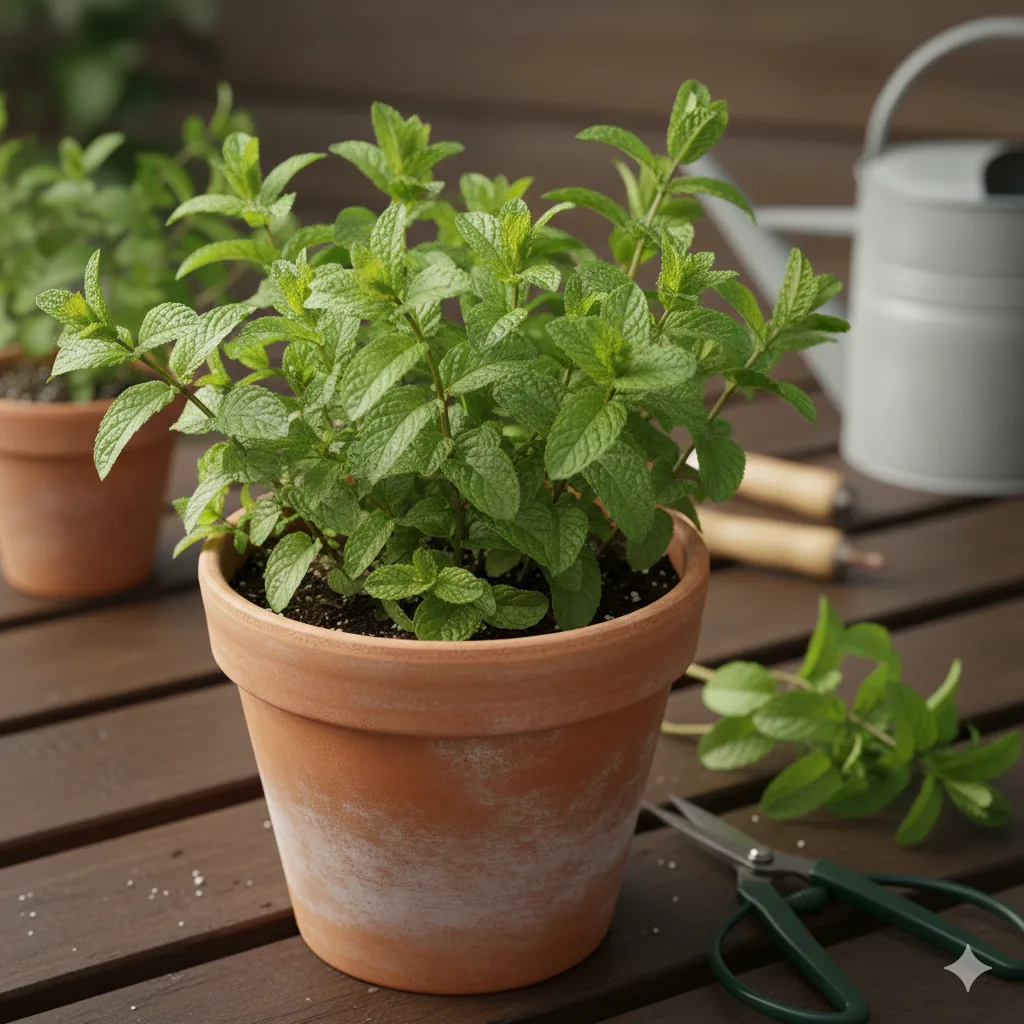
The first step to growing healthy mint at home is selecting the correct pot. Mint grows fast, and its roots spread in all directions. A small pot will restrict growth and make the plant weak.
Recommended pot size: 8–12 inch wide pot with drainage holes.
If you want your mint to become bushy, choose a wider pot instead of a deeper one. Mint loves horizontal space.
Plastic, terracotta, ceramic—all pots work, but terracotta dries faster and prevents overwatering.
Step 2: Prepare the Perfect Soil Mix
Mint does not like heavy, sticky soil. It prefers loose, airy soil that drains well but still holds enough moisture. A simple home-made soil mix works best.
Best Soil Mix for Mint in Pots (Beginner-Friendly)
- 40% garden soil
- 40% coco peat or compost
- 20% perlite, sand, or small gravel for drainage
If you don’t have perlite, just add a handful of sand. This prevents the soil from becoming waterlogged, which is a common reason mint plants die.
Step 3: Selecting the Best Mint Cutting or Sapling
You can grow mint in two ways:
- Using a healthy store-bought mint stem (cutting)
- Buying a small mint sapling from a nursery
If you’re using cuttings, look for stems that are:
- Green and fresh
- At least 4–5 inches long
- Have 3–4 sets of leaves
Remove the lower leaves and place the stem in a glass of water for 3–4 days. Roots will begin to appear. Once the roots reach 1–2 inches, it’s ready to plant.
Step 4: Planting the Mint Correctly
Fill your pot with the prepared soil mix, leaving one inch of space at the top. Plant the rooted cutting or sapling in the center. Press lightly around the base so the plant stays stable.
After planting, water gently until water starts dripping from the bottom holes.
Step 5: Sunlight Requirements for Mint
Mint grows best in bright indirect sunlight. Direct sunlight for too many hours may cause leaf burn, especially during hot Indian summers.
Ideal Light Conditions:
- 3–4 hours of morning sun
- Bright shade during the afternoon
- If indoors, keep near a bright window
If your mint leaves are turning pale, it needs more light. If they are turning brown or curling, it is getting too much sun.
Step 6: Watering Mint the Right Way
Mint loves moisture, but standing water is dangerous. The trick is to keep the soil slightly moist but never soggy.
Watering Rules:
- Check soil with your finger—if top 1 inch feels dry, water.
- During summer, water daily or every alternate day.
- During winter, reduce watering.
- Never let water sit in trays.
Overwatering causes root rot. Underwatering makes leaves droop. Find the middle balance for best results.
Step 7: Fertilizing Mint for Fast Growth
Mint does not require heavy fertilizers. Light feeding every month keeps it green and lush.
Best Fertilizers for Mint at Home:
- Homemade compost
- Vermicompost
- Liquid fertilizer made from vegetable waste
- Jeevamrut or cow dung (in very small amounts)
Add a handful of compost every 3–4 weeks around the plant. Water lightly after adding it.
Step 8: How to Make Mint Bushy (Very Important)
If you want thick, bushy mint, trimming is essential. Without trimming, mint grows tall and thin.
How to Trim Mint Correctly:
- Cut 2–3 inches from the top every 10–12 days.
- Always trim above a leaf node.
- Use sharp scissors to avoid damaging the stem.
Trimming encourages fresh side branches and makes the plant dense.
Step 9: Common Problems and Simple Solutions
1. Leaves Turning Yellow
Usually caused by overwatering or poor drainage. Reduce watering and check soil.
2. Leaves Curling or Turning Brown
Too much direct sunlight. Move the pot to a shaded but bright location.
3. Slow Growth
Plant may need trimming, fresh compost, or more indirect sunlight.
4. Pests on Mint
You may notice small insects like aphids or whiteflies. Use neem oil spray once a week.
Step 10: Harvesting Mint the Right Way
You can harvest mint anytime once the plant is 6–7 inches tall. Always harvest from the top to maintain shape. Never remove all leaves from one branch—leave some for photosynthesis.
Fresh mint can be used in chai, salads, chutneys, detox water, raita, and countless Indian dishes.
Final Tips for Growing Mint Successfully at Home
- Use wide pots for bushier growth.
- Trim regularly to encourage new leaves.
- Keep soil moist but not soggy.
- Use neem oil to prevent pests naturally.
- Give 3–4 hours of mild sunlight daily.
Growing mint at home is easy, budget-friendly, and perfect for beginners. With just a little care, you can enjoy endless fresh leaves throughout the year. Once your plant becomes stable, you can even propagate more plants using simple cuttings.