How to Save Plants from Heat Stress: Practical Summer Care Guide for Indian Gardeners
Learn how to save plants from heat stress during Indian summers with simple, effective, and natural techniques. This 1000+ word guide covers symptoms, watering timing, shade solutions, soil care, and heatwave survival tips.
How to Save Plants from Heat Stress: Complete Guide for Indian Gardeners
Indian summers are becoming hotter every year. Temperatures crossing 40°C, warm winds, harsh sunlight, and fast evaporation create extreme stress for plants. Balcony plants, terrace gardens, outdoor pots, and even indoor plants can suffer when exposed to high heat for long hours. If you've noticed drooping leaves, burnt edges, dry soil, or stunted growth, your plants are likely experiencing heat stress.
The good news is that heat stress can be managed— and even prevented— with a proper care routine. In this guide, you’ll learn exactly how to save plants from heat stress using simple, practical, and beginner-friendly tips that fit the Indian climate.
What is Heat Stress in Plants?
Heat stress occurs when plants absorb more heat than they can handle. The leaves lose water faster than the roots can supply, causing the plant to go into a survival mode. This slows down growth, reduces flowering, and weakens the plant.
Understanding this helps you make better decisions about watering, shading, and placement during summer.
Common Signs of Heat Stress in Plants
If you see any of the following signs, your plants need immediate attention:
- Drooping or wilted leaves (especially in the morning)
- Crispy or burnt edges on leaves
- Soil drying too quickly
- Flower buds falling off before opening
- Slow or stunted growth
- Yellowing leaves
- Brown patches on leaves
- Pot feels very hot when touched
Once you identify these symptoms early, saving the plant becomes much easier.
How to Save Plants from Heat Stress (Step-by-Step)
Here are the most effective ways to protect your plants from extreme heat, especially during Indian summers.
1. Water Plants at the Right Time
Water timing is more important than the quantity of water. The best time to water plants in summer is early morning between 5:00 AM to 8:00 AM. At this time, the soil absorbs water slowly and roots stay cool for a longer time.
- Morning watering = best for preventing heat stress.
- Evening watering (6–7 PM) is okay only if soil gets extremely dry.
- Never water in afternoon — water evaporates instantly and may shock the roots.
2. Provide Temporary or Permanent Shade
Direct afternoon sun is the biggest reason for heat stress. Even sun-loving plants struggle when exposed to harsh light from 12 PM – 4 PM.
You can protect plants using:
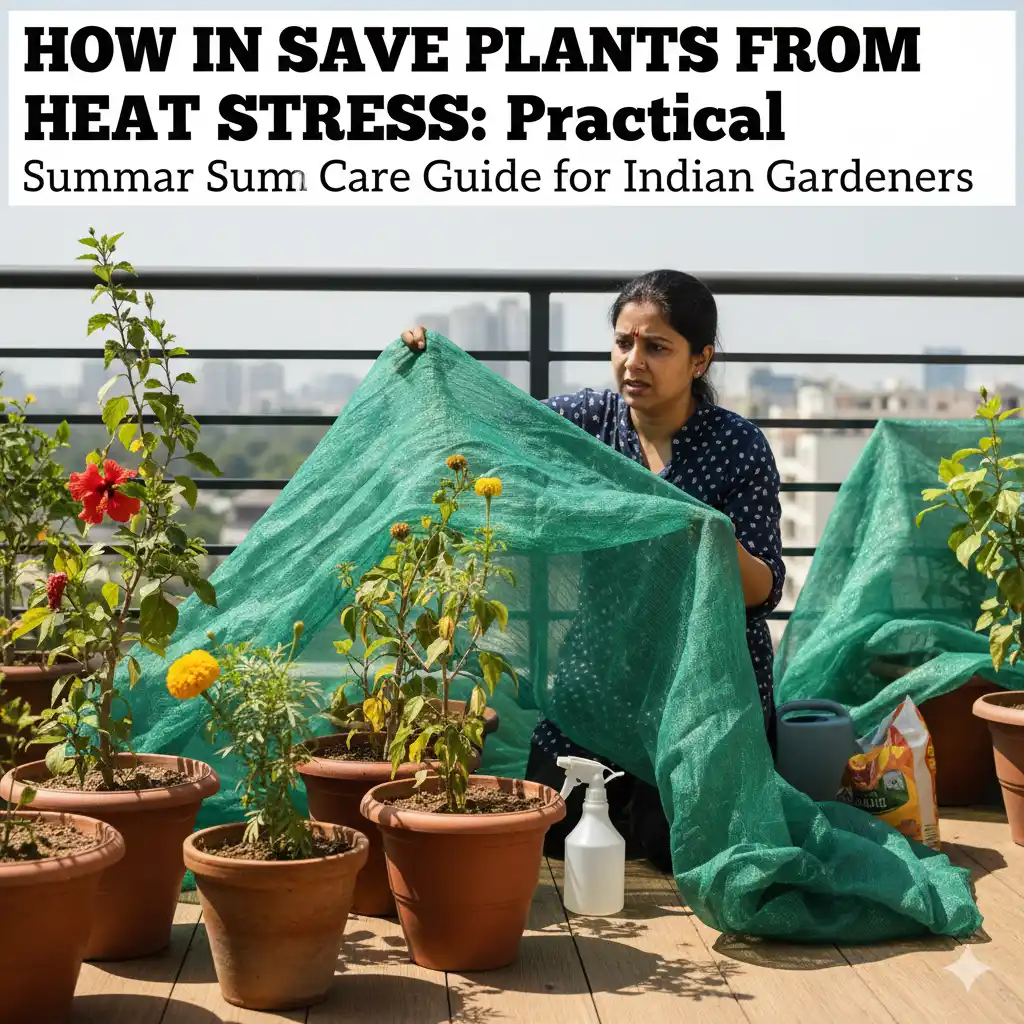
- Green shade net (50% shade is ideal)
- Old cotton cloth sheets
- Bamboo screens
- Sun curtains on balconies
- Placing taller plants around smaller ones
This block harmful UV rays while allowing enough light for photosynthesis.
3. Move Pots to Partial Shade
If your plants are in movable pots, shift them to a cooler spot during peak heat.
- North-facing balconies get gentle sunlight
- Under a tree or pergola
- Under staircase area with filtered light
- Corridors with morning light only
This simple shift can reduce heat stress by 50%.
4. Mulch the Soil to Reduce Heat
Mulching keeps the soil cool and prevents fast evaporation.
You can use:
- Dry leaves
- Cocopeat
- Wood chips
- Rice hull
- Bark mulch
A 1–2 inch layer of mulch can keep roots protected during summers.
5. Use Deep Watering Instead of Light Sprinkling
Shallow watering only wets the upper soil layer. It evaporates quickly and roots stay thirsty.
Instead:
- Water slowly until it reaches deeper roots
- Let excess water drain properly
- Avoid waterlogging to prevent root rot
6. Add Water Reservoir Trays Under Pots
This helps thirsty plants like hibiscus, jasmine, or big palms survive peak heat. The plant absorbs water slowly throughout the day.
But make sure:
- You clean the tray every 3–4 days (to avoid mosquitoes)
- Water level is low and controlled
7. Mist Indoor Plants to Improve Humidity
Indoor plants like Areca Palm, Peace Lily, and Ferns love humidity. During hot weather, indoor air becomes extremely dry. Misting helps them stay fresh and prevents browning of leaves.
Mist them:
- Once in morning
- Once in evening
8. Group Plants Together
Plants release moisture into the air around them. When you place them close together, they create a mini humid zone. This naturally protects them from heat stress.
9. Avoid Fertilizers During Heatwaves
Fertilizing during high heat can burn the roots. Plants under stress cannot handle strong nutrients.
Do not fertilize when:
- Temperature goes above 38°C
- Plant shows drooping or burnt leaves
- Soil dries too fast
Instead, fertilize early morning or only after heatwave ends.
10. Repot Only After Summer
Repotting adds pressure on plants. Summer is already stressful— changing pots now can damage roots further.
Repot in:
- Monsoon season
- Early winter
Best Natural Remedies to Reduce Heat Stress in Plants
Here are some gentle and effective home remedies:
1. Buttermilk Spray
Mix 1 cup of thin buttermilk in 1 litre water. Spray on leaves once a week. It cools the plant and strengthens immunity.
2. Aloe Vera Water
Add 2–3 tbsp aloe gel in 1 litre water. Use it once every 10 days to help plants tolerate heat.
3. Neem Water
Boil neem leaves and spray once a week to prevent pests (heat attracts insects).
Low-Competition Keywords Used in This Blog
- how to save plants from heat stress
- summer heat protection for plants India
- best shade ideas for potted plants
- heatwave care for balcony plants
- why plants droop in summer India
Conclusion
Saving plants from heat stress is not difficult— it just requires a little planning. If you water at the right time, use shade, protect the soil, and watch for stress signs early, your plants can survive even the toughest Indian summers. With these simple methods, you can keep your garden green, healthy, and thriving throughout the hot season.
If you want, I can also create a custom summer care routine based on your plant list. Just tell me the names!