Plastic vs Ceramic Pots for Plants: Which Is Better for Your Garden?
A detailed comparison between plastic and ceramic (clay) plant pots — pros, cons, and which is best for different kinds of plants and conditions, especially for Indian homes.
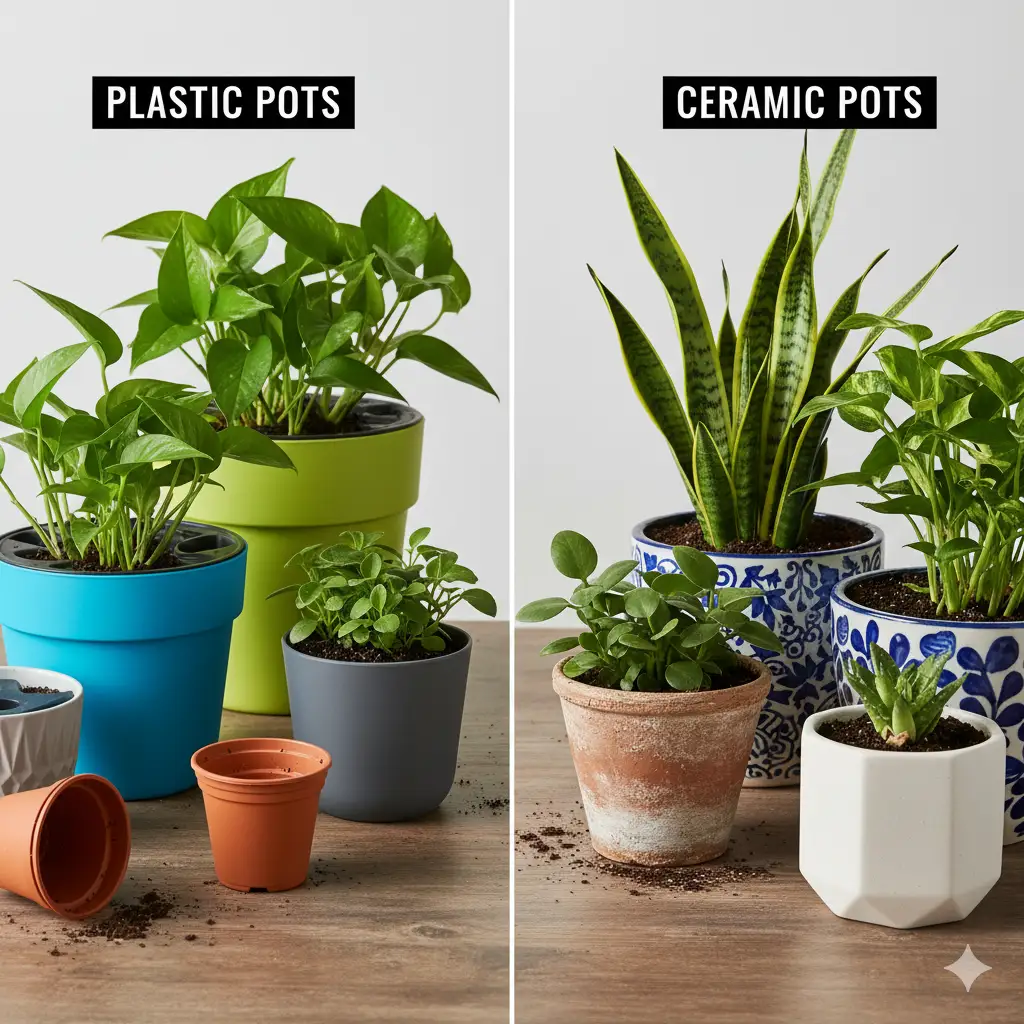
Plastic vs Ceramic Pots: Which Is Better for Your Plants?
When choosing a planter for your indoor or outdoor plants, one of the biggest decisions you’ll make is the material of the pot. Among the most popular options are plastic pots and ceramic pots. Each has its strengths and trade-offs — and the right choice depends a lot on your plant’s needs, where you live, and how much effort you want to put into care.
In this guide, we’ll break down the advantages and disadvantages of plastic vs ceramic pots, explain which plants benefit from each type, and help you decide what’s best for your home garden.
What’s the Difference Between Plastic and Ceramic Pots?
To compare them properly, let’s look at key aspects:
- Material & Manufacturing: Plastic pots are made from synthetic polymers. Ceramic pots are typically made from natural clay and then fired, giving them a denser, heavier finish.
- Porosity & Breathability: Unglazed ceramic (clay) is porous and allows air and moisture to pass through its walls. Plastic is non-porous and retains moisture for longer.
- Insulation: Ceramic provides better thermal insulation, keeping roots cooler in hot weather. Plastic may heat up or retain warmth depending on its color.
- Weight & Portability: Plastic is lightweight and easy to move. Ceramic is heavier, more stable, but difficult to relocate.
- Durability: Plastic resists chipping and doesn’t break easily, while ceramic can crack or chip if dropped.
- Moisture Retention & Drainage: Plastic holds water longer, which can increase over-watering risk. Unglazed ceramic helps wick moisture out naturally.
- Cost & Environment: Plastic pots are cheaper but contribute to plastic waste. Ceramic is eco-friendly but more expensive.
Advantages of Plastic Pots
- Lightweight and Portable: Easy to move even when filled with soil.
- Moisture Retention: Retains water longer, ideal for plants needing consistent moisture.
- Durable: Doesn’t easily chip or break.
- Inexpensive: Budget-friendly and widely available.
- Easy to Clean & Reuse: Can be disinfected easily if plants had diseases.
Disadvantages of Plastic Pots
- Over-watering Risk: Soil may stay wet for too long.
- Poor Aeration: Limited airflow for roots.
- Heat Sensitivity: Can become hot in direct sunlight.
- Environmental Impact: Not biodegradable and contributes to long-term waste.
- UV Degradation: May fade or become brittle over time in sunlight.
Advantages of Ceramic Pots
- Good Insulation: Keeps root temperature more stable.
- Aesthetic Appeal: Available in various designs, textures, and colors.
- Breathability: Unglazed ceramic helps with natural moisture evaporation, preventing waterlogging.
- Stable: Heavy weight supports tall plants and prevents tipping.
- Long-lasting: Maintains quality for years with proper care.
Disadvantages of Ceramic Pots
- Heavy & Fragile: Hard to move and prone to cracking.
- Water Retention (Glazed): Glazed ceramic may hold too much water.
- Cost: More expensive than plastic.
- Slow to Dry: Thicker walls may delay soil drying.
Which Pot Is Better for Different Plants?
Here’s a quick guide based on plant type and your situation:
- Succulents & Cacti: Prefer ceramic (especially unglazed) due to excellent drainage.
- Moisture-Loving Plants (e.g. Ferns, Peace Lily): Plastic works better as it retains water longer.
- Large or Top-Heavy Plants: Ceramic offers better stability.
- Frequent Repotting: Plastic is easier to handle and lightweight.
- Outdoor Use in Hot Climate: Both work, but avoid dark plastic in extreme heat.
Practical Tips When Using These Pots
- Use drainage holes in every pot to prevent root rot.
- Use a liner or nursery pot inside a ceramic pot for easier watering and repotting.
- Monitor water use — plastic needs less water, ceramic dries faster.
- Clean regularly to prevent salt buildup and bacterial issues.
- Choose wisely based on long-term needs and local climate.
Real-World Examples of Pots
Here are common pot types you’ll find in Indian markets:
- Lightweight decorative plastic pots
- Classic PP nursery pots
- Unglazed terracotta pots
- Glazed ceramic designer pots
Conclusion: There Is No Single “Best” Pot
Your choice between plastic and ceramic should depend on your plant type, watering routine, design preference, and climate. Plastic pots are best for everyday use, moisture-loving plants, and lightweight handling. Ceramic pots are ideal for breathability, aesthetics, and stability.
For most gardeners, a combination of both works well: plastic for practicality and ceramic for beauty and better root aeration.