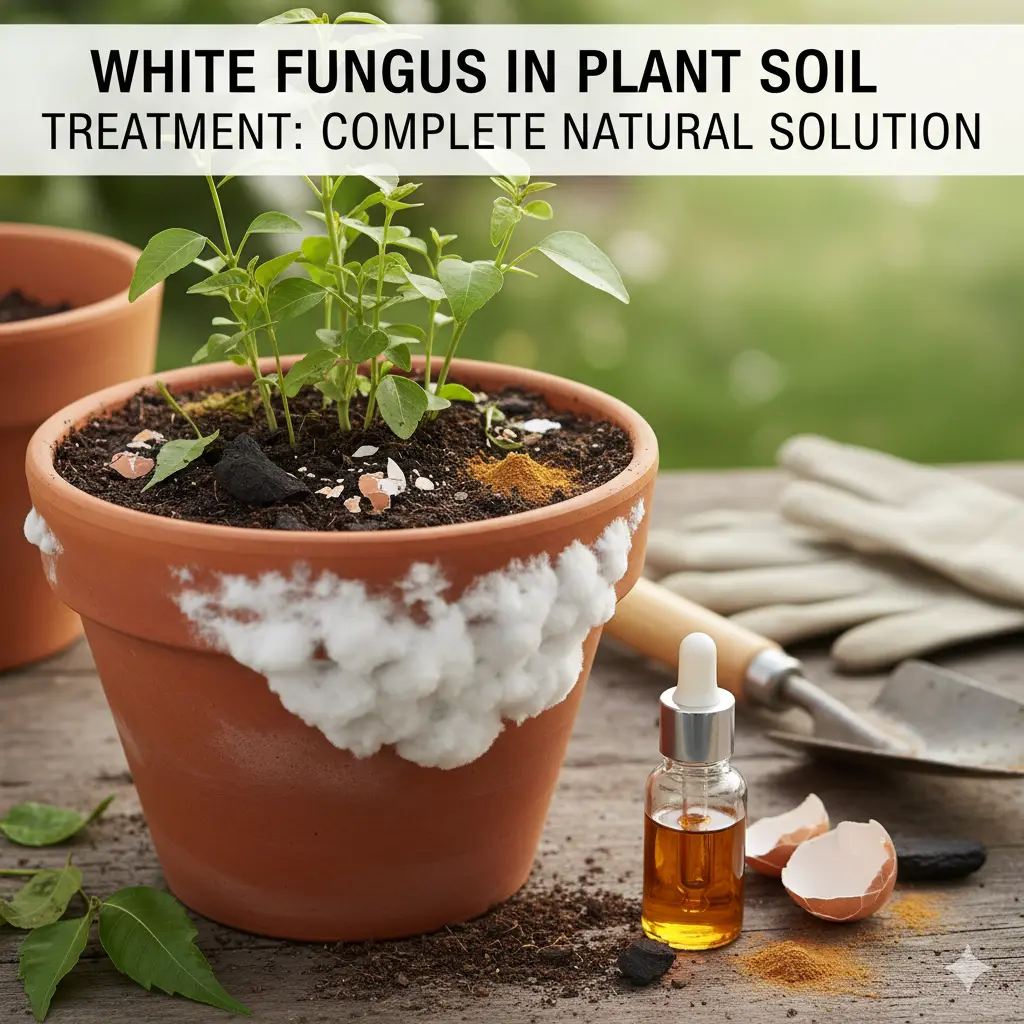
Short answer: white, fluffy or cotton-like growth on the soil surface is usually a harmless saprophytic fungus (mould) feeding on organic matter like compost, cocopeat or bark. It appears when soil stays damp, light is low and air does not move. Scrape off the top layer, let the soil dry more between waterings, give the plant more light and air, and it usually goes away. But white fluff on the stem or leaves, or a white crust on the soil, are different problems — use the table below to tell them apart, or upload a photo to our free plant diagnosis tool.
What is the white stuff? Quick guide
| What you see | What it is | Harmful? |
|---|---|---|
| White fluffy or web-like patches on soil surface | Saprophytic fungus / mould | Usually not, but a sign of too much moisture |
| Hard, crusty white or yellowish layer on soil or pot rim | Salt and mineral build-up from water/fertiliser | Can burn roots over time |
| White cottony clusters on stems, leaf joints or roots | Mealybugs (insects) | Yes — treat as pests |
| White powder on leaves | Powdery mildew | Yes — a leaf disease |
| Small white mushrooms in the pot | Fungal fruiting bodies | Not to the plant; do not eat them |
Why white fungus grows in plant soil
- Overwatering: soil that never dries out.
- Poor drainage: no hole, or a heavy mix that holds water.
- Low light and no air flow: common in indoor corners, bathrooms and in the monsoon.
- Organic material on top: fresh compost, cow dung, cocopeat or bark gives the fungus food.
- Humid weather: it appears suddenly in many pots during the rains. See our monsoon plant care guide.
Is white fungus harmful to my plant?
The fluffy surface mould itself usually does not attack healthy roots. The real concern is what it tells you: the soil is staying too wet, which can lead to root rot, fungus gnats and yellow leaves. If the plant is drooping in wet soil, check the roots — see how to save a dying plant.
Step-by-step: how to remove white fungus
- Scrape off the top layer. Remove the visible fungus with the top 1–2 cm of soil and throw it away (not in your compost).
- Let the soil dry. Do not water until the top 2–3 cm is dry to the touch.
- Improve drainage. Check the drainage hole is clear and empty the saucer after watering.
- Add fresh, dry mix to replace what you removed.
- Increase light and air. Move the pot to a brighter spot with better air movement. A few hours of gentle morning sun on the soil helps.
- Optional natural dusting: a light sprinkle of ground cinnamon on the soil surface is a commonly used home remedy that may slow surface mould. It is not a cure on its own — drying the soil is what works.
- Repot if it keeps returning or the soil smells sour. Use a lighter mix with perlite or sand, and a pot with good drainage — see best pots for indoor plants.
Home remedies — what works and what to avoid
- Drying the soil and more light: the most effective fix.
- Neem oil spray on the soil surface (about 5 ml per litre with a few drops of liquid soap): can help with surface mould and fungus gnats.
- Cinnamon powder: mild, safe, helps a little on the surface.
- Weak baking soda solution (about 1 teaspoon per litre): may slow surface fungus; do not use strong mixes or repeat too often, as sodium builds up in soil.
- Avoid: pouring vinegar, hydrogen peroxide at high strength, or bleach into pots — these can damage roots.
How to stop it coming back
- Water only when the top 2–3 cm of soil is dry.
- Use a well-draining mix — garden soil + cocopeat + compost, with perlite or sand.
- Mix compost into the soil instead of leaving a thick layer on top.
- Give plants bright light and space for air flow.
- Water less in winter and the rainy season — see winter plant care.
White crust on soil: salt build-up
A hard white crust is not fungus. It comes from minerals in hard tap water and fertiliser salts. Scrape it off and flush the pot by watering slowly with plenty of water until it runs freely out of the bottom. Do this every couple of months if your water is hard.
White fluff on stems? It is probably mealybugs
If the white cotton is on stems, leaf joints or under leaves and moves when touched, it is mealybugs, not soil fungus. Wipe them off with cotton dipped in rubbing alcohol and follow up with neem spray weekly. See common plant diseases and pests.
Check your plant's problem from a photo
Not sure if it is mould, mealybugs or powdery mildew? Upload a close photo to our AI plant diagnosis tool.
Frequently asked questions
Will white fungus kill my plant?
The surface mould usually will not, but the wet conditions behind it can cause root rot. Fix the watering.
Can I reuse soil with white fungus?
Yes, after removing the top layer and drying it out, if the plant is healthy. Discard soil from plants that died of root rot.
Why does white fungus appear on new potting mix?
Fresh compost and cocopeat contain organic matter and fungal spores. It often appears for a few weeks and fades as the soil settles and dries.
Are the small mushrooms in my pot dangerous?
They do not harm the plant, but some mushrooms are toxic if eaten. Pick them off if you have children or pets.
Does sunlight kill soil fungus?
Sun and air dry the surface, which stops the mould growing. It is one of the best natural fixes.