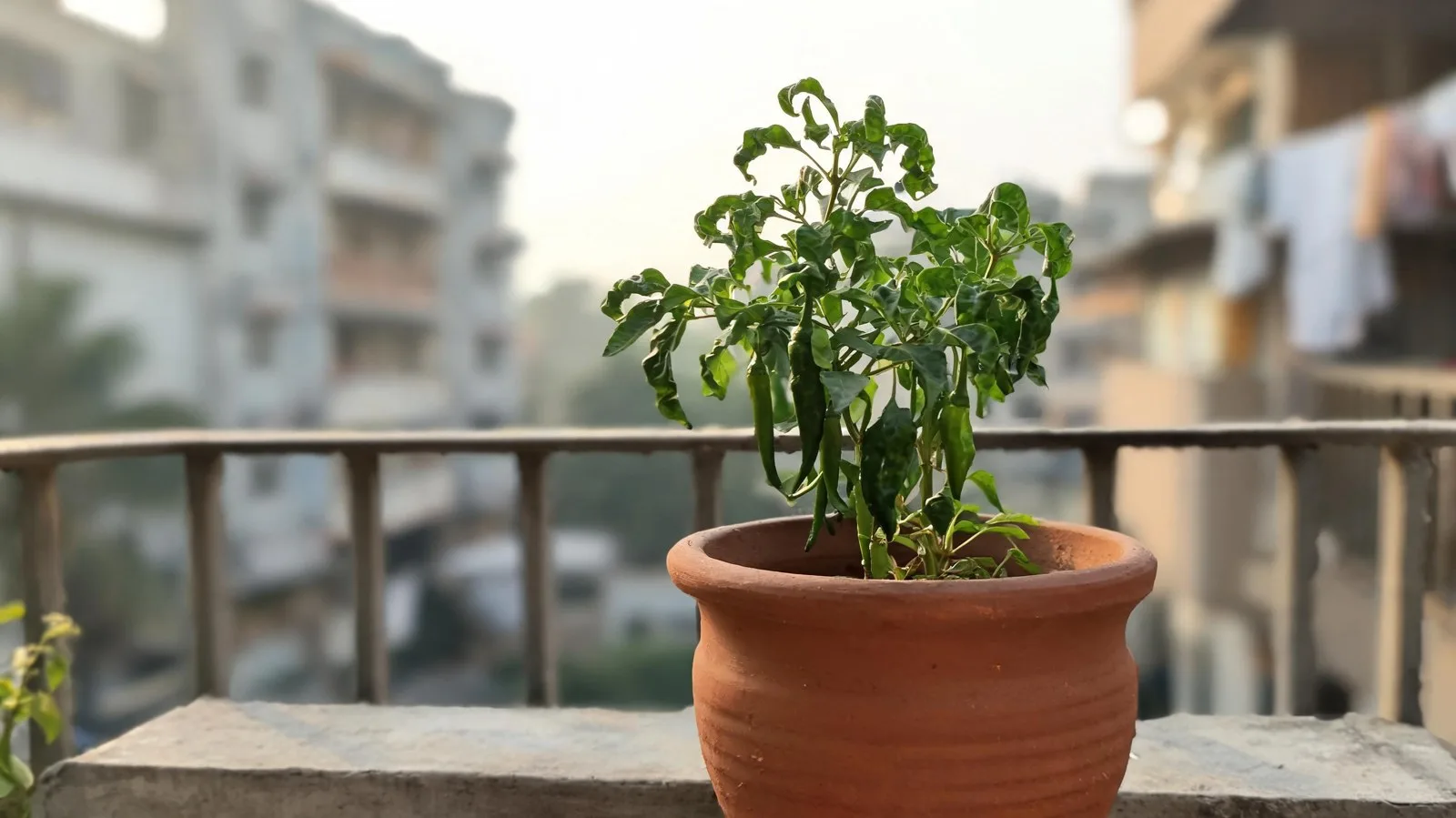
Short answer: chilli plant leaves usually curl because of tiny sap-sucking pests. Leaves curling upward (boat-shaped, with silvery streaks underneath) point to thrips. Leaves curling downward, turning narrow, stiff and bronze underneath point to mites. Small, puckered, yellow-green leaves on a stunted plant covered in whiteflies suggest leaf curl virus. Hot afternoon sun, uneven watering and aphids can also make leaves roll. Pests are fixable if you start early and spray regularly.
Not sure which one you have? Take a clear photo of a curled leaf (top and underside) and check it with our free AI plant diagnosis tool, then match it with the table below.
Chilli leaf curl: symptoms and likely causes
| What you see | Most likely cause |
|---|---|
| Leaves curl upward like a boat, silvery or brown streaks on the underside | Thrips |
| Leaves curl downward, become narrow and leathery, underside looks bronze or shiny | Mites (yellow mites or spider mites) |
| Fine webbing between leaves, tiny dots on leaves | Spider mites |
| Clusters of small green or black insects, sticky leaves, ants on the plant | Aphids |
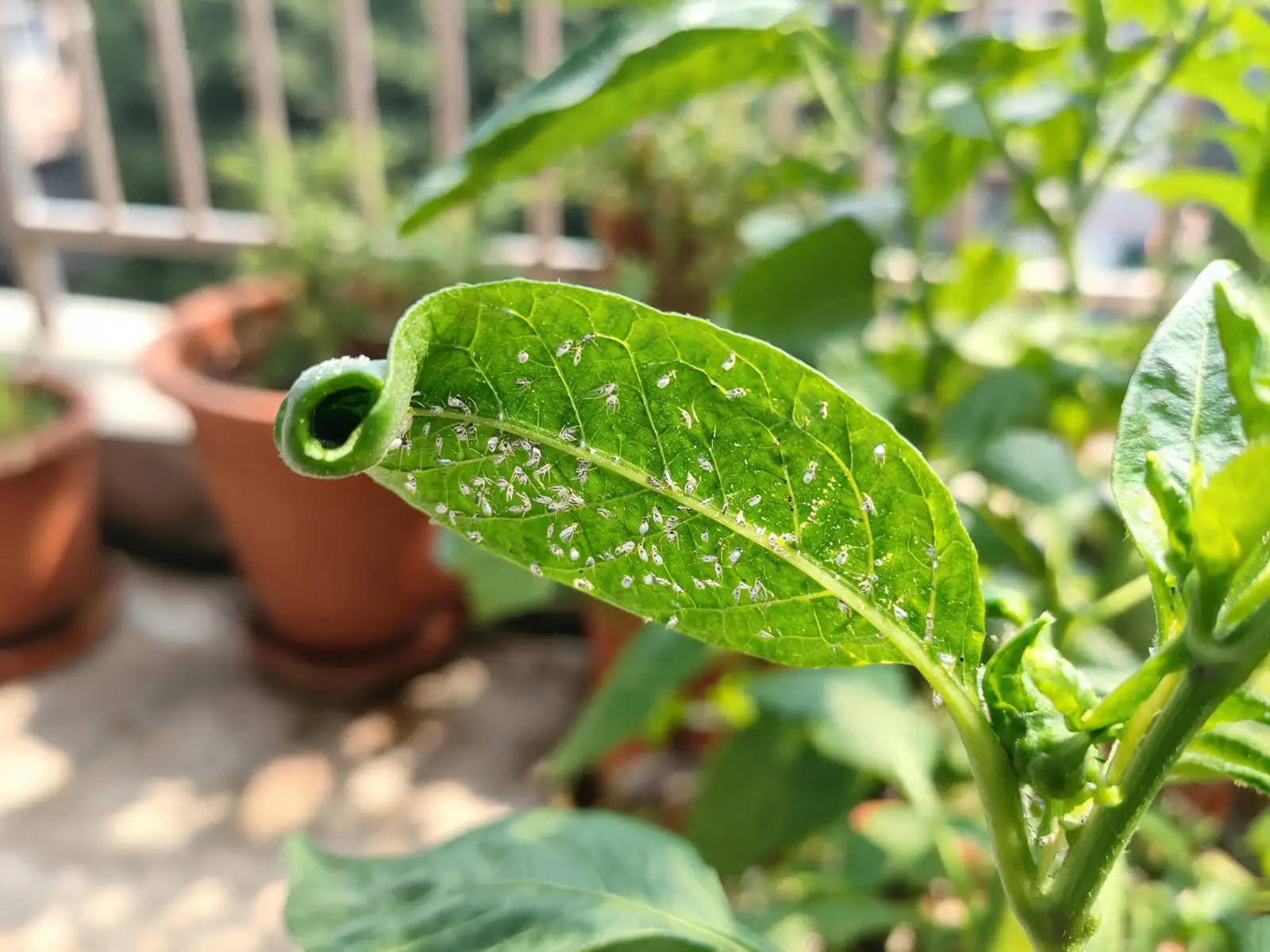
| Tiny white flying insects rise when you touch the plant | Whiteflies |
| New leaves small, puckered and yellow-green, plant stops growing, few flowers | Leaf curl virus (spread by whiteflies) |
| Leaves roll inward in afternoon heat and open again by evening | Heat or water stress |
Always look at the underside of the leaves with your phone torch or a magnifier. Most chilli pests hide there, and the direction of the curl is your best clue.
1. Thrips: leaves curling upward
Thrips are very small, thin insects that scrape the leaf surface and suck the sap. The leaf edges turn up, the leaf looks like a small boat, and you may see silvery patches or brown streaks underneath. They are common on chillies in dry, warm weather, which is why many Indian gardeners see this problem after the monsoon.
How to fix it
- Spray the plant, especially the underside of leaves and the growing tips, with a strong stream of plain water to knock off thrips.
- Spray neem oil: about 5 ml neem oil and a few drops of liquid soap in 1 litre of water. Mix well and spray in the evening.
- Repeat every 5–7 days for at least 3 rounds, because new thrips hatch from eggs inside the leaf.
- Hang a blue sticky trap near the plant. Thrips are attracted to blue.
- Pinch off and throw away the worst curled tips so the plant can push fresh growth.
2. Mites: leaves curling downward
Mites are too small to see clearly without a magnifier. Yellow mites cause leaves to curl down, become narrow, stiff and shiny or bronze on the underside. Spider mites leave fine webbing and tiny pale dots on the leaves. Mites love hot, dry air, so balcony plants against a sunny wall are at higher risk.
How to fix it
- Wash the underside of the leaves with water every 2–3 days. Mites dislike moisture.
- Use the same neem oil and soap spray, covering the underside of every leaf, every 5–7 days.
- If the problem is severe, ask a local nursery for a miticide or wettable sulphur made for vegetables and follow the label exactly.
- Remove badly affected leaves and keep the pot away from very hot walls in the afternoon.
3. Aphids: curled, sticky leaves
Aphids sit in groups on new shoots and the underside of young leaves. They make leaves crinkle and curl, and leave a sticky "honeydew" that attracts ants and can turn black with sooty mould.
How to fix it
- Rub them off with your fingers or wash them off with water.
- Spray neem oil and soap solution every 5–7 days until they are gone.
- Control ants around the pot, because ants protect aphids from their natural enemies.
Sticky black coating and white patches can look similar from far away. If you see a dusty white layer instead, read our guide on white powder on plant leaves.
4. Whiteflies and leaf curl virus
Whiteflies are tiny white insects that fly up when you shake the plant. They suck sap, but the bigger danger is that they spread chilli leaf curl virus. A virus-infected plant has small, thick, puckered leaves that curl in all directions, short gaps between leaves, a bushy stunted look, and very few flowers or fruits.
How to fix it
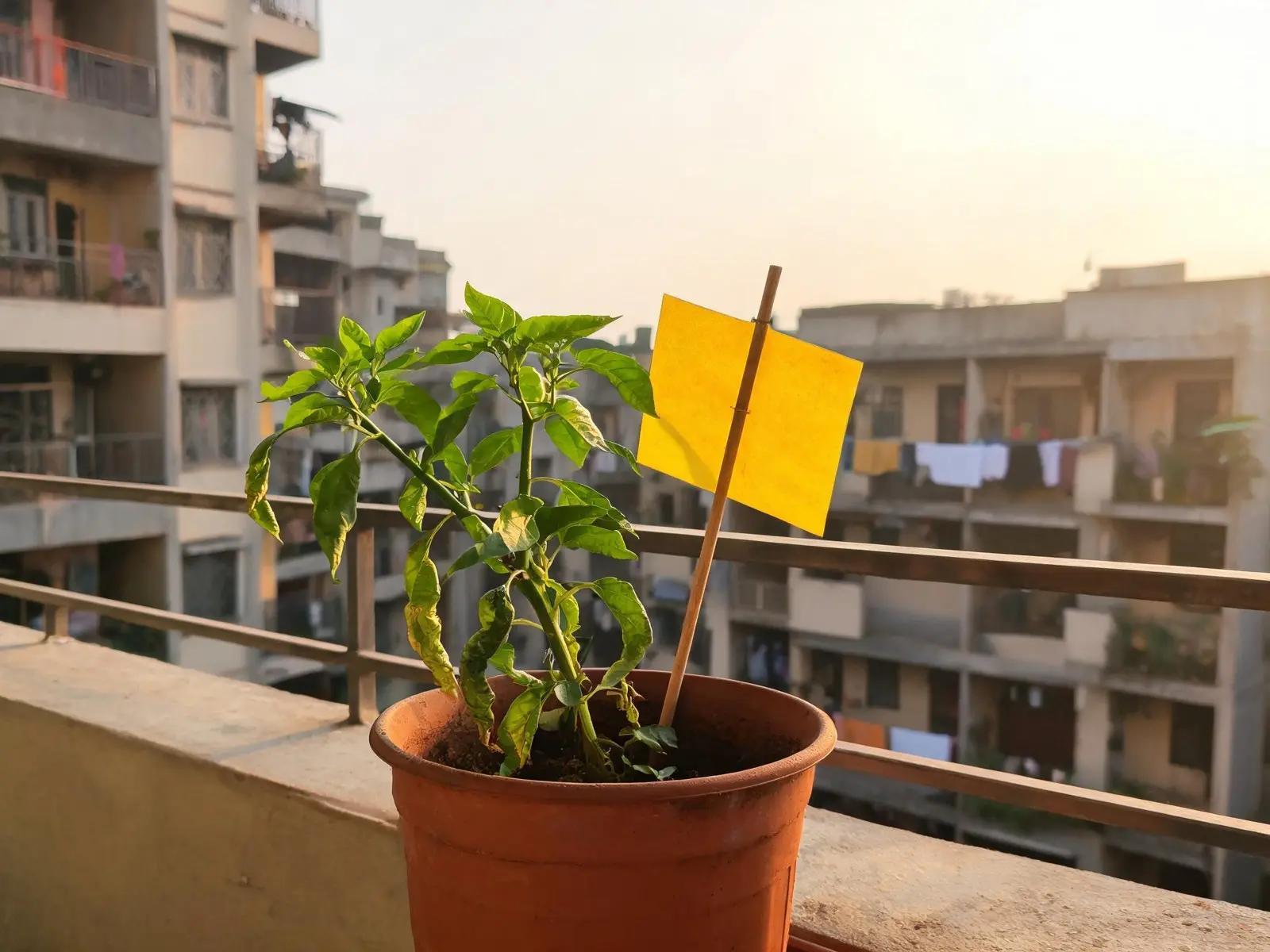
- Hang yellow sticky traps near the plants to catch adult whiteflies.
- Spray neem oil and soap on the underside of leaves every 5–7 days.
- There is no cure for a virus-infected plant. If the whole plant shows virus symptoms, pull it out and throw it away (not in compost) so whiteflies don't carry the virus to healthy plants.
- For new plants, buy seeds or seedlings from a trusted source and check young plants for whiteflies every few days.
Not sure if it's a pest or a disease? Our list of common plant diseases and natural treatments shows how other problems look.
5. Heat and water stress
If leaves roll inward during hot afternoons but look normal in the morning and evening, and you can't find any insects, the plant is protecting itself from heat or lack of water. Very dry soil, and also soil that stays soggy and damages roots, can both cause curling and drooping.
How to fix it
- Water when the top 2–3 cm of soil feels dry, then water deeply until it drains from the bottom.
- Make sure the pot has drainage holes and never leave water standing in the saucer.
- Chillies like 6 or more hours of sun, but in very hot weather give some shade in the afternoon.
- Add a thin layer of dry leaves or cocopeat on the soil to keep moisture even.
Weak plants attract more pests, so feed lightly with compost or vermicompost every few weeks. See our guide to the best organic fertilizer for kitchen garden plants for safe options.
Step-by-step: how to fix chilli leaf curl at home
- Inspect: check the underside of 5–6 curled leaves and note the direction of the curl.
- Isolate: move the affected pot away from other chilli, tomato and brinjal plants if you can.
- Prune: remove the most damaged tips and leaves and throw them in the bin.
- Wash: spray the whole plant, especially the leaf undersides, with water.
- Spray: the next evening, spray neem oil (about 5 ml per litre) with a few drops of liquid soap. Test on a few leaves first and wait a day.
- Trap: hang yellow and blue sticky traps near the plant.
- Repeat: spray every 5–7 days for at least 3 weeks, even if the plant looks better.
- Support: water evenly, give good sun and light feeding so the plant pushes new, flat leaves.
Old curled leaves will not open again. Judge recovery by the new leaves at the top: if they come out flat and green, your treatment is working.
Safety: wash chillies well before eating after any spray, keep sprays away from children and pets, and never spray in strong sun, as it can burn the leaves.
Check your plant's problem from a photo
Curl direction gives a good clue, but pests and virus can look alike in the early stage. Upload a photo of the curled leaves to our free plant diagnosis tool to get the likely problem and treatment steps. If you are growing a chilli variety you don't know, or a plant that only looks like chilli, check it first with the plant identifier.
Growing chillies from scratch? Our step-by-step guide on how to grow chillies in pots covers soil, pot size, sun and watering.
Frequently asked questions
Will curled chilli leaves become normal again?
No, leaves that are already curled usually stay that way. Once the pest is controlled, the new leaves that grow will be flat and healthy. You can remove badly curled leaves once there is enough new growth.
Why are my chilli leaves curling upward?
Upward curling with silvery or brown streaks on the underside is most often caused by thrips. Spray water and neem oil on the underside of leaves every 5–7 days and use blue sticky traps.
Why are my chilli leaves curling downward?
Downward curling with narrow, stiff leaves that look bronze underneath is a typical sign of mites. Wash the leaves often and spray neem oil, covering the underside of every leaf.
Can leaf curl virus be cured?
No. A virus-infected chilli plant cannot be cured. Remove and discard the plant, and control whiteflies so the virus does not spread to your other plants.
How often should I spray neem oil on chilli plants?
For an active pest problem, spray every 5–7 days in the evening for at least 3 rounds. As prevention, once every 10–15 days is enough.
Is it safe to eat chillies from a plant sprayed with neem oil?
Neem oil is commonly used in home vegetable gardens. Wait a few days after spraying and wash the chillies well with water before eating.