Short answer: most diseases in home gardens are caused by fungi that thrive in wet leaves, soggy soil and poor air flow. The ten you will meet most often are powdery mildew, root rot, leaf spot, rust, blight, wilt, anthracnose, mosaic virus, sooty mould and damping-off. Early removal of infected parts, drier leaves and better drainage stop most of them. Not sure which one you have? Upload a leaf photo to our free plant diagnosis tool.
Quick symptom guide
| Symptom | Disease | Spreads by |
|---|---|---|
| White or grey powder on leaves | Powdery mildew | Air-borne spores, humid nights |
| Wilting in wet soil, brown mushy roots | Root rot | Waterlogged soil |
| Round brown/black spots, often with yellow halo | Leaf spot | Water splashing on leaves |
| Orange-brown powdery bumps under leaves | Rust | Spores, wet leaves |
| Fast-spreading dark patches on leaves and stems | Blight | Rain, humidity, infected debris |
| Whole plant droops suddenly, stem browning inside | Wilt | Soil-borne fungus or bacteria |
| Sunken dark lesions on leaves, stems or fruit | Anthracnose | Rain splash, warm wet weather |
| Light and dark green mottled, twisted leaves | Mosaic virus | Aphids, whiteflies, hands and tools |
| Black film that wipes off | Sooty mould | Honeydew from sap-sucking pests |
| Seedlings collapse at soil level | Damping-off | Wet, cold, unclean seed-starting mix |
1. Powdery mildew
A white, flour-like coating that starts as small patches on the upper side of leaves. It is common on roses, curry leaf, cucurbits (lauki, cucumber) and tulsi when days are warm and nights are humid.
How to fix it: remove the worst leaves, give the plant more sun and space, and water the soil instead of the leaves. Spray neem oil (about 5 ml per litre of water with a few drops of liquid soap) in the evening, once a week for three weeks. A milk spray (1 part milk to 9 parts water) is a gentle alternative for mild cases.
2. Root rot
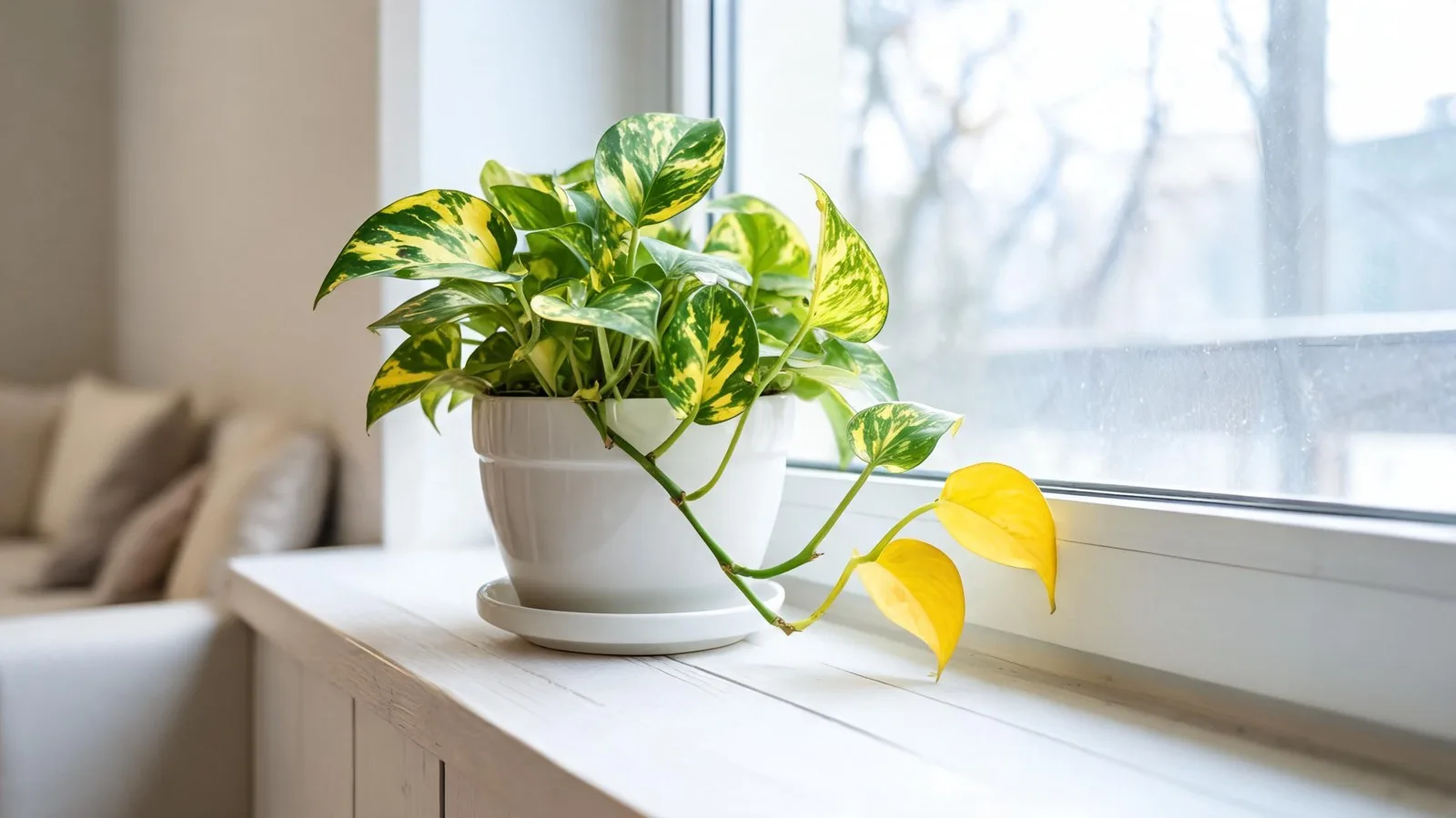
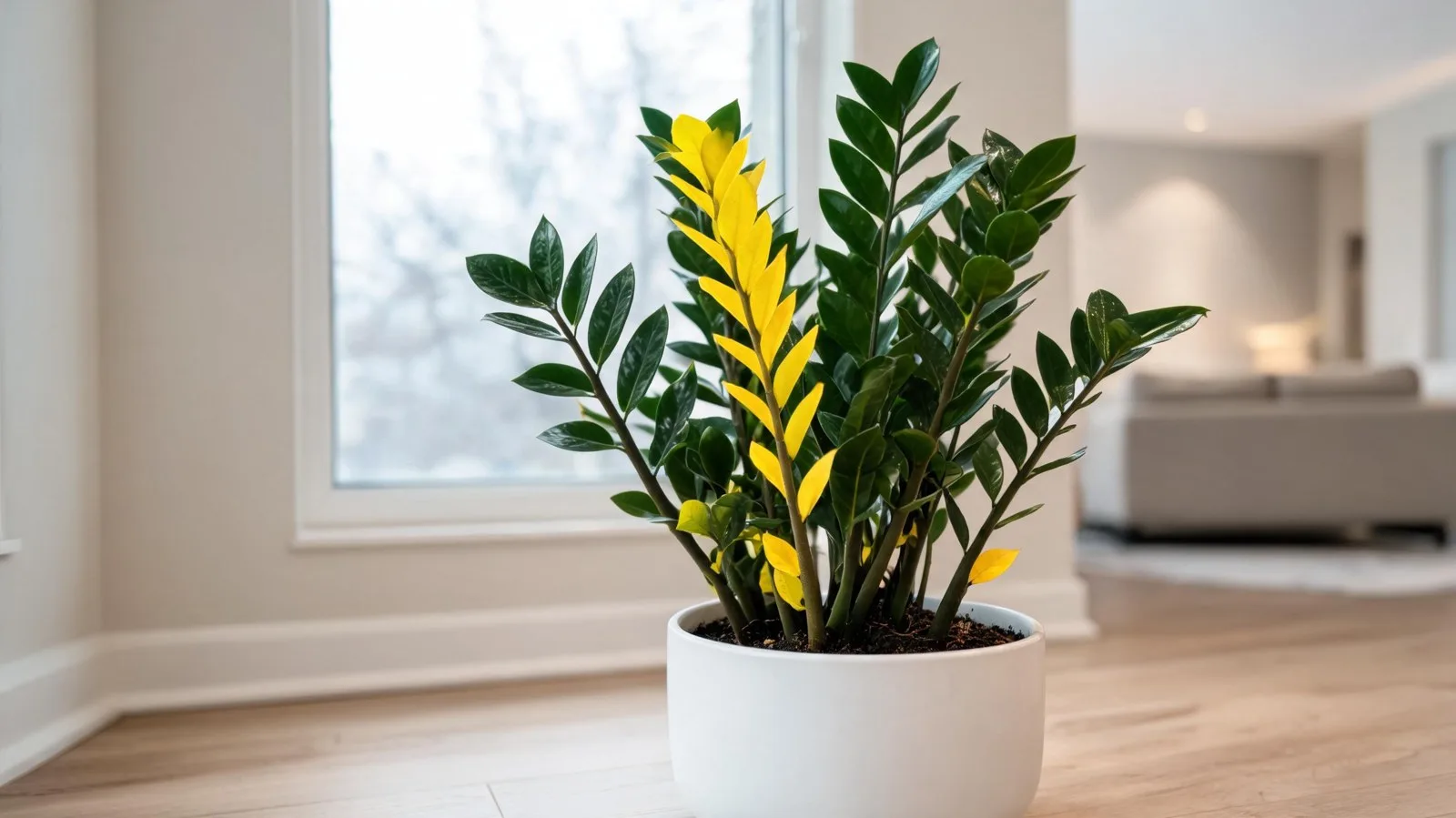
Caused by roots sitting in water, which lets rot fungi attack. Leaves turn yellow, the plant droops even though the soil is wet, and the stem base may go black.
How to fix it: take the plant out, cut off all brown, mushy roots with clean scissors, and repot in fresh, dry, well-draining mix in a pot with holes. Water only when the top 2–3 cm of soil is dry. Choosing the right pot matters — see plastic vs ceramic pots.
3. Leaf spot
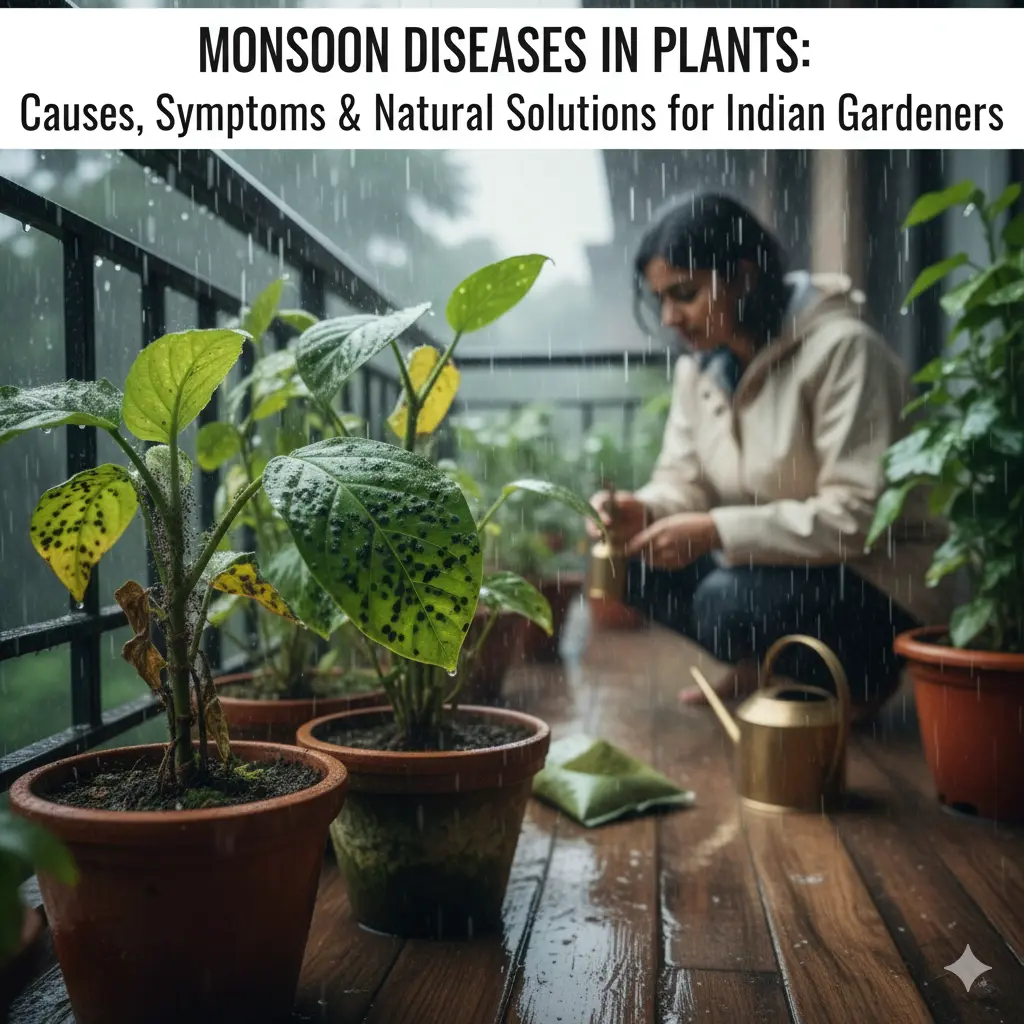
Brown or black spots, sometimes with a yellow ring, caused by fungi or bacteria. Spots may join together and the leaf drops.
How to fix it: pick off spotted leaves, water early in the day at soil level, and avoid crowding plants. Neem spray helps stop new spots on fungal leaf spot.
4. Rust
Small orange or brown raised bumps, mostly under the leaf, with yellow spots above them. Common on roses, beans and some ornamentals.
How to fix it: remove infected leaves early, clean fallen leaves from the pot, keep foliage dry and improve air flow.
5. Blight
Large dark patches that spread quickly through leaves and stems, often in rainy weather. Tomatoes and potatoes are the classic victims.
How to fix it: cut and bin all affected parts immediately, mulch the soil so rain does not splash spores up, and stake plants so leaves stay off the ground. Badly infected plants are best removed. Our balcony tomato guide covers prevention.
6. Wilt
The plant droops even when watered, often starting on one side. Cutting the stem may show brown streaks inside. It is caused by soil-borne fungi (like Fusarium) or bacteria that block water flow.
How to fix it: there is no reliable home cure once a plant is badly wilted. Remove it, do not reuse the soil for the same crop, and start fresh with clean potting mix.
7. Anthracnose
Sunken, dark, sometimes water-soaked spots on leaves, stems and fruits — common on chillies, mangoes and beans in warm, wet weather.
How to fix it: remove infected parts, avoid overhead watering and give plants space. Harvest chillies regularly so infected fruit does not stay on the plant.
8. Mosaic virus
Patchy light and dark green leaves, often twisted or stunted. Viruses are spread by aphids, whiteflies and by touching healthy plants after infected ones.
How to fix it: there is no cure. Remove the infected plant, control sap-sucking insects, and wash your hands and tools between plants.
9. Sooty mould
A black, soot-like layer on leaves. It is not attacking the leaf directly — it grows on honeydew left by aphids, mealybugs, whiteflies or scale.
How to fix it: treat the pest first, then wipe leaves with a damp cloth. Without the honeydew, the mould stops growing.
10. Damping-off
Young seedlings suddenly fall over at the soil line, with a thin, dark stem. Very common when sowing coriander, chillies or tomatoes in wet, heavy soil.
How to fix it: sow in fresh, light seed-starting mix, water from below or with a gentle spray, give seedlings sun and air, and do not overcrowd. See our coriander growing guide for sowing tips.
How to prevent plant diseases
- Water the soil, not the leaves, and water in the morning so any splashes dry quickly.
- Use pots with drainage holes and a light, airy mix.
- Give each plant space for air to move around it.
- Remove fallen and dead leaves regularly.
- Check new plants for pests before placing them next to old ones.
- Take extra care in the rainy season — see monsoon diseases in plants.
Check your plant's problem from a photo
Many diseases look similar in the early stage. Upload a close, daylight photo of the affected leaf to our plant diagnosis tool to get the likely disease and treatment steps. Learn how to get the most accurate result in our AI plant diagnosis guide.
Frequently asked questions
What is the most common plant disease at home?
Root rot from overwatering is the most common killer of potted plants. Powdery mildew and leaf spot are the most common leaf diseases.
Can a plant recover from a fungal disease?
Yes, if you catch it early. Remove infected parts, fix watering and air flow, and new growth will come out healthy. Damaged leaves will not turn green again.
Is neem oil safe for all plants?
It is safe for most plants when diluted (around 5 ml per litre) and sprayed in the evening. Test on one leaf first, as a few delicate plants can get leaf burn.
Should I throw away soil from a diseased plant?
For root rot, wilt and damping-off, yes — do not reuse it for potted plants. For leaf diseases, the soil can usually be reused after removing fallen leaves.
Can plant diseases spread to other plants?
Fungal spores, viruses and pests all spread easily. Keep sick plants apart and clean your scissors after each cut.