Short answer: hibiscus buds usually fall off because the plant is stressed. The most common reasons are uneven watering (soil drying out completely or staying soggy), too little direct sun, a sudden change in weather or position, and sap-sucking pests such as mealybugs, aphids and thrips. Buds that turn yellow, drop and have tiny maggots inside point to hibiscus bud midge. Fix the stress and the plant will start holding its buds again.
If you can't tell what is wrong, take a clear photo of a fallen bud and a few leaves (top and underside) and check it with our free AI plant diagnosis tool, then use the table below to confirm.
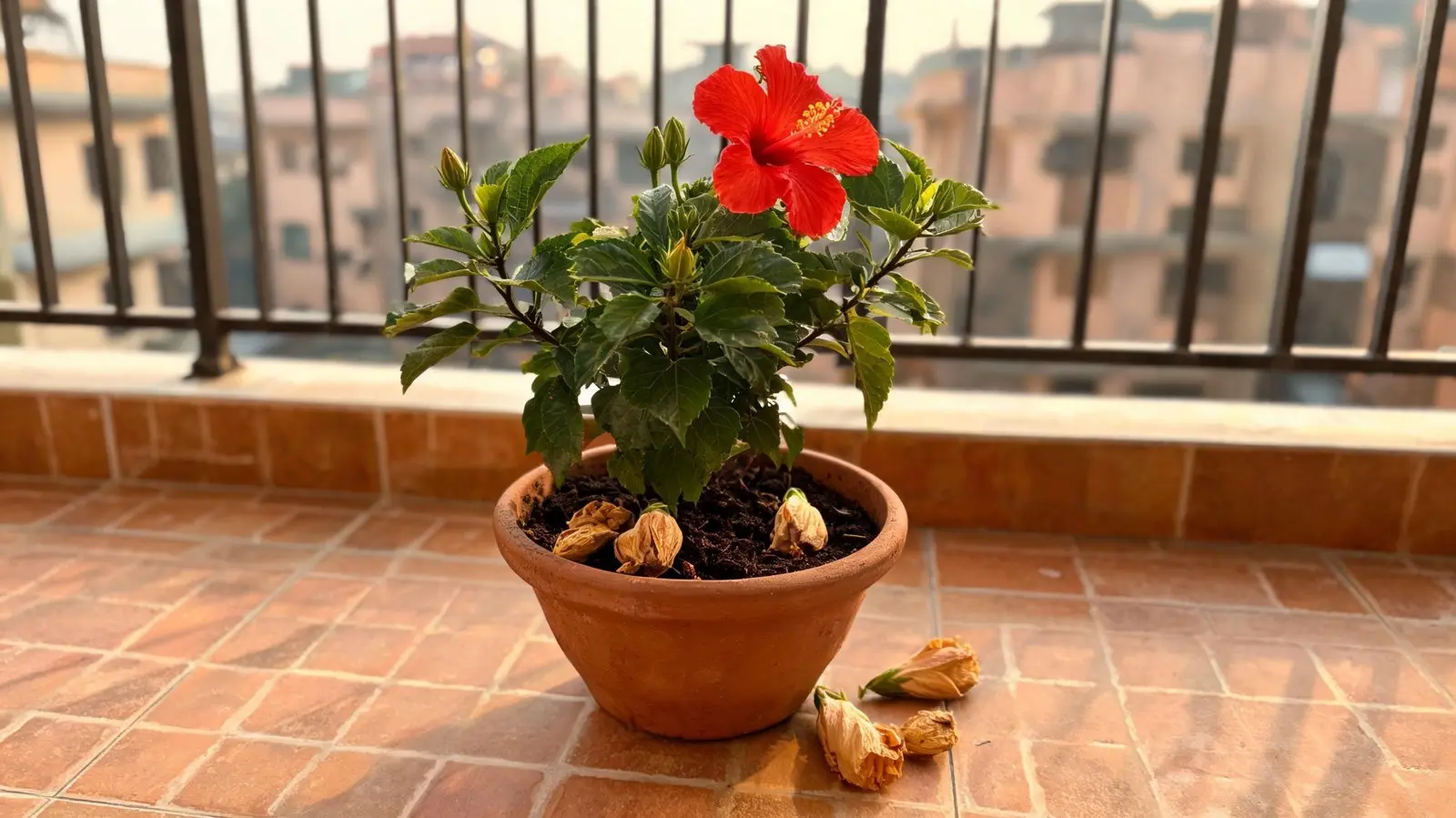
Why hibiscus buds fall off: symptoms and causes
| What you see | Most likely cause |
|---|---|
| Buds turn yellow and drop; soil is bone dry or leaves droop by afternoon | Underwatering |
| Buds and lower leaves turn yellow; soil stays wet for days; pot has no drainage | Overwatering or poor drainage |
| Lots of leaves, few buds, and the buds that form drop small | Not enough direct sun |
| Many buds drop at once after the pot was moved, or after the first cool nights or a hot, dry wind | Sudden change in weather or position |
| White cottony clumps, sticky leaves, ants, or tiny green or black insects on buds | Mealybugs or aphids |
| Buds have brown, scratchy marks and drop or open twisted | Thrips |
| Yellow buds drop; when you break one open, tiny white maggots are inside | Hibiscus bud midge |
| Dark green leafy growth but buds drop, or leaf edges look burnt after feeding | Wrong or too much fertiliser |
A few buds dropping now and then is normal. Worry when most buds fall, or when it goes on for weeks.
1. Uneven watering (too little or too much)
Hibiscus needs steady moisture while in bud. If the soil dries out completely, the plant drops buds first to save itself. If the soil stays wet, roots run short of air and start to rot, and the plant again sheds buds and yellow leaves. A small pot in summer sun can dry out in a day; the same pot in winter shade can stay wet for a week.
How to fix it
- Water when the top 2–3 cm of soil feels dry, not on a fixed schedule. Push a finger into the soil to check.
- Water deeply until it runs out of the drainage hole, then empty the saucer after 15–20 minutes.
- Make sure the pot has at least one drainage hole. If water sits on top for long, the soil is too heavy; mix in some coarse sand or cocopeat when you next repot.
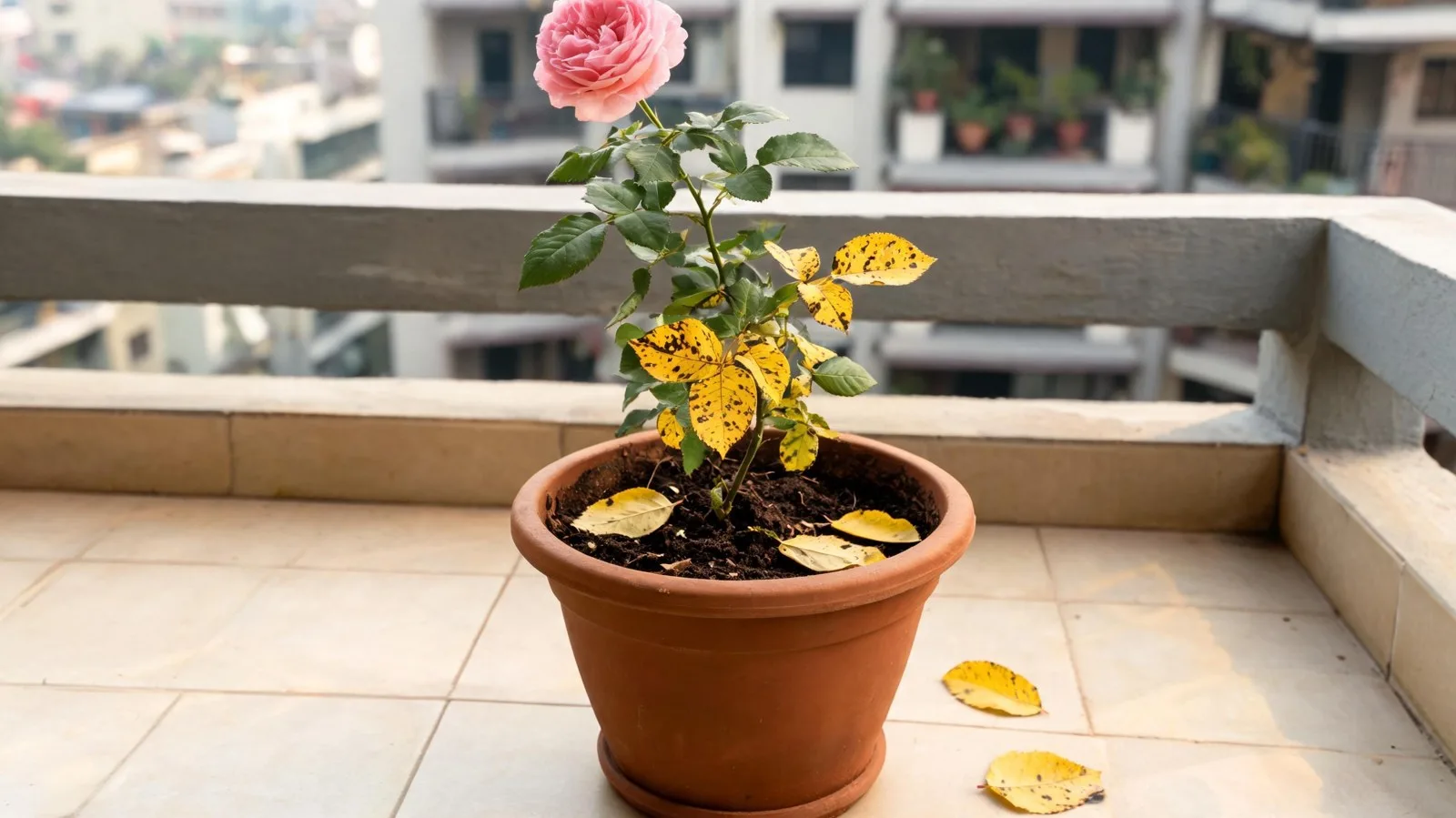
The same watering mistakes cause yellow leaves in many flowering shrubs; our guide on why rose plant leaves turn yellow explains how to read wet and dry soil in more detail.
2. Not enough direct sun
Hibiscus loves sun. With less than about 6 hours of direct sun, it keeps making leaves but struggles to carry buds to full bloom. This is common on north-facing balconies, under a roof overhang, or indoors.
How to fix it
- Move the pot to the sunniest spot you have, ideally with 6 hours or more of direct sun.
- Shift it gradually over a week if it has been in shade, so leaves don't scorch.
3. Sudden change in weather or position
Hibiscus dislikes sudden changes. Moving the pot to a new spot, bringing it indoors, the first cool nights of October and November, or hot, dry winds in May can all make it drop buds within a few days.
How to fix it
- Once a plant is in bud, keep it in one place. Avoid turning or shifting the pot again and again.
- Keep it away from AC vents and very windy corners.
- Water less as nights get cooler, because soil dries more slowly. See our winter plant care guide for Indian homes for how to adjust watering and sun in the cold months.
4. Mealybugs, aphids and thrips
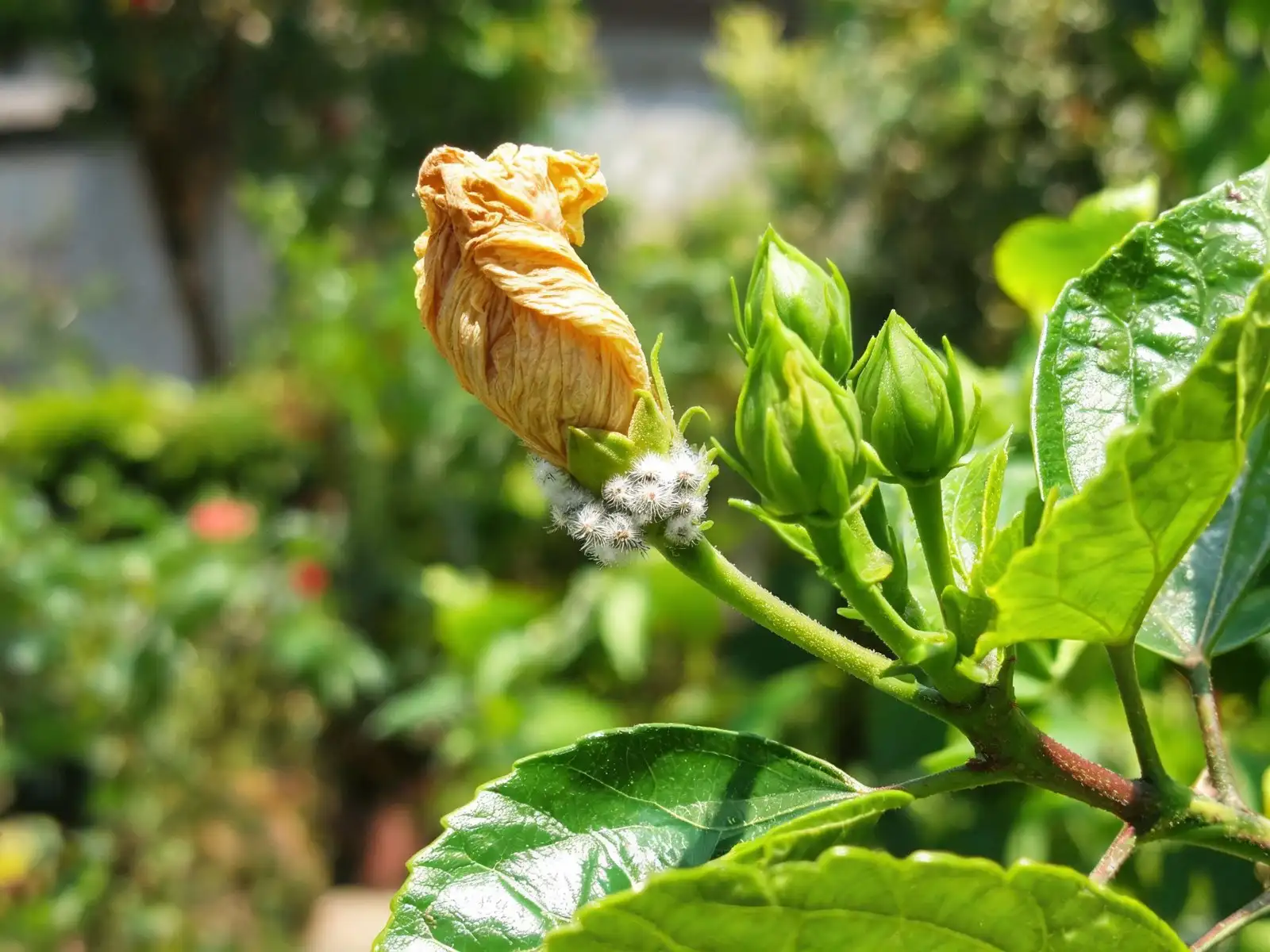
Sap-sucking pests cluster on soft new growth and buds, drain the sap, and the weakened buds yellow and fall.
- Mealybugs look like small white cotton clumps in leaf joints and at the base of buds. Leaves may be sticky and ants often walk over them.
- Aphids are tiny soft green or black insects packed on bud tips and new leaves.
- Thrips are very small, thin insects that hide inside buds. Infested buds show brown, scratchy marks and often drop or open deformed.
How to fix it
- Hose the plant with a strong jet of water to knock off aphids and loose mealybugs.
- Remove heavily infested buds and shoots and throw them in the bin, not in compost.
- Spray neem oil: about 5 ml neem oil plus a few drops of liquid soap in 1 litre of water. Shake well, spray all sides of leaves and buds in the evening, and repeat every 5–7 days for 3–4 rounds.
- Test on a few leaves first and wait a day before spraying the whole plant.
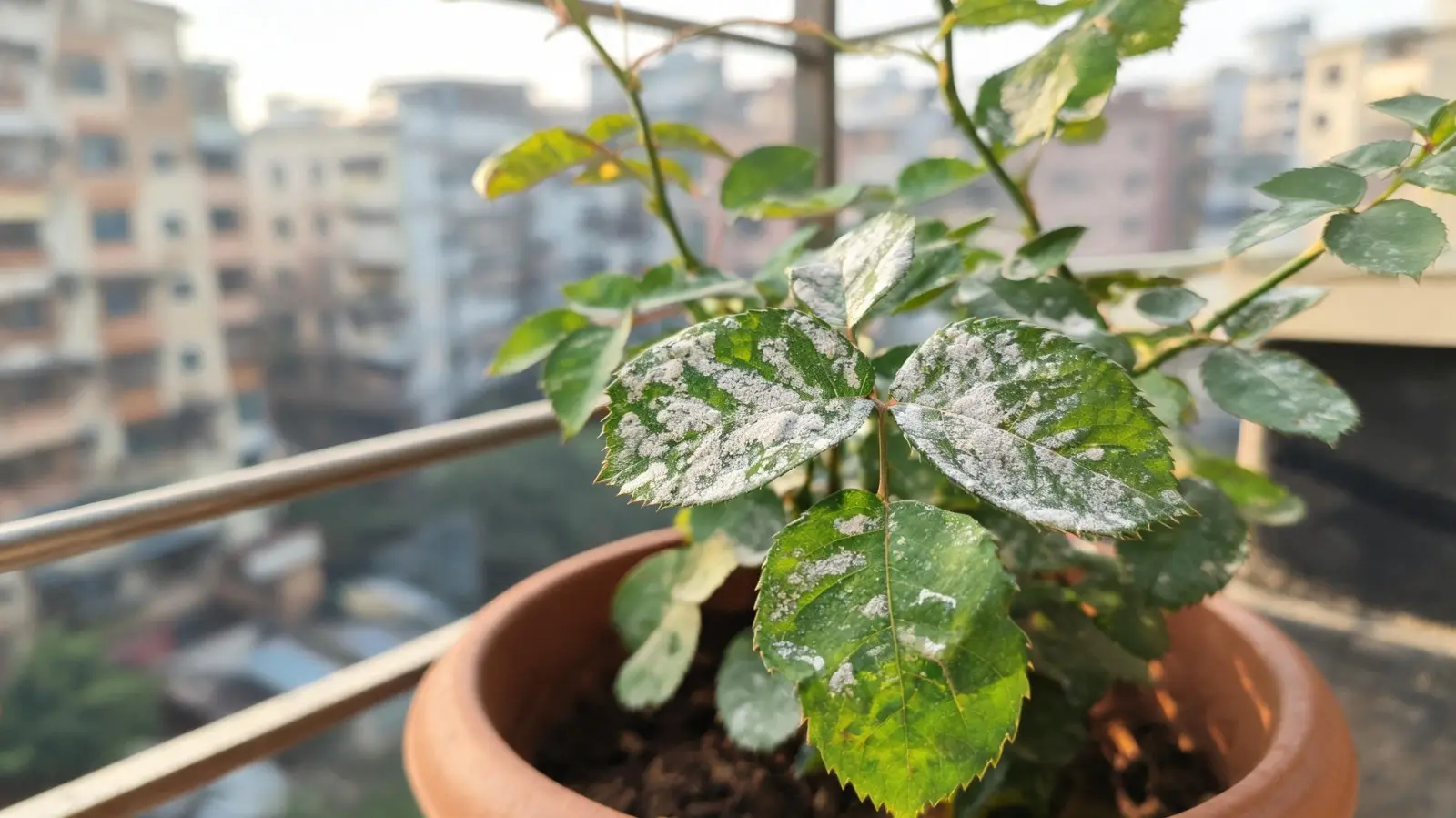
If the white clumps keep coming back, our guide to white powder on plant leaves shows how to tell mealybugs apart from powdery mildew and treat each one.
Safety note: if you offer hibiscus flowers in puja, use flowers that opened after spraying or rinse them well, and keep sprays away from children and pets.
5. Hibiscus bud midge
If the fallen buds are yellow and you find tiny white or pale maggots when you break them open, the cause is likely the hibiscus bud midge. The small fly lays eggs inside young buds, the larvae feed inside, and the bud yellows and drops. The larvae then drop into the soil and the cycle continues.
How to fix it
- Pick up every fallen bud daily, and also pick off yellowing buds still on the plant. Seal them in a bag and throw them in the bin.
- Keep doing this for a few weeks to break the cycle. Sprays on the outside of buds do little because the larvae are inside.
6. Wrong or too much fertiliser
Hibiscus needs regular feeding in the growing season, but the type matters. Too much nitrogen (such as heavy urea doses) gives leafy growth and fewer buds, and too much fertiliser at once can burn roots, which leads to bud drop.
How to fix it
- Feed a balanced or flowering-plant fertiliser in small doses during the warm growing months, following the pack dose. Use less in the coldest months when growth slows.
- Never feed a plant whose soil is dry; water first.
- If you have overfed, flush the pot with plenty of water to wash out extra salts.
For a simple overview of organic and chemical options, see our guide to the best fertiliser for home garden plants.
Step-by-step: how to stop hibiscus bud drop
- Look closely under leaves and at bud bases for pests, and break one fallen bud open to check for maggots.
- Check the soil. Push a finger 2–3 cm in. Dry? Water deeply. Wet and smelly? Let it dry out and check drainage.
- Clean up fallen and yellow buds every day.
- Treat pests with a water jet and neem oil spray in the evening, repeated every 5–7 days.
- Fix the light. Give it a spot with at least 6 hours of direct sun and keep it there.
- Feed gently once the plant looks stable.
- Be patient. Existing weak buds may still drop; judge success by the new buds that form over the next few weeks.
Check your plant's problem from a photo
Bud drop often has more than one cause, for example dry soil plus mealybugs. Upload a photo of the buds and leaves to our free plant diagnosis tool to get likely causes and next steps. If you are not sure your plant is a hibiscus or which type it is, our plant identifier can tell you from a single photo.
Frequently asked questions
Why are my hibiscus buds turning yellow and falling off?
Yellow buds that fall are usually caused by stress from uneven watering, low sun or a sudden change in weather. If you find tiny maggots inside the fallen buds, hibiscus bud midge is the cause; collect and bin the buds daily.
Can overwatering cause hibiscus bud drop?
Yes. Soil that stays wet for days starves roots of air, and the plant reacts by dropping buds and yellow leaves. Water only when the top 2–3 cm of soil is dry and make sure the pot drains freely.
Should I remove fallen hibiscus buds?
Yes. Pick them up daily and bin them; this removes pests hiding inside, such as midge larvae and thrips.
Is it normal for hibiscus to drop buds in winter?
Some bud drop is normal when nights turn cool, and in colder parts of India hibiscus flowers less in December and January. Keep it in full sun, water less often and avoid heavy feeding until the weather warms up.
Which fertiliser helps hibiscus hold its buds?
A balanced or flowering-plant fertiliser in small, regular doses works better than heavy nitrogen feeds. Compost or vermicompost is a safe organic option.