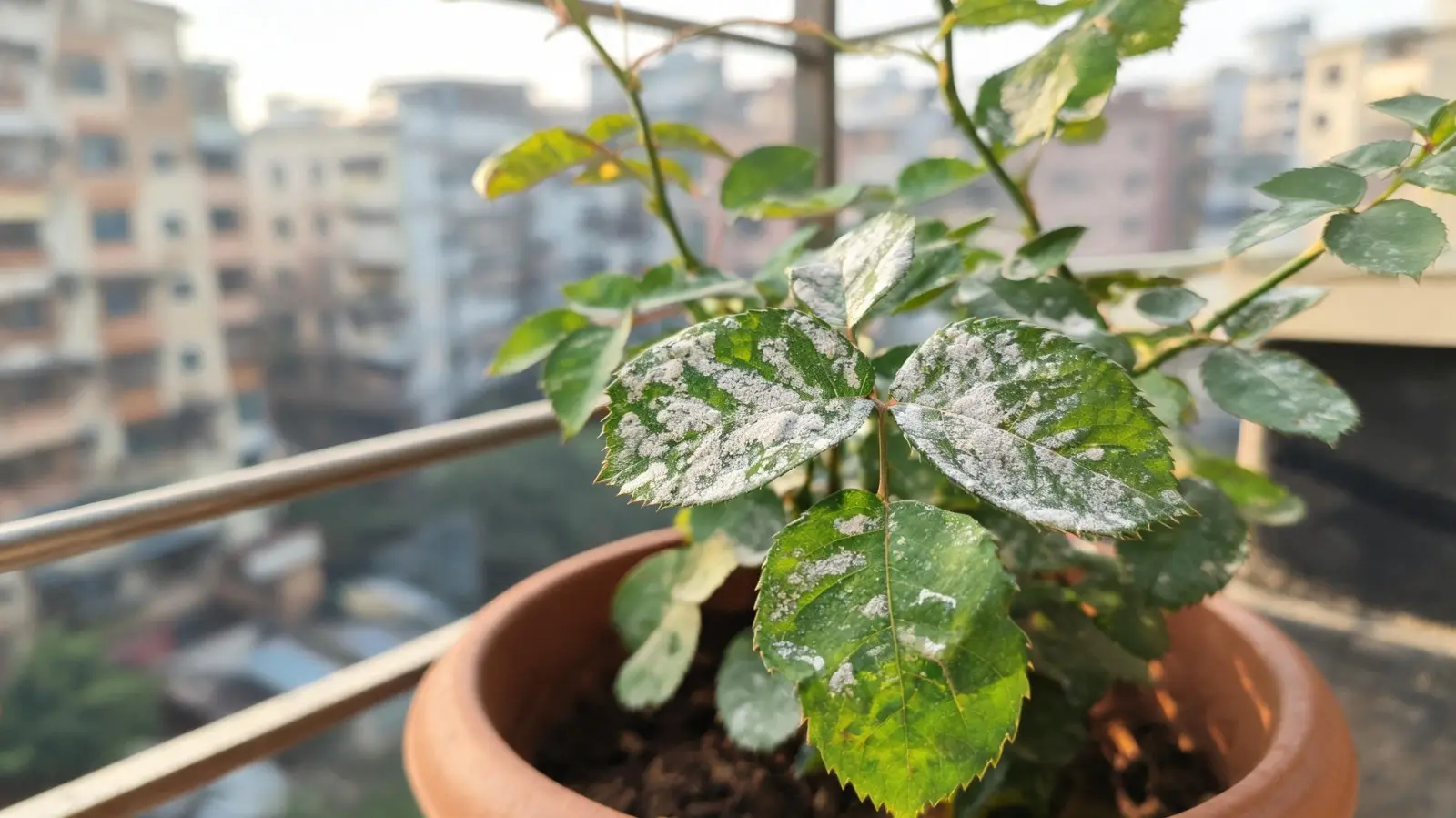
Short answer: white powder on plant leaves is most often powdery mildew, a fungal disease that looks like flour dusted on the leaf and spreads fast in the dry days and cool nights of October to February. If the white stuff is cottony and sits in leaf joints, it is usually mealybugs; if tiny white insects fly up when you touch the plant, it is whiteflies; and if it is flat white spots that wipe off cleanly and never spread, it is just hard-water or spray residue.
Not sure which one you have? Take a clear, close photo of an affected leaf (top and underside) and check it with our free AI plant diagnosis tool, then use the table below to confirm.
What the white powder means: symptoms and causes
| What you see | Most likely cause |
|---|---|
| Flour-like white or grey patches, mostly on the upper side of leaves, rub off as dust but come back and spread to new leaves | Powdery mildew (fungus) |
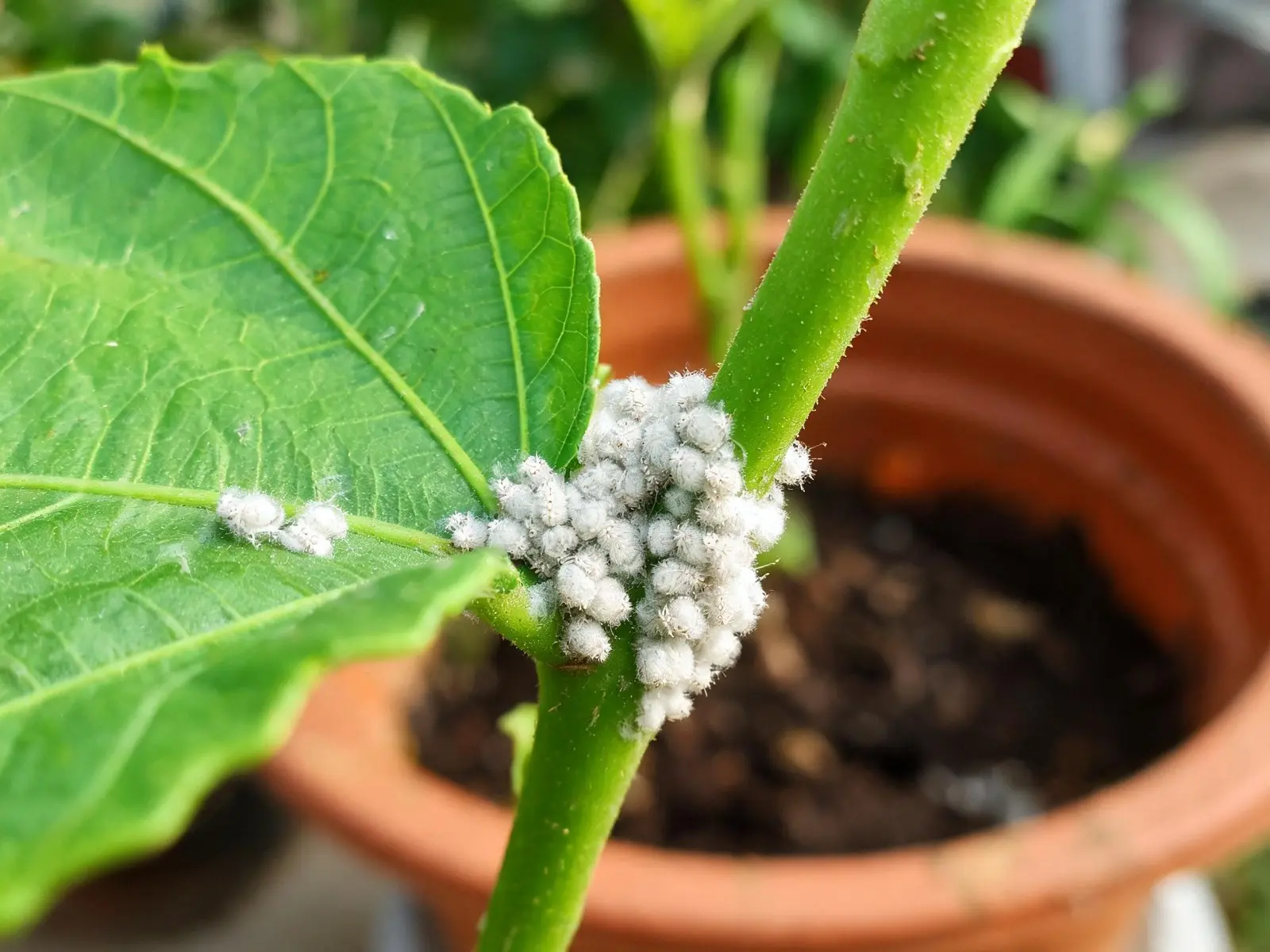
| White, cottony or waxy clumps in leaf joints, along stems and under leaves; sticky leaves; ants on the plant | Mealybugs |
| Tiny white insects under the leaves that fly up in a cloud when you shake the plant; leaves turning pale or yellow | Whiteflies |
| Flat, chalky white spots or rings that wipe off with a damp cloth and do not spread; leaves otherwise healthy | Hard-water, fertiliser or spray residue |
| White fuzzy growth on the soil surface, not on the leaves | Mould on soil (a different problem, see below) |
Quick test: gently rub the white spot with a fingertip. Powdery mildew comes off as fine dust and leaves the leaf slightly pale underneath. Mealybugs feel soft and cottony and smear. Mineral residue feels gritty and the leaf below looks completely normal.
1. Powdery mildew
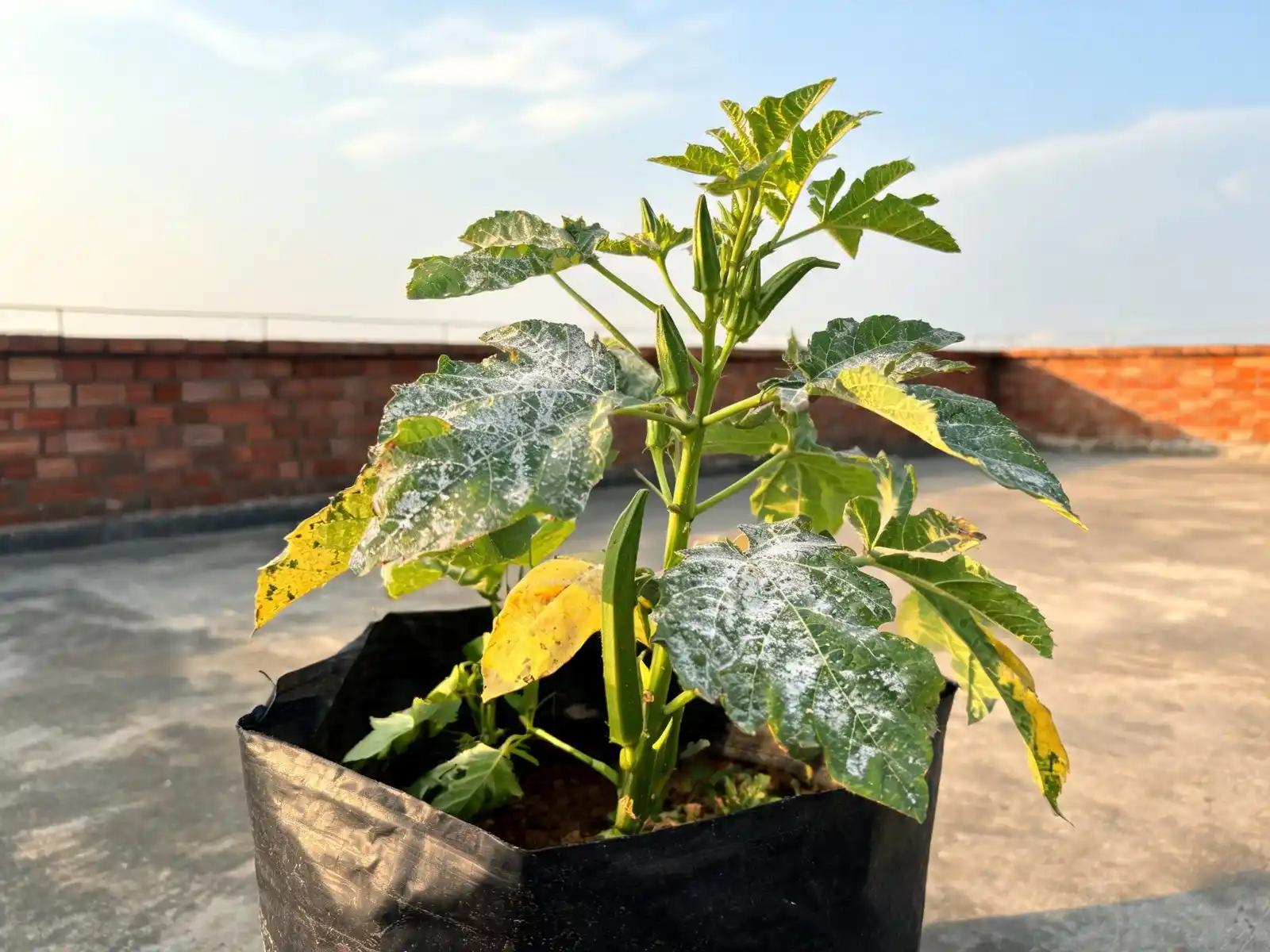
Powdery mildew is one of the most common leaf diseases in Indian home gardens, caused by fungi that grow on the leaf surface. Unlike most fungal diseases, it does not need rain or wet leaves to spread. It does best when days are dry and warm, nights are cool and humid, the plant is crowded and air does not move much, which is exactly the weather many parts of India get after the monsoon and through winter.
Plants that get it often at home include rose, bhindi (okra), chilli, peas, zinnia, and gourds such as lauki, pumpkin and cucumber. It starts as small round white spots that join up; badly affected leaves turn yellow, dry and fall, and the plant gives fewer flowers or vegetables.
How to fix it
- Remove the worst leaves: cut off leaves that are mostly white or yellow and throw them in the bin, not in your compost pit. Clean your scissors afterwards.
- Improve air flow: space pots apart, prune crowded inner branches, and move the plant to a spot with more sun if it is in shade.
- Water the soil, not the leaves, and water in the morning so the plant is not sitting damp and cool all night.
- Spray a home remedy on lightly affected plants: about 1 teaspoon of baking soda in 1 litre of water with a few drops of liquid soap, or neem oil at about 5 ml per litre with a few drops of liquid soap to mix it. Spray both sides of the leaves in the evening, once a week, for 3 to 4 weeks.
- For a bad infection, use a fungicide sold for powdery mildew at a garden shop (wettable sulphur is a common choice) and follow the label exactly. Do not use sulphur in hot afternoon sun or within a couple of weeks of an oil spray like neem, because the mix can burn leaves.
Test any spray on a few leaves first. Sprays will not turn already white leaves green again, so judge success by new leaves staying clean.
2. Mealybugs
Mealybugs are small, soft insects covered in a white waxy coat, so a colony looks like bits of cotton. They hide in leaf joints, on new shoots and under leaves, sucking sap. They are very common on hibiscus, croton, jade, curry leaf, money plant and many succulents. Signs include sticky leaves, black sooty mould, ants on the stem, and yellowing, curling leaves. Mealybug sap-sucking is also one of the reasons a curry leaf plant's leaves turn yellow.
How to fix it
- Remove what you can see: dab each clump with a cotton bud dipped in rubbing alcohol (isopropyl alcohol), or wash them off with a strong jet of water.
- Spray neem oil (about 5 ml per litre with a few drops of liquid soap) or a ready-made insecticidal soap, covering leaf joints and undersides, in the evening.
- Repeat every 5 to 7 days for at least 3 to 4 rounds, because eggs keep hatching after the first spray.
- If they keep coming back, check the roots; some mealybugs live there.
3. Whiteflies
Whiteflies are tiny white winged insects that sit on the underside of leaves. You often notice them only when you brush the plant and a small white cloud flies up. They suck sap, leave sticky honeydew, and make leaves pale, yellow or mottled. Tomato, chilli, brinjal and hibiscus are common targets; see our guide on growing chillies in pots for regular pest checks.
How to fix it
- Hang yellow sticky traps near the plant to catch the adults.
- Spray the undersides of the leaves with water to knock them off, then spray neem oil or insecticidal soap in the evening.
- Repeat weekly for a few weeks and remove heavily infested lower leaves.
4. Hard-water or spray residue
If you mist your plants with tap or borewell water, or spray fertiliser or neem on leaves, the water dries and leaves behind white mineral spots or rings. It is not a disease and does not spread.
How to fix it
- Wipe the leaves gently with a soft cloth dipped in plain water (a few drops of lemon juice in the water help with stubborn spots), then wipe with clean water.
- Use RO, filtered or collected rainwater for misting, or stop misting leaves altogether.
- Water at the base of the plant instead of over the leaves.
Is it on the leaves or on the soil?
White fluffy growth on top of the potting mix is usually harmless mould in damp soil. It is fixed by letting the soil dry and improving drainage, not by spraying leaves. See how to treat white fungus in plant soil for the full steps.
Step-by-step: what to do today
- Look closely at both sides of the leaves and the leaf joints, and do the rub test described above.
- Move the affected pot away from other plants.
- Remove badly affected leaves and clear fallen leaves from the pot.
- Treat the right cause: baking soda or neem spray for powdery mildew, alcohol dabbing and neem for mealybugs, sticky traps and neem for whiteflies, a wipe with plain water for residue.
- Fix the conditions: more sun and air, morning watering at the soil.
- Repeat the treatment every week for 3 to 4 weeks and check new leaves. If new growth stays clean, the problem is under control.
Safety notes: spray in the evening, not in strong sun. If you use tulsi, curry leaf, mint or vegetable leaves for cooking, tea or puja, wash them well after any spray and wait a few days before picking. Keep sprays and rubbing alcohol away from children and pets.
Check your plant's problem from a photo
White spots can look alike at first. Upload a photo to our free plant diagnosis tool to get the likely cause and treatment steps in a few seconds. Not sure of the plant name? Find it with the free plant identifier.
Frequently asked questions
Is white powder on leaves harmful to the plant?
Powdery mildew, mealybugs and whiteflies all weaken the plant over time, so treat them early. Hard-water spots are harmless.
Can a leaf covered in powdery mildew recover?
A heavily coated leaf usually does not turn fully green again. Remove it and protect new growth with air flow, sun and a weekly spray.
Does powdery mildew spread to other plants?
Yes, its spores travel through the air to nearby plants. Keep affected pots apart and treat early.
Is baking soda spray safe for all plants?
Used weak (about 1 teaspoon per litre) it is safe for most plants, but too strong a mix or too many sprays can burn leaves and build up salt in the soil. Test on a few leaves first and do not spray more than once a week.
Why does powdery mildew come back every winter?
Dry days and cool, humid nights suit it, and spores survive on fallen leaves and nearby plants. Clearing fallen leaves, pruning for air flow and starting a weekly neem spray early in the season reduces repeat attacks.
My rose has white powder and yellow leaves. Are they related?
They can be, because powdery mildew makes affected leaves turn yellow and drop. But roses also get yellow leaves from watering, feeding and other problems, so read our guide on why rose leaves turn yellow to rule those out.