Short answer: rose leaves usually turn yellow because of black spot (a fungal disease that is very common after the monsoon), too much water in a pot that drains poorly, too little direct sun, a lack of nutrients, or spider mites. A few yellow leaves at the bottom of the plant are normal. Yellow leaves with black spots, wet soil or fine webbing need action.
If you are not sure which problem your plant has, take a clear photo of a few affected leaves (top and underside) and check it with our free AI plant diagnosis tool. Then match what you see with the table below.
Symptoms and their likely causes
| What you see | Most likely cause |
|---|---|
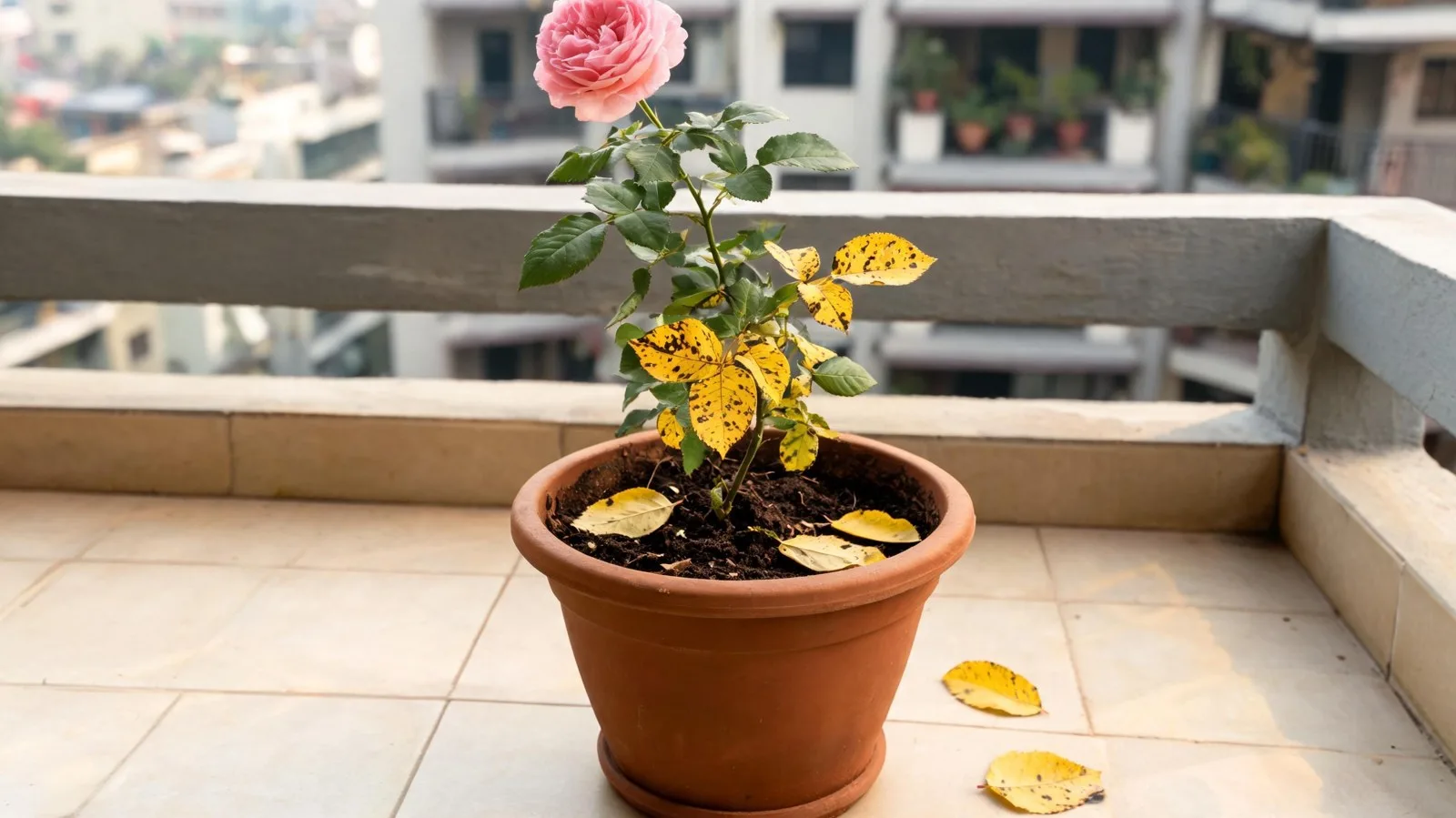
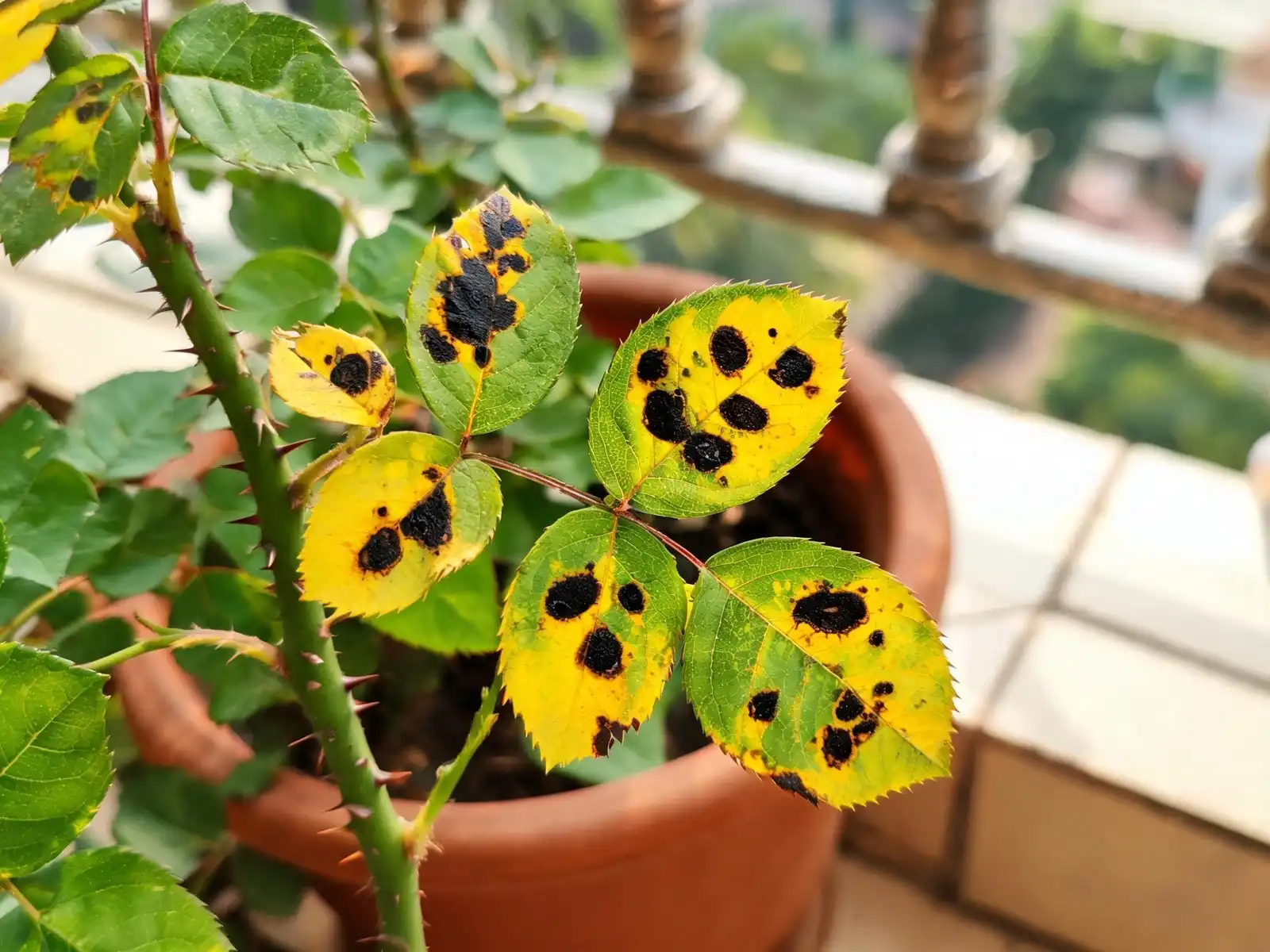
| Round black spots with fuzzy edges, yellow around the spots, leaves falling from the bottom up | Black spot (fungal disease) |
| Soft yellow leaves, soil wet for days, water standing in the saucer | Overwatering or poor drainage |
| Lower leaves yellow and crispy, soil pulling away from the pot edge | Underwatering |
| Long thin stems, pale leaves, very few flowers | Not enough direct sunlight |
| Older leaves evenly pale or yellow, slow growth, small new leaves | Nitrogen deficiency or old, exhausted soil |
| New leaves yellow but the veins stay green | Iron deficiency, often from alkaline soil or hard water |
| Fine yellow speckles on leaves, dusty look, thin webbing under leaves | Spider mites |
| A few bottom leaves yellow after pruning, repotting or buying from a nursery | Normal shedding or transplant shock |
1. Black spot disease
Black spot is the most common cause of yellow rose leaves from the monsoon into early winter. It is caused by a fungus that spreads when water splashes from infected leaves or soil onto healthy ones. The signs are clear: round black or dark brown spots with feathery edges, yellowing around the spots, and then the whole leaf falls. It usually starts on the lower leaves and moves up.
How to fix it
- Pick off every spotted or yellow leaf, and collect fallen leaves from the soil surface. Throw them in the bin, not in your compost.
- Water the soil at the base of the plant, not over the leaves, and water in the morning so any splashed leaves dry quickly.
- Give the plant space so air can move around it.
- As a home option, spray neem oil (about 5 ml per litre of water with a few drops of liquid soap) on both sides of the leaves in the evening, once a week. It works best as prevention and on mild infections.
- For a severe infection, use a garden fungicide labelled for black spot on roses and follow the label exactly. Keep all sprays away from children and pets.
For other humid-weather problems, see our guide to monsoon diseases in plants and how to prevent them.
2. Overwatering and poor drainage
Roses like regular water but hate standing in wet soil. In a pot with no drainage hole, heavy clay-like soil, or a saucer that is always full, the roots cannot breathe. The leaves turn soft and yellow, often starting at the bottom,.
How to fix it
- Push a finger into the soil. Water only when the top 2–3 cm feel dry.
- Make sure the pot has a drainage hole and empty the saucer 15–20 minutes after watering.
- If the soil smells sour or stays muddy, repot into a fresh, loose mix (garden soil, compost and some sand or cocopeat) and cut off any black, mushy roots.
3. Underwatering
Here the lower leaves turn yellow, then brown and crispy, and the soil pulls away from the pot edge. Small pots on sunny terraces dry out fastest.
How to fix it
- Water slowly until water comes out of the drainage hole, so the whole root ball gets wet.
- Add a thin layer of mulch (dry leaves or cocopeat) on the soil to slow drying.
4. Not enough direct sunlight
Roses need at least 6 hours of direct sun a day to stay healthy and flower well. In a shaded balcony or indoors, they grow long, weak stems, the leaves turn pale and yellow, and flowers are few.
How to fix it
- Move the pot to your sunniest spot, ideally one with morning sun.
- Roses do not do well indoors.
5. Nutrient deficiency
Roses are heavy feeders, and potted roses use up the nutrients in their soil quickly. Two patterns are common:
- Nitrogen deficiency: older leaves turn evenly pale or yellow, new leaves are small and growth is slow.
- Iron deficiency: new leaves turn yellow while the veins stay green. This often happens in alkaline soil or when the plant gets hard water for a long time.
How to fix it
- Feed with well-rotted compost or vermicompost: mix a handful or two into the top layer of soil once a month during the growing season.
- For faster results, use a balanced fertilizer or a rose fertilizer at the dose on the pack. Too much fertilizer burns roots.
- For iron deficiency, use a chelated iron or micronutrient product as directed on the label, and use filtered or rain water if your tap water is very hard.
If you want to compare organic and ready-made options, read our guide to the best fertilizers for home garden plants.
6. Spider mites
Spider mites are tiny pests that suck sap from the underside of leaves. They like warm, dry weather. The leaves get fine yellow speckles, look dusty and dull, then turn yellow and drop. In a bad case you will see thin webbing under the leaves and at the tips of shoots.
How to fix it
- Spray the underside of the leaves with a strong jet of plain water every few days. Mites hate being washed off.
- Spray neem oil (about 5 ml per litre with a few drops of liquid soap) in the evening, covering the undersides well. Repeat weekly for 3–4 weeks.
7. Normal leaf shedding and transplant shock
Not every yellow leaf is a problem. Roses naturally shed some old leaves at the bottom of the plant. A plant that was just pruned, repotted or bought from a nursery may also drop a few leaves. If the new growth at the top looks healthy and there are no spots, pests or wet soil, there is nothing to treat.
How to fix it
- Remove the yellow leaves, keep watering normally and give the plant full sun.
- Wait two to three weeks before repotting or feeding a newly bought plant.
Step-by-step: how to revive a rose plant with yellow leaves
- Check the leaves. Look at both sides for spots, speckles or webbing.
- Check the soil. Push a finger 2–3 cm in. Wet and smelly means overwatering; bone dry means underwatering.
- Clean the plant. Remove all spotted and fully yellow leaves and clear fallen leaves from the pot.
- Fix the spot. Make sure the plant gets at least 6 hours of direct sun and has space for air to move around it.
- Correct the watering. Water at the base only when the top soil is dry, and keep the saucer empty.
- Treat the cause. Spray neem oil for black spot or mites, or feed the plant if it shows signs of nutrient deficiency.
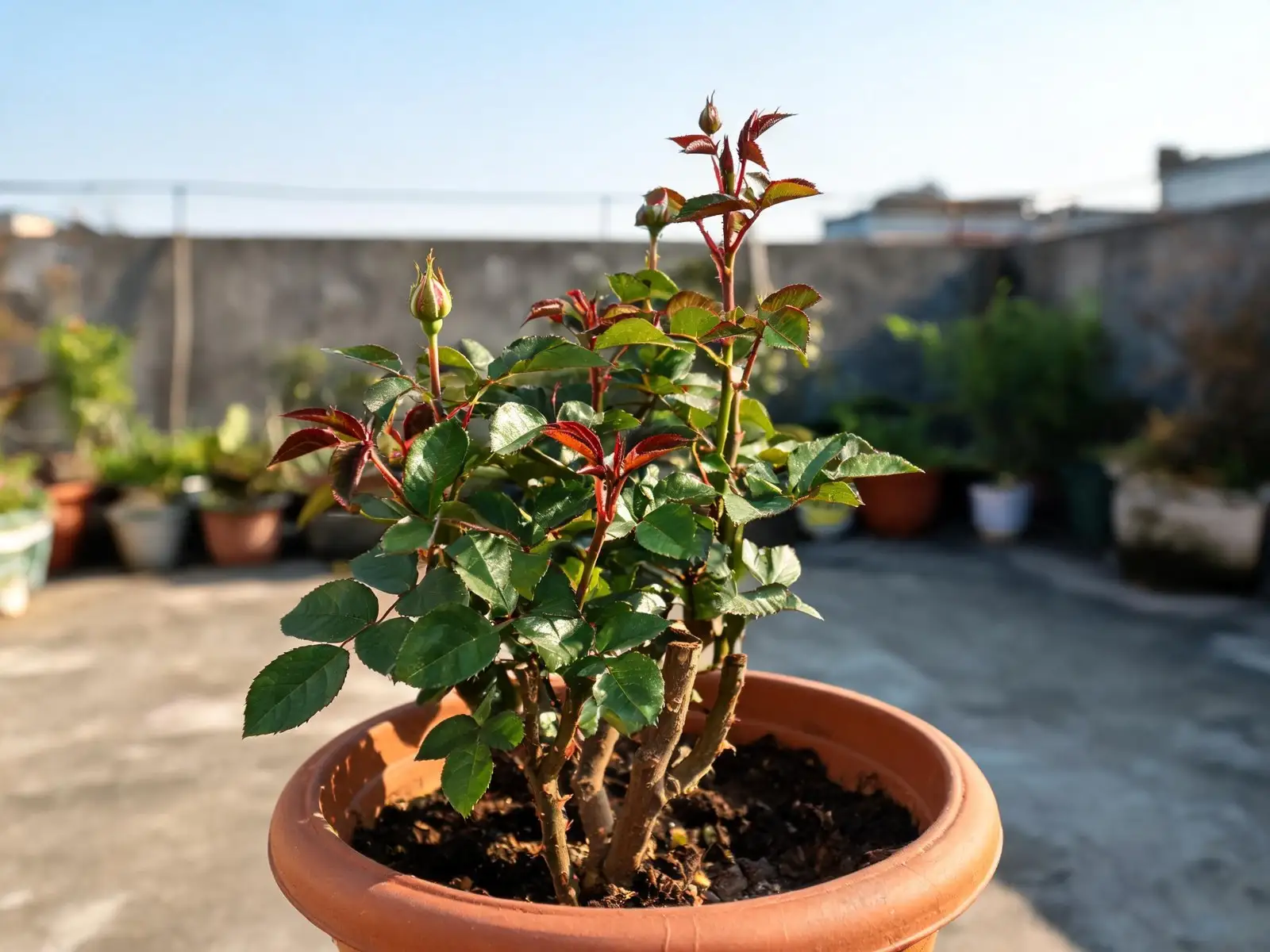
- Watch the new growth. Old yellow leaves will not turn green again. Healthy new red-green shoots in two to four weeks mean the plant is recovering.
If many plants turn yellow at once, the cause is often water, soil or season. Our guide on how to fix yellow leaves on plants naturally covers the general checks.
Check your plant's problem from a photo
Black spot, mites and nutrient problems can look alike in the early stage. Upload a clear photo of your rose leaves to our free plant diagnosis tool to get the likely cause and care steps in a few seconds. For other balcony plants you cannot name, start with our free plant identifier so you can look up the right care for each one.
Frequently asked questions
Should I remove yellow leaves from my rose plant?
Yes. Remove leaves that are fully yellow or have black spots. Spotted leaves can spread black spot to healthy ones. Throw them away instead of composting them.
Can yellow rose leaves turn green again?
A leaf that has turned fully yellow will not turn green again. Once you fix the cause, the new leaves that grow should be healthy and green.
How often should I water a potted rose plant?
There is no fixed schedule. Water when the top 2–3 cm of soil feel dry, and water until it drains from the bottom. In cool weather this is much less often than in summer.
Is neem oil safe to use on roses?
Yes, when it is diluted (about 5 ml per litre with a few drops of liquid soap). Spray in the evening, not in strong midday sun,. Keep the spray away from children and pets.
Why are my rose leaves turning yellow and falling off after the rains?
The most likely cause is black spot, which spreads quickly in wet, humid weather. Remove spotted leaves, let the soil dry a little between waterings, and spray neem oil weekly as prevention.