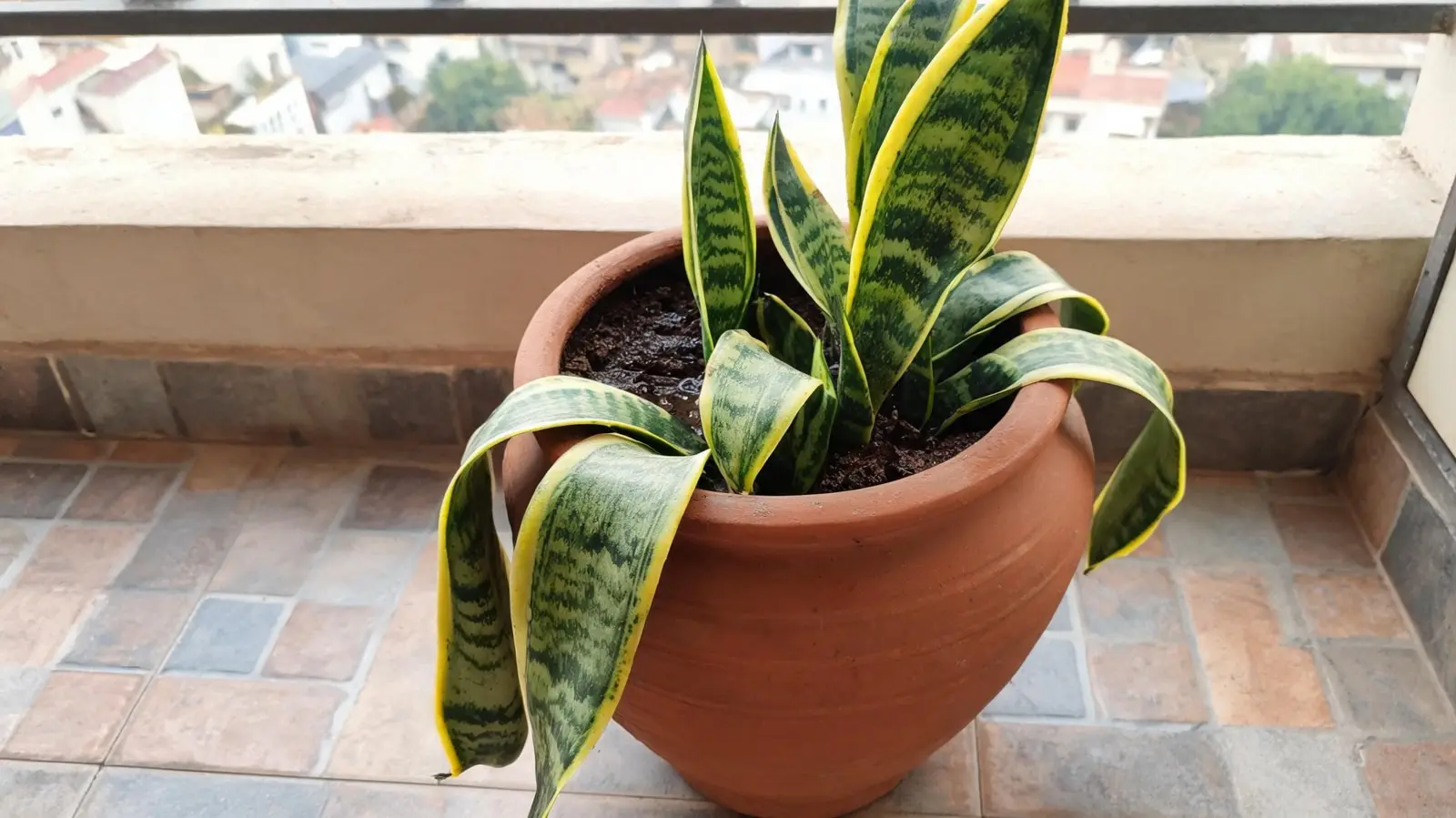
Short answer: snake plant leaves usually fall over because of overwatering and root rot, which makes the base of the leaf soft so it can no longer hold the leaf up. Other common causes are too little light (weak, stretched leaves that lean), long dry spells (thin, wrinkled, curling leaves), cold damage in winter, and a pot or soil that stays wet. Check the base of the fallen leaf first: soft and mushy means rot, firm but wrinkled means thirst.
If you are not sure what you are looking at, take a clear photo of the plant and the base of the leaves and check it with our free AI plant diagnosis tool. Then match the signs with the table below.
Symptoms and their likely causes
| What you see | Most likely cause |
|---|---|
| Leaf base soft, mushy or yellow-brown, soil wet for many days, bad smell from the soil | Overwatering and root rot |
| Leaves thin, wrinkled or curling inward, soil bone dry and pulling away from the pot | Underwatering for too long |
| Long, pale, floppy leaves that lean toward a window, slow new growth | Not enough light |
| Leaves fall over soon after a cold night, with soft, water-soaked or scarred patches | Cold damage |
| Whole plant tips over, roots circling the pot or a very heavy top on a small pot | Root-bound plant or pot too small |
| Plant wobbles in the pot, heavy wet soil, no drainage hole | Wrong pot or heavy soil holding water |
1. Overwatering and root rot
This is the most common reason snake plants droop. The plant stores water in its thick leaves, so when the soil stays wet the roots run short of air and rot. The rot moves into the leaf base, and a leaf with a rotten base bends or falls over, often at soil level. The risk rises from October, when growth slows and the soil dries much more slowly.
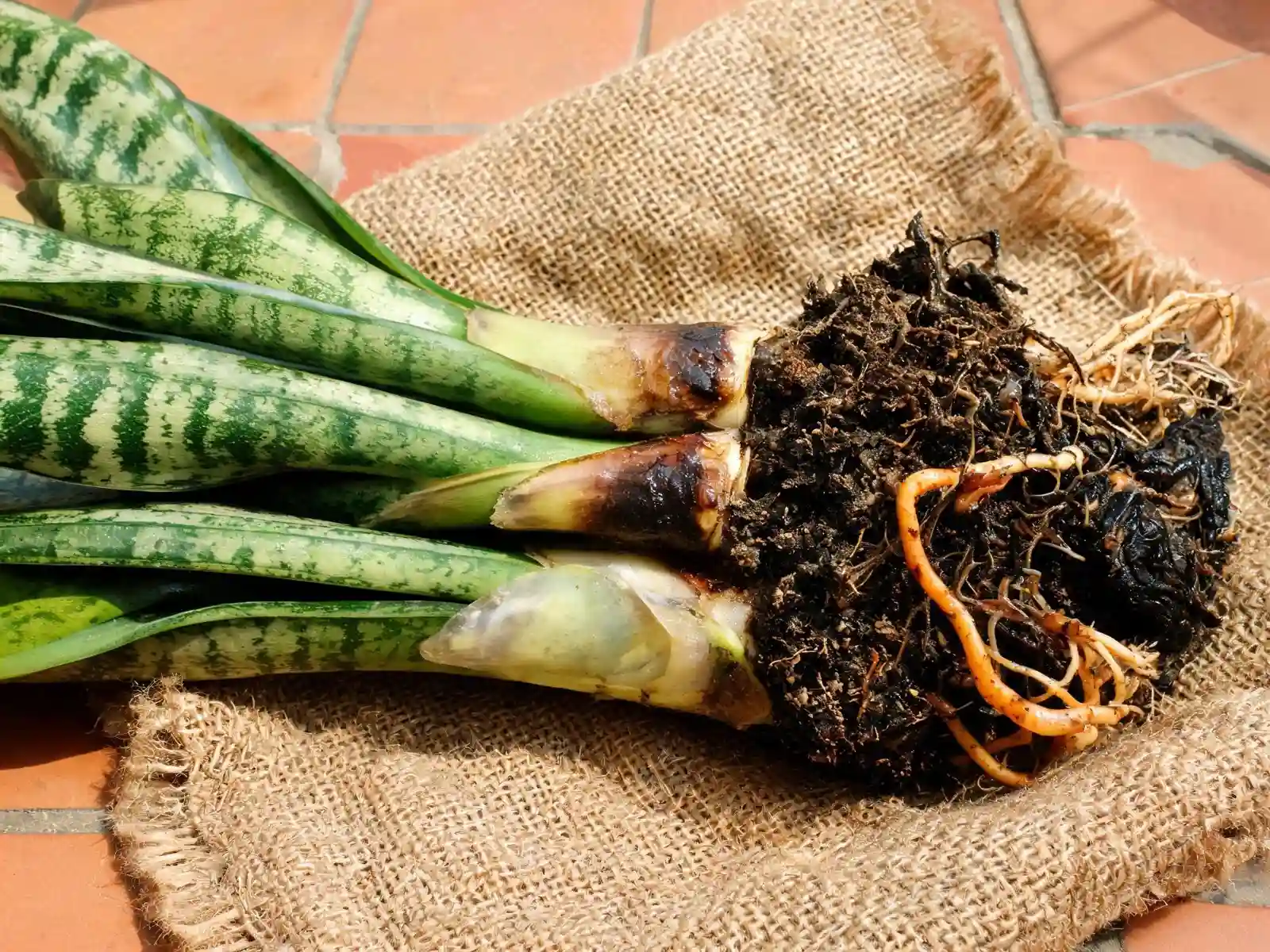
Signs: the leaf base feels soft when pressed, looks yellow, brown or translucent, and the soil smells sour. If you also see white mould on the soil surface, our guide on how to treat white fungus in plant soil explains how to deal with it.
How to fix it
- Stop watering straight away.
- Unpot the plant and shake off the wet soil. Healthy roots are firm and light coloured; rotten roots are dark and soft.
- Cut off rotten roots and any leaf with a mushy base using a clean blade.
- Let the cut plant sit in shade for a day or two so the cuts dry.
- Repot in fresh, dry, fast-draining soil in a pot with a drainage hole. Do not water for about a week, then water lightly.
If no healthy roots are left, save the plant with cuttings from the firm upper parts of the leaves (see the steps below).
2. Underwatering for too long
Snake plants handle dry soil well, but after a very long dry spell, especially in heat or a small pot, the leaves use up their stored water. They turn thin, wrinkled and curl inward, and tall leaves may bend. Unlike rot, the leaf base stays firm.
How to fix it
- Water deeply until water runs out of the drainage hole, then empty the saucer.
- After that, water when the soil is fully dry, not on a fixed date. Sharply bent leaves may not stand up again.
3. Not enough light
Snake plants survive low light, but they do not grow well in it. In a dark corner, new leaves grow long, thin and pale, lean toward the window and flop easily. The soil also dries more slowly, which raises the risk of rot.
How to fix it
- Move the plant to a spot with bright, indirect light, such as near an east- or north-facing window, or a shaded balcony corner.
- Gentle morning sun is fine, but move it into stronger light gradually over one or two weeks so the leaves do not scorch.
- Turn the pot every couple of weeks so the leaves grow straight.
If you are looking for plants for darker rooms, see our list of indoor plants for low-light homes.
4. Cold damage in winter
Snake plants are tropical. Temperatures below about 10°C can damage the leaves, and frost kills them. In much of North India, plants on open balconies face cold nights in December and January. Cold-damaged leaves turn soft and water-soaked, then fall over, and wet soil makes it worse.
How to fix it
- Bring the plant indoors or into a sheltered spot on cold nights, away from open windows and cold walls.
- Water very little in winter; cold, wet soil is the most dangerous combination.
- Cut off leaves that have turned mushy. Firm leaves with only small scars can stay.
For more winter tips, read our guide on winter care for indoor plants in India.
5. Wrong pot, heavy soil or a root-bound plant
A pot without a drainage hole, or heavy clay-like soil, keeps roots soaked even with careful watering, and a pot much bigger than the root ball holds extra wet soil. On the other side, a plant that has filled its pot with roots can become top-heavy and tip over.
How to fix it
- Use a pot with at least one drainage hole. Terracotta (clay) pots dry faster than plastic, which suits snake plants.
- Choose a pot only a little wider than the root ball.
- Use a loose, fast-draining mix, for example garden soil mixed with coarse sand and perlite, or a ready cactus and succulent mix.
- If roots are circling the pot or pushing it out of shape, divide the plant or move it to the next size up. Spring and summer are the best time for this.
Our guide to the best pots for indoor plants compares pot materials in more detail.
How to save a snake plant with falling leaves: step by step
- Check the base of the fallen leaves. Press gently. Soft or mushy means rot; firm means the leaf bent for another reason.
- Check the soil. Push a finger a few centimetres in. Wet soil and soft leaves mean overwatering; dry soil and wrinkled leaves mean thirst.
- Remove leaves that will not recover. Cut sharply folded or rotten leaves off at soil level with a clean blade.
- Treat the roots if needed. For rot, unpot the plant, trim the bad roots, dry it for a day or two and repot in fresh, dry, gritty soil.
- Support firm leaves. Hold leaning but healthy leaves up with a soft tie around the clump.
- Fix the light. Move the plant to bright, indirect light and turn it every couple of weeks.
- Water only when the soil is fully dry. In winter this is often only every few weeks indoors. Always let excess water drain away.
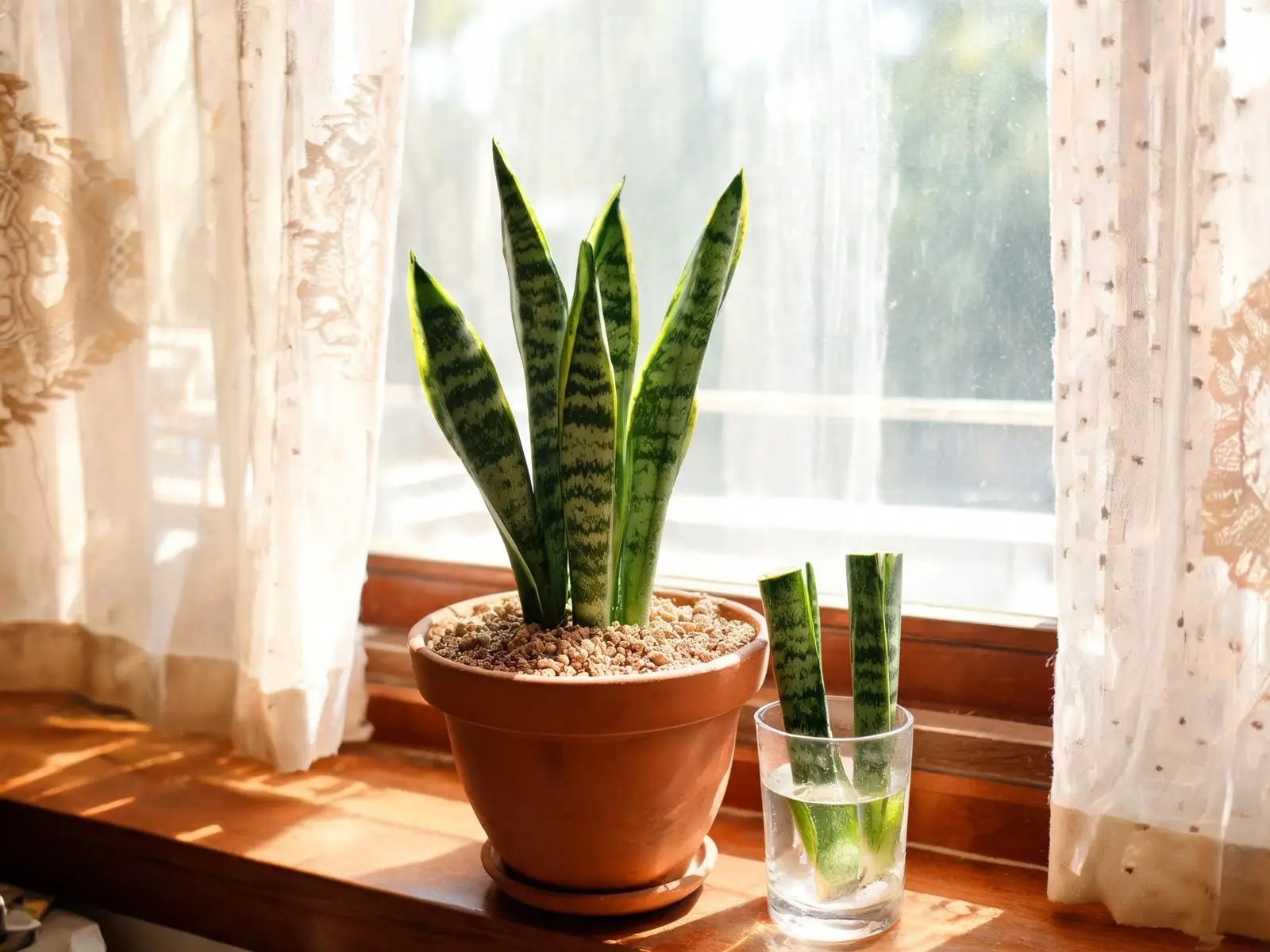
- Propagate the healthy parts. Cut a firm leaf into pieces about 8–10 cm long, note which end was the bottom, let the cuts dry for a day, and stand them bottom end down in water or moist sandy soil. Roots take several weeks. Leaf cuttings of yellow-edged varieties usually lose the yellow edge; dividing the roots keeps it.
Check your plant's problem from a photo
Drooping from rot, thirst or cold can look alike. Upload a photo to our free plant diagnosis tool for a quick idea of the problem. Not sure it is a snake plant? The plant identifier can tell you the name first.
Safety note: snake plants are mildly toxic to cats and dogs if chewed, so keep the plant and any cut leaves out of reach of pets and small children.
Frequently asked questions
Will a fallen snake plant leaf stand up again?
Usually not. A sharply bent or rotted leaf stays down. Cut it off, use firm healthy parts for cuttings, and fix the cause so new leaves grow straight.
How often should I water a snake plant?
Water only when the soil has dried out completely. There is no fixed schedule: in hot summer weather that may be every couple of weeks, while indoors in winter it is often only every few weeks. Always use a pot with a drainage hole and empty the saucer after watering.
Why are my snake plant leaves falling over but not yellow?
Green leaves that flop are often caused by low light (long, weak leaves) or by long dry spells (thin, wrinkled leaves). Rot can also start at the base before the rest of the leaf turns yellow, so always press the base to check whether it is soft.
Should I keep my snake plant outside in winter?
In places where nights stay mild, a sheltered balcony is fine. Where nights drop below about 10°C, bring the plant indoors or into a protected spot and keep the soil on the dry side.