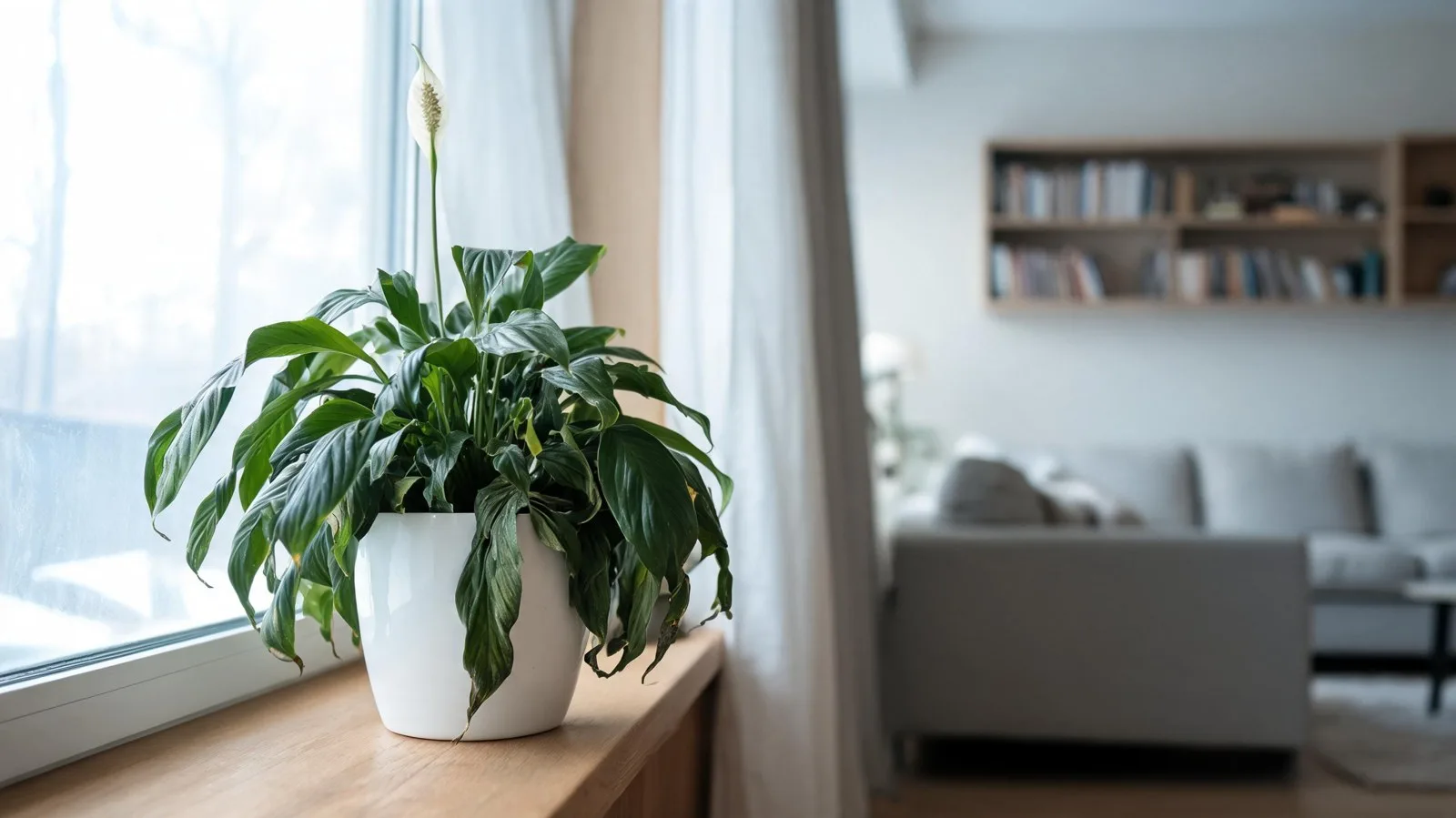
Short answer: a drooping peace lily is usually thirsty, and it will stand back up within a few hours of a thorough watering. If the soil is already wet and it still droops, the problem is the roots: overwatering and root rot, a cold draft, or a pot it has outgrown. Feel the soil first, because the fix for dry and wet soil is the opposite.
If you also see spots, yellowing or something on the leaves, upload a photo to our free plant diagnosis tool to rule out pests or disease before you change your routine.
Why peace lilies droop so dramatically
Peace lilies (Spathiphyllum) have soft, thin-stemmed leaves that are held up mostly by water pressure inside the cells. When the plant can't get enough water to the leaves, for any reason, the stems lose that pressure and the whole plant flops over the rim of the pot. That makes the peace lily a good "messenger" plant, but it also means drooping is a symptom, not a diagnosis. Dry roots, rotten roots and cold-damaged roots all fail to deliver water, so they all look the same from above.
Use this table to narrow it down in a minute:
What you notice
Most likely cause
First thing to do
Soil dry, pot feels light, soil pulling away from the pot edge
Water runs straight out of the drainage hole, soil stays dry inside
Dried-out, water-repellent soil
Soak the pot from the bottom
Drooped overnight near a window, door or AC vent; leaves dark or limp
Cold draft or chill
Move it to a warmer spot
Next to a radiator or in direct afternoon sun; soil dries in 2–3 days
Heat and too much sun
Move it to bright, indirect light
Roots circling the pot or poking out of the drainage hole
Root-bound
Repot one size up
Drooping started right after repotting or moving house
Transplant shock
Steady care and patience
1. Underwatering (the most common cause)
A thirsty peace lily droops all at once: every leaf hangs down, but the leaves stay green and are not mushy. Push a finger into the soil. If the top 1–2 inches (2–5 cm) are dry and the pot feels light when you lift it, this is your answer.
How to fix it
Water slowly until water drains out of the bottom, then empty the saucer after 15–20 minutes.
Use room-temperature water. Very cold water straight from the tap can add stress in winter.
Expect the leaves to lift within a few hours, and fully by the next day.
Going forward, check the soil once or twice a week instead of watering on a fixed schedule. In winter the plant uses less water, so the gap between waterings usually gets longer.
One or two droops from thirst won't hurt the plant much, but repeated collapses lead to yellow lower leaves and crispy brown edges.
2. Overwatering and root rot
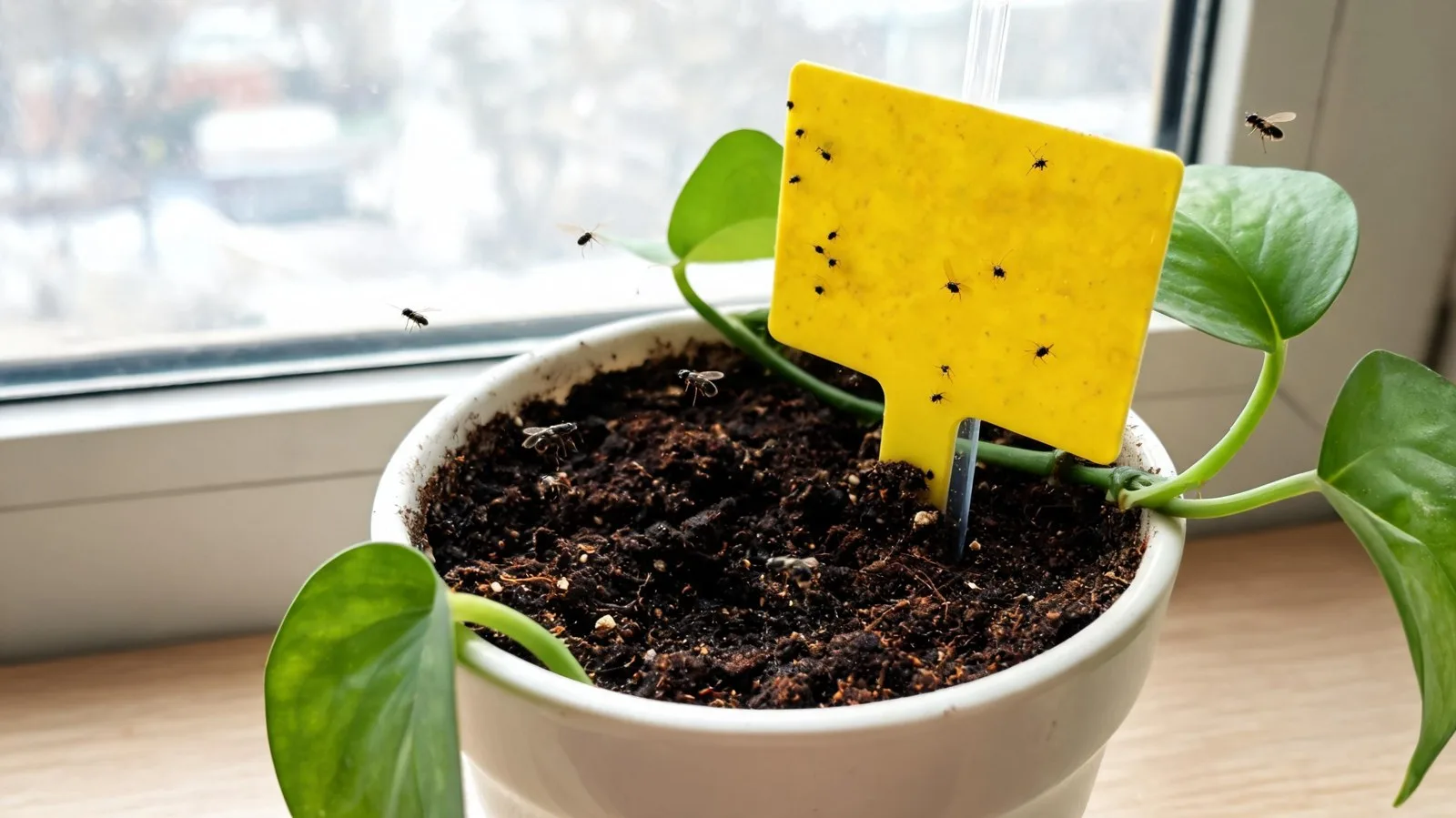
This is the cause behind most "peace lily drooping after watering" searches. Roots sitting in soggy soil run out of oxygen and start to rot. Rotten roots can't take up water, so the plant wilts even though the pot is wet, and watering it again only makes things worse. Other signs are yellowing lower leaves, a musty or sour smell from the soil, and small flies around the pot. If you have those flies, see our guide on how to get rid of fungus gnats in houseplants, since they breed in constantly wet soil.
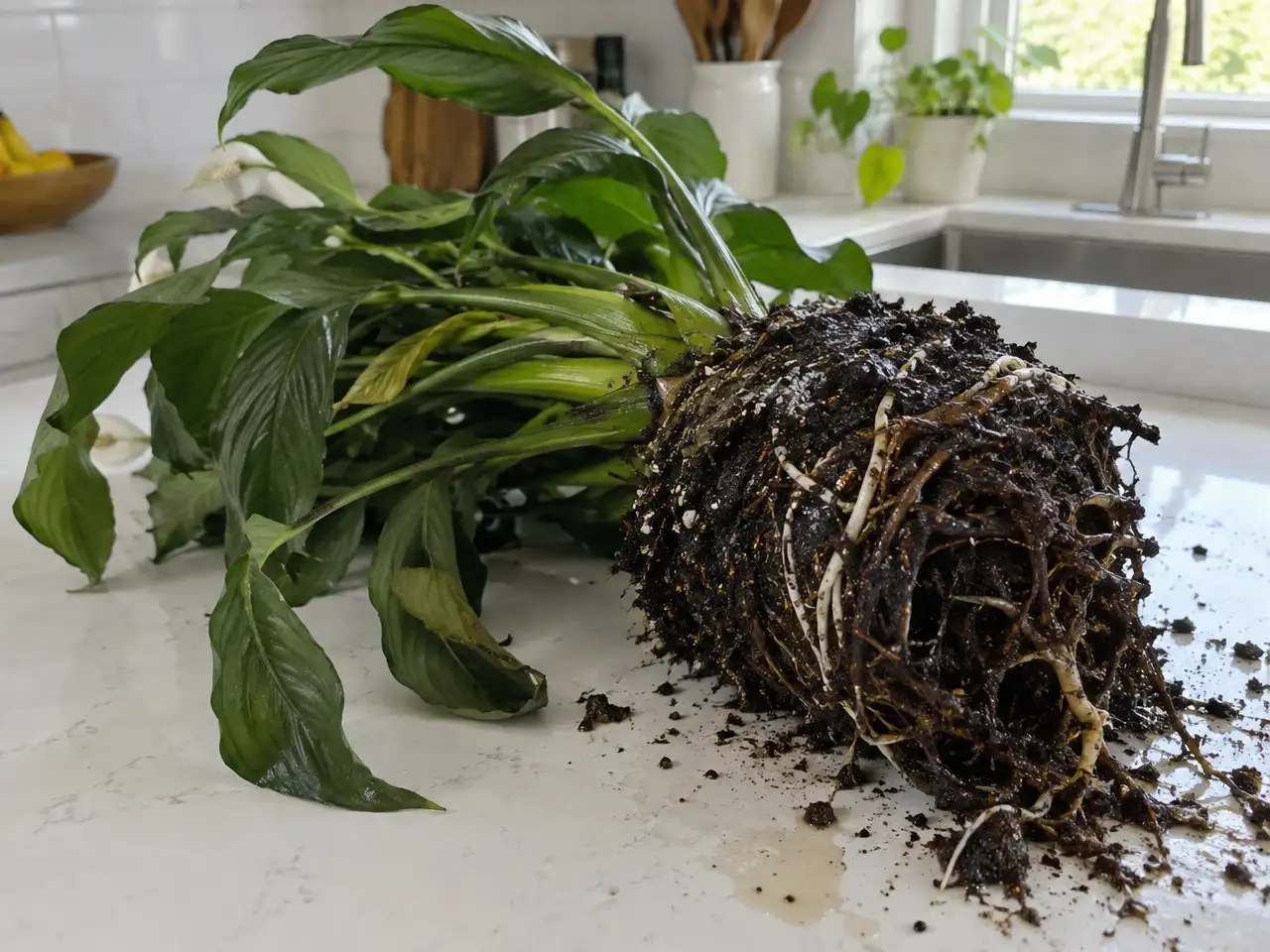
Healthy roots are firm and white or light tan. Brown, mushy roots that pull apart easily are rotting.
How to fix it
Slide the plant out of its pot and gently loosen the wet soil.
Rinse the roots in lukewarm water so you can see them clearly.
Cut off every brown, soft or slimy root with clean scissors. Keep the firm white ones.
Repot into fresh, well-draining potting mix in a pot with a drainage hole. Don't reuse the old soggy soil.
Water lightly, then wait until the top inch (2.5 cm) is dry before watering again.
If you removed a lot of roots, also remove a few of the oldest leaves so the smaller root system has less to support.
Decorative pots without holes and saucers that stay full of water are the usual culprits. Yellow leaves from overwatering follow the same pattern in other plants too; our article on monstera leaves turning yellow explains how to read the soil before you water.
3. Dry, water-repellent soil
When peat-based potting mix dries out completely, it shrinks away from the pot and can actually repel water. You pour water in, it runs down the gap at the sides and out of the drainage hole, and the root ball stays dry. The plant keeps drooping even though you "just watered it".
How to fix it
Set the pot in a sink or bowl with 2–3 inches (5–8 cm) of room-temperature water for 20–30 minutes so the soil soaks it up from below.
Let it drain fully before you put it back on its saucer.
Water a little sooner next time so the mix never dries out completely.
4. Cold drafts and chilly windowsills
Peace lilies are tropical plants. They grow best between about 65–80°F (18–27°C), and they don't like nights below about 60°F (15°C). In winter a windowsill can be much colder than the rest of the room, especially at night behind a curtain, next to old single-pane glass, or by a door that opens to the outside. Cold-stressed leaves droop, may darken or look water-soaked, and recover slowly.
How to fix it
Move the plant a few feet back from cold glass, exterior doors and AC vents.
Don't let leaves touch the window in freezing weather.
Remove any leaves that turn black or mushy; healthy new growth will replace them once the plant is warm again.
5. Too much heat or direct sun
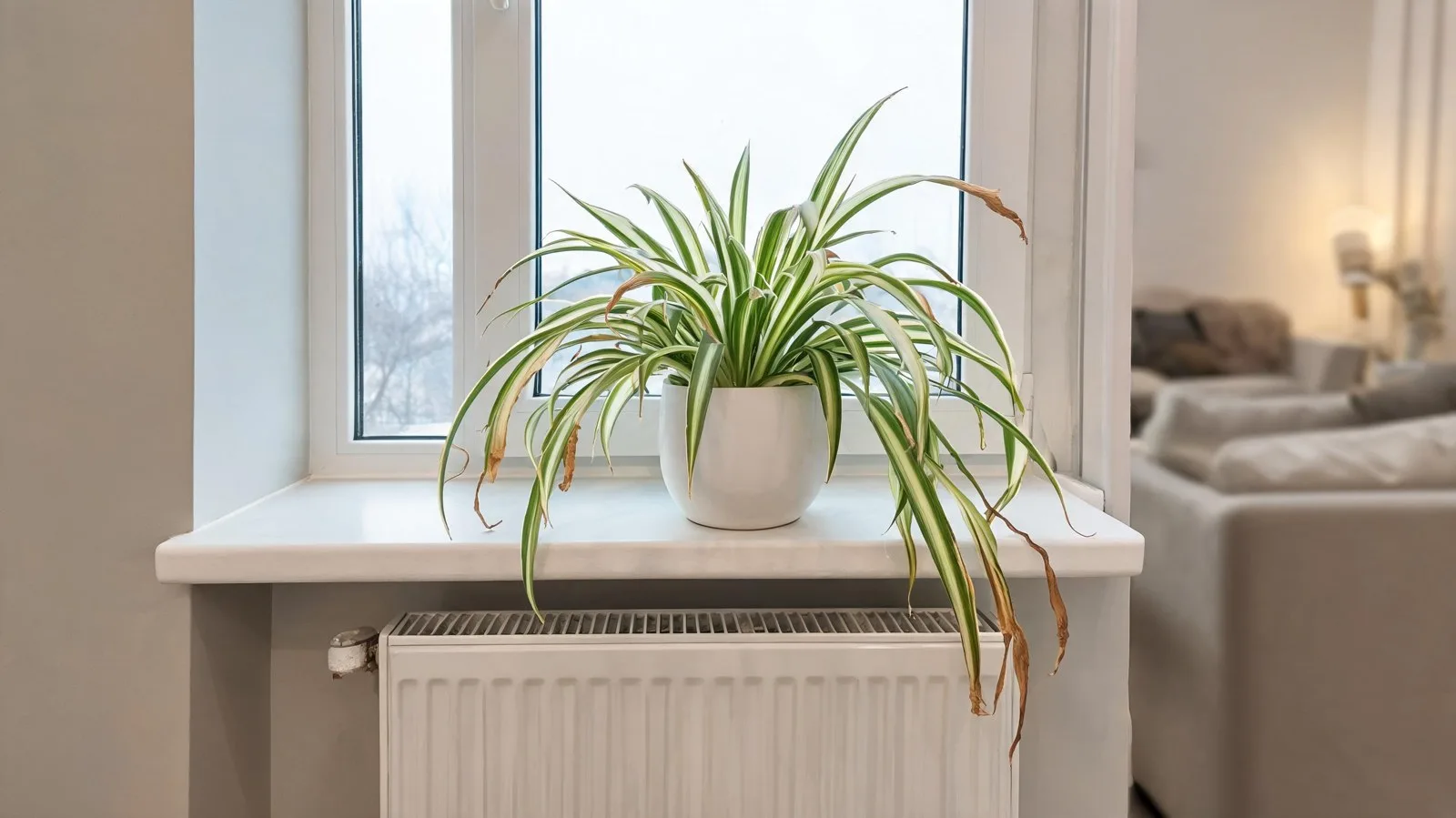
The opposite problem shows up in heated homes. A peace lily next to a radiator, baseboard heater or forced-air vent dries out very fast, and hot, dry air pulls water from the leaves faster than the roots can replace it. Direct afternoon sun through a south- or west-facing window can wilt the plant and bleach or scorch the leaves.
How to fix it
Give it bright, indirect light: a few feet from a sunny window, or right beside an east- or north-facing one.
Keep it away from heat sources and vents.
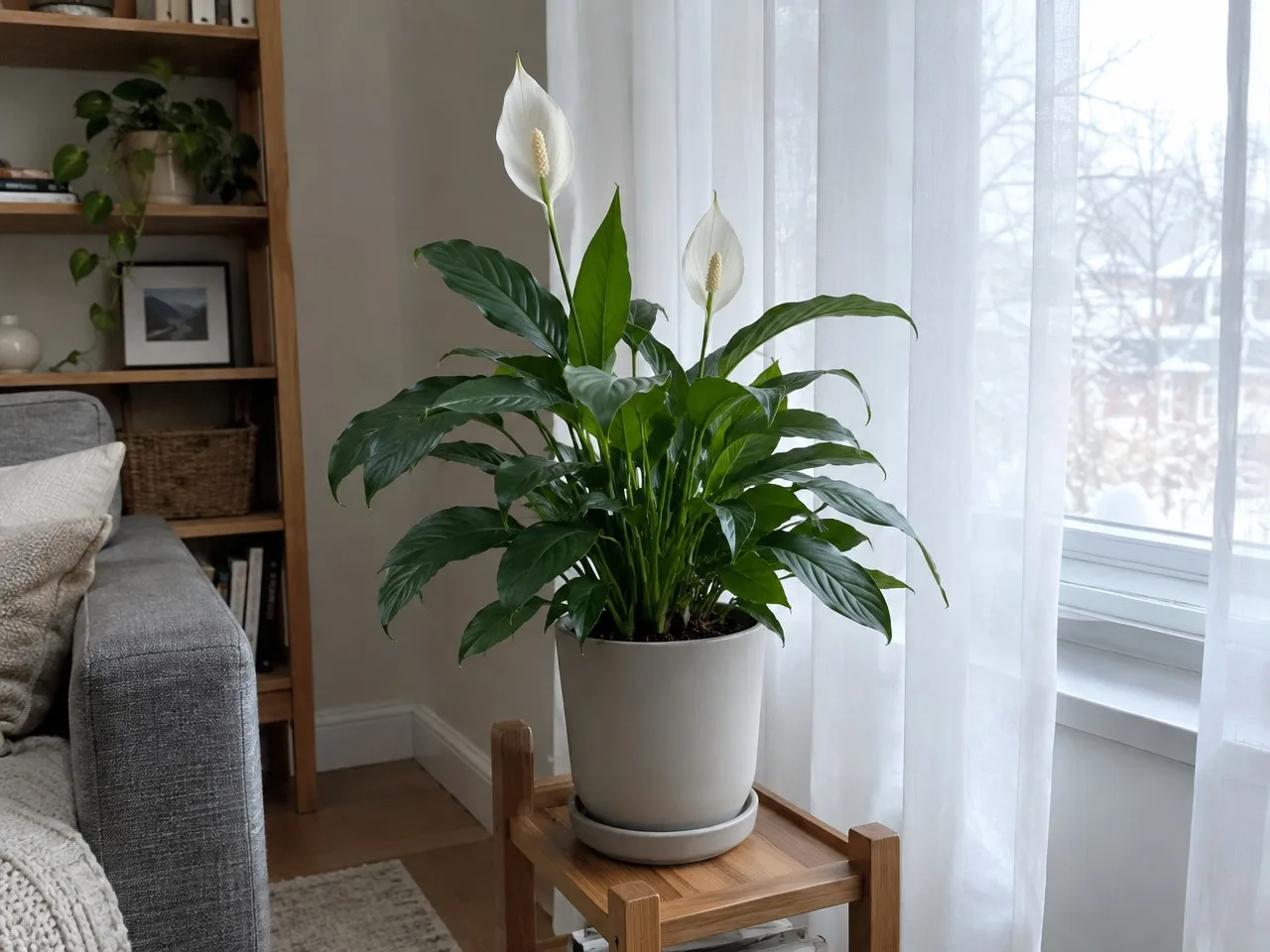
Peace lilies cope with fairly low light, which is why they appear on most lists of indoor plants for low-light homes, but they flower best in medium to bright indirect light.
Bright light filtered through a sheer curtain, away from radiators and cold glass, suits a peace lily in winter.
6. Root-bound plant
Peace lilies grow quickly and can fill their pot within a year or two. When the pot is mostly roots and very little soil, there is nothing to hold water. The plant dries out and droops every two or three days no matter how well you water it.
How to fix it
Check for roots circling the inside of the pot or growing out of the drainage hole.
Repot into a pot only 1–2 inches (2–5 cm) wider than the old one. A much bigger pot holds extra wet soil and raises the risk of root rot.
Spring is the ideal time to repot. If the plant is drooping constantly in winter, it is better to repot now than to let it struggle until spring.
A large, crowded plant can also be divided into two or three smaller plants while you repot.
7. Transplant shock after repotting or moving
A peace lily often droops for several days after repotting, dividing, or a move to a new home or room. Some fine roots get damaged and the plant has to adjust to new light and temperature.
How to fix it
Keep it in bright, indirect light and away from drafts.
Keep the soil lightly moist but not wet. Don't keep adding water to "perk it up".
Skip fertilizer for about a month while new roots grow.
Most plants recover within one to two weeks.
Step-by-step: how to revive a drooping peace lily
Check the soil 1–2 inches (2–5 cm) down with your finger.
If it's dry: water thoroughly or bottom-water for 20–30 minutes, drain, and wait a few hours.
If it's wet: don't water. Tip the plant out and look at the roots.
If roots are brown and mushy: trim the rot and repot in fresh mix in a pot with a drainage hole.
If roots are crowded: repot one size up.
Check the location: no cold glass, drafts, heaters or direct afternoon sun.
Trim damaged leaves at the base once the plant has stabilized.
Give it a week of steady care before you change anything else.
When a peace lily can't be saved
A peace lily is a tough plant and usually comes back even after losing most of its leaves. It's beyond saving only if every root is brown and mushy and the base of the stems (the crown) is soft and rotten. If you can find even a small clump with firm white roots and a firm crown, cut it away from the rotten part and pot it up on its own in fresh mix. It can grow into a full plant again.
Is a peace lily safe for cats and dogs?
No. Peace lilies contain insoluble calcium oxalate crystals, which can cause mouth irritation, drooling and vomiting if a cat or dog chews the leaves. It is not a "true lily" (Lilium), so it isn't linked to the kidney failure that true lilies cause in cats, but keep it out of reach of pets and children and call your vet if a pet chews on it.
Check your plant's problem from a photo
If your plant still droops after you have checked the water, roots and location, or you see spots, webbing or yellow patches, take a clear photo of the leaves and soil and run it through our free plant diagnosis tool. Not sure it's actually a peace lily? Our plant identifier can confirm the species from a photo, so you can follow the right care guide.
Frequently asked questions
How long does it take a drooping peace lily to recover after watering?
If the cause was simple thirst, the leaves usually start lifting within a few hours and are fully upright by the next day. If it still droops 24 hours after a thorough watering, check the roots for rot or the location for cold drafts.
Why is my peace lily drooping after watering?
Usually because the roots are damaged. Soil that has been kept too wet causes root rot, and rotten roots can't take up water. The other common reason is very dry soil that let the water run straight through, which bottom-watering fixes.
How often should I water a peace lily in winter?
There is no fixed schedule. Water when the top inch (2.5 cm) of soil is dry, which in winter is often every 1–2 weeks depending on pot size, light and how warm your home is. Always check the soil first.
Should I cut off drooping peace lily leaves?
Not right away. Drooping green leaves usually lift again once the cause is fixed. Only cut leaves that have turned fully yellow, brown or mushy, at the base of the stem with clean scissors.
Can low humidity make a peace lily droop?
Dry indoor air from heating more often causes brown, crispy leaf tips than drooping. It does make the soil dry faster, though, so plants in heated rooms need checking more often. For more on brown tips, see our guide to spider plant brown tips, which have the same causes.