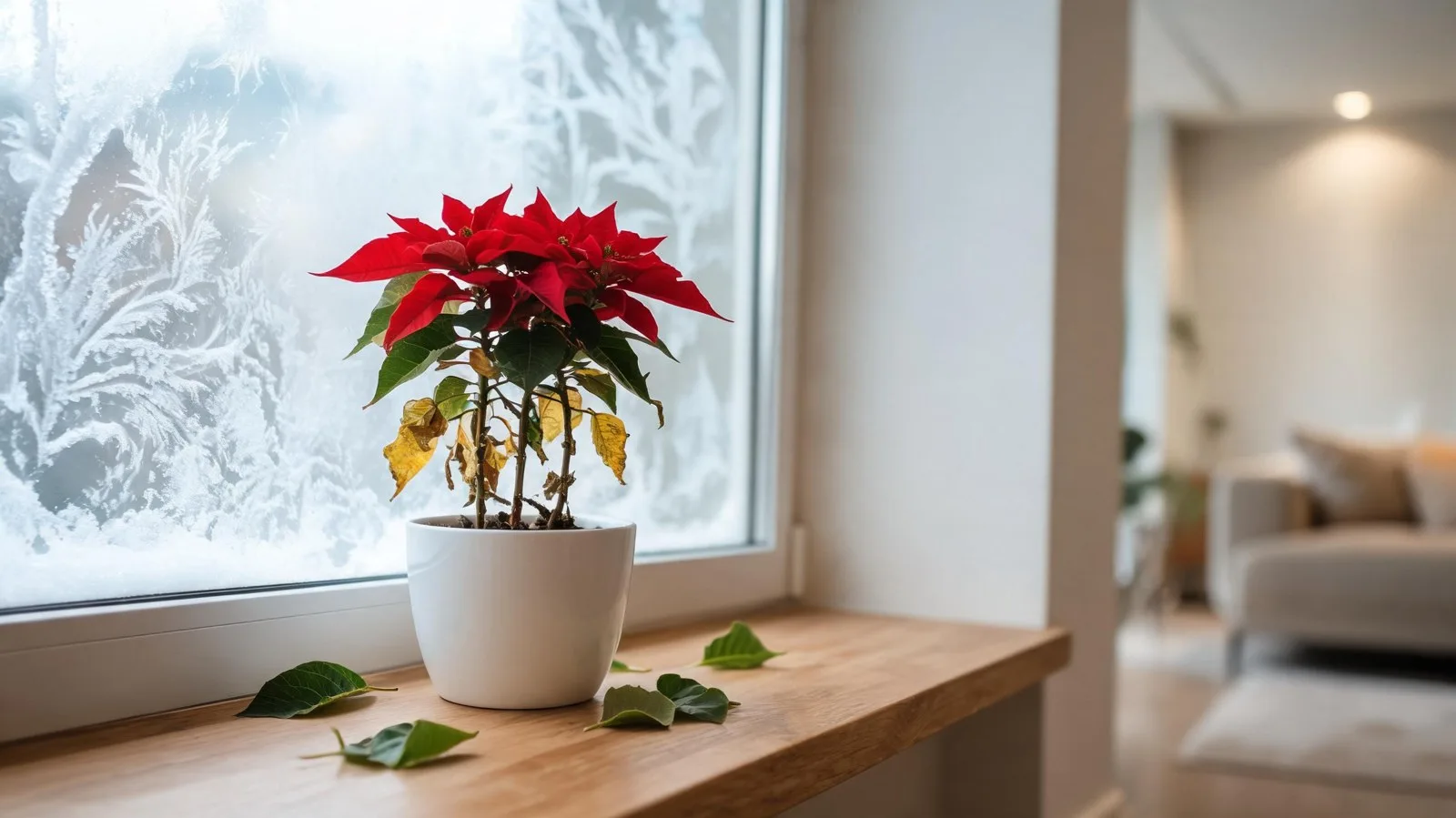
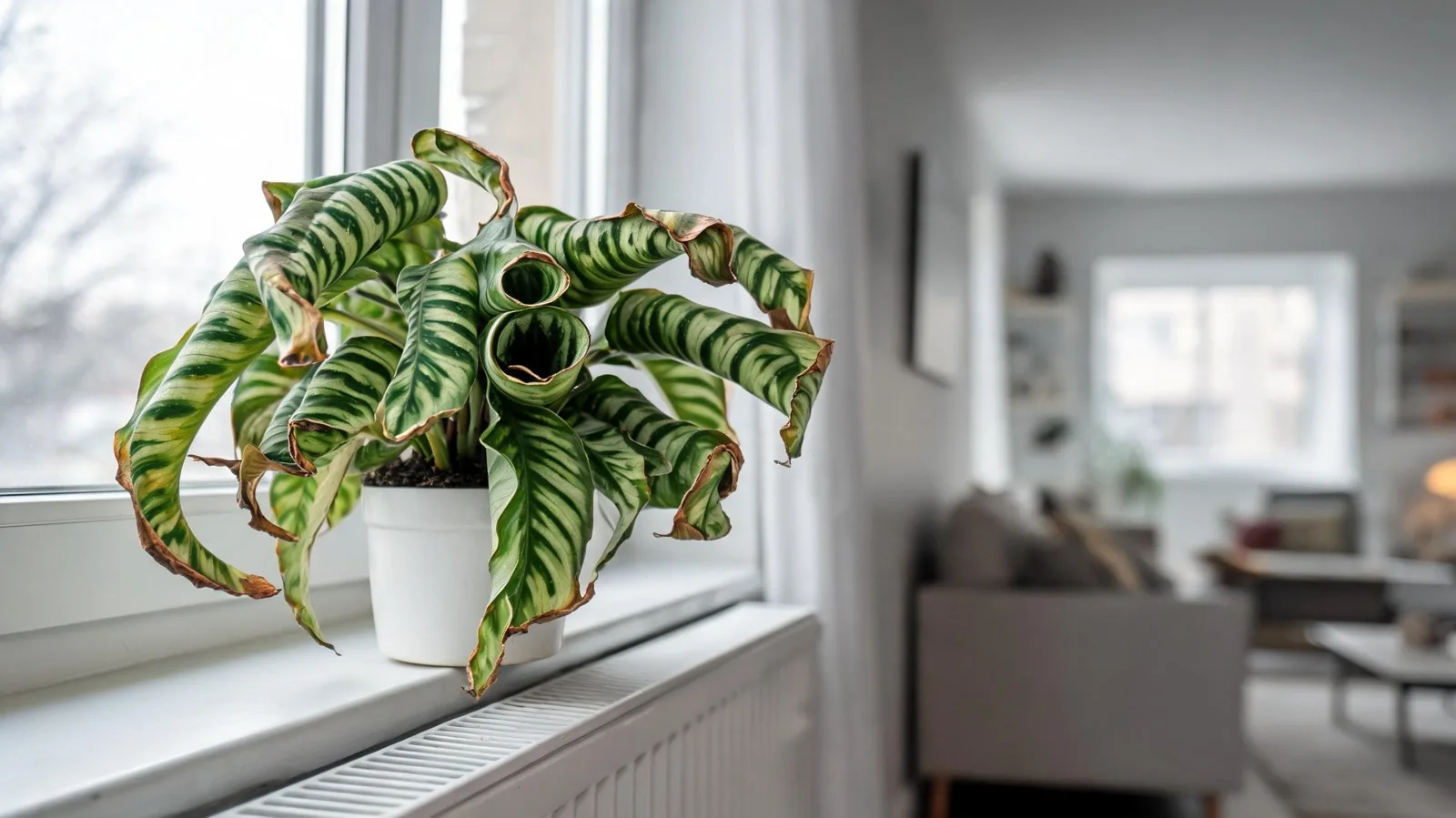
Short answer: fungus gnats live in houseplant soil that stays moist, so the fastest way to get rid of them is to let the top 1–2 inches (2–5 cm) of soil dry out between waterings, catch the adults on yellow sticky traps, and kill the larvae in the soil with a BTI product (the bacterium sold as "mosquito bits" or "mosquito dunks"). Keep it up for 3–4 weeks, because new gnats keep hatching from eggs already in the pot.
Not sure the tiny flies are fungus gnats, or worried your plant is also sick? Upload a photo to our free plant diagnosis tool and get a likely cause in seconds.
What fungus gnats are (and why they show up in winter)
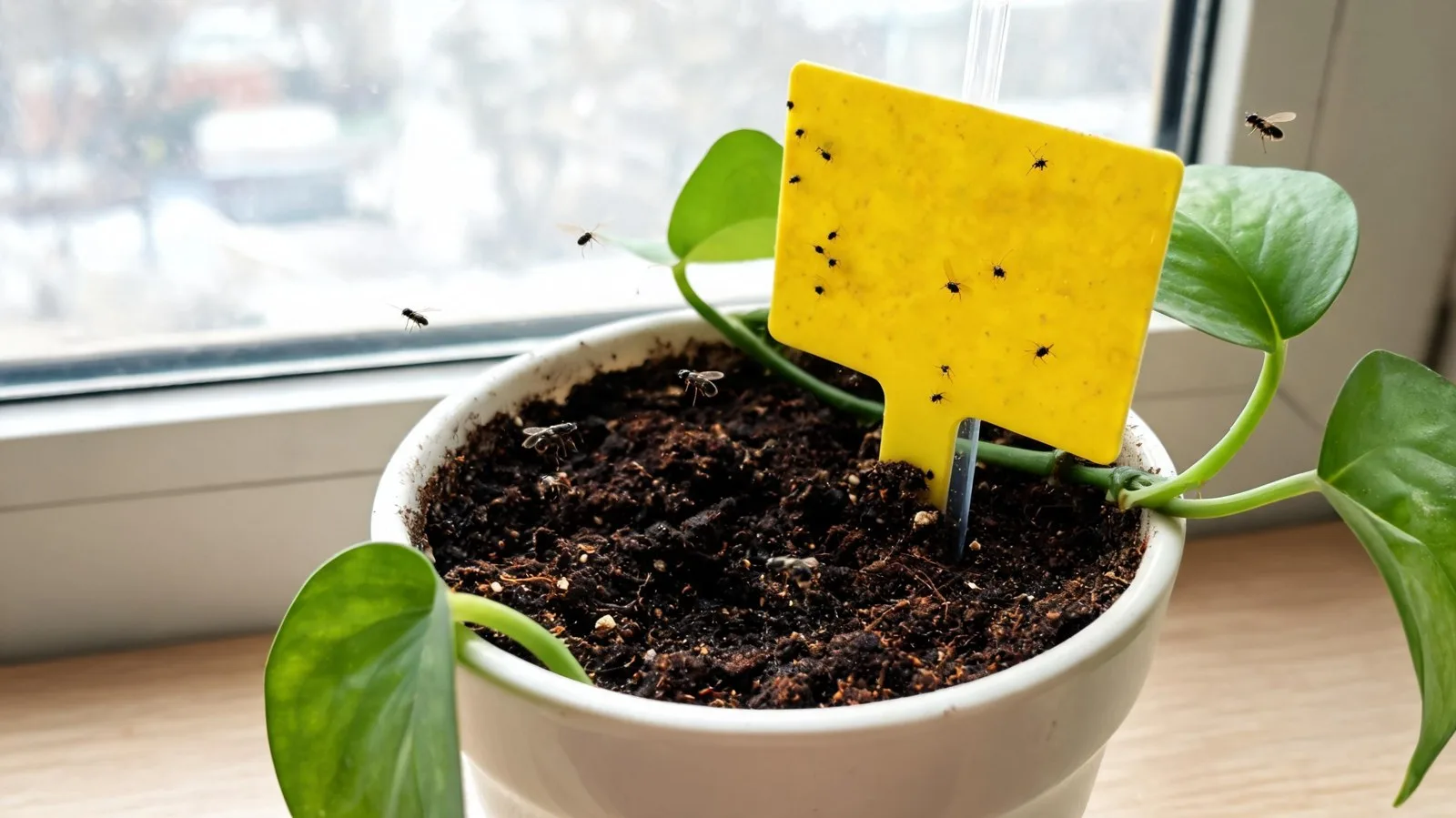
Fungus gnats are small, dark, mosquito-like flies about 1/8 inch (3 mm) long. The adults are weak fliers: they walk across the soil, hover around the pot, and drift toward your screen or a window when you sit nearby. They do not bite people or pets. The adults are mostly a nuisance; the real problem is underground.
Each female lays her eggs in the top layer of damp potting mix. The eggs hatch into tiny larvae, up to about 1/4 inch (6 mm) long, that are clear or whitish with a shiny black head. The larvae feed on fungi and decaying organic matter in the soil, and in large numbers they also chew fine roots. Healthy mature plants usually cope, but seedlings, fresh cuttings and plants that are already struggling can wilt and yellow. At normal room temperature the whole cycle from egg to adult takes roughly 3–4 weeks, which is why a few gnats can turn into a cloud of them within a month.
Winter is peak season indoors. Shorter, darker days and cooler rooms mean your plants drink far less water, yet most of us keep watering on the same schedule. The soil stays wet for days, which is exactly what gnat larvae need. Plants brought inside for the winter, and fresh bags of potting mix, can also carry eggs and larvae into the house.
Adult fungus gnats gather on wet soil and get caught on a yellow sticky trap
Is it fungus gnats or something else?
What you see
Most likely cause
Small black flies hovering low around the pot, running on the soil surface
Fungus gnats
Tan flies with red eyes near the fruit bowl, trash or drains
Fruit flies (not a soil pest)
Tiny white flying insects that rise from the underside of leaves when you touch them
Whiteflies (a leaf pest, treated differently)
Tiny white specks that jump on the soil or in the saucer after watering
Springtails (harmless, also a sign of very wet soil)
Gnats plus yellowing lower leaves, a sour smell and soggy soil
Overwatering, possibly root rot
Gnats only in one pot that sits in a saucer of water
Constantly wet soil from standing water
If you are not sure which plant you have, check it with the free plant identifier first, because how often you should water depends heavily on the species.
The main causes and how to fix each one
1. Soil that never dries out
This is the root cause in almost every home. Larvae cannot survive long in dry soil, so wet soil keeps the cycle going no matter what else you do.
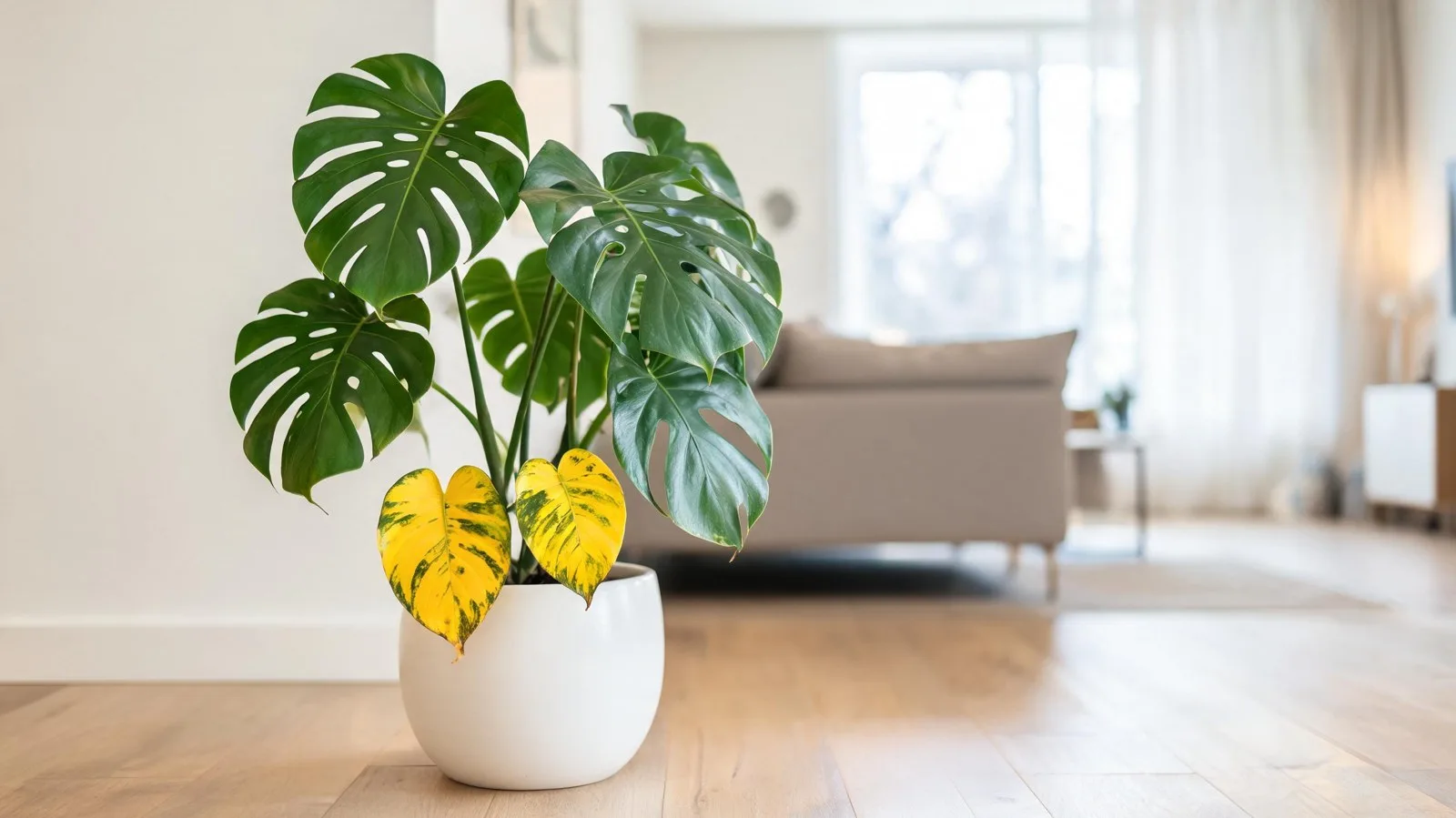
How to fix it: push a finger or a wooden chopstick into the mix and only water when the top 1–2 inches (2–5 cm) feel dry. For plants that like to dry out more, such as snake plants, ZZ plants, succulents and cacti, wait until the pot feels noticeably lighter. In winter this often means watering half as often as you do in summer. If your plant is also showing yellow leaves from too much water, our guide to why monstera leaves turn yellow explains how to read the soil and roots, and the same checks work for most tropical houseplants.
2. Water sitting in saucers, cachepots or self-watering reservoirs
A decorative pot without a drainage hole, or a nursery pot sitting in a saucer of water, keeps the bottom of the root ball permanently soggy.
How to fix it: empty saucers and cachepots 15–30 minutes after watering. Make sure every plant is in a pot with drainage holes. Let self-watering pots run dry for a while during treatment instead of refilling the reservoir right away.
3. Rich, moisture-holding potting mix
Mixes heavy in peat, coir and compost hold a lot of water and organic matter, which gnats love. Bags left open in a garage or shed can also collect eggs.
How to fix it: for most tropical houseplants, add perlite, orchid bark or pumice to standard potting mix so it drains faster. Store opened bags sealed. A top layer of about 1/2 inch (1 cm) of coarse sand or fine grit makes the surface dry quickly and discourages females from laying eggs there.
4. Decaying leaves and mold on the soil surface
Fallen leaves rotting on wet soil, and fuzzy mold, give larvae extra food. If you see a white web-like growth on the soil, read our guide on how to treat white fungus in plant soil; it usually clears up once the watering is corrected.
How to fix it: pick dead leaves off the soil, scrape away moldy top mix, and let the surface dry.
5. Low light and cold rooms
A plant in a dim corner, or near a cold window where the room drops below about 60°F (15°C) at night, grows slowly and uses very little water, so the soil stays wet much longer.
How to fix it: move the plant closer to a bright window (but away from icy glass and heating vents), or add an LED grow light for 10–12 hours a day in winter. Faster drying soil helps break the gnat cycle on its own. If you are choosing plants for a darker room, our list of low-light indoor plants covers tougher options.
Treatments that work on larvae and adults
Yellow sticky traps (adults): stand one in each affected pot, close to the soil. They catch flying adults and also show you whether the problem is getting better. Traps alone will not clear an infestation, because the larvae stay in the soil.
BTI (larvae):Bacillus thuringiensis subsp. israelensis is a soil bacterium that kills the larvae of gnats and mosquitoes. Soak mosquito bits or a piece of a dunk in your watering can following the label directions, then use that water each time you water for several weeks. It is widely used around homes and is considered low risk to people, pets and plants when used as directed.
Hydrogen peroxide drench (larvae): mix 1 part ordinary 3% hydrogen peroxide with 4 parts water and water the soil with it once the top layer is dry. It fizzes on contact and kills larvae it reaches. Do not use stronger peroxide, and do not repeat it more than every week or two.
Beneficial nematodes or predatory mites (larvae):Steinernema feltiae nematodes and soil-dwelling predatory mites such as Stratiolaelaps scimitus hunt gnat larvae. They are a good option for large collections or plants you do not want to drench.
Vinegar trap (adults): a small dish of apple cider vinegar with a drop of dish soap catches some adults, though it works better on fruit flies than on fungus gnats.
Be careful with home remedies you see online. Cinnamon, coffee grounds and matches in the soil are not reliable fixes, and coffee grounds can actually hold more moisture and feed gnats.
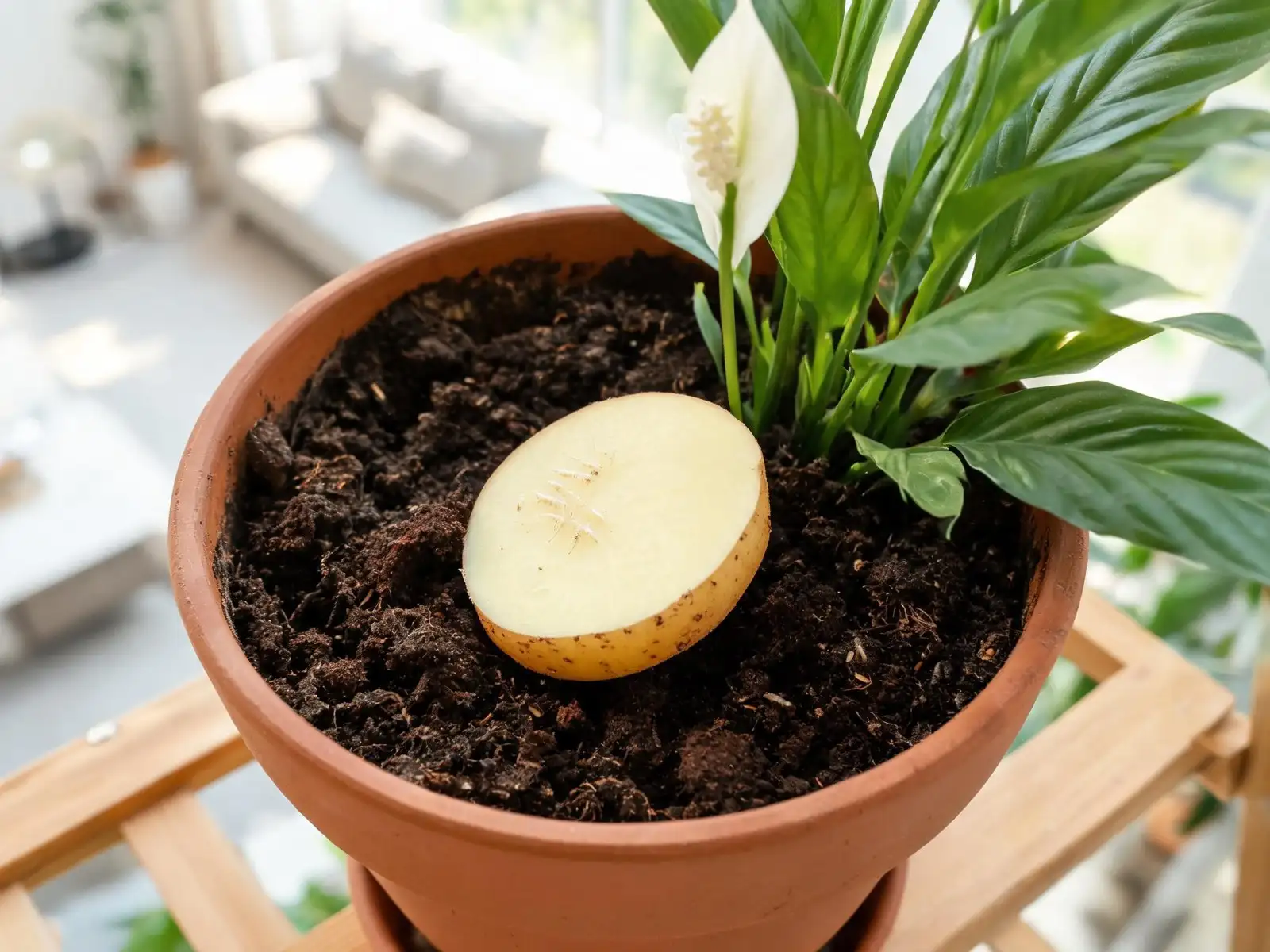
A raw potato slice left on the soil for a few hours shows whether larvae are still present
Step-by-step: get rid of fungus gnats in 4 weeks
Find every affected pot. Lay a thin slice of raw potato on the soil of each plant for 4–8 hours. If larvae are present, you will usually see them on the underside of the slice.
Clean up the surface. Remove fallen leaves and scrape off any moldy top mix.
Let the soil dry. Skip watering until the top 1–2 inches (2–5 cm) are dry. Empty all saucers and cachepots.
Put out sticky traps in each pot to catch adults before they lay more eggs.
Treat the larvae. Use BTI water every time you water for at least 3–4 weeks, or a single hydrogen peroxide drench followed by BTI, or beneficial nematodes.
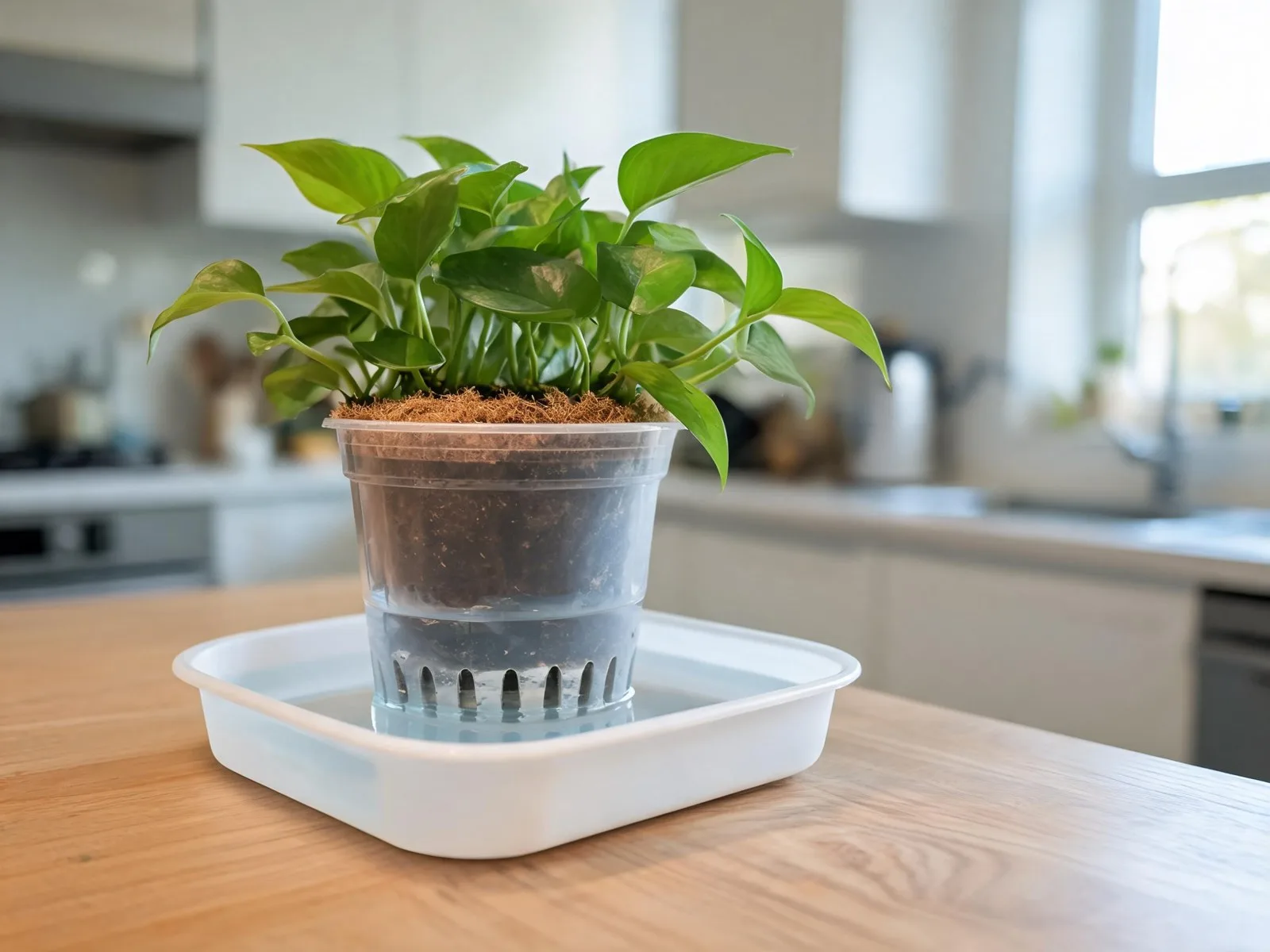
Switch to bottom watering if it suits the plant. Set the pot in a tray of water for 15–20 minutes so the roots drink while the surface stays dry, then drain it fully.
Add a grit top layer of about 1/2 inch (1 cm) once the soil has dried.
Check again after 2 weeks and after 4 weeks with the potato test and the sticky traps. If both stay clean, the cycle is broken. Keep the drier watering routine going for the rest of the winter.
Bottom watering keeps the top of the soil dry, so gnats have nowhere to lay eggs
When to repot instead
Repot in fresh, well-draining mix if the soil is compacted and stays wet for more than a week, smells sour or rotten, or you still have heavy numbers of larvae after a month of treatment. Gently remove old mix from the roots, trim any brown, mushy roots with clean scissors, and use a pot only 1–2 inches (2–5 cm) wider than the root ball, with drainage holes. Water lightly afterwards and let it drain fully. If the plant is wilting and the stems are soft at the base, it may have root rot; our guide to snake plant leaves falling over shows how to check roots and save healthy sections.
Keep sticky traps, BTI products and hydrogen peroxide out of reach of children, cats and dogs, since pets like to chew or play with traps.
Check your plant's problem from a photo
Fungus gnats are often a sign that something else is going on, usually too much water for the amount of light the plant gets. If leaves are also yellowing, browning or drooping, take a clear photo of the plant and the soil and run it through our free plant diagnosis tool to see what else may need fixing.
Frequently asked questions
Are fungus gnats harmful to my plants?
Adults are harmless, but the larvae eat fine roots. Mature, healthy plants usually tolerate a light infestation, while seedlings, cuttings and stressed plants can wilt or yellow when larvae numbers are high.
Do fungus gnats bite people or pets?
No. Fungus gnats do not bite and do not spread disease to people or pets. They are mainly a nuisance indoors.
Why do I still see gnats after a week of treatment?
Eggs and pupae already in the soil keep hatching for a while, and the full life cycle takes about 3–4 weeks. Keep the soil drier, keep the traps up and continue larva treatment for at least a month.
Does letting the soil dry out really kill fungus gnats?
Drying the top 1–2 inches (2–5 cm) of soil makes it hard for females to lay eggs and for larvae to survive near the surface. Combined with sticky traps it solves many mild infestations, and with BTI it handles heavier ones.
Can I use hydrogen peroxide on all houseplants?
A diluted drench of 1 part 3% hydrogen peroxide to 4 parts water is commonly used on most houseplants. Test it on one plant first, do not use it on very young seedlings, and do not repeat it often.
How do I stop fungus gnats coming back?
Water only when the top of the soil is dry, use pots with drainage holes, empty saucers, store potting mix sealed, and check new plants for gnats before putting them next to your others.