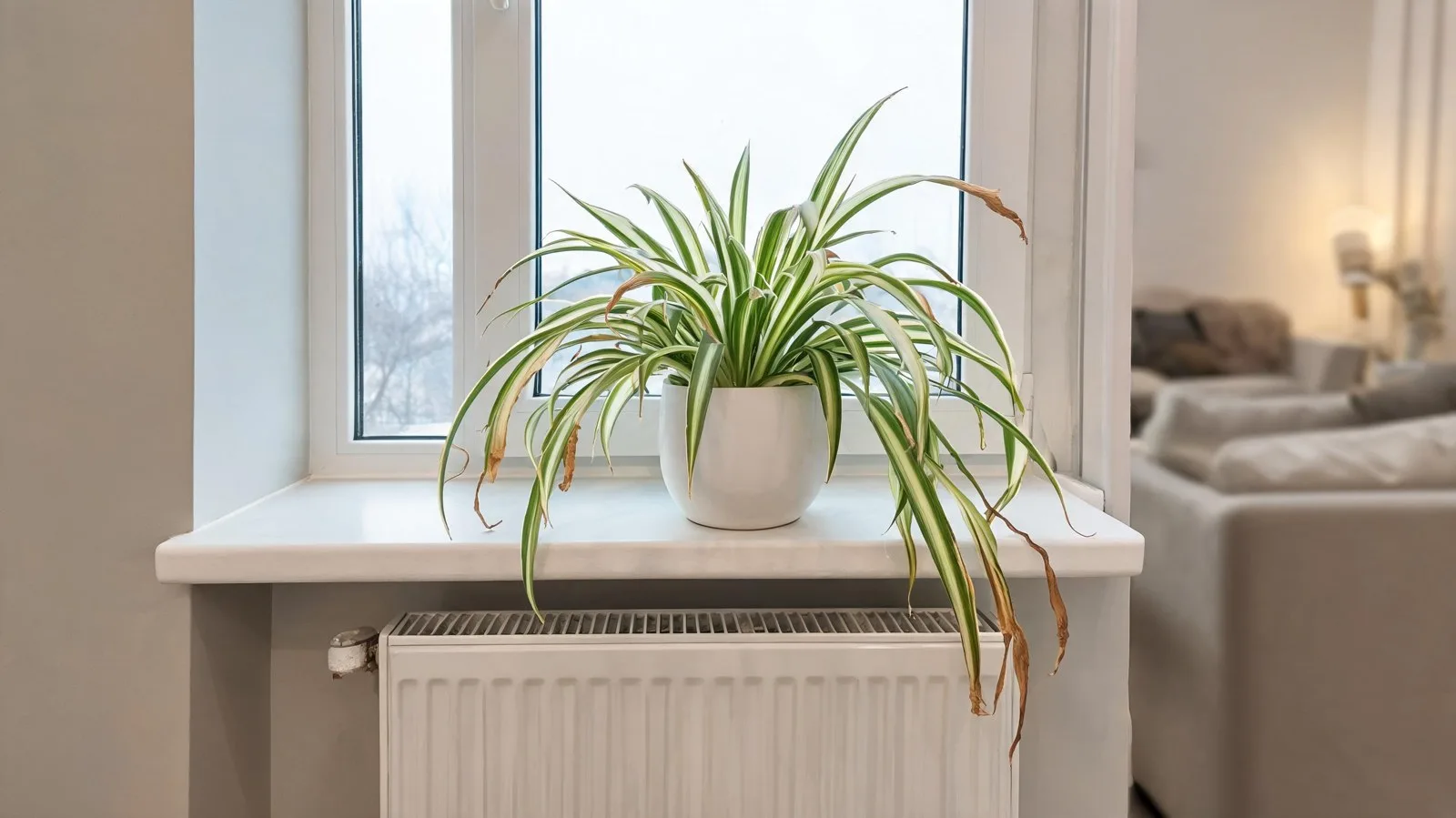
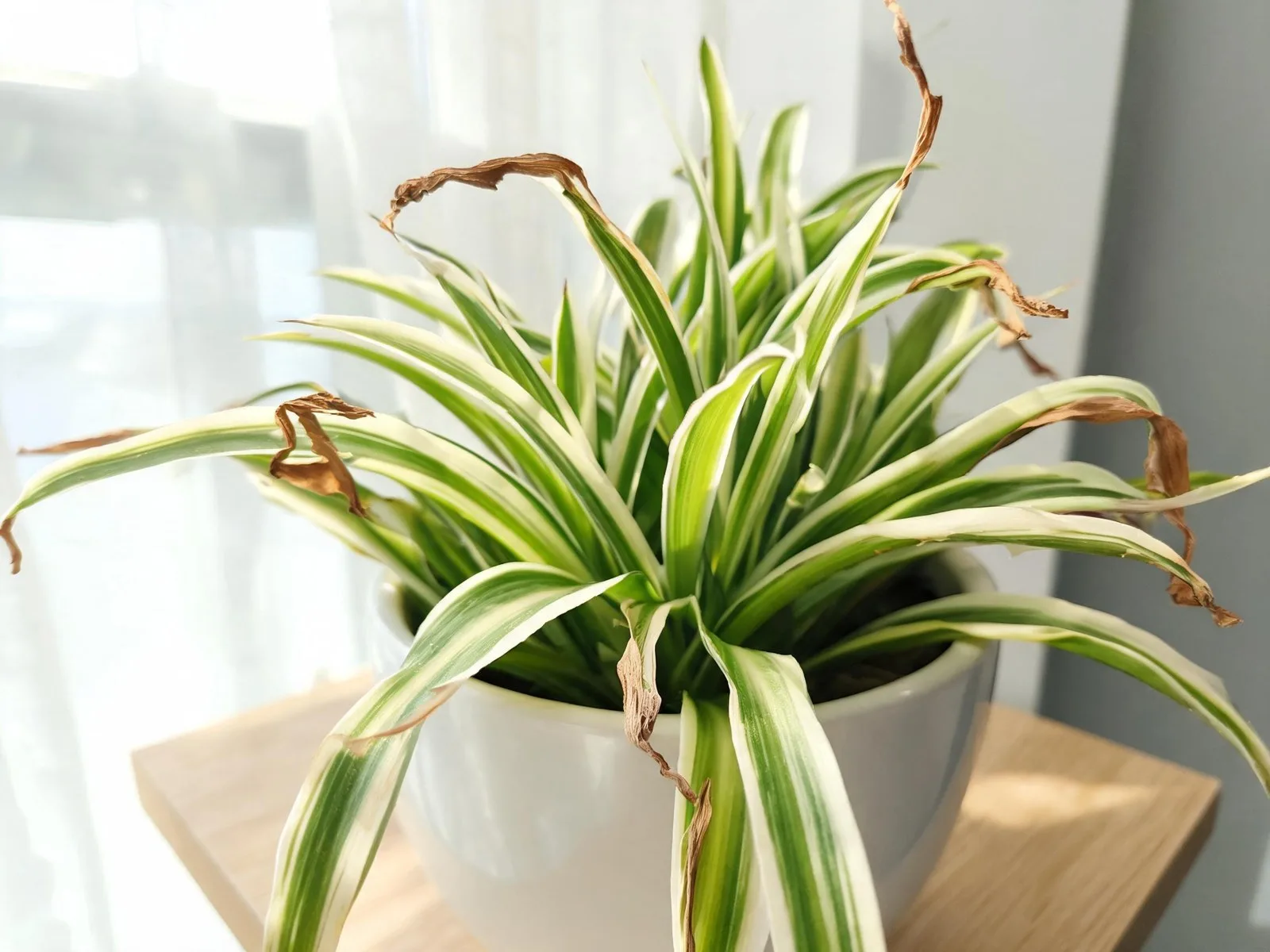
Short answer: brown tips on a spider plant are almost always caused by water and air, not disease. The usual culprits are dry indoor air from heating, minerals and fluoride in tap water, fertilizer salt build-up, or uneven watering. Brown tips will not turn green again, but you can trim them off and stop new ones from forming within a few weeks.
Not sure it is only the tips? Upload a photo to our free plant diagnosis tool to check for pests, rot or disease before you change your care routine.
Dry, crispy brown tips usually point to low humidity or salts in the soil.
What the brown tips are telling you
Spider plants (Chlorophytum comosum) have long, thin leaves, and the tip is the part furthest from the roots. When water is short, the air is dry or salts build up in the leaf, the tip is the first place cells die. Match what you see in the table below.
What you see
Most likely cause
First thing to do
Light brown, papery tips on many leaves, worse in winter
Dry air from heating
Raise humidity, move away from radiators and vents
Brown tips even though watering and humidity seem fine
Fluoride, chlorine or hard tap water
Switch to rainwater, distilled or filtered water
White crust on the soil or pot rim, brown tips after feeding
Fertilizer salt build-up
Flush the soil, cut back on fertilizer
Crispy tips plus limp, pale leaves and bone-dry soil
Underwatering
Water deeply, then check the soil more often
Dark brown or black tips, yellow leaves, soggy soil
Overwatering or root rot
Let the soil dry, check the roots
Brown patches or tips on leaves touching the window
Cold glass, drafts or direct sun scorch
Move the plant a little away from the window
Water runs straight through, roots poking out of the drainage holes
Rootbound plant
Repot into a pot 1–2 inches (2–5 cm) wider
1. Dry air from central heating
This is the most common reason spider plants get brown tips in the colder months. Furnaces, radiators and baseboard heaters dry the air in a room, and indoor humidity can drop well below what most houseplants like. The long leaf tips lose moisture faster than the roots can replace it, so they turn crispy and light brown.
How to fix it:
Keep the plant at least a few feet away from radiators, heating vents and fireplaces.
Run a humidifier in the room, aiming for roughly 40–50% humidity or a little higher. A cheap hygrometer shows you the real number.
A pebble tray (a saucer of pebbles and water under the pot, with the pot sitting above the water line) helps a little. Misting only helps for a few minutes, so do not rely on it.
2. Fluoride, chlorine and minerals in tap water
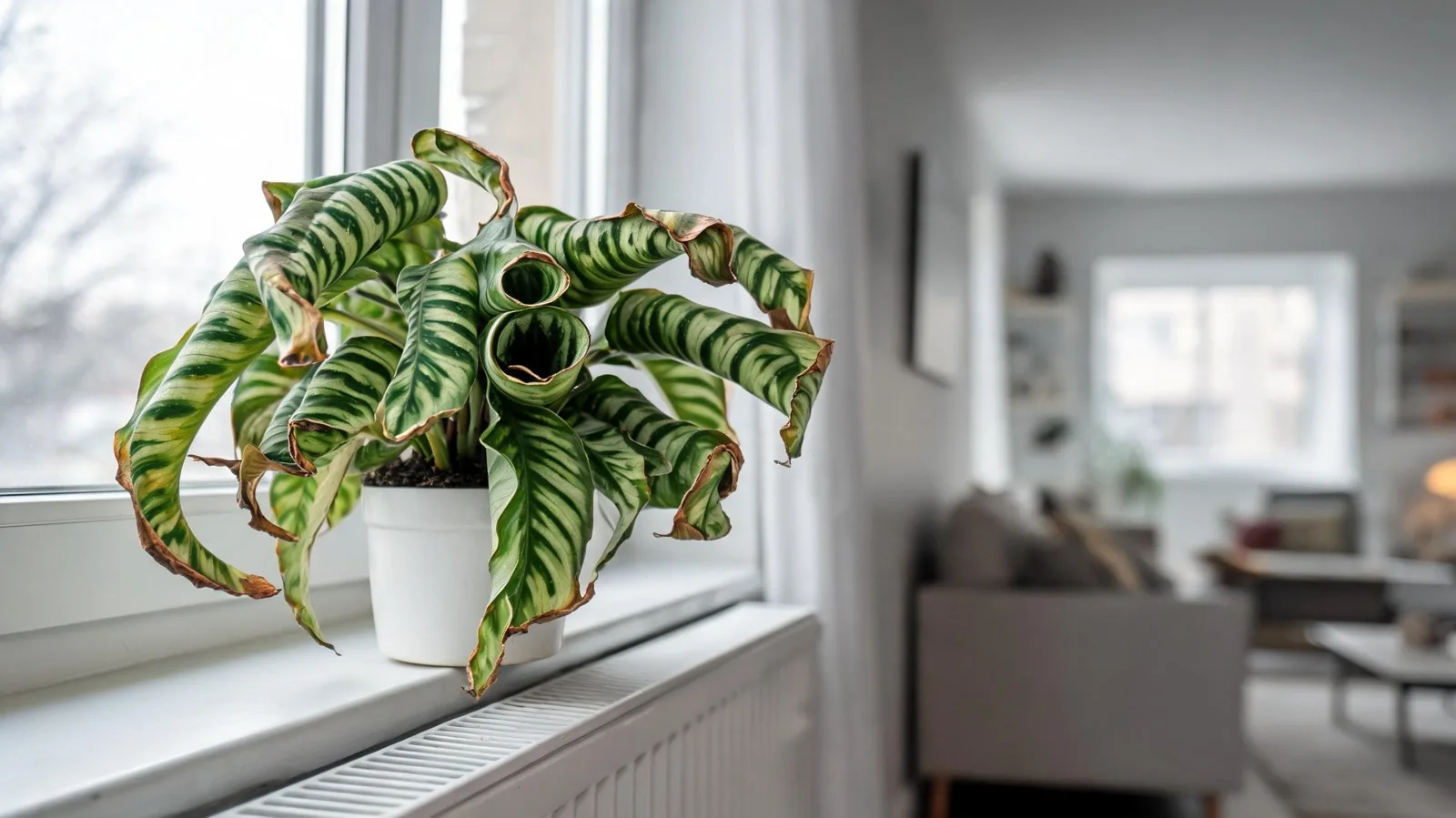
Spider plants are well known for being sensitive to fluoride, and they also react to chlorine and to the dissolved minerals in hard water. If your humidity and watering are fine but new brown tips keep appearing, your water is a strong suspect. The same thing happens with other fussy plants, as explained in our guide to calathea leaves curling.
How to fix it:
Water with rainwater, distilled water or water from a filter that removes fluoride (many basic pitcher filters do not, so check the label).
Leaving tap water out overnight lets some chlorine escape, but it does not remove fluoride or minerals.
Flush the soil once (see the next section) to wash out what has already built up.
3. Fertilizer salt build-up
Spider plants need very little feeding. Too much fertilizer, or feeding through the winter when the plant is barely growing, leaves salts in the soil. You may see a white or yellowish crust on the soil surface or around the rim of the pot. These salts burn the leaf tips.
How to fix it:
Take the plant to a sink or bathtub (it needs a pot with drainage holes).
Scrape off any white crust from the top of the soil.
Slowly pour room-temperature, low-mineral water through the soil for a couple of minutes, letting it run out of the bottom.
From now on, feed only in spring and summer, about once a month with a balanced houseplant fertilizer at half the label strength, and stop in fall and winter.
Spider plants store water in thick, fleshy roots, so they forgive a missed watering. But if the soil goes completely dry again and again, the plant protects itself by letting the tips die. You will usually see crispy tips together with leaves that look pale, limp or folded.
How to fix it: water when the top 1 inch (2.5 cm) of soil feels dry. Water slowly until it runs out of the drainage holes, then empty the saucer. Check with your finger rather than watering on a fixed schedule.
5. Overwatering and root rot
Too much water causes brown tips too, but they look different: darker brown or almost black, often with yellowing leaves and soil that stays wet for days. Soggy soil also attracts tiny flies; if you see them, read how to get rid of fungus gnats in houseplants.
How to fix it:
Stop watering until the top 1–2 inches (2.5–5 cm) of soil are dry.
Make sure the pot has drainage holes and never leave it sitting in water, especially inside a decorative cover pot.
If the plant keeps declining, slide it out of the pot. Healthy roots are white or cream and firm; rotten roots are brown, mushy and smell bad. Cut rotten roots off with clean scissors and repot into fresh, well-draining potting mix.
6. Cold drafts, cold glass and harsh sun
Spider plants grow best in bright, indirect light at about 60–80°F (15–27°C). In winter, leaves pressed against a cold window or sitting next to a drafty door can be damaged where they touch. Temperatures below about 50°F (10°C) can harm them. In summer, hot direct sun through glass can scorch leaves instead.
How to fix it: keep the plant close to a bright window but not touching the glass, and away from outside doors and AC vents. In summer, pull it back from a hot south- or west-facing window or filter the light with a sheer curtain.
7. A rootbound spider plant
Spider plants grow fast and fill their pots with thick white roots. Once the pot is packed, there is very little soil left to hold water, so it runs straight through and the plant dries out quickly, which shows up as brown tips. Roots growing out of the drainage holes or pushing the plant up out of the pot are clear signs.
How to fix it: repot in spring into a pot only 1–2 inches (2–5 cm) wider, with drainage holes and fresh all-purpose potting mix. Most spider plants need this every one to two years.
Step-by-step: how to fix brown tips on a spider plant
Check the soil. Push a finger 1–2 inches (2.5–5 cm) into the soil. Bone dry, soggy, or covered in white crust? That tells you where to start.
Look at the roots if the soil is soggy or the plant is wilting. Trim any mushy roots and repot if needed.
Flush the soil with low-mineral water if you have been feeding it or use hard tap water.
Fix water, light and air: low-mineral water, bright indirect light away from heaters and cold glass, and a humidifier in winter.
Trim the brown tips with clean, sharp scissors. Follow the natural pointed shape of the leaf and leave a very thin line of brown so you do not cut into healthy green tissue, which can cause a new brown edge.
Wait and watch new growth. New leaves from the center should stay green once the cause is fixed.
When to repot, and when it can't be saved
Repot if roots fill the pot, water runs straight through, or you found root rot. Spider plants are very hard to kill: even if most of the leaves are brown, a plant with firm white roots or a healthy center will usually grow back. If the whole root ball is mushy and the center of the plant pulls away easily, the mother plant is unlikely to recover. In that case, cut off any healthy baby plantlets (spiderettes), root them in water or moist potting mix, and start again. For other emergency steps, see how to save a dying plant.
Are spider plants safe for cats and dogs?
Yes. Spider plants are listed as non-toxic to cats and dogs by the ASPCA. Cats do love to chew the leaves, and eating a lot can cause a mild upset stomach, so hang the plant or put it on a high shelf if your cat treats it as a snack. Chewed tips can turn brown too, so check for bite marks.
Check your plant's problem from a photo
If the brown areas are spreading as spots or rings rather than staying at the tips, or you see webbing or tiny insects, it may be a pest or a leaf disease rather than a care issue. Take a clear photo of the leaves and upload it to our free AI plant diagnosis for a likely cause and treatment. Not 100% sure your plant is a spider plant? Use the plant identifier first.
Frequently asked questions
Should I cut the brown tips off my spider plant?
Yes, if you don't like the look. Trimming does not harm the plant. Use clean, sharp scissors, cut at an angle that copies the natural pointed tip, and leave a thin sliver of brown so you don't cut into healthy tissue.
Will brown tips on a spider plant turn green again?
No. The brown part is dead tissue and will not recover. The goal is to fix the cause so new leaves stay green, then trim the old tips for looks.
Is tap water bad for spider plants?
Not always, but spider plants are sensitive to fluoride, chlorine and hard-water minerals. If brown tips keep appearing even with good watering and humidity, switch to rainwater, distilled water or a filter that removes fluoride.
How often should I water a spider plant in winter?
There is no fixed schedule. Water when the top 1 inch (2.5 cm) of soil is dry, which may be every 1–2 weeks in a cool room and more often near a heater. Always let extra water drain away.
Why are my spider plant's tips brown and the leaves yellow?
Brown tips with yellowing leaves and wet soil usually mean overwatering or root rot. Let the soil dry out and check the roots. Our guide to yellow leaves on indoor plants covers the other causes.