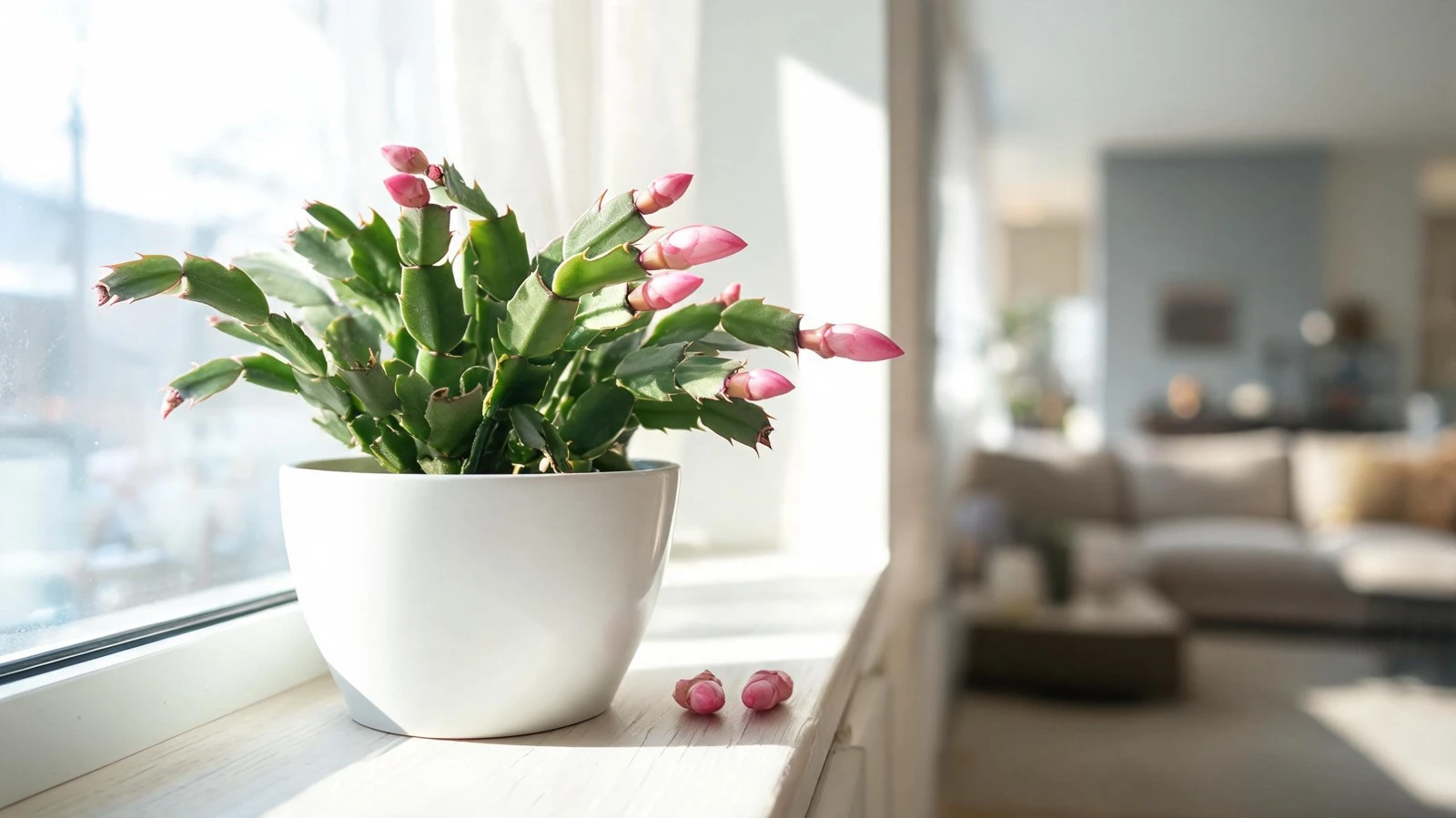
Short answer: Christmas cactus buds usually fall off because something changed suddenly after the buds formed: the plant was moved, it sits in a cold draft or next to a heater, the soil went bone dry or stayed soggy, or the air is very dry from central heating. Keep it in one spot with bright indirect light, steady temperatures around 60–70°F (15–21°C), and evenly moist (not wet) soil, and the remaining buds usually open.
Not sure if bud drop is the only problem? Upload a photo to our free plant diagnosis tool and it will check the stems, soil and leaves for rot, pests or other issues.
Why Christmas cactus buds fall off: quick symptom check
Bud drop is a stress response. The plant spends weeks forming buds, and if conditions change sharply it sheds some or all of them to save energy. Use this table to match what you see with the most likely cause.
| What you see | Most likely cause | First thing to do |
|---|---|---|
| Buds dropped a few days after you brought the plant home or moved it | Change of location or light | Pick one bright spot and stop moving it |
| Buds fall and the plant sits near a door, window or heater vent | Cold or hot drafts, temperature swings | Move it away from vents, radiators and drafty glass |
| Soil is dry and pulls away from the pot, segments look thin or wrinkled | Underwatering | Water thoroughly and let the excess drain |
| Soil stays wet, segments are limp, base of the stem is soft | Overwatering or root rot | Let the top inch dry; check the roots |
| Buds shrivel at the tips before dropping, room feels very dry | Low humidity from central heating | Add a humidifier or pebble tray |
| Buds drop in a warm, bright room that is lit late into the evening | Too warm, or too much light at night | Give it a cooler spot with natural dark nights |
| Buds drop right after repotting or fertilizing | Root disturbance or fertilizer stress | Leave it alone until flowering ends |
1. The plant was moved after buds formed
This is the most common reason, especially in November and December. A plant raised in a bright, humid greenhouse goes through a big change on its way to your living room. Even at home, turning the pot around or moving it to a "nicer" spot for the holidays can be enough. Buds grow toward the light, and a sudden change in light direction or intensity often makes the plant drop them.
How to fix it
- Choose one spot with bright, indirect light, such as near an east-facing window or a few feet back from a south- or west-facing one.
- Leave the plant there until it finishes flowering. Avoid rotating the pot while it is in bud.
- If you just bought it, expect a few buds to drop as it adjusts. The rest usually hold once conditions are stable.
2. Cold drafts, heater vents and temperature swings
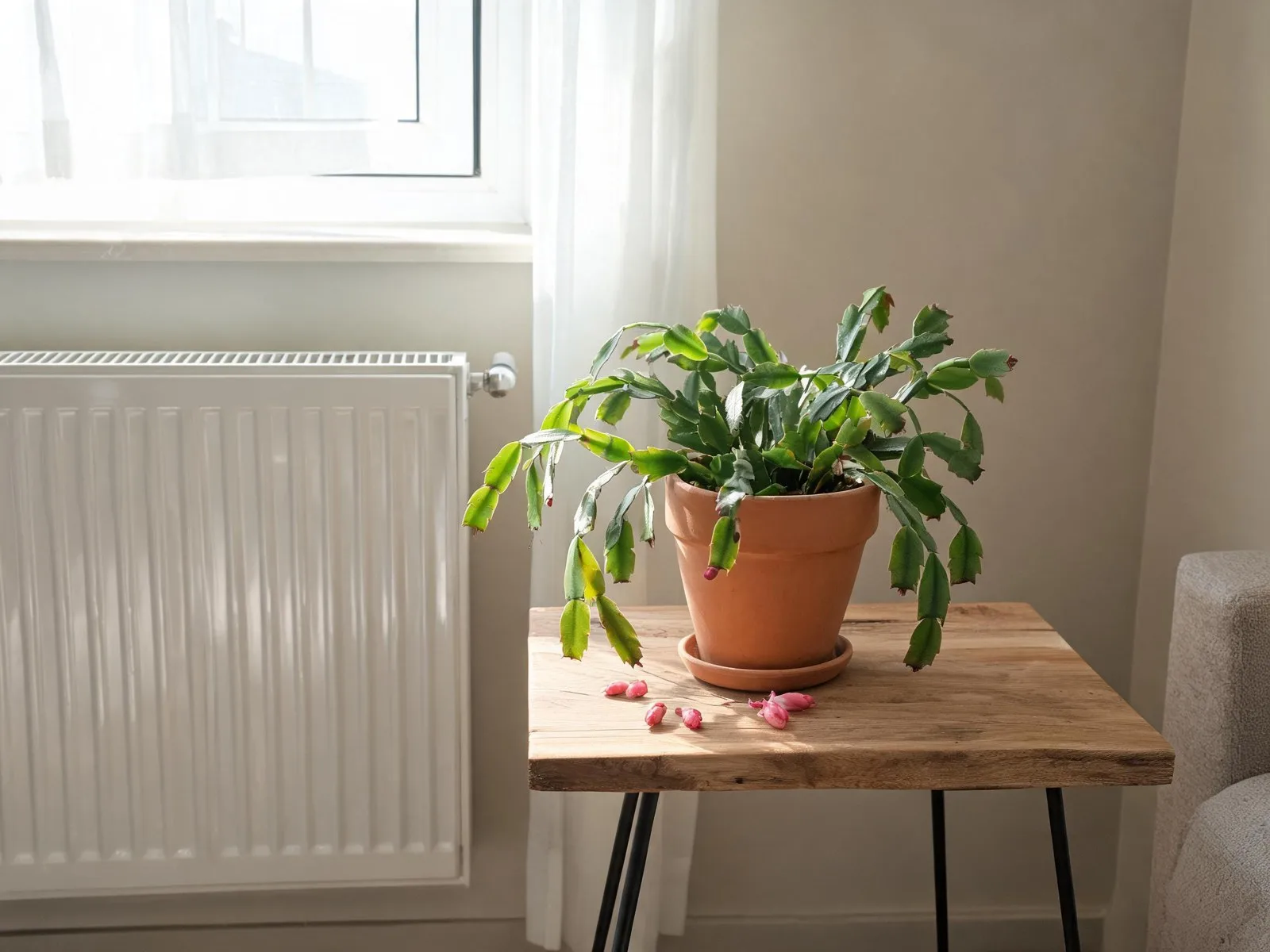
Christmas cacti like it moderate and steady. In winter, a windowsill can drop well below room temperature at night, especially with single-pane glass, while the same plant may get blasted by a forced-air vent, radiator or fireplace during the day. Those swings are a classic trigger for bud drop.
How to fix it
- Keep the plant away from heating vents, radiators, space heaters, fireplaces and exterior doors that open often.
- Aim for about 60–70°F (15–21°C) during the day and slightly cooler nights, around 55–65°F (13–18°C).
- On very cold nights, pull the pot back from the glass so the segments never touch it.
3. Underwatering while the plant is in bud
Although it is called a cactus, the Christmas cactus is a tropical forest plant that naturally grows on trees, not in deserts. It stores some water in its segments, but while it is budding and flowering it needs more consistent moisture than a desert cactus. If the soil dries out completely, the plant often sheds buds first.
How to fix it
- Check the soil with your finger. When the top 1 inch (2.5 cm) feels dry, water thoroughly until water runs out of the drainage holes.
- Empty the saucer after 10–15 minutes so the pot never sits in water.
- Indoor heating dries pots faster in winter, so check every few days rather than watering on a fixed calendar.
4. Overwatering and root rot
The opposite problem is just as common. Soil that stays soggy, a pot without drainage holes, or a saucer full of water starves the roots of air. Damaged roots cannot supply the buds, so they drop, and the segments may turn limp, yellowish or soft at the base. If you see white fuzz on the soil surface as well, it is usually harmless mold from staying too wet; our guide on how to treat white fungus in plant soil explains how to clear it.
How to fix it
- Stop watering until the top inch of soil is dry.
- Make sure the pot has drainage holes. If it sits inside a decorative cover pot, lift it out after watering so water does not collect at the bottom.
- If the base of the stems is mushy or the soil smells sour, check the roots (see the rescue section below).
The same soggy-soil problem is behind snake plant leaves falling over, so the fixes carry over to other houseplants too.
5. Dry air from central heating
Heated homes in winter often have very low humidity. Christmas cacti come from humid forests, and dry air can make buds shrivel at the tips and fall before they open, especially if the plant also sits near a heat source.
How to fix it
- Run a humidifier in the room, or group the plant with other houseplants.
- Set the pot on a tray of pebbles with water below the top of the pebbles, so the pot sits above the water, not in it.
6. Too warm, or lit late into the evening
Christmas cacti set buds in response to long nights and cool temperatures in fall. A room that is kept very warm, or a plant that sits under lamps or a grow light late into the evening, can disrupt the process and lead to buds stalling or dropping. This is also the main reason a Christmas cactus does not bloom at all.
How to fix it
- Keep it in a room that gets natural darkness in the evening, not next to a lamp or TV that is on for hours after sunset.
- For next year, give it about 12–14 hours of uninterrupted darkness each night and cooler temperatures for roughly six weeks in fall, before buds appear.
- If you use a grow light, put it on a timer so it switches off in the early evening.
7. Repotting or fertilizing during bloom
Repotting disturbs the roots, and a strong dose of fertilizer can stress a plant that is already putting its energy into flowers. Both are common causes of sudden bud drop when done at the wrong time.
How to fix it
- Do not repot while the plant is in bud or flower. Wait until blooming finishes, ideally in spring.
- Pause fertilizer while it is flowering. Resume a balanced houseplant fertilizer at half strength in spring and summer when it is actively growing.
Bud drop for similar reasons happens on many flowering plants. Our guide on why hibiscus buds fall off covers the same mix of watering, light and temperature stress on another popular bloomer.
Step-by-step: how to stop bud drop right now
- Stop moving the plant. Pick a bright spot with indirect light and leave it there until flowering ends.
- Check the location for drafts. Move it at least a few feet away from heating vents, radiators, fireplaces and drafty doors.
- Test the soil. Push a finger 1 inch (2.5 cm) into the mix. Water thoroughly if it is dry; wait if it is still damp.
- Fix drainage. Empty saucers and cover pots after watering. Never let the pot stand in water.
- Raise humidity. Add a humidifier or pebble tray if your heating runs a lot.
- Keep evenings dark and temperatures steady. Avoid late-night lamps and big swings between day and night.
- Hold off on repotting and fertilizer until the plant has finished blooming.
- Watch for a week. If the remaining buds stay firm and keep swelling, the problem is solved. If segments start going soft or limp, check the roots.
When to repot, and when the plant can't be saved
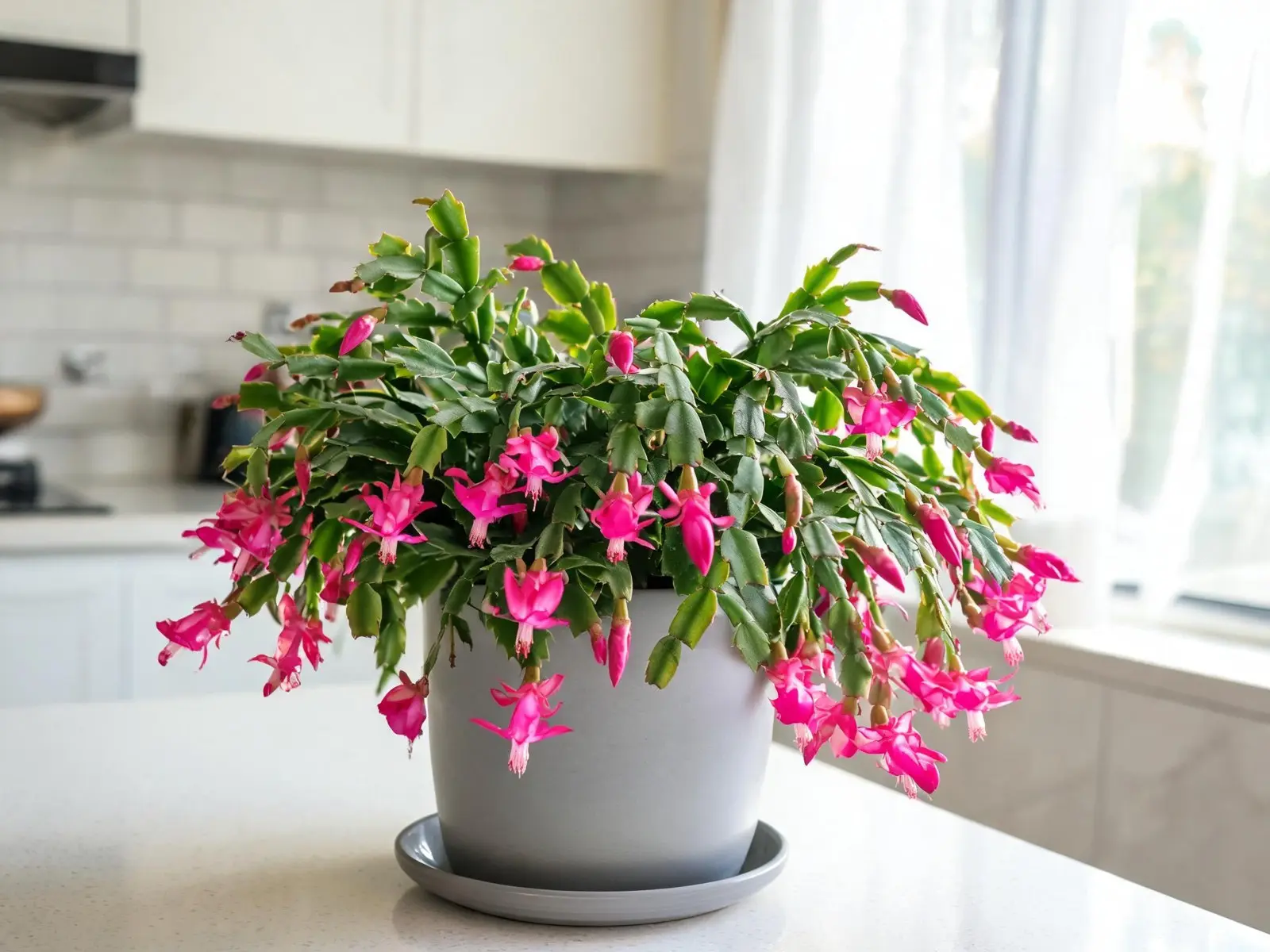
Christmas cacti flower well when slightly root-bound, so they only need repotting every few years, in spring after blooming. Move up just one pot size (about 1–2 inches / 2.5–5 cm wider) and use a fast-draining mix, such as cactus or succulent mix blended with some perlite or orchid bark.
If the segments are limp and the base of the stems is soft, gently slide the plant out of its pot. Healthy roots are firm and pale. Roots that are brown or black, mushy, and fall apart when touched are rotten. Trim them back to healthy tissue with clean scissors and replant in fresh, dry mix in a clean pot, then water lightly only once the top inch has dried.
If most of the roots and the main stem base are rotten, the plant itself may not recover. You can still save it by taking cuttings: twist off healthy pieces of 2–3 segments, let the ends dry for a day, then push them about half an inch (1 cm) deep into barely moist cactus mix. Keep them in bright, indirect light, and they usually root within a few weeks. For more help with a struggling plant, see our guide on how to save a dying plant.
Christmas cactus or Thanksgiving cactus?
Many plants sold as "Christmas cactus" in stores are actually Thanksgiving cactus (Schlumbergera truncata), which has pointed, claw-like teeth on the edges of its segments and usually blooms a few weeks earlier. A true Christmas cactus has smoother, more rounded segment edges. Care is almost the same, and bud drop has the same causes, but knowing which one you have explains why yours may bloom in November instead of December. If you are not sure, our free plant identifier can tell you from a photo.
Pet safety: the ASPCA lists the Christmas cactus as non-toxic to cats and dogs, though eating a lot of any plant can upset a pet's stomach.
Check your plant's problem from a photo
If buds keep dropping even after you have fixed light, temperature and watering, there may be a hidden problem such as root rot, mealybugs or scale. Take a clear photo of the stems and soil and run it through our free AI plant diagnosis to get a likely cause and treatment steps in seconds.
Frequently asked questions
Will Christmas cactus buds grow back after they fall off?
Buds that have dropped will not reattach or regrow this season. However, buds that are still on the plant can open normally once the cause is fixed, and a healthy plant will set new buds again next fall.
Is it normal for a new Christmas cactus to drop a few buds?
Yes. A plant that has just moved from a store to your home often drops a few buds while it adjusts to new light and temperature. Keep it in one bright spot, water carefully, and most of the remaining buds should open.
How often should I water a Christmas cactus in winter?
There is no fixed schedule. Water when the top 1 inch (2.5 cm) of soil feels dry, then let the excess drain away. In a warm, heated home that may be about once a week while it is flowering; in a cooler room, less often.
Why do my Christmas cactus buds drop every year?
Repeated bud drop usually points to a recurring condition, such as moving the plant for the holidays every year, a spot near a heater vent, or letting the soil dry out completely while it is in bud. Find a stable location and keep watering consistent during the budding period.