Short answer: Monstera leaves usually curl because the plant is losing more water than its roots can supply. In winter that most often means soil left dry for too long, very dry air from central heating, or a spot next to a hot vent or a cold, drafty window. Overwatering that rots the roots, pests such as spider mites and thrips, and a root-bound pot cause the same curl, so check the soil and the undersides of the leaves before you change anything.
Not sure which one it is? Upload a photo of the curled leaf to our free plant diagnosis tool and it will point you to the most likely cause in a few seconds.
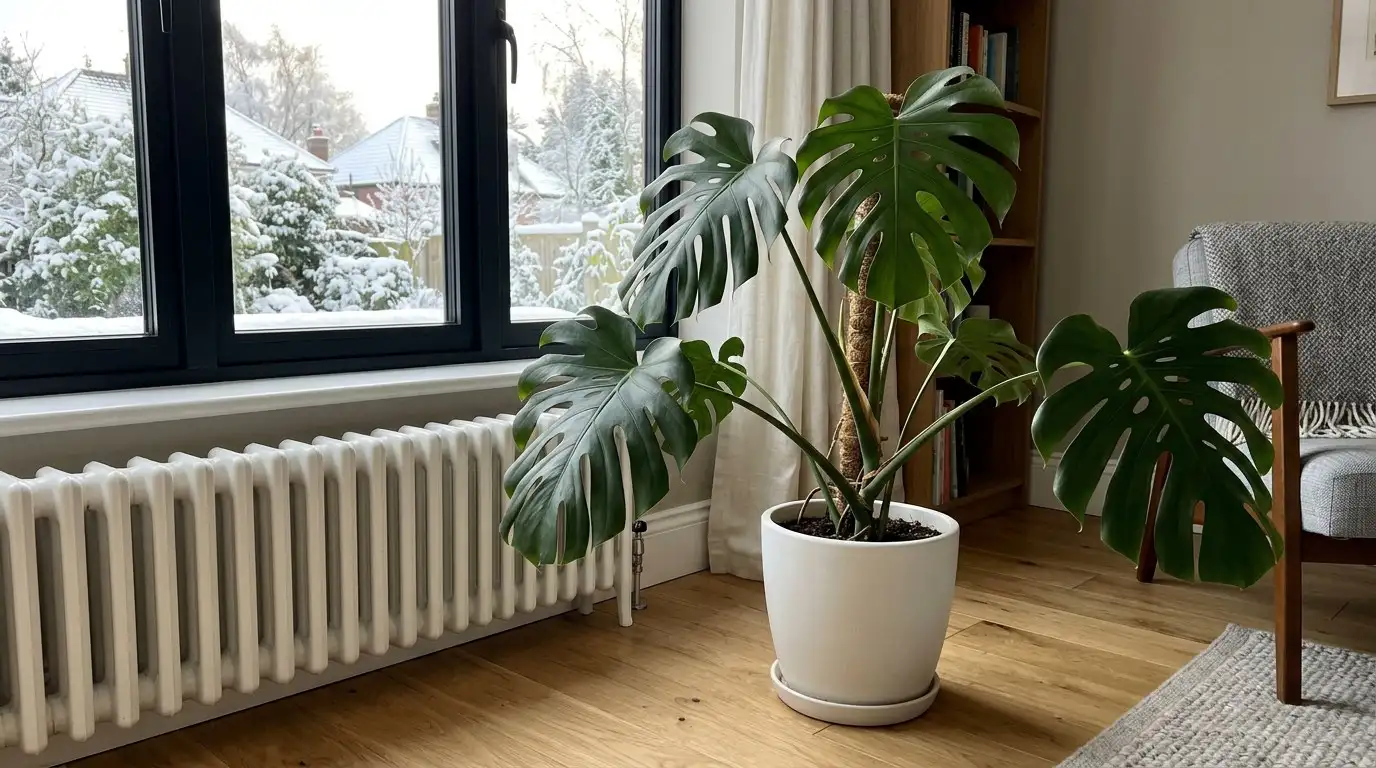
A monstera parked right next to a radiator or a cold window in winter is a classic setup for curling leaves.
First, is the curl normal?
A brand-new monstera leaf comes out tightly rolled and opens over several days to a couple of weeks. That is normal, and you should never try to unroll it by hand, because the tissue tears easily. The leaves you need to worry about are mature, fully opened leaves that start rolling inward along the edges, cup downward, or fold in half along the midrib like a taco.
Monstera leaves curling: symptom and cause guide
What you see
Most likely cause
Quick check
Leaves curl inward and feel soft or limp, soil is dry and light
Underwatering
Push a finger 2 inches (5 cm) into the soil; it is dry all the way down
Edges roll inward and turn crispy brown, soil is moist
Low humidity / hot, dry air from heating
Plant is near a radiator, heat vent or fireplace
Leaves curl and droop, some turn yellow, soil stays wet
Overwatering and root rot
Soil smells sour; roots are brown and mushy
Curling plus dull, dark or see-through patches
Cold damage or drafts
Leaves touch a window or sit near an outside door
Curling with tiny pale speckles, silvery streaks or fine webbing
Spider mites or thrips
Wipe the leaf underside with a white tissue
Curling, and water runs straight out of the pot
Root-bound plant
Roots circle the pot or grow out of the drainage holes
Curled, scorched or bleached patches facing the window
Too much direct sun
Hot afternoon sun through glass hits the leaves
Curled, crispy edges and a white crust on the soil or pot rim
Fertilizer salt build-up
You feed often, especially in winter
1. Underwatering (the most common cause)
When the root ball dries out completely, the leaves roll inward to cut down on water loss. The plant often looks tired and the leaves feel thin rather than stiff. This happens a lot in winter because heated rooms dry the soil faster than people expect, even though the plant is growing more slowly.
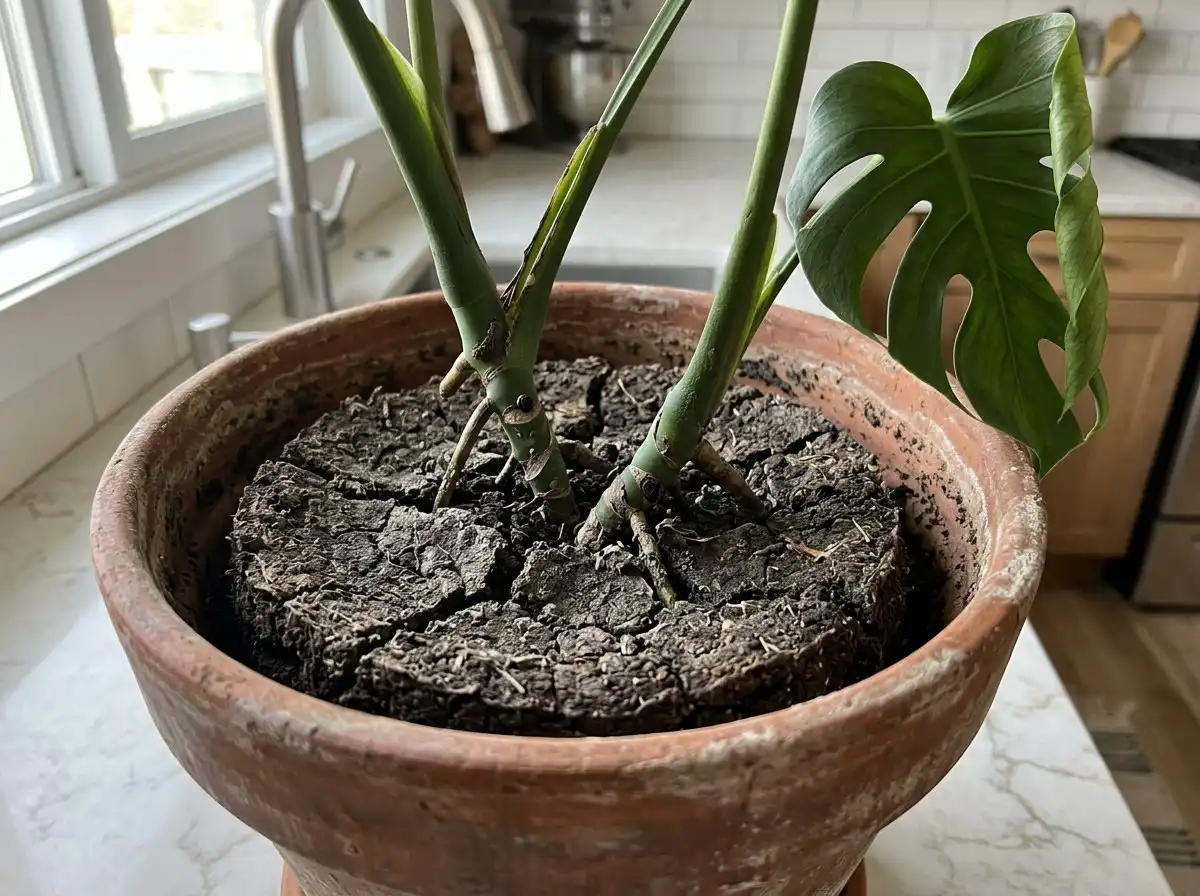
Cracked soil that has shrunk away from the pot wall means water is running down the sides instead of soaking the roots.
How to fix it
Water slowly and thoroughly until water drains from the bottom, then empty the saucer.
If the soil has shrunk away from the pot, bottom-water: stand the pot in a sink or bowl with 2–3 inches (5–8 cm) of room-temperature water for 20–30 minutes so the dry root ball can soak it up.
From then on, water when the top 1–2 inches (2–5 cm) of soil are dry. Check with your finger rather than watering on a fixed calendar day.
2. Low humidity and dry heated air
Monstera is a tropical plant that grows best in moderate to high humidity. In winter, forced-air heating and radiators can drop indoor humidity well below what it likes, and a plant sitting right next to a heat source loses moisture through its leaves faster than the roots can replace it. The result is edges that roll inward and often turn crispy and brown.
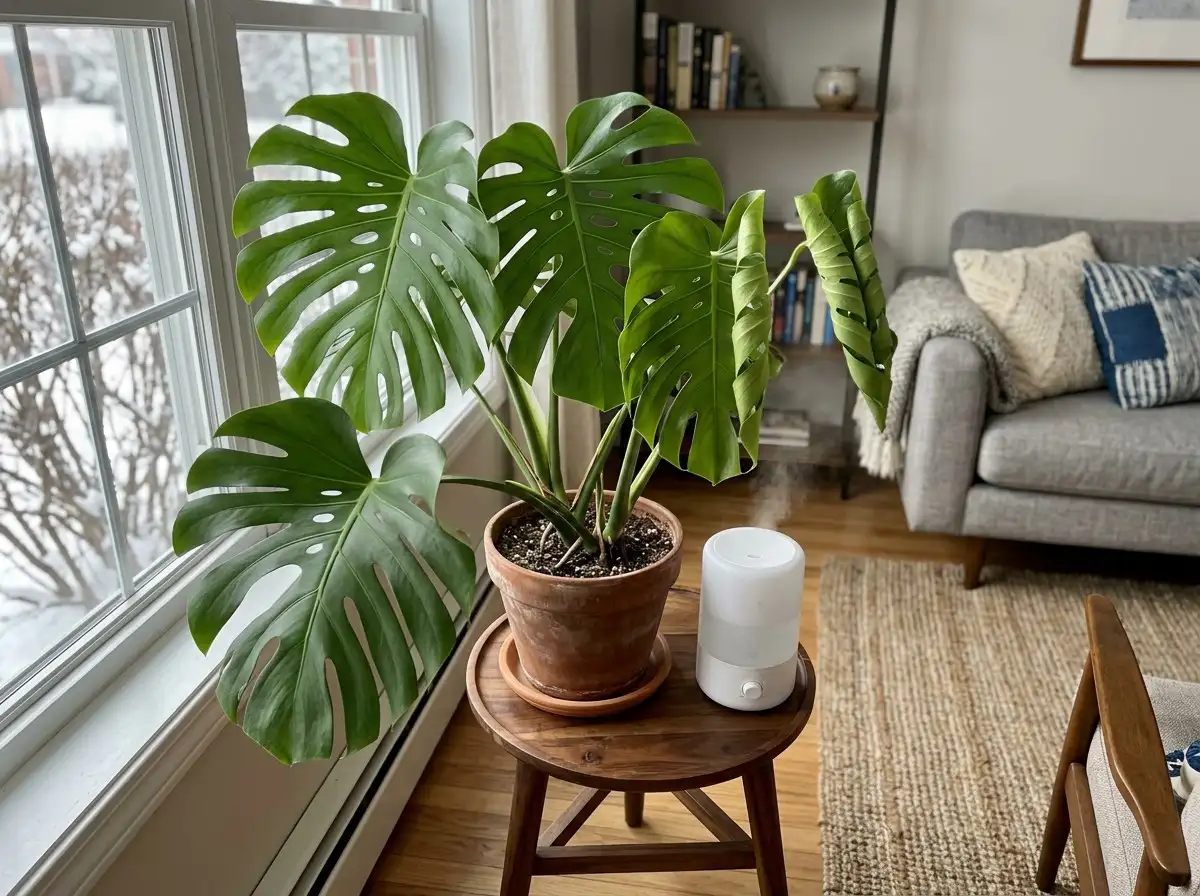
A small humidifier near the plant does far more for dry winter air than occasional misting.
How to fix it
Move the plant at least 3 feet (about 1 m) away from radiators, heating vents, space heaters and fireplaces.
Run a humidifier nearby. A cheap hygrometer helps you see what the room actually reads; aim for roughly 40–60% humidity.
Grouping plants raises humidity slightly. Misting only helps for a few minutes, so do not rely on it.
Trim fully crispy edges with clean scissors if they bother you. Brown tissue will not turn green again, but new leaves will come out fine once the air improves.
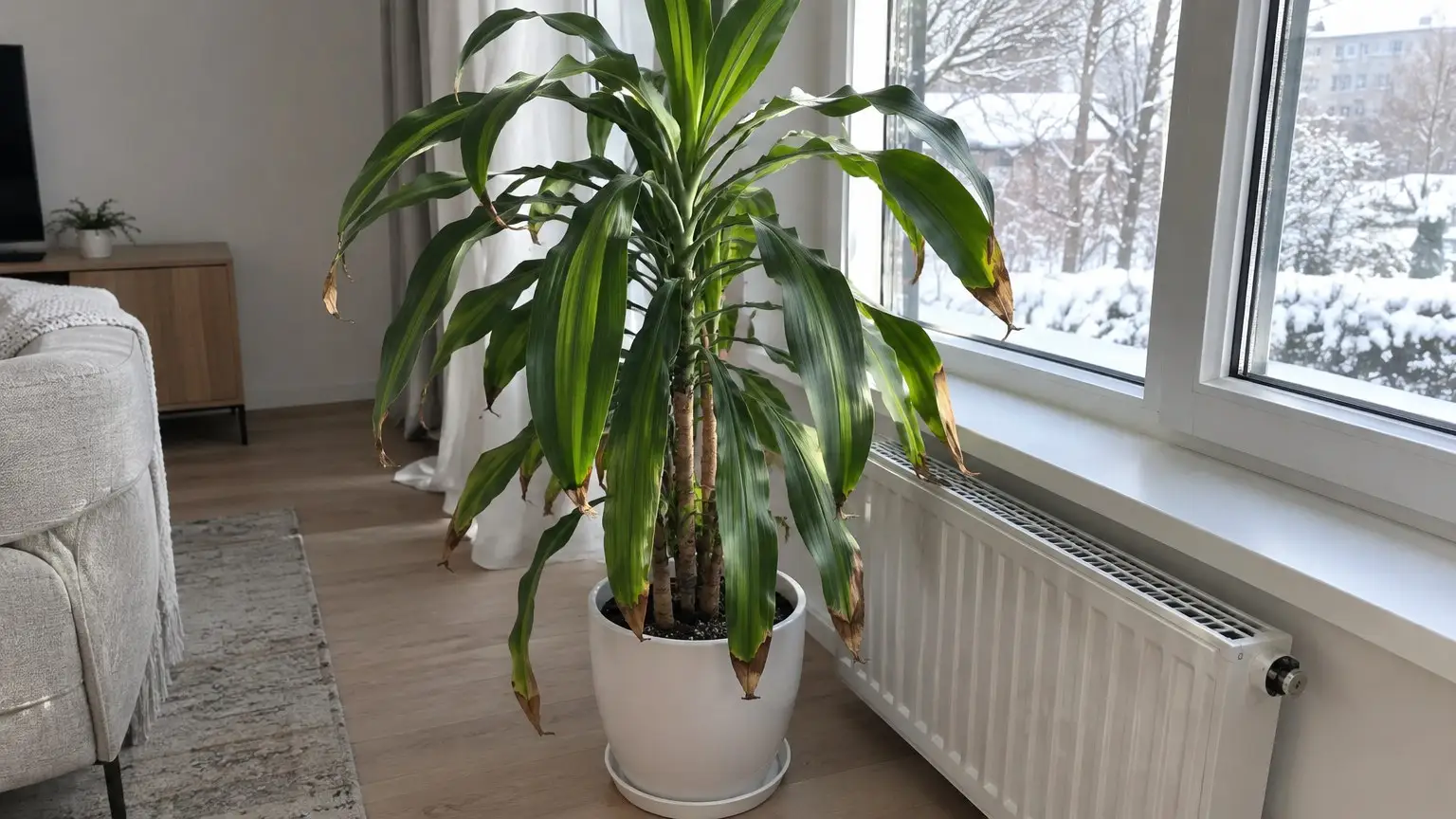
The same dry winter air is behind many other browning problems too; see our guide to brown tips on dracaena for more ways to raise humidity indoors.
3. Overwatering and root rot
It sounds backwards, but a monstera in soggy soil can curl just like a thirsty one. Roots sitting in wet, airless soil start to rot, and rotten roots cannot move water up to the leaves. You will usually also see yellowing lower leaves, drooping stems and soil that never seems to dry. Winter makes this worse because the plant uses much less water when light is low.
How to fix it
Stop watering and let the top 2 inches (5 cm) dry out. Make sure the pot has drainage holes and is not standing in a full saucer or a decorative pot without drainage.
If the soil smells sour or the plant keeps getting worse, slide it out of the pot and look at the roots. Healthy roots are firm and white to light tan; rotten ones are brown, black and mushy.
Cut away rotten roots with clean scissors, then repot into fresh, chunky aroid mix (potting mix with added bark and perlite) in a pot only slightly larger than the healthy root ball.
If yellowing is the bigger problem, our full guide on monstera leaves turning yellow walks through root rot step by step. Constantly wet soil also attracts fungus gnats, so read how to get rid of fungus gnats if you see tiny black flies around the pot.
4. Cold drafts and temperature swings
Monstera is happiest between about 65 and 85°F (18–29°C). Temperatures below about 50°F (10°C) can damage the leaves. A plant pressed against a single-pane window at night, or near an outside door that opens often in winter, can get leaves that curl, darken or develop soft, see-through patches.
How to fix it
Keep leaves from touching cold glass, and pull the plant back from the window on very cold nights.
Move it away from outside doors and drafty hallways.
Cut off leaves that are badly damaged (blackened or mushy).
5. Pests: spider mites and thrips
Spider mites love warm, dry indoor air, which is why they often show up in winter. They feed on the undersides of the leaves, causing fine pale speckles, a dusty look and, in heavy cases, thin webbing. Thrips leave silvery streaks and black specks, and they often attack new leaves before they unroll, which makes those leaves come out twisted or curled.
How to fix it
Rinse both sides of every leaf in the shower with lukewarm water, then wipe the leaves with a damp cloth.
Spray thoroughly with insecticidal soap or a ready-to-use neem oil spray, following the label, and covering the undersides of the leaves. Repeat every 5–7 days for several weeks, because new pests keep hatching from eggs.
Raise humidity, since spider mites are much less of a problem in moist air.
6. A root-bound pot
A monstera that has filled its pot with roots has very little soil left to hold water. It dries out within a day or two of watering, and the leaves curl from constant thirst even though you water often. Roots growing out of the drainage holes or circling tightly around the pot are the giveaway.
How to fix it
Repot into a pot 1–2 inches (2–5 cm) wider than the current one, using fresh aroid mix. Spring and early summer are the best times, but a seriously root-bound plant that dries out daily can be moved up a size in winter too; just water carefully afterward and do not fertilize for a few weeks.
7 and 8. Hot direct sun and fertilizer salts
Strong afternoon sun through a south- or west-facing window can heat the leaves until they curl and show pale, scorched patches. It is mostly a late-spring and summer problem; move the plant a few feet back or use a sheer curtain. Feeding too often, especially in winter, leaves mineral salts that cause crispy, curled edges and a white crust on the soil. Flush the pot with plenty of room-temperature water, stop feeding until spring, then use a balanced houseplant fertilizer at half strength about once a month in the growing season.
Step-by-step: how to fix a monstera with curling leaves
Check the soil. Push a finger 2 inches (5 cm) in. Bone dry points to thirst or a root-bound pot; wet and heavy points to overwatering.
Look under the leaves with your phone flashlight for speckles, webbing or silvery streaks.
Check the spot. Move the plant away from heat sources, cold glass and drafts.
Correct the watering: soak a dry plant thoroughly, or let a soggy one dry out and check the roots.
Add humidity and treat pests if needed, repeating pest treatments weekly.
Give it time. Thirsty leaves can flatten in days; damaged leaves may stay curled, but new leaves should open normally.
When to repot, and when a leaf can't be saved
Repot when you find rotten roots, when roots are circling the pot or coming out of the drainage holes, or when the soil dries out within a day or two of watering. Otherwise, leave the plant in its pot through winter.
A leaf that is mostly yellow, brown, crispy or has soft black patches will not recover. Cut it off at the base of its stem so the plant can put its energy into new growth. As long as the main stem is firm and some roots are healthy, a monstera usually bounces back well. If the stem itself has gone soft and mushy at the soil line, cut off a healthy section with at least one node and an aerial root and propagate it in water or fresh mix.
Pet safety: Monstera is toxic to cats and dogs if chewed, because it contains calcium oxalate crystals that irritate the mouth and stomach. Keep trimmed leaves and the plant itself out of reach of pets.
Check your plant's problem from a photo
Curling can have more than one cause at the same time, such as dry air plus spider mites. If you are still unsure after the checks above, snap a clear photo of the top and underside of an affected leaf and run it through our free AI plant diagnosis tool. Not sure your plant is really a Monstera deliciosa? Check it with our plant identifier.
Frequently asked questions
Will curled monstera leaves uncurl?
Leaves that curled from thirst usually flatten again within a few days of a thorough watering. Leaves that curled from cold damage, pest damage or crispy dried edges often stay curled, but they can still feed the plant as long as they are mostly green.
How often should I water a monstera in winter?
There is no fixed schedule. Water when the top 1–2 inches (2–5 cm) of soil are dry. In a cool room with low light that might be every two to three weeks; in a warm, bright, heated room it can be weekly.
Should I mist my monstera to stop the leaves curling?
Misting raises humidity for only a few minutes, so it rarely fixes curling from dry winter air. A humidifier and moving the plant away from heat work much better.
Why are my new monstera leaves coming out curled or deformed?
New leaves are always rolled when they first appear and open over several days. If they stay twisted or come out with brown, scarred patches, the usual causes are thrips feeding on the leaf before it opened, or very dry air making the leaf stick as it unfurls.