Short answer: Brown tips on a dracaena are usually caused by chemicals in tap water (especially fluoride), dry indoor air from heating, or uneven watering. Switch to distilled, rain or filtered water, keep the soil evenly moist but never soggy, raise the humidity a little, and trim the brown ends off with clean scissors. Brown tissue will not turn green again, but new leaves will grow in clean.
Not sure it is only tip burn? Upload a photo to our free plant diagnosis tool and it will check the leaves for watering stress, pests and disease in a few seconds.
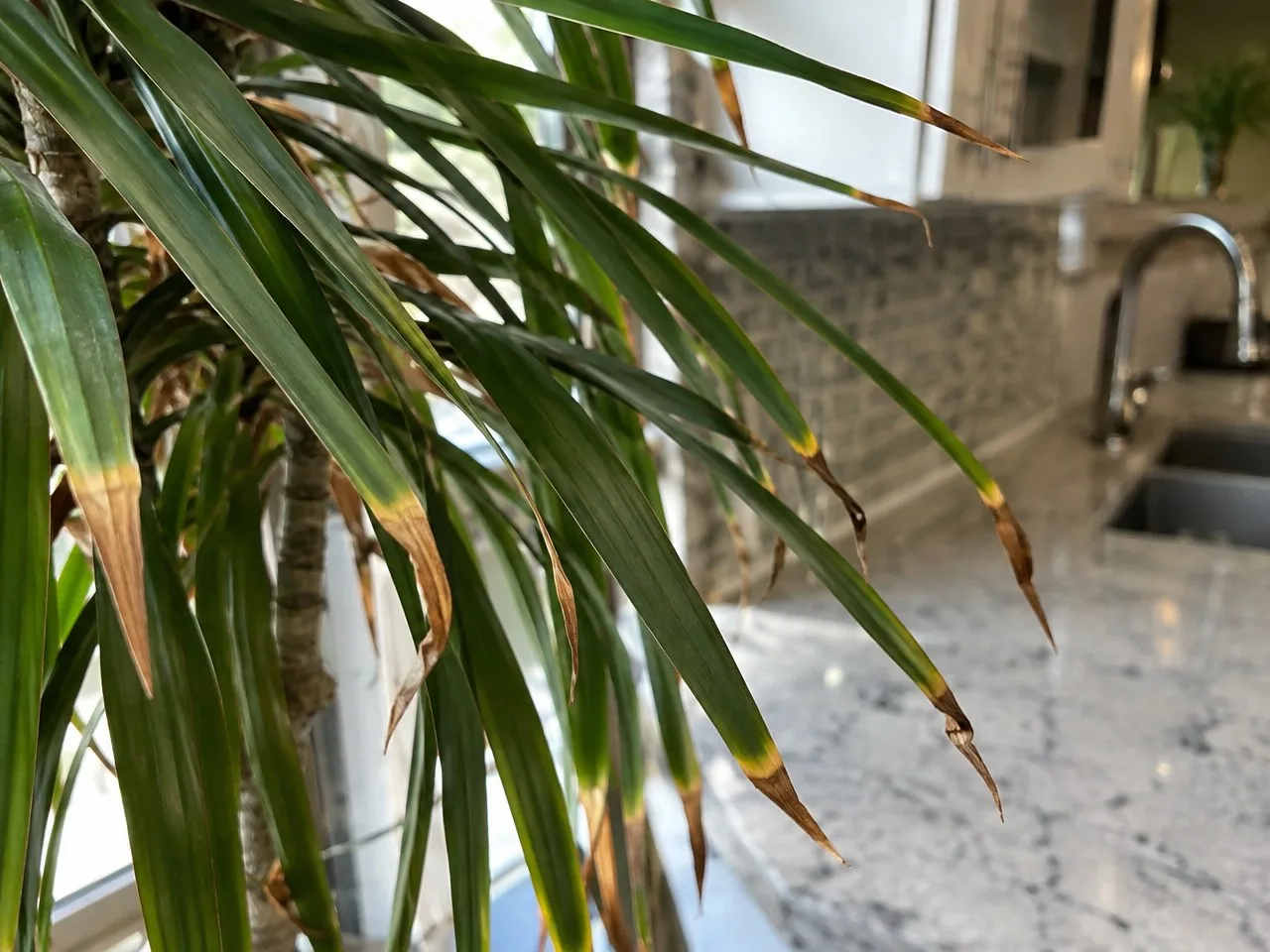
Typical dracaena tip burn: dry brown ends, often with a thin yellow band before the healthy green part of the leaf.
Why dracaena tips turn brown: quick symptom guide
Dracaenas (corn plant, dragon tree, Janet Craig, lemon lime) are tough, but their long leaves show stress at the tips first. Use the table to narrow down the cause before you change anything.
What you see
Most likely cause
First thing to do
Brown tips and brown spots or streaks on many leaves, soil and watering seem fine
Fluoride or other chemicals in tap water
Water with distilled, rain or filtered water
Thin, crispy tips that appear in winter when the heating is on
Dry indoor air
Move away from heat vents, group plants, add a humidifier
Crispy tips, soil pulling away from the pot, light pot
Underwatering
Soak the soil thoroughly and water more evenly
Brown tips plus yellow lower leaves, soil wet for days, sour smell
Overwatering or root rot
Let the soil dry, check the roots
White crust on the soil or pot rim, tips burn after feeding
Fertilizer and mineral salt buildup
Flush the soil with clean water, feed less
Brown, papery patches after the plant sat by a cold window or door
Cold drafts
Move it to a spot that stays above 60°F (15°C)
Fine yellow speckles, dull leaves, tiny webs under leaves
Spider mites
Wash leaves, treat with insecticidal soap
1. Fluoride and chemicals in tap water
Dracaenas are well known for being sensitive to fluoride, which is added to many city water supplies in the US, Canada, Australia and parts of the UK. Fluoride builds up in the leaf tips and margins over time and kills that tissue, giving brown tips and sometimes brown spots along the edges.
How to fix it
Water with distilled water, rainwater, or water from a reverse-osmosis filter. A simple carbon pitcher filter may not remove fluoride, so check the filter's specifications.
Do not rely on leaving tap water out overnight. That lets chlorine escape, but fluoride stays in the water.
Avoid fertilizers that list superphosphate as an ingredient, since it can contain fluoride.
Flush the existing soil once (see the step-by-step section below) to wash out what has already built up.
2. Dry air from central heating
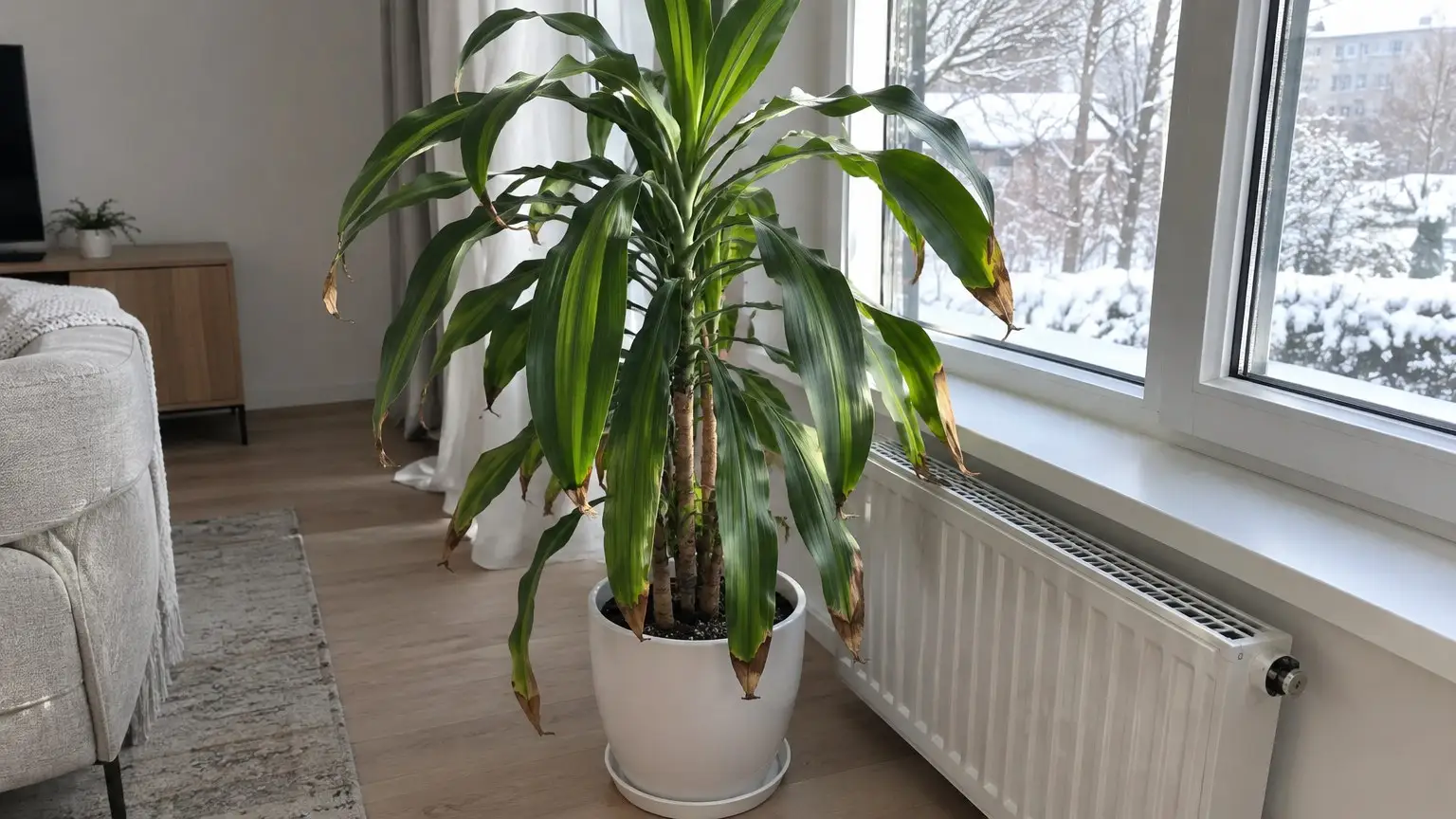
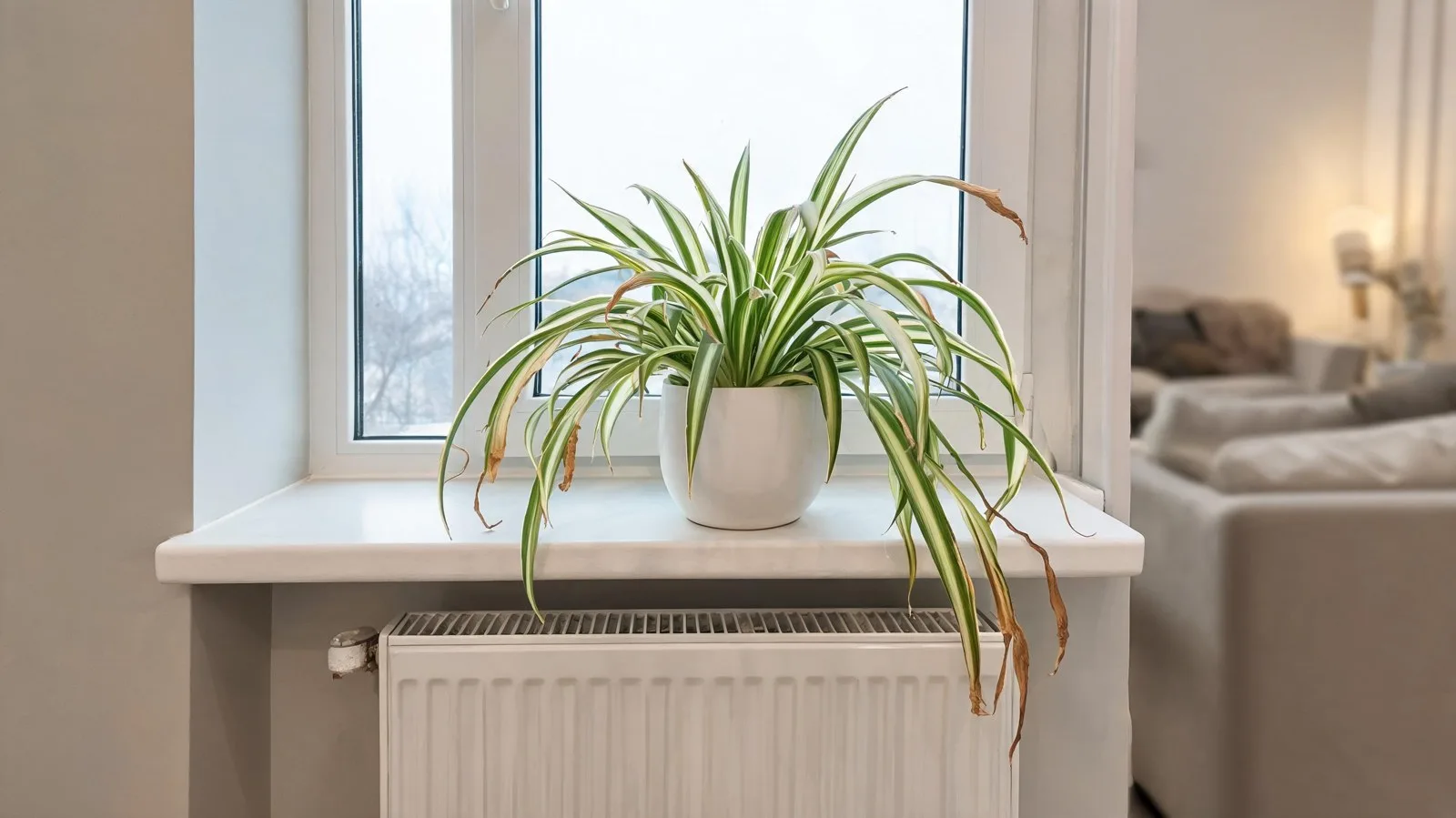
In winter, forced-air heating can drop indoor humidity very low. Dracaenas cope with average household air better than many tropical plants, but very dry air combined with a plant placed next to a heat vent or radiator often shows up as thin, crispy brown tips within a few weeks. If your spider plant has brown tips or your Boston fern is turning brown at the same time, dry air is a strong suspect.
How to fix it
Move the plant at least 3 feet (about 1 m) away from radiators, baseboard heaters and heating vents.
Run a small humidifier nearby and aim for roughly 40 to 50% humidity. An inexpensive hygrometer tells you what you actually have.
Misting gives only a few minutes of extra humidity, so it will not fix tip burn on its own.
3. Underwatering or very uneven watering
When the soil dries out completely, the plant cannot move enough water to the far ends of its leaves, and the tips die back.
How to fix it
Check the soil with your finger. For most dracaenas, water when the top 1 to 2 inches (2.5 to 5 cm) are dry.
Water slowly until water runs out of the drainage holes, then empty the saucer after 15 to 30 minutes.
If the soil has shrunk away from the pot and water runs straight through, soak the pot in a sink or bucket of water for 20 to 30 minutes so the root ball rehydrates, then let it drain.
4. Overwatering and root rot
Too much water causes brown tips too, because rotting roots cannot take up water. The difference is that the soil stays wet, lower leaves often turn yellow, and the base of the stem may feel soft. Winter is the riskiest time, because the plant grows slowly in low light and uses far less water. Constantly wet soil also invites fungus gnats; if you see small black flies around the pot, read our guide on getting rid of fungus gnats in houseplants.
How to fix it
Stop watering until the top 2 inches (5 cm) are dry, and make sure the pot has drainage holes. Never let it stand in a full saucer or a decorative pot without holes.
If the soil smells sour or stays wet for more than a week, slide the plant out and look at the roots. Healthy roots are firm and light colored; rotten roots are brown or black, mushy and may slip apart.
Cut away rotten roots with clean scissors and repot into fresh, well-draining potting mix in a pot only slightly larger than the remaining root ball.
5. Fertilizer and mineral salt buildup
Dracaenas are light feeders. Fertilizer salts and minerals from hard tap water collect in the soil over months, especially when you water in small sips that never drain through. High salt levels pull moisture away from the roots and burn the leaf tips. A white or crusty layer on the soil or pot rim is the giveaway. A fuzzy white layer is different; that is usually mold, covered in our guide to white fungus in plant soil.
How to fix it
Flush the soil with clean water (steps below) and scrape off any crust on top.
Feed only in spring and summer, about once a month with a balanced houseplant fertilizer diluted to half strength. Do not fertilize in late fall and winter.
6. Cold drafts and chilly windows
Dracaenas like the same temperatures people do, roughly 65 to 80°F (18 to 27°C). Leaves that touch cold window glass, or plants placed by a door that opens to winter air, can develop brown tips and papery patches. Temperatures below about 55°F (13°C) can damage the leaves.
How to fix it
Keep leaves from touching the glass and move the plant away from drafty doors and leaky windows.
Keep the room above 60°F (15°C), including at night.
7. Spider mites
Warm, dry, heated rooms are exactly what spider mites like. They feed on the undersides of the leaves, causing fine yellow speckling, a dusty dull look and, in bad cases, browning leaves and thin webbing.
How to fix it
Isolate the plant and rinse the leaves well in the shower, including the undersides.
Spray thoroughly with insecticidal soap, following the label, and repeat every 5 to 7 days for a few weeks to catch newly hatched mites.
Step-by-step: how to fix a dracaena with brown tips
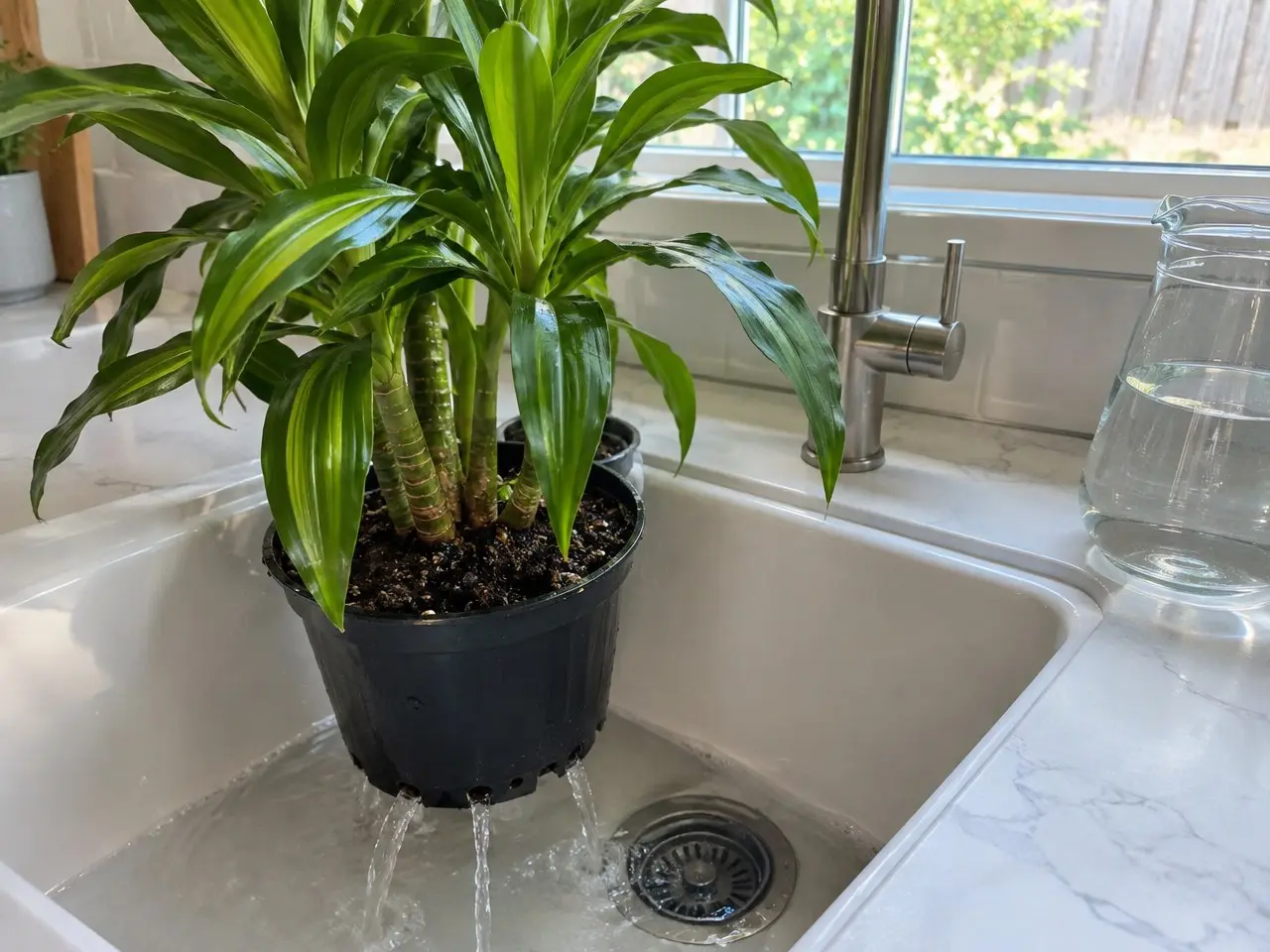
Flushing the soil in the sink washes out built-up fertilizer salts and minerals.
Check the soil moisture. Push a finger 2 inches (5 cm) into the soil. Bone dry points to underwatering; wet and heavy points to overwatering. Adjust before anything else.
Look at the roots if the soil stays wet. Remove the plant from its pot and cut off any mushy, dark roots. Repot in fresh potting mix in a pot with drainage holes.
Flush the soil. In a sink or bathtub, slowly pour distilled or filtered water through the soil, using roughly twice the volume of the pot, and let it drain completely. Repeat every few months if you use tap water or fertilizer.
Switch the water. From now on, use distilled, rain or reverse-osmosis water, at room temperature.
Fix the location. Bright, indirect light, away from heat vents, radiators, cold glass and drafty doors.
Raise humidity in winter. A humidifier or grouping plants helps; misting alone does very little.
Trim the brown tips. Use clean, sharp scissors and follow the natural pointed shape of the leaf. Leave a very thin line of brown so you do not cut into living green tissue, which can cause a fresh brown edge.
Be patient. Existing damage stays, but new leaves that come in over the next couple of months should have clean green tips if the cause is fixed.
When to repot, and when a leaf can't be saved
Repot if roots are circling the bottom or growing out of the drainage holes, if water runs straight through without wetting the soil, or if you found root rot. Choose a pot only 1 to 2 inches (2.5 to 5 cm) wider than the old one.
A few brown tips are cosmetic. A leaf that is more than about half brown or yellow will not recover, so cut it off at the base. It is also normal for a dracaena to lose its oldest, lowest leaves slowly as the cane grows taller. If the main stem is soft and mushy at the soil line, that cane is rotting; you can usually save the plant by cutting a healthy top section and rooting it in water or fresh soil.
Is dracaena safe for cats and dogs?
No. The ASPCA lists dracaena as toxic to cats and dogs. Chewing the leaves can cause vomiting, drooling and loss of appetite, and cats may also show dilated pupils. Keep the plant out of reach and contact your vet if your pet eats it. If you are not sure whether your plant is a dracaena or a look-alike such as a cordyline or yucca, check it with our free plant identifier.
Check your plant's problem from a photo
Brown tips can look similar whether the cause is water quality, dry air or root trouble. Upload a clear photo of the whole plant and a close-up of the damaged leaves to the Plant Solutions diagnosis tool to get a likely cause and next steps.
Frequently asked questions
Should I cut the brown tips off my dracaena?
Yes, if you do not like the look of them. Trimming does not harm the plant. Cut with clean, sharp scissors, follow the leaf's natural pointed shape and leave a thin edge of brown so you do not cut into healthy tissue.
Will brown dracaena tips turn green again?
No. Brown leaf tissue is dead and cannot recover. Once you fix the cause, the new leaves should grow in without brown tips, and you can trim the old ones for appearance.
Can I use tap water for my dracaena?
You can if your tap water is low in fluoride and minerals, but many city supplies are fluoridated, which often leads to brown tips. Distilled, rain or reverse-osmosis water is the safer choice. Letting tap water sit overnight removes chlorine but not fluoride.
How often should I water a dracaena in winter?
There is no fixed schedule. Water when the top 1 to 2 inches (2.5 to 5 cm) of soil are dry. Indoors in winter this is often every 2 to 3 weeks, less often in cool, dim rooms and more often near a heater.
Why does my dracaena have brown tips and yellow leaves?
Brown tips together with yellowing lower leaves and soil that stays wet usually point to overwatering or root rot. Let the soil dry, check the roots and repot if they are mushy.