Short answer: A Christmas cactus that won't bloom is almost always getting too much light at night, staying too warm, or being watered and fed like a summer plant in fall. It needs about six weeks of long, dark nights (around 12–14 hours of darkness) and/or cool temperatures of roughly 50–60°F (10–15°C) to set buds. Fix those and most plants flower the same season.
Not sure if the problem is blooming or something else, like limp segments or rot? Upload a photo to our free plant diagnosis tool for a quick check.
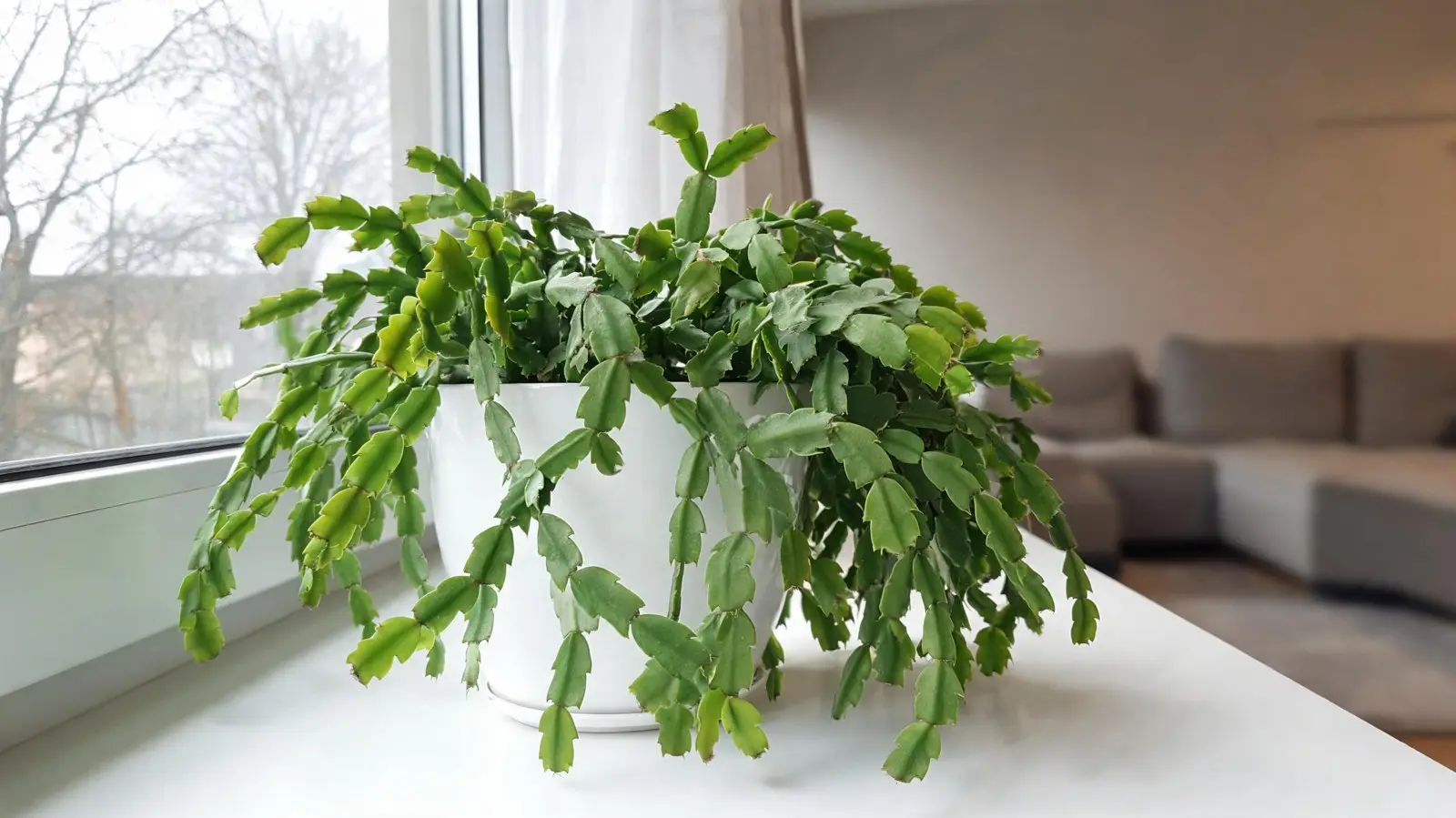
A healthy Christmas cactus can stay green for years without flowering if its nights are too bright or too warm.
Why Christmas cactus needs a trigger to bloom
Christmas cactus (Schlumbergera) is a short-day plant. In its native mountain forests in Brazil, buds form as autumn nights get longer and cooler. Indoors, a warm living room with lamps on until midnight never sends that signal, so the plant keeps growing new green segments instead of flowers. Once buds are visible, the plant usually takes several more weeks to open them.
The good news: a plant that grows well but never flowers is usually healthy. You only need to change its conditions for a few weeks in fall.
Christmas cactus not blooming: symptom → likely cause
What you see
Most likely cause
Lush green growth, no buds at all
Lamps or TV light at night, or room too warm
Long, thin, pale segments
Too little daytime light
Buds form, then drop
Moving the plant, drafts, heat vents or uneven watering
Flowers every year, but in November or spring
It is a Thanksgiving or Easter cactus, not a Christmas cactus
Soft, limp or wrinkled segments, no buds
Root stress from overwatering or a pot that stays wet
Bloomed last year, nothing this year
Fed with fertilizer into fall, or recently repotted into a much bigger pot
Small plant grown from a cutting
Too young; most need a year or two before flowering well
1. Too much light at night
This is the number one reason. Even a few minutes of lamp light every evening can interrupt the long, unbroken darkness the plant needs to form buds. A plant in a living room, kitchen or home office often sits under lights until late.
How to fix it: From late September or October, give the plant 12–14 hours of total darkness each night for about six weeks. Move it to a spare bedroom or a room you don't use at night, or cover it loosely with a cardboard box from early evening until morning. Keep it in bright light during the day. Stop once you see buds forming.
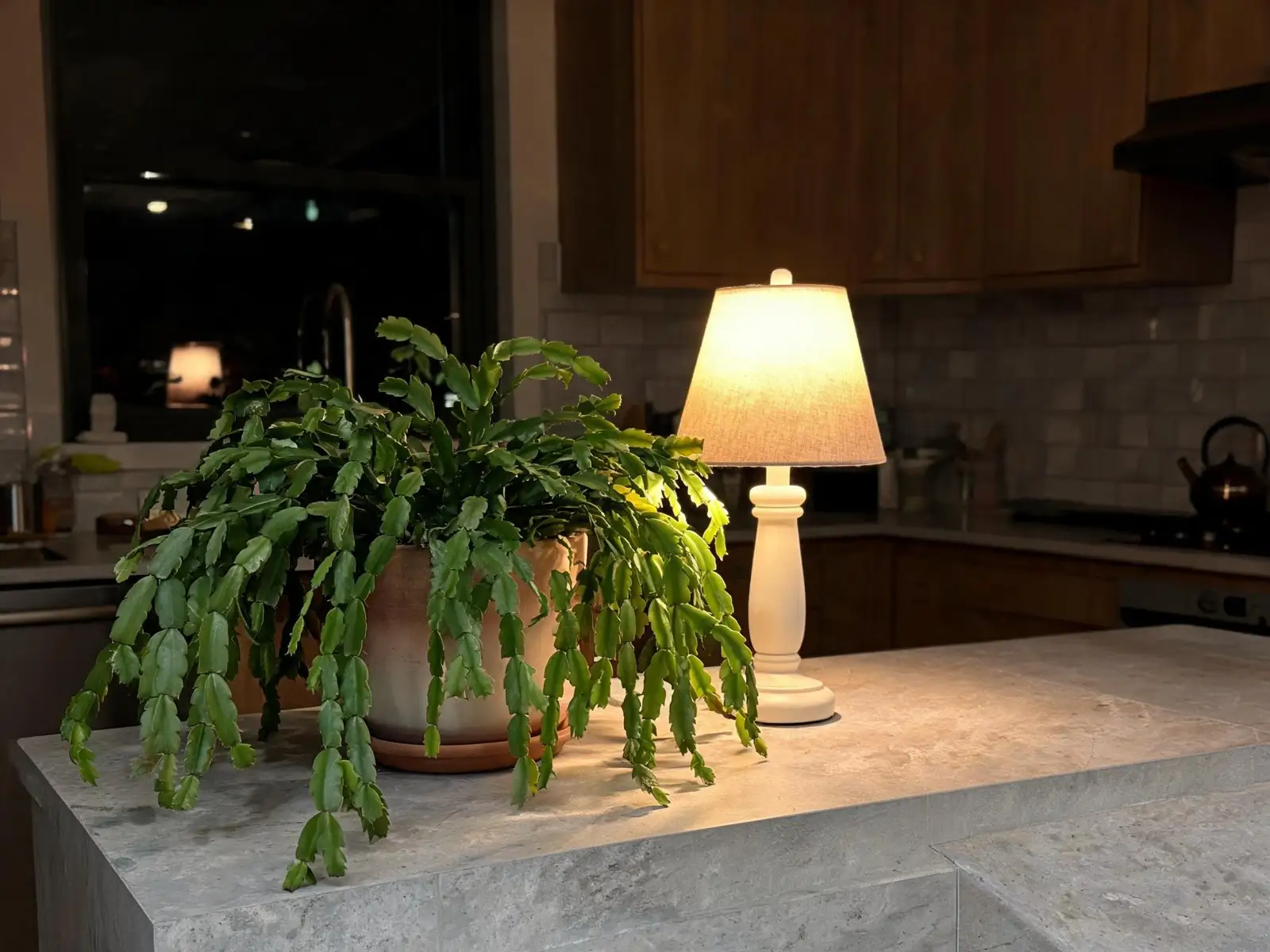
A lamp switched on every evening is often enough to stop a Christmas cactus from setting buds.
2. The room is too warm
Central heating keeps many homes at 70°F (21°C) or above day and night. Warm nights make it harder for the plant to set buds, and cool nights can trigger blooming even when the day length isn't perfect.
How to fix it: In fall, keep the plant somewhere with nights around 50–60°F (10–15°C), such as a cool bedroom, a bright unheated porch or a windowsill in a room you keep cooler. Avoid frost: don't let it drop below about 45°F (7°C), and keep it away from radiators, heat vents and fireplaces.
3. Not enough daytime light
Christmas cactus doesn't want harsh midday sun, but a plant in a dim corner won't have the energy to flower. In winter, light levels indoors drop sharply in the US, Canada, the UK and other northern regions.
How to fix it: Place it in bright, indirect light: an east-facing window, or a few feet back from a south or west window. If your home is dark in winter, a grow light on a timer works well, but switch it off in the evening so the night stays long and dark.
4. Watering and feeding like it's summer
Constant moisture and regular fertilizer in fall tell the plant to keep growing leaves. Wet soil in a cool room can also damage roots, and a stressed plant won't flower.
How to fix it: In fall, water less often. Let the top 1–2 inches (2–5 cm) of soil dry out before watering, then water thoroughly and empty the saucer. Stop fertilizing by late summer. Resume light feeding with a balanced houseplant fertilizer in spring and summer only. If tiny flies appear around damp soil, see our guide on getting rid of fungus gnats in houseplants, which usually means the soil is staying wet too long.
5. Buds form, then fall off
Sometimes the plant does its job and sets buds, then drops them before they open. Common triggers are moving or turning the plant, cold drafts from a door, hot air from a vent, or the soil going bone dry and then soaking wet.
How to fix it: Once buds appear, pick a spot and leave the plant there. Keep watering steady. Our full guide on why Christmas cactus buds fall off covers each cause in detail.
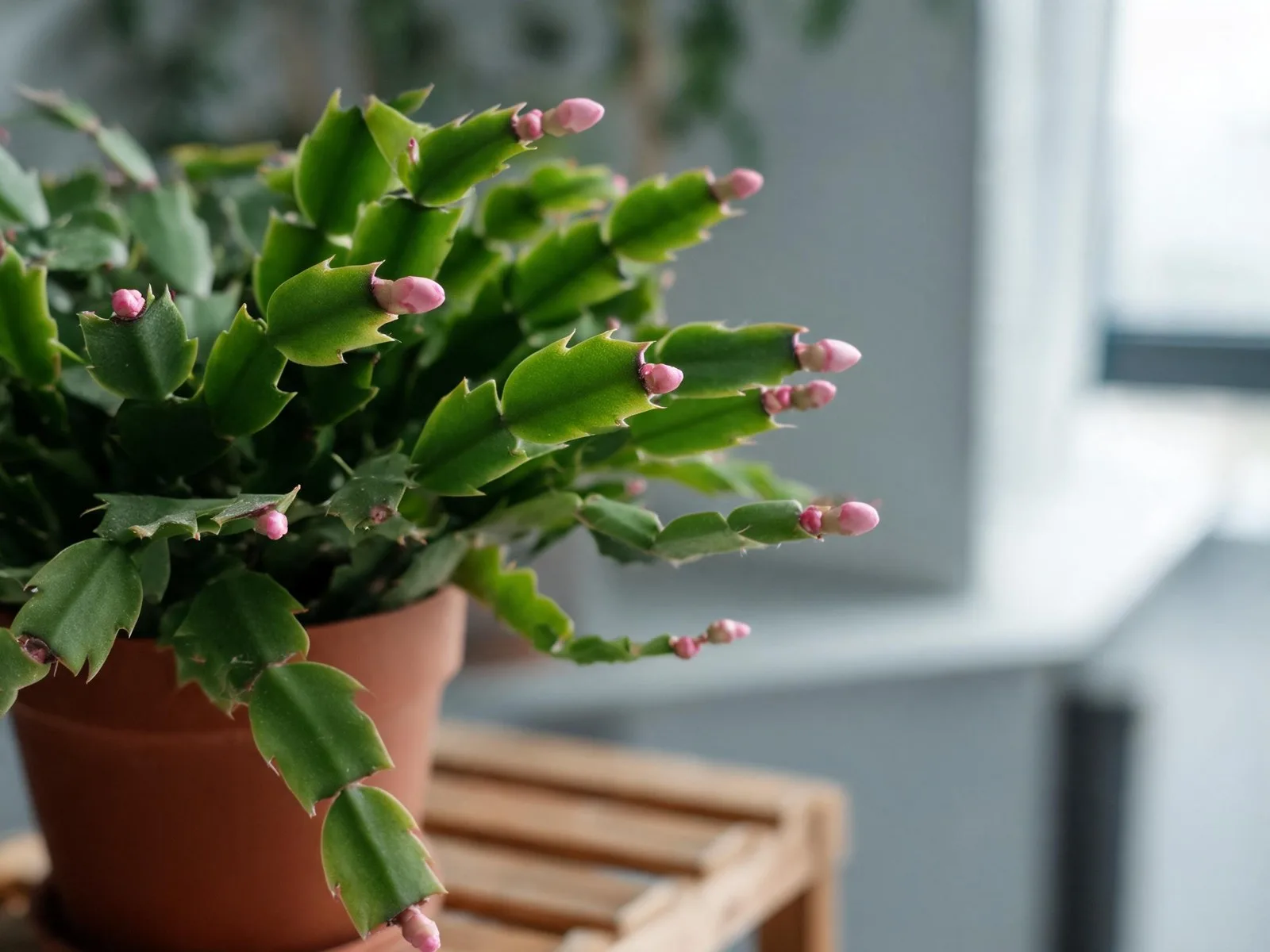
Tiny buds at the segment tips mean the treatment worked. Now leave the plant in one place. (This one has the pointed segment edges of a Thanksgiving cactus, which is often sold as a Christmas cactus.)
6. It's actually a Thanksgiving or Easter cactus
Many plants sold as "Christmas cactus" in stores are really Thanksgiving cactus (Schlumbergera truncata). It usually flowers in November, so it may have already bloomed. Its stem segments have pointed, claw-like teeth on the edges, while a true Christmas cactus has more rounded, scalloped edges. Easter cactus flowers in spring and needs a longer cool rest. If yours "never blooms at Christmas" but flowers at another time of year, it may simply be a different type.
Not sure which one you have? Take a clear photo of a stem segment and try our free plant identifier.
7. Recently repotted, too young or in a huge pot
Christmas cactus blooms best when its roots are a little snug. A plant moved into a much bigger pot often spends its energy on roots and leaves. Fresh cuttings also need time; most need a year or two to grow large enough to flower well.
How to fix it: Repot only every few years, in spring after flowering, and only one pot size up (about 1–2 inches / 2–5 cm wider). Use a fast-draining mix, such as regular potting mix with added perlite or orchid bark, in a pot with a drainage hole.
How to make a Christmas cactus bloom: step by step
Start in early fall. Late September to October is ideal for December flowers. If you start in mid or late November, expect blooms closer to January.
Stop fertilizing and cut back watering so the top 1–2 inches (2–5 cm) of soil dries between drinks.
Give long nights: 12–14 hours of total darkness every night, in an unused room or under a loose box.
Keep it cool: nights around 50–60°F (10–15°C), away from heat vents and frost.
Give bright, indirect light during the day.
Watch for buds at the tips of the segments. This usually takes several weeks.
Once buds appear, return to normal room temperature if you like, water evenly, and don't move the plant again until it finishes blooming.
Is a Christmas cactus safe for cats and dogs?
Christmas cactus is listed as non-toxic to cats and dogs by the ASPCA. Eating a lot of it can still upset a pet's stomach, so it's best kept out of reach of animals that like to chew plants. If you have holiday plants such as poinsettias too, see our guide on why poinsettias drop their leaves.
When it can't bloom (yet): check the roots
If the segments are soft, limp or wrinkled even though the soil is moist, the roots may be damaged. Slide the plant out of its pot. Healthy roots are firm and pale; rotten roots are brown, mushy and may smell bad. Trim off rotten roots, repot in fresh, dry, fast-draining mix and water lightly. A plant recovering from root rot usually won't flower that season. Focus on getting it healthy, then try the long-nights method next fall.
If most of the base is rotten, take a few healthy segments as cuttings. They root easily in slightly moist potting mix and will grow into a new plant. For a dying plant in general, our guide on how to save a dying plant walks you through the first steps.
Check your plant's problem from a photo
If your Christmas cactus has spots, limp segments or something you can't name, upload a photo to the free Plant Solutions plant diagnosis tool. It suggests likely causes and simple fixes in seconds.
Frequently asked questions
How do I get my Christmas cactus to bloom in time for Christmas?
Start in late September or October. Give it about six weeks of 12–14 hour dark nights and cool temperatures around 50–60°F (10–15°C), water less and stop fertilizing. Buds usually appear within several weeks.
Is it too late to make my Christmas cactus bloom this year?
Not usually. If you start in November, the plant can still bloom, just later, often in January. Give it long dark nights and cool temperatures now.
Should I put my Christmas cactus in a dark closet?
Only at night. A closet works for the dark hours, but bring the plant back to bright, indirect light every morning. Constant darkness weakens it.
Does a Christmas cactus need to be root-bound to bloom?
It doesn't need to be tightly root-bound, but it flowers best when slightly snug in its pot. Avoid repotting into a much larger pot, especially in fall.
Why does my Christmas cactus bloom in November instead of December?
It's most likely a Thanksgiving cactus, which naturally flowers earlier. Look for pointed, claw-like teeth on the edges of the segments.
How often should I water a Christmas cactus in winter?
Water when the top 1–2 inches (2–5 cm) of soil feels dry, then let excess water drain away. In a cool room this may be every one to two weeks, but always check the soil rather than following a fixed schedule.