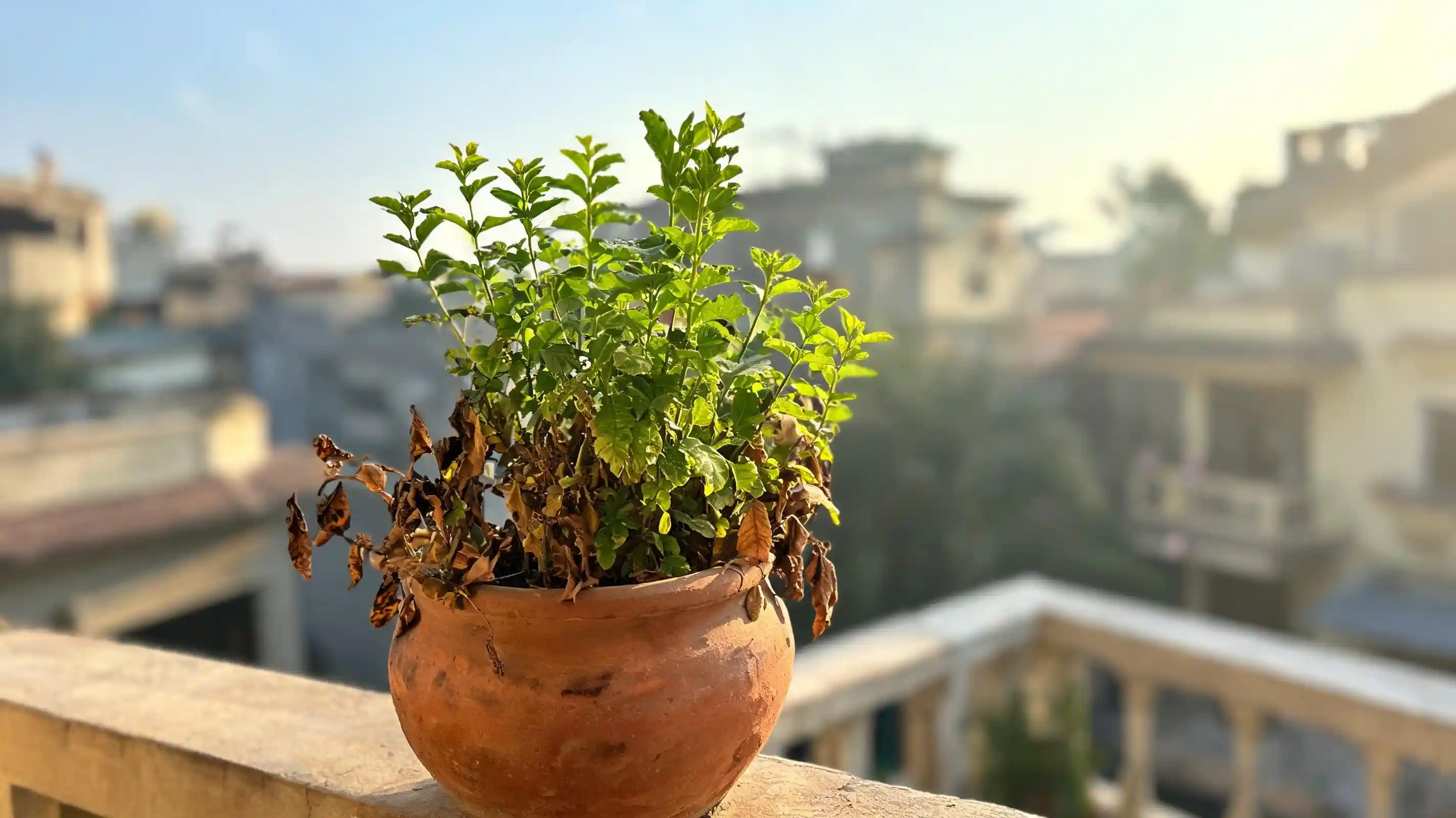
Short answer: a tulsi plant usually dries because of one of four things — cold weather, too much water, letting it flower (manjari) non-stop, or pests. Most drying tulsi plants can be saved if the stem is still green inside. Check the cause below, fix it, and you will see new leaves in 2–3 weeks.
Not sure what's wrong? Upload a photo of the leaves to our free plant diagnosis tool — it tells you the likely problem in a few seconds.
First check: is your tulsi still alive?
Before doing anything, gently scratch a small part of the main stem with your fingernail.
- Green under the bark — the plant is alive. Follow the fixes below.
- Brown and dry all the way, and the stem snaps easily — that part is dead. Scratch lower down; if the base is green, cut the dry part off and the plant can regrow.
- Base is soft, black or smells bad — this is root rot. Jump to cause 2.
Quick symptom guide
| What you see | Most likely cause |
|---|---|
| Leaves turn black or dark brown and fall after a cold night | Cold / winter stress |
| Yellow leaves, soil always wet, stem base dark | Overwatering or root rot |
| Leaves crispy and droopy, soil dry and hard | Underwatering or summer heat |
| Many flower spikes, small leaves, woody stems | Plant is putting all its energy into seeds |
| Sticky leaves, white cotton spots, tiny insects, curled leaves | Pests (mealybugs, aphids, whiteflies, mites) |
| Long thin stems, few leaves, pale colour | Not enough sunlight |
| Brown or black spots spreading on leaves | Fungal leaf spot |
1. Cold weather (the most common cause from November to February)
Tulsi is a tropical plant. It is happiest in warm weather and starts to suffer when nights get cold, especially when temperatures drop close to 10°C or below. In North India this is why so many tulsi plants dry up in December and January. The leaves turn dark, curl and drop, and the plant looks burnt.
How to fix it:
- Move the pot to the warmest, sunniest spot you have — a south-facing balcony or next to a wall that gets afternoon sun.
- On very cold nights, bring the pot indoors near a window, or cover it loosely with a cotton cloth or old dupatta (remove it in the morning).
- Keep it away from cold wind and frost.
- Water much less in winter. Wet soil plus cold air is what kills most tulsi plants.
- Do not add fertilizer in peak winter; wait for spring growth.
2. Too much water and root rot
Many people pour water on tulsi every day, often as part of the morning puja. In summer that can be fine, but in winter or in a pot without drainage it slowly rots the roots. Rotting roots cannot carry water, so the plant dries from the top even though the soil is wet.
How to fix it:
- Water only when the top 2–3 cm (about one finger joint) of soil feels dry.
- Make sure the pot has a drainage hole and do not let water stand in the saucer.
- If the stem base is black and soft, take the plant out. Cut away mushy black roots, let it sit in shade for a few hours, and replant in fresh, well-draining soil.
- If you offer water daily for puja, pour just a little and let the rest go to another plant.
3. Underwatering and summer heat
In May–June, small pots dry out within a day. The leaves go soft, then crispy, and the plant droops in the afternoon.
How to fix it: water deeply in the early morning until water comes out of the drainage hole, give some afternoon shade during heatwaves, and add a thin layer of dry leaves or straw on the soil to keep it cool. Use a bigger pot if it dries out daily.
4. Too many manjari (flowers and seeds)
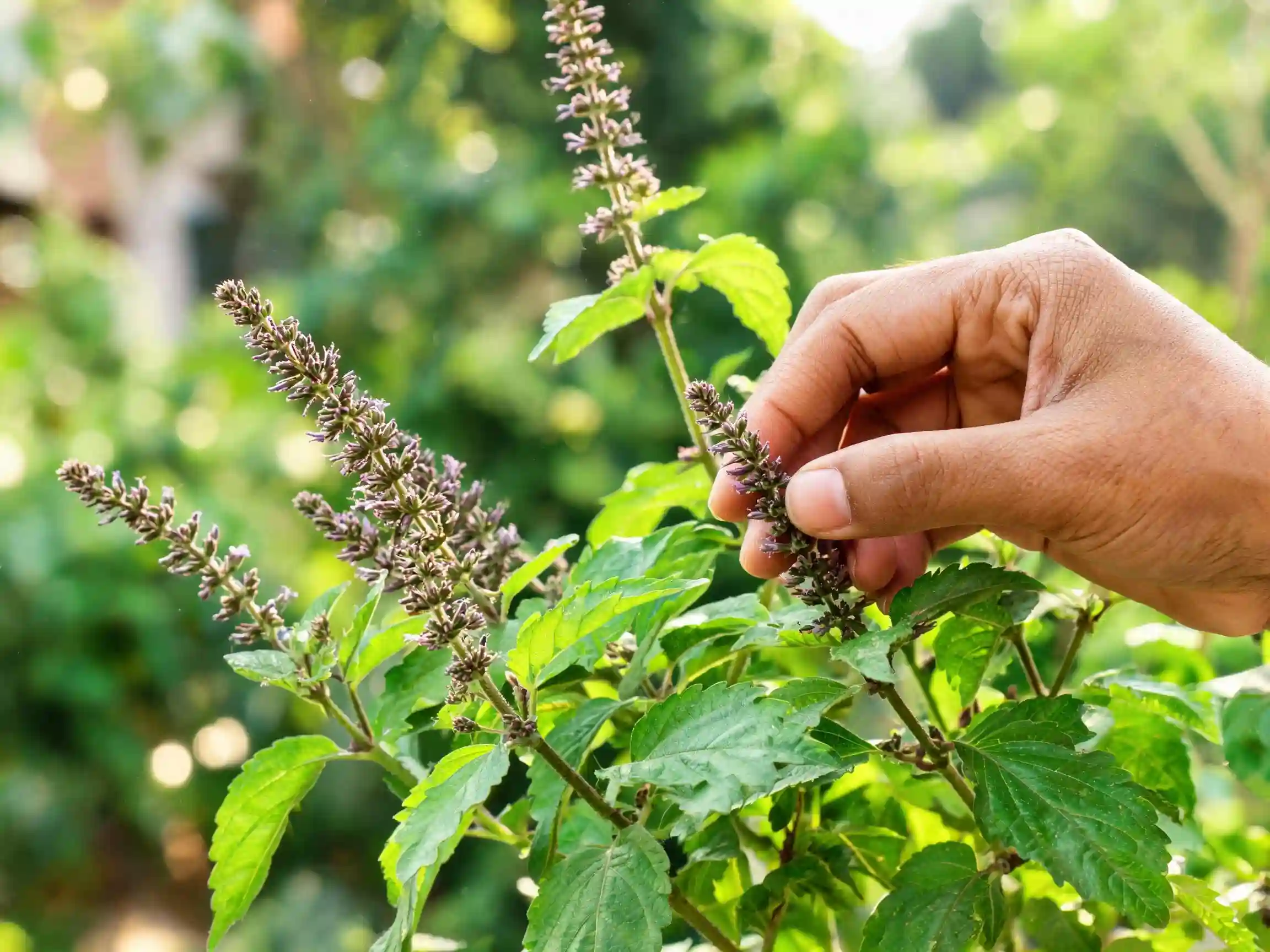
When tulsi flowers continuously, it puts its energy into making seeds. The leaves get smaller, the stems turn woody, and after heavy seeding the plant often starts drying. This is natural for the plant, but you can slow it down.
How to fix it:
- Pinch off the manjari regularly when they appear, just above a pair of leaves. This pushes the plant to grow new side branches and more leaves.
- Let only a few manjari mature if you want seeds. Dry seeds can be sown in spring to grow new plants.
- Remember that tulsi in a pot is not a forever plant — an old, very woody plant usually lives a year or two. Keep a young plant from seeds or a cutting ready as a backup.
5. Pests
Look under the leaves. Mealybugs look like white cotton, aphids and whiteflies are tiny insects in groups, and spider mites leave fine webbing and dusty-looking leaves. They all suck sap, so the leaves curl, yellow and dry.
How to fix it:
- Wash the leaves with a gentle spray of water to knock insects off.
- Spray neem oil solution (about 5 ml neem oil and 2–3 drops of liquid soap in 1 litre of water) on both sides of the leaves in the evening, once a week for 3–4 weeks.
- Remove badly infested branches.
If you use tulsi leaves for tea or puja, rinse them well and wait a few days after spraying before using them.
6. Not enough sunlight
Tulsi needs at least 4–6 hours of direct sunlight a day. Kept indoors or in deep shade, it becomes thin, pale and weak, and drops leaves. Move it to the sunniest place you have — gradually over a few days if it has been in shade for a long time.
7. Fungal leaf spots
Brown or black spots that spread, especially in humid weather or when leaves stay wet, are often a fungal problem. Remove the spotted leaves, water the soil instead of the leaves, give the plant space for air to move, and avoid watering in the evening.
Step-by-step: how to revive a dry tulsi plant
- Do the scratch test to find where the stem is still green.
- Cut off all fully dry branches just above a green node. Do not cut into green, healthy wood.
- Check the soil and roots. If the soil is soggy or smells bad, repot into a fresh mix of garden soil, compost and some sand or cocopeat for drainage.
- Put it in bright sun (4–6 hours), protected from cold wind.
- Water only when the top soil is dry.
- Remove manjari as they appear, so new growth goes into leaves.
- Be patient. If the stem is alive, small new leaves usually appear in 2–3 weeks (longer in winter).
Check your tulsi's problem from a photo
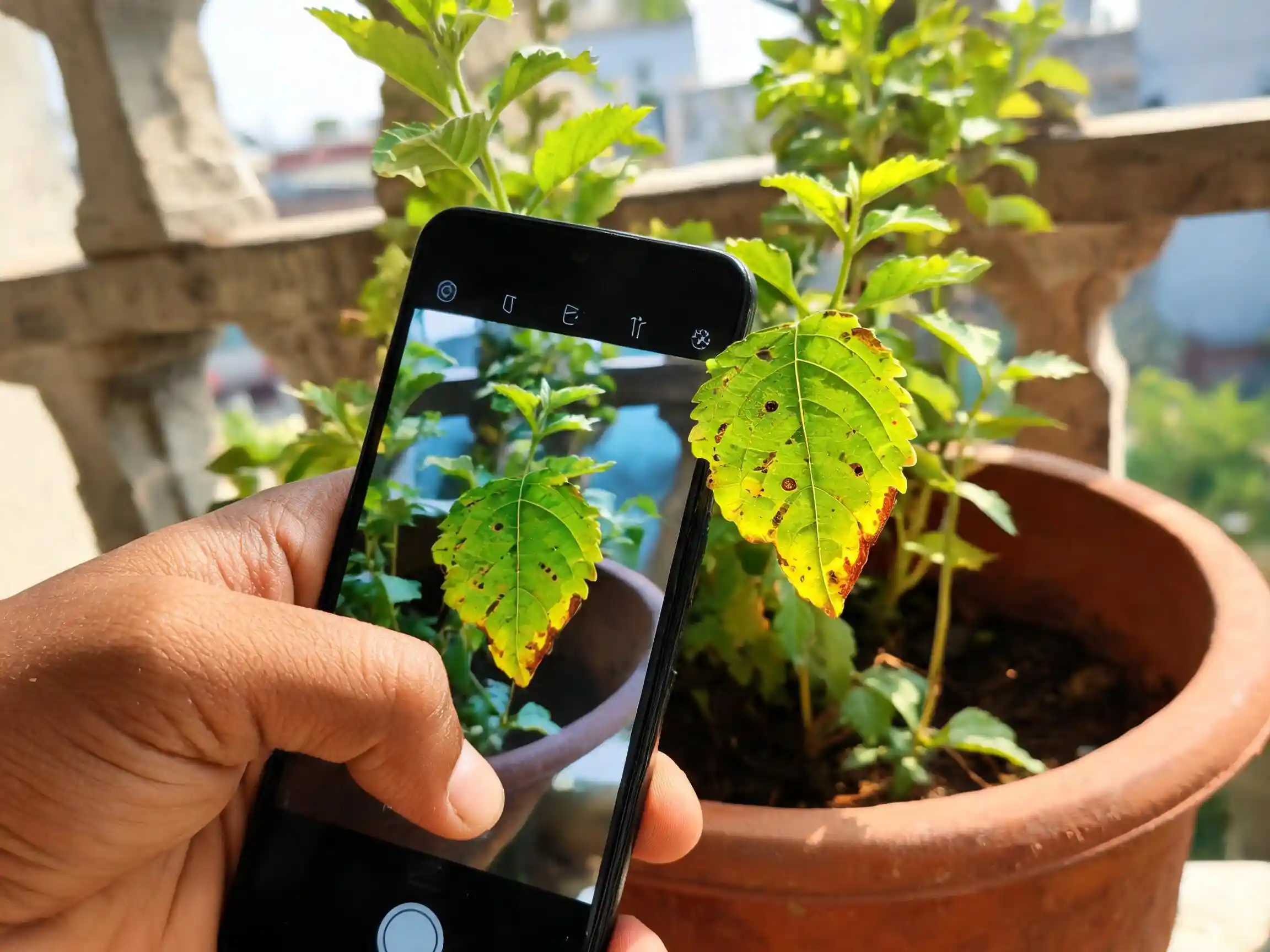
If you still can't tell what's wrong, take a clear photo of the affected leaves in daylight and upload it to the free Plant Solutions diagnosis tool. It shows the likely disease or problem with simple treatment steps. Not sure which variety of tulsi you have? Use the free plant identifier.
Frequently asked questions
Why does my tulsi dry up every winter?
Because tulsi is a warm-weather plant. Cold nights, cold wind and wet soil together damage it. Keep it in the sunniest spot, cover it on cold nights and water much less from December to February.
How often should I water tulsi?
Only when the top 2–3 cm of soil is dry. In summer that may be daily; in winter it can be once every few days or even once a week.
Should I remove the manjari from tulsi?
Yes, pinching most of them keeps the plant bushy and leafy for longer. Keep a few only if you want seeds.
Can a completely dry tulsi plant come back?
If the stem is still green when scratched, yes. If the whole plant is brown and brittle down to the soil, it is dead — sow seeds or plant a cutting for a new one.
Which fertilizer is good for tulsi?
A handful of compost or vermicompost mixed into the topsoil once a month during spring and summer is enough. Avoid strong chemical fertilizers and don't fertilize a sick or cold-stressed plant.


