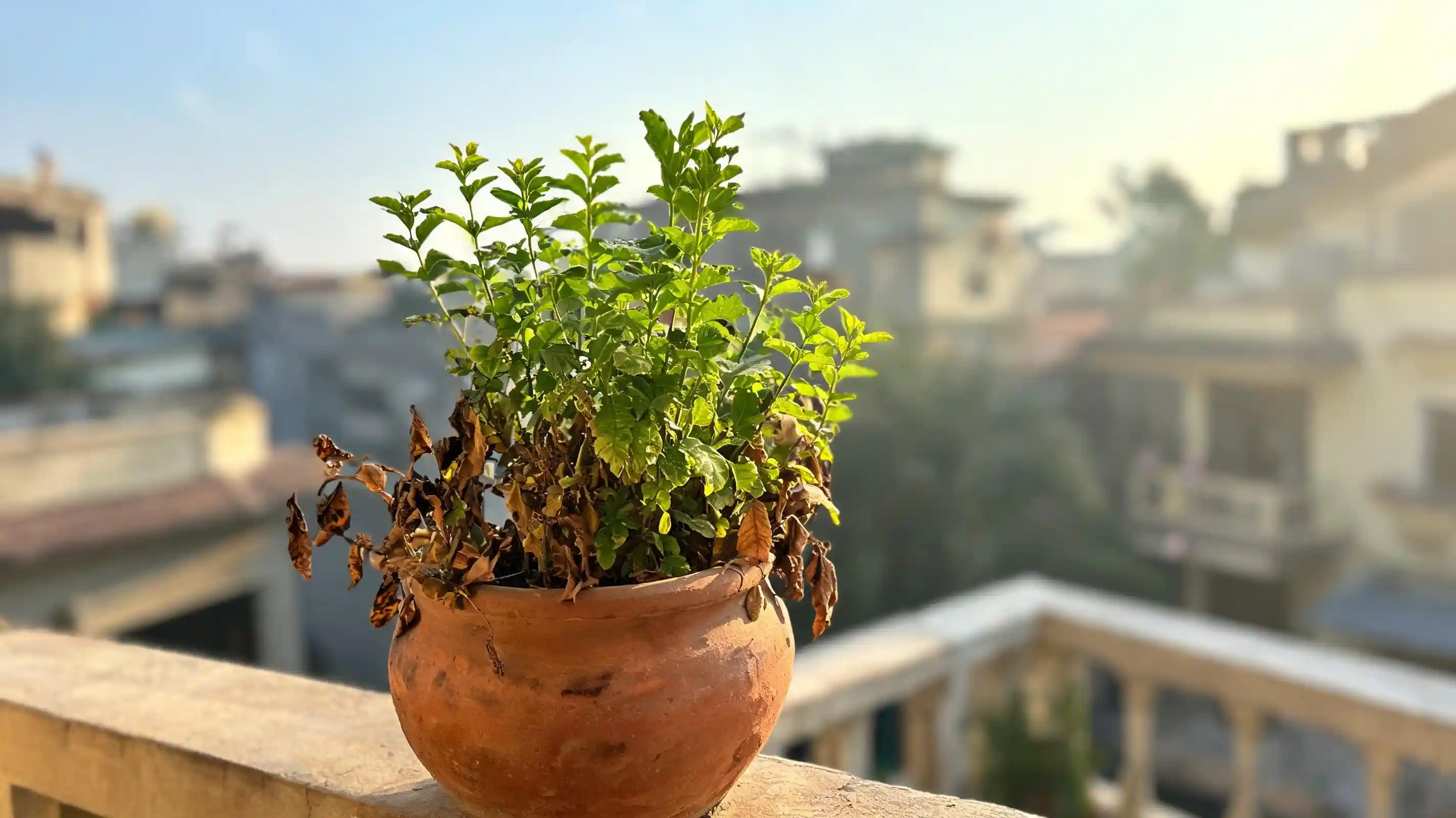
Short answer: curry leaf (kadi patta) leaves usually turn yellow because of cold weather and slow winter growth, too much water in a pot that drains poorly, a lack of nutrients (often iron or nitrogen), or sap-sucking pests. A few yellow leaves on the lower branches in winter is normal. Many yellow leaves together with wet soil, pests or patterned yellowing need action.
If you are not sure which one it is, take a clear photo of the affected leaves and check it with our free AI plant diagnosis tool. Then use the table below to match what you see.
Symptoms and their likely causes
| What you see | Most likely cause |
|---|---|
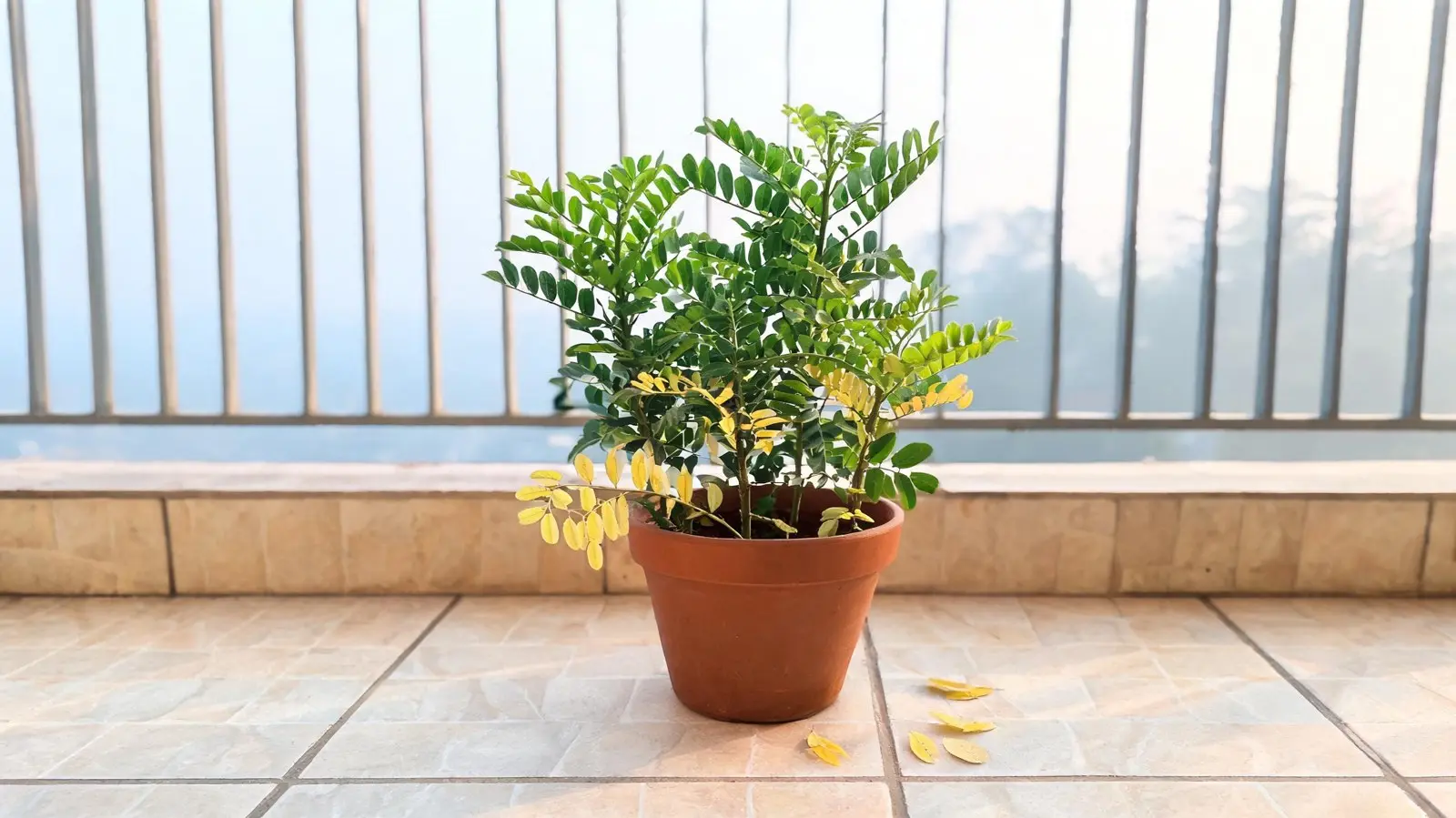
| Older, lower leaves turn yellow and fall in Nov–Jan; little new growth | Normal winter slow-down or cold stress |
| Yellow, soft leaves, soil stays wet for days, sour smell from soil | Overwatering or poor drainage (possible root rot) |
| New leaves yellow but the veins stay green | Iron deficiency, often from alkaline soil or hard water |
| Whole plant pale, older leaves evenly yellow, small new leaves | Nitrogen deficiency / old, exhausted soil |
| Yellow, curled or sticky leaves, black sooty layer, tiny insects | Aphids, scale, mealybugs or psyllids |
| Roots coming out of the drainage hole, soil dries in a day | Pot too small (root-bound plant) |
| White crust on soil or pot rim, brown leaf edges with yellowing | Salt build-up from hard water or too much fertilizer |
1. Winter slow-down and cold stress
Curry leaf is a tropical plant. When nights get cold, especially in North and Central India, it slows down, drops some older leaves and may look bare until spring. This is the most common reason for yellow curry leaves between November and February, and in most cases the plant is alive and fine.
Scratch a thin stem lightly with your nail. If it is green and moist underneath, the plant is only resting.
How to fix it
- Keep the pot in the sunniest spot you have. Curry leaf needs at least 5–6 hours of direct sun, and winter sun matters even more.
- Move it away from cold night winds, for example closer to a wall on the balcony.
- Water much less than in summer (see the next section).
- Do not prune hard, repot or feed heavily in winter. Wait for new growth in spring.
For more on protecting the rest of your garden this season, read why plants die in winter and how to prevent it.
2. Overwatering and poor drainage
This is the cause that actually kills curry leaf plants. In winter the plant uses very little water, so the same summer watering routine keeps the soil wet. Roots then start to rot, and leaves turn yellow, soft and drop easily.
How to fix it
- Push a finger into the soil. Water only when the top 2–3 cm feels dry. In cold months this may be once a week or even less.
- Make sure the pot has a working drainage hole and empty the saucer after watering.
- If the soil smells sour and stems near the base are dark and soft, remove the plant, cut off black mushy roots, and replant in fresh, well-draining soil.
If you also see white fuzzy growth on the soil surface, it is a sign the soil is staying too wet. See how to treat white fungus in plant soil.
3. Iron or nitrogen deficiency
Curry leaf plants often show yellowing from a lack of nutrients, especially when they have been in the same soil for a long time.
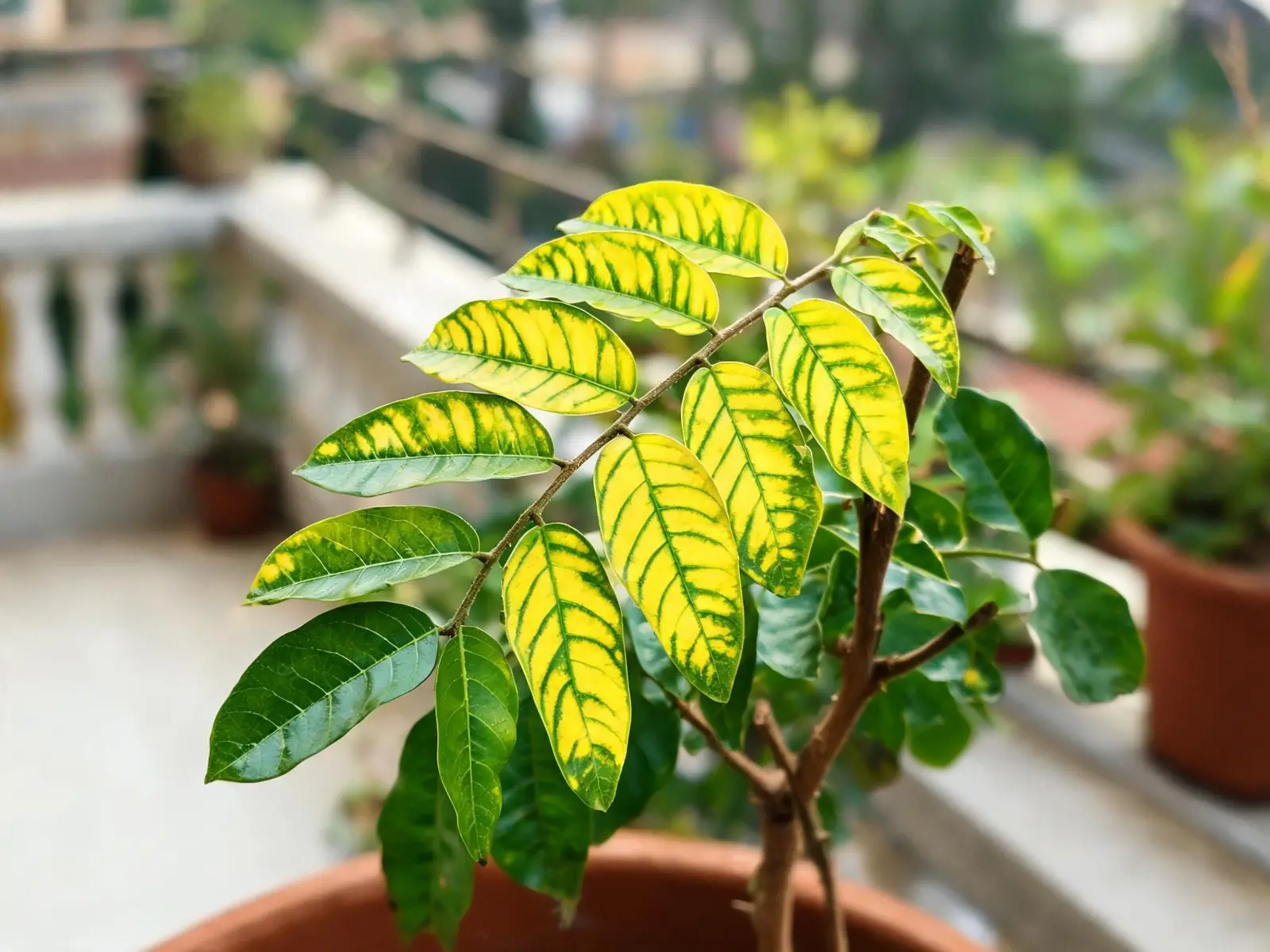
- Iron deficiency: the new leaves turn yellow while the veins stay green. It is common in alkaline soil or when the plant is watered with hard water, because the roots cannot take up iron well.
- Nitrogen deficiency: the older leaves turn evenly pale yellow first, and the whole plant looks weak and grows slowly.
How to fix it
- Mix a handful of well-rotted compost or vermicompost into the top layer of soil during the growing season (spring to early monsoon).
- For iron deficiency, a chelated iron micronutrient product made for plants works well. Follow the dose on the pack, as more is not better.
- If your tap water is hard, use collected rainwater when you can, and flush the pot with plenty of water about once a month.
- Feed lightly every few weeks in the growing season and stop in winter.
Our guide to the best fertilizer for kitchen garden plants explains which organic feeds suit herbs like curry leaf.
4. Pests: aphids, scale, mealybugs and psyllids
Curry leaf belongs to the citrus family, so it attracts the same sap-sucking insects as lemon plants. They feed on tender shoots and the underside of leaves, causing yellow, curled or sticky leaves. A black sooty layer on leaves is mould growing on the sticky honeydew these insects leave behind.
How to fix it
- Check the underside of leaves and new shoots every few days.
- Wash off small groups with a strong spray of water, or wipe them off with a cotton swab.
- Spray neem oil: about 5 ml neem oil + a few drops of liquid soap in 1 litre of water. Spray in the evening, cover both sides of the leaves, and repeat every 7 days until the pests are gone.
- Cut off badly affected shoots.
Safety note: after spraying, wait a few days and wash leaves well before using them in cooking. Keep sprays away from children and pets.
5. Root-bound plant or old, salty soil
A curry leaf plant kept in a small pot for years runs out of root space. The soil dries very fast, nutrients get used up, and salts from tap water and fertilizer collect as a white crust. Leaves turn yellow and edges may brown.
How to fix it
- Repot into a pot one size bigger in spring (around February–March), when the plant starts growing again, not in peak winter.
- Use a light mix: garden soil, compost and some sand or cocopeat for drainage.
- Flush salty soil by slowly pouring plenty of water through the pot until it drains freely from the bottom.
Step-by-step: revive a yellowing curry leaf plant
- Take a photo of the yellow leaves and check it with the free plant diagnosis tool to narrow down the cause.
- Check the soil with your finger. If it is wet, stop watering until the top 2–3 cm is dry.
- Look under the leaves and on new shoots for insects. Treat with water spray or neem oil if you find any.
- Move the pot to the sunniest spot, away from cold wind.
- Pick off fully yellow leaves; they will not turn green again.
- Avoid strong fertilizer in winter. Add compost when the weather warms up.
- In spring, repot if roots are crowded, and prune lightly to encourage bushy new growth.
- Harvest only a few leaf stems at a time, so the plant always keeps enough leaves to recover.
Check your plant's problem from a photo
Yellowing can look similar for very different causes. Upload a photo to our AI plant diagnosis for a quick, free check of possible problems and suggested fixes. If you got a sapling from a nursery and are not sure it is a true curry leaf plant, you can confirm it with the free plant identifier.
Frequently asked questions
Is it normal for a curry leaf plant to lose leaves in winter?
Yes. In colder parts of India, curry leaf plants often drop older leaves and stop growing in winter. If the stems are green inside and the soil is not waterlogged, new leaves usually come back in spring.
Will yellow curry leaves turn green again?
No. A leaf that has turned fully yellow will not recover. Fix the cause, remove the yellow leaves, and the new leaves that grow should be healthy and green.
How often should I water a curry leaf plant in winter?
There is no fixed schedule. Water only when the top 2–3 cm of soil is dry, which in cold weather can be once a week or less for a pot kept outdoors. Always let excess water drain out.
Can I use neem oil on curry leaves I eat?
You can use neem oil to control pests, but do not harvest right after spraying. Wait a few days and wash the leaves thoroughly before cooking.
When is the best time to repot or prune a curry leaf plant?
Spring, around February to March, when the plant starts new growth. Repotting or hard pruning in peak winter adds stress and slows recovery.