Short answer: A succulent that is stretching, growing tall with wide gaps between its leaves, leaning toward the window or turning pale, is not getting enough light. This is called etiolation, and it is very common indoors in winter when days are short. Stretched growth will not shrink back, but you can stop it with more light (a south- or west-facing window or a grow light) and then fix the shape by cutting and replanting the top.
Not sure the problem is only light? Upload a photo to our free plant diagnosis tool to check for rot, pests or watering stress at the same time.
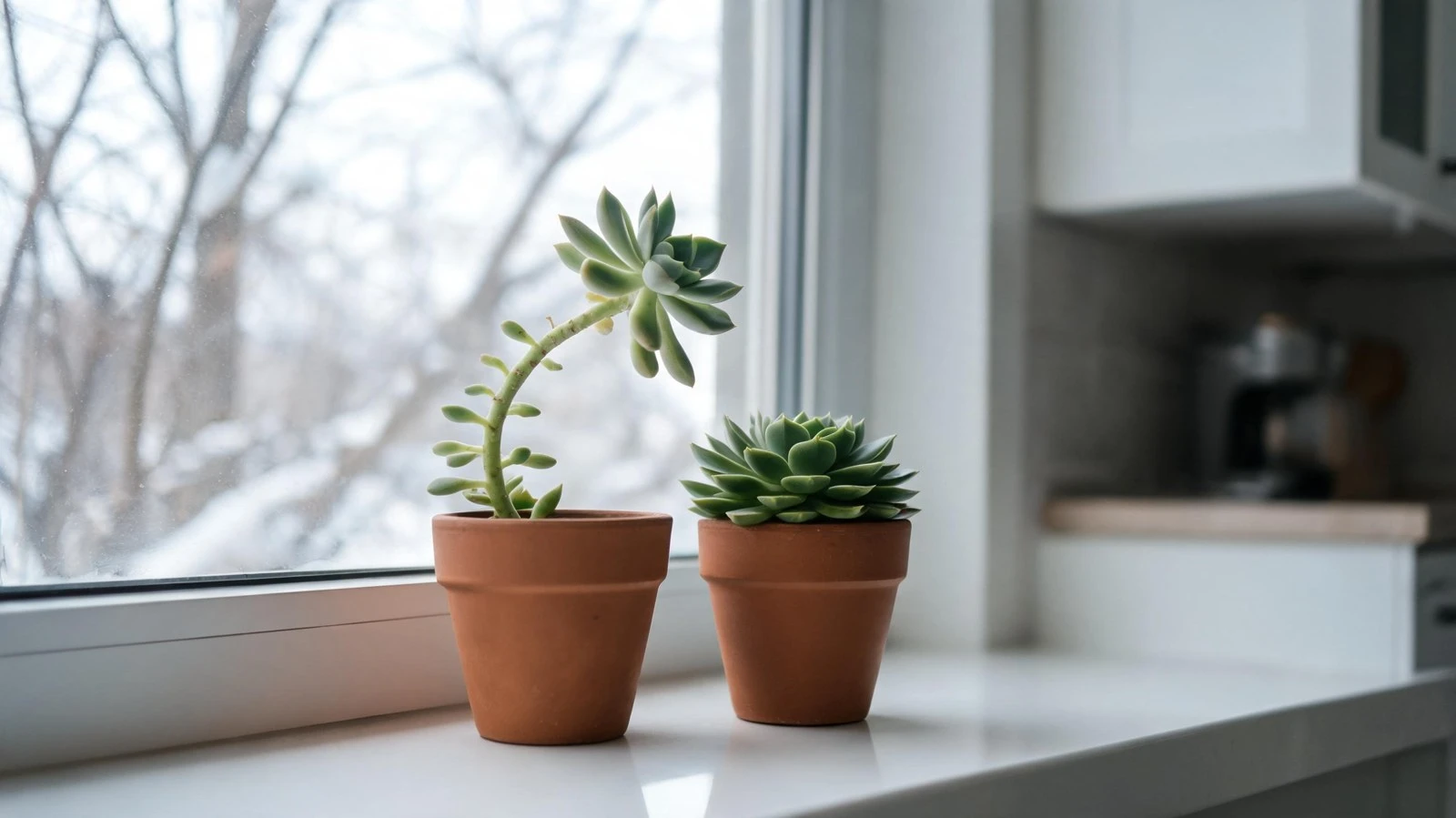
Left: a stretched echeveria with long gaps between leaves. Right: a compact rosette that gets enough light.
What succulent stretching looks like
Echeveria, graptopetalum, sedum, crassula and many cacti grow compact in full sun. In weak light they grow longer stems to "reach" for brighter light. Typical signs:
The rosette opens up and the leaves point downward or flatten out, before any stretching is obvious.
New leaves are spaced far apart along a bare, thin stem.
The whole plant leans or bends toward the nearest window.
Color fades: red, purple or blue tones turn plain pale green.
Cacti grow a narrow, pointed tip on top of their normal shape.
If you are not sure which succulent you have, our plant identifier can tell you from a photo, which helps because some types (like trailing sedums) naturally grow longer than rosette types.
Succulent stretching: symptom → likely cause
What you see
Most likely cause
Tall stem, wide gaps between leaves, pale color
Not enough light (etiolation)
Plant leans in one direction
Light from one side only, pot never rotated
Started stretching in late fall or winter
Short days, low winter sun, plant moved indoors
Stretched and also soft, swollen or mushy leaves
Low light combined with overwatering
Stretching under a lamp or grow light
Light too weak, too far away or on too few hours
Rosette shooting up a single tall stalk with buds
Flowering, not etiolation (normal)
1. Not enough light (the main cause)
Succulents need much more light than most houseplants. A spot that looks bright to us, like a table a few feet from a window, is often far too dim, because light drops quickly with distance from the glass.
How to fix it:
Move the plant as close to the window as possible. In the Northern Hemisphere, a south-facing window is best, then west, then east. North-facing windows are usually too dim for rosette succulents.
Aim for at least 4–6 hours of direct or very bright light a day.
Keep the glass clean and do not let curtains or blinds cover it during the day.
If no window gives enough light, use a grow light (see section 3).
Increase light gradually over a week or two if the plant has been in a dim spot for a long time. A stretched, pale succulent moved straight into strong sun, especially outdoors in summer, can get sunburn marks.
2. Short winter days and moving plants indoors
This is why so many people notice stretching between November and February: short days, low sun and weeks of cloud. Succulents that spent summer on a patio lose most of their light the day they come inside.
How to fix it:
Give your succulents the brightest windowsill in the house through winter, even if they live elsewhere in summer.
Rotate the pot a quarter turn every week so all sides get light and the plant grows straight.
Keep them away from cold, drafty glass on freezing nights. Most common succulents are happiest above about 50°F (10°C); move them a few inches back from the window if the glass gets icy.
Keep them away from heating vents, which dry the soil fast and can trick you into watering more often.
3. A grow light that is too weak or too far away
Grow lights are often the only real fix in a dim apartment, but a regular desk lamp or a light hung high above the shelf will still lead to stretching.
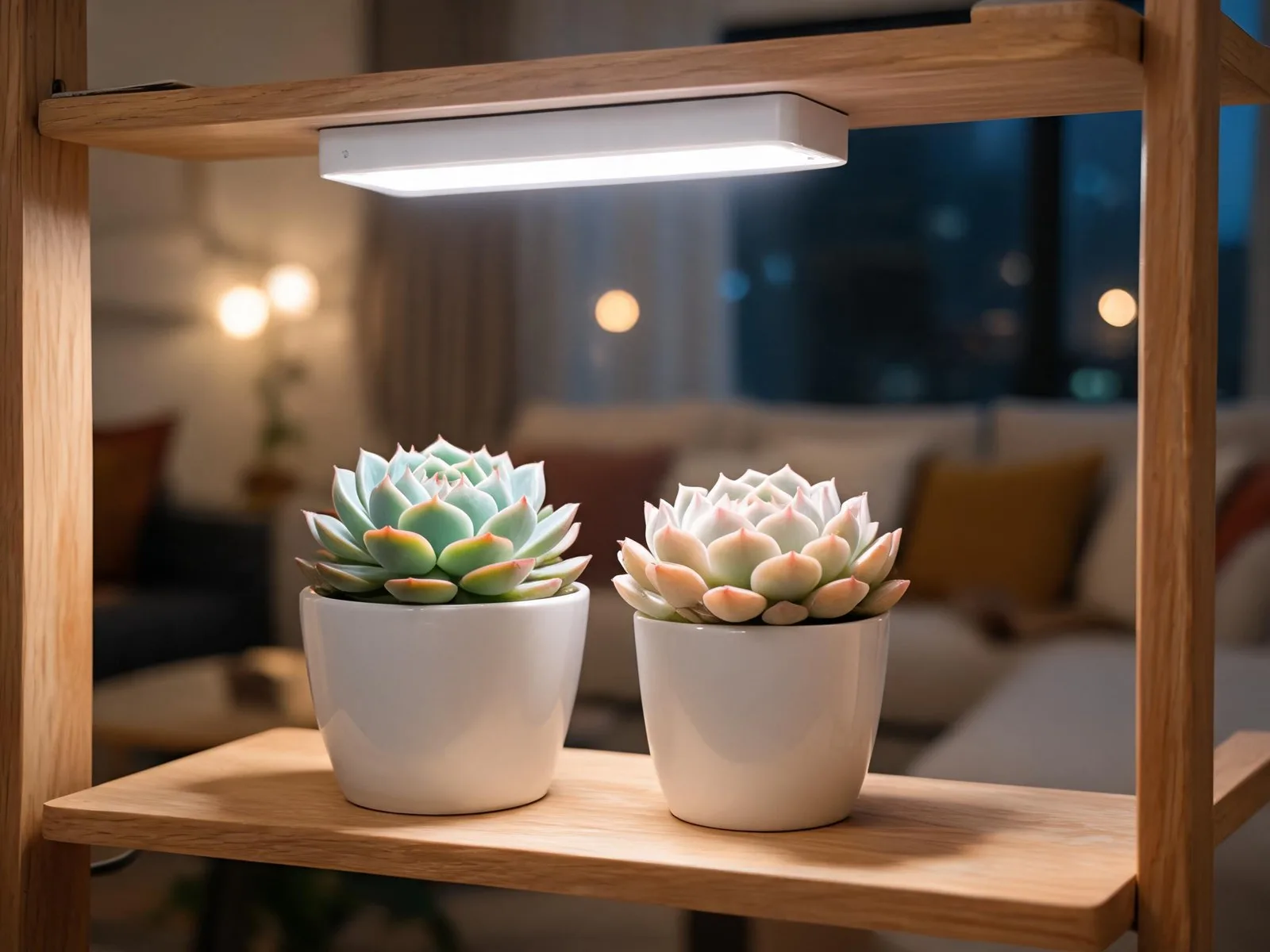
A full-spectrum LED bar placed close above the plants keeps succulents compact through winter.
How to fix it:
Use a full-spectrum LED grow light made for plants rather than a standard household bulb.
Place it close to the plants. Many LED bars and panels work well about 6–12 inches (15–30 cm) above succulents; check the maker's guidance for your light.
Run it for about 12–14 hours a day. A cheap plug-in timer makes this effortless.
If the plants still stretch, lower the light or add another one. If leaves get bleached or brown patches, raise it a little.
If you are shopping for plants that cope better with dim rooms, our list of indoor plants for low-light homes is a better match than most succulents.
4. Watering too much in low light
Water does not cause stretching by itself, but extra water in low light gives soft, floppy, spaced-out growth. In winter, wet soil also stays wet much longer, which raises the risk of root rot.
How to fix it:
Water only when the soil is completely dry all the way down. Push a finger or a wooden skewer 1–2 inches (2–5 cm) into the mix; if it feels at all damp, wait.
In winter, most indoor succulents need water only every 2–4 weeks, sometimes less. Go by the soil, not the calendar.
Use a pot with a drainage hole and a gritty cactus and succulent mix. Empty any saucer 15 minutes after watering.
Skip fertilizer from late fall to early spring. Feeding a plant in low light pushes more weak growth.
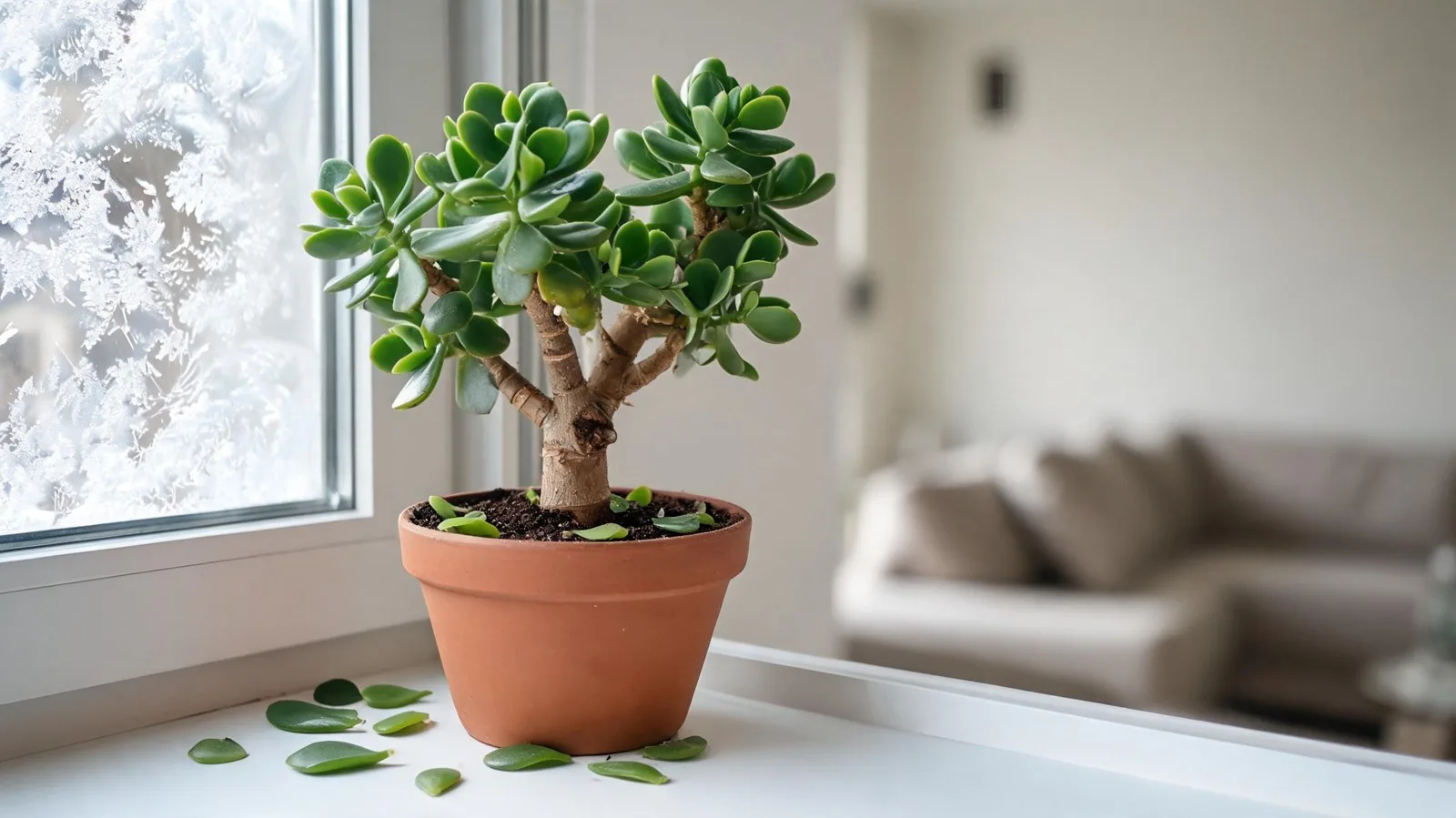
Overwatered succulents often drop plump leaves at a touch. The same problem shows up in jade plants, so our guide to a jade plant dropping leaves has more detail on spotting it. If you see tiny black flies around damp soil, read how to get rid of fungus gnats in houseplants.
Is it stretching or flowering?
Many echeverias and other rosette succulents send up a long, thin flower stalk from the side of the rosette, usually with small buds along it. That is normal and the rosette itself stays compact. Etiolation stretches the main stem and the whole rosette. If you do not want the flower stalk, you can cut it off near the base once it fades. Some succulents, like hens and chicks (Sempervivum), stretch upward and die after flowering; this is natural, and they usually leave offsets behind.
How to fix a stretched succulent step by step
The stretched part of the stem will never become compact again; only new growth will. To get a good-looking plant back, "behead" and replant it. This roots fastest in spring and summer, but works indoors in winter if the cutting gets good light.
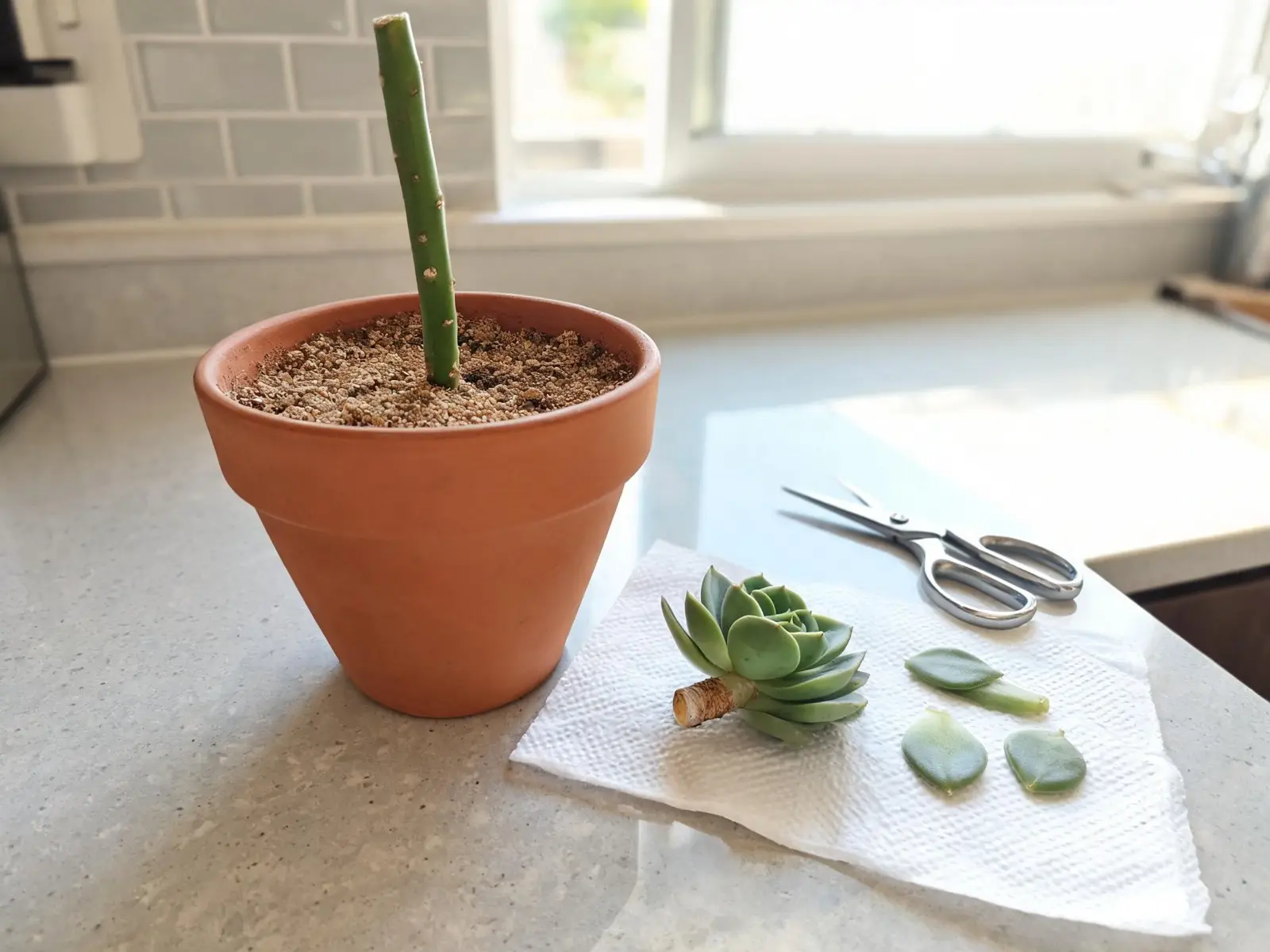
The cut rosette dries for a few days before replanting. The leftover stem often grows new small rosettes.
Fix the light first. Move the plant to its brightest spot or set up a grow light. Otherwise the new plant will stretch again.
Let the soil dry. A slightly dry plant is firmer and easier to cut cleanly.
Cut the top. With clean, sharp scissors or a knife, cut the stem about 1–2 inches (2–5 cm) below the rosette, leaving a short stem on the top piece.
Remove a few lower leaves from the cutting so there is bare stem to plant. Gently twist them off whole; healthy leaves can be laid on dry soil to propagate.
Let it callus. Leave the cutting in a dry, bright spot out of direct sun for 2–7 days, until the cut end is dry and sealed.
Replant. Set the stem in a small pot of dry cactus mix with a drainage hole, just deep enough to hold it upright.
Wait before watering. Hold off for about a week, then water lightly when the soil is dry. Roots usually start within a few weeks.
Keep the base. Leave the old stem in its pot in good light and water sparingly. It often grows one or more new small rosettes along the stem.
If you do not want to cut, you can simply give the plant better light and let it be. It will grow compact again at the top, and you can repot it a little deeper later to hide some of the bare stem, as long as the buried part stays dry and the mix drains fast.
When to repot, and when it can't be saved
Repot when the roots fill the pot, the soil stays wet for more than a week after watering, or the plant is in a pot with no drainage hole. Choose a pot only slightly bigger than the root ball. For a step-by-step example with another succulent, see our guide to repotting aloe vera.
A stretched succulent on its own is almost always saveable. It is in real trouble when the stem is black, brown or mushy at the soil line, or the roots are dark and slimy. Then cut above the rotten part into firm, healthy green tissue, let the cutting callus, and replant it in fresh, dry mix. Throw away the rotten part and the old wet soil. If every part of the stem is soft, propagate any firm leaves that are left.
Check your succulent's problem from a photo
Stretching often comes with other problems, like rot from winter overwatering, mealybugs in the leaf joints, or sunburn after a sudden move. Upload a photo of the whole plant and a close-up of the stem to our free plant diagnosis tool to see what's wrong and what to do next.
Frequently asked questions
Can a stretched succulent go back to normal?
No. The stretched stem stays the same length. Once the plant gets enough light, new growth at the top will be compact again. To fix the overall shape, cut off the top, let it callus and replant it.
How much light do indoor succulents need?
Most rosette succulents need at least 4–6 hours of direct or very bright light daily. Indoors that usually means right on a south- or west-facing windowsill, or 12–14 hours a day under a full-spectrum grow light placed close above them.
Why are my succulents stretching in winter?
Winter days are shorter, the sun is lower and often hidden by clouds, and plants moved indoors lose most of their light. Watering at summer frequency makes the soft, stretched growth worse. Give them the brightest window, rotate the pots weekly and water less.
Should I cut the top off my leggy succulent?
If you want a compact plant again, yes. Beheading is safe for most echeverias, graptopetalums, sedums and crassulas. The top roots as a new plant, and the old stem usually sprouts new rosettes. Improve the light first, or both will stretch again.
Can I use a normal LED bulb instead of a grow light?
A bright household LED placed very close can help a little, but succulents need a lot of light. A full-spectrum LED grow light is far more reliable and does not use much electricity. Put it on a timer for 12–14 hours a day.
Are succulents safe for cats and dogs?
Not all of them. Jade plant (Crassula) and aloe are toxic to cats and dogs, and some euphorbias have irritating sap. Echeverias are generally listed as non-toxic. If you have pets, identify your plant first and keep any toxic types out of reach.