Short answer: in Indian summers, water plants early in the morning and only when the top 2–3 cm of soil is dry. As a rough guide: small pots in full sun daily, larger pots every 2–3 days, indoor plants every 3–5 days, and succulents every 1–2 weeks. Always check the soil first — pot size, sun, wind and soil mix change everything. Use the table below as a starting point, not a fixed timetable.
Best time to water in summer
- Early morning (6–9 am): the best time. Roots take up water before the heat, and leaves dry quickly so fungus is less likely.
- Evening (after 6 pm): fine for small pots that dry out by evening on extreme days. Water the soil, not the leaves, to avoid fungus overnight.
- Afternoon: avoid routine watering — much of it evaporates. But if a plant is badly wilted, water it immediately.
Summer watering guide by plant type
| Plant type | Examples | Typical summer frequency | Check |
|---|---|---|---|
| Small pots in full sun | Herbs, seedlings, small flowers | Daily, sometimes twice in heatwaves | Top 2 cm dry |
| Vegetables in large pots / grow bags | Tomato, chilli, brinjal | Daily to every 2 days | Top 2–3 cm dry |
| Flowering shrubs outdoors | Hibiscus, mogra, rose | Every 1–2 days | Top 3 cm dry |
| Herbs | Tulsi, mint, coriander | Daily to every 2 days; mint likes more | Top 2 cm dry |
| Indoor foliage plants | Money plant, peace lily, philodendron | Every 3–5 days | Top 2–3 cm dry |
| Low-water indoor plants | Snake plant, ZZ plant | Every 2–3 weeks | Soil fully dry |
| Succulents and cacti outdoors | Aloe vera, adenium, jade | Every 7–14 days | Soil fully dry |
| Plants in the ground | Shrubs, trees | Deep watering 1–3 times a week | Soil dry 5 cm down |
How to water properly
- Check the soil first. Push a finger in up to the second knuckle. Dry? Water. Damp? Wait.
- Water slowly at the base until water comes out of the drainage hole. This wets the whole root zone.
- Empty saucers after 15 minutes so roots do not sit in water.
- Mulch the soil surface with dry leaves or cocopeat to cut evaporation.
- Use bottom watering for dry, hard soil: set the pot in a tray of water for 20–30 minutes when water just runs off the top.
Why pot size and material change the schedule
Two identical plants can need very different watering. A 4-inch pot holds so little soil that it can dry out in a few hours of May sun, while a 12-inch pot of the same plant may stay moist for two or three days. Terracotta pots lose water through their walls and dry faster than plastic. Grow bags dry faster still. Cocopeat-heavy mixes hold more water than sandy mixes. So if one pot always seems thirsty, the answer is often a bigger pot or a mulch layer, not more frequent watering. Compare materials in our plastic vs ceramic pots guide.
Heatwave routine
When temperatures cross about 40°C:
- Water deeply in the morning; check small pots again in the evening.
- Shade sun-loving plants from 12–4 pm with a shade net.
- Move pots off hot terrace floors onto bricks or stands.
- Pause fertiliser until the heat passes.
More protection tips are in our guide on saving plants from heat stress.
Signs your plant needs water
- Soil dry 2–3 cm deep and pulling away from the pot edge.
- The pot feels light when lifted.
- Leaves droopy in the morning (not just in the afternoon heat).
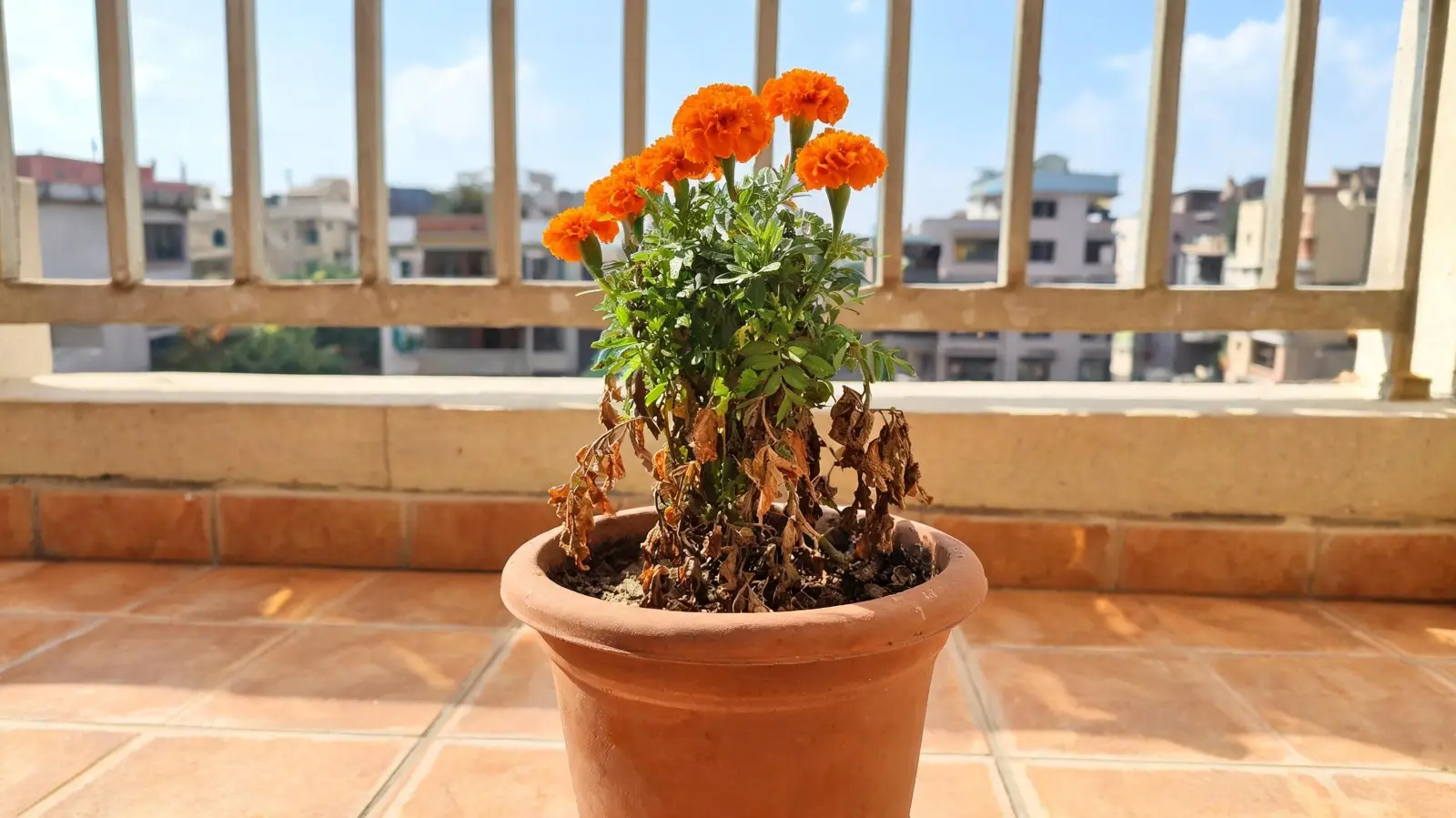
- Crispy brown leaf edges.
Signs you are overwatering (yes, even in summer)
- Soil still wet a day or two after watering.
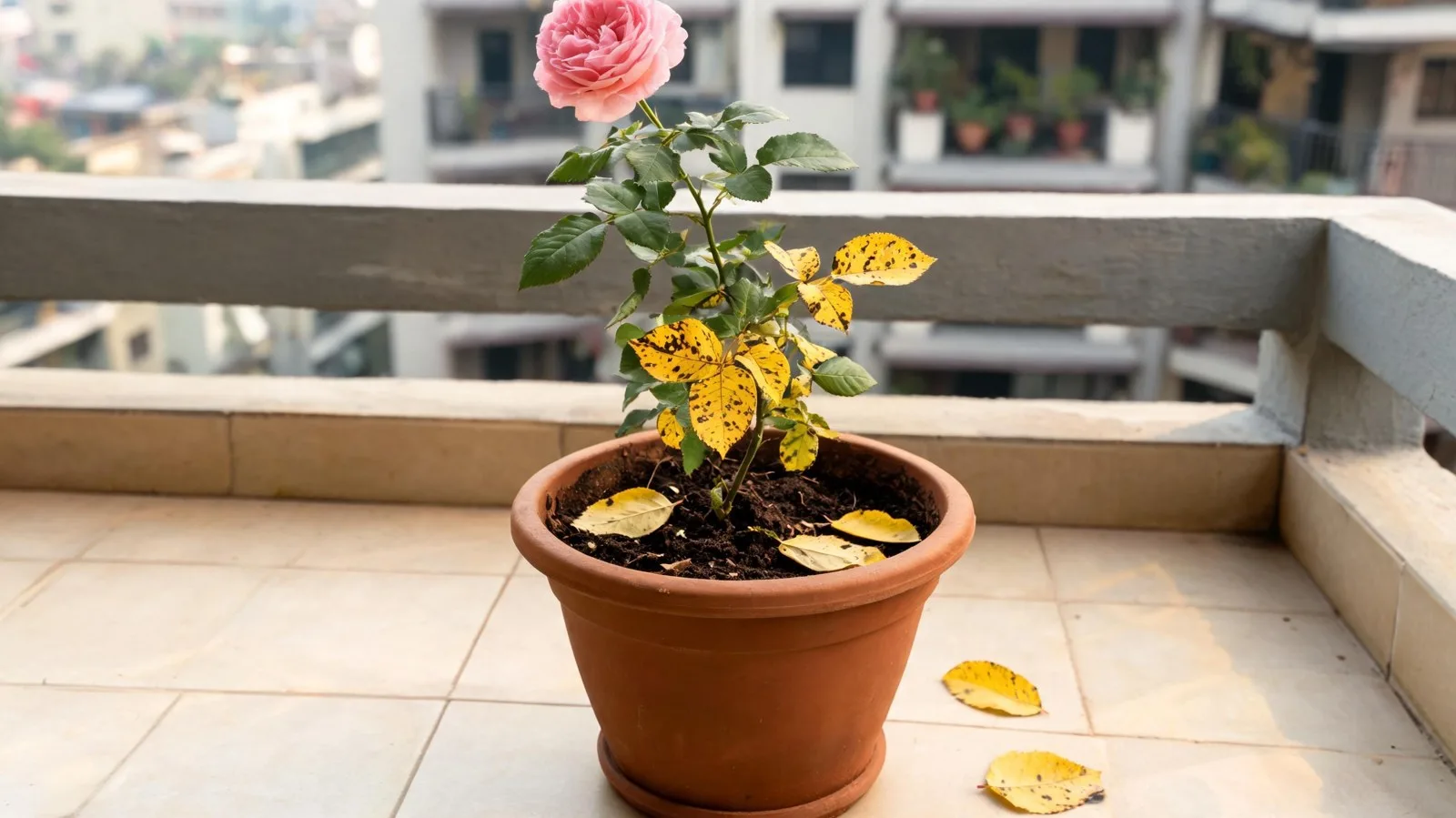
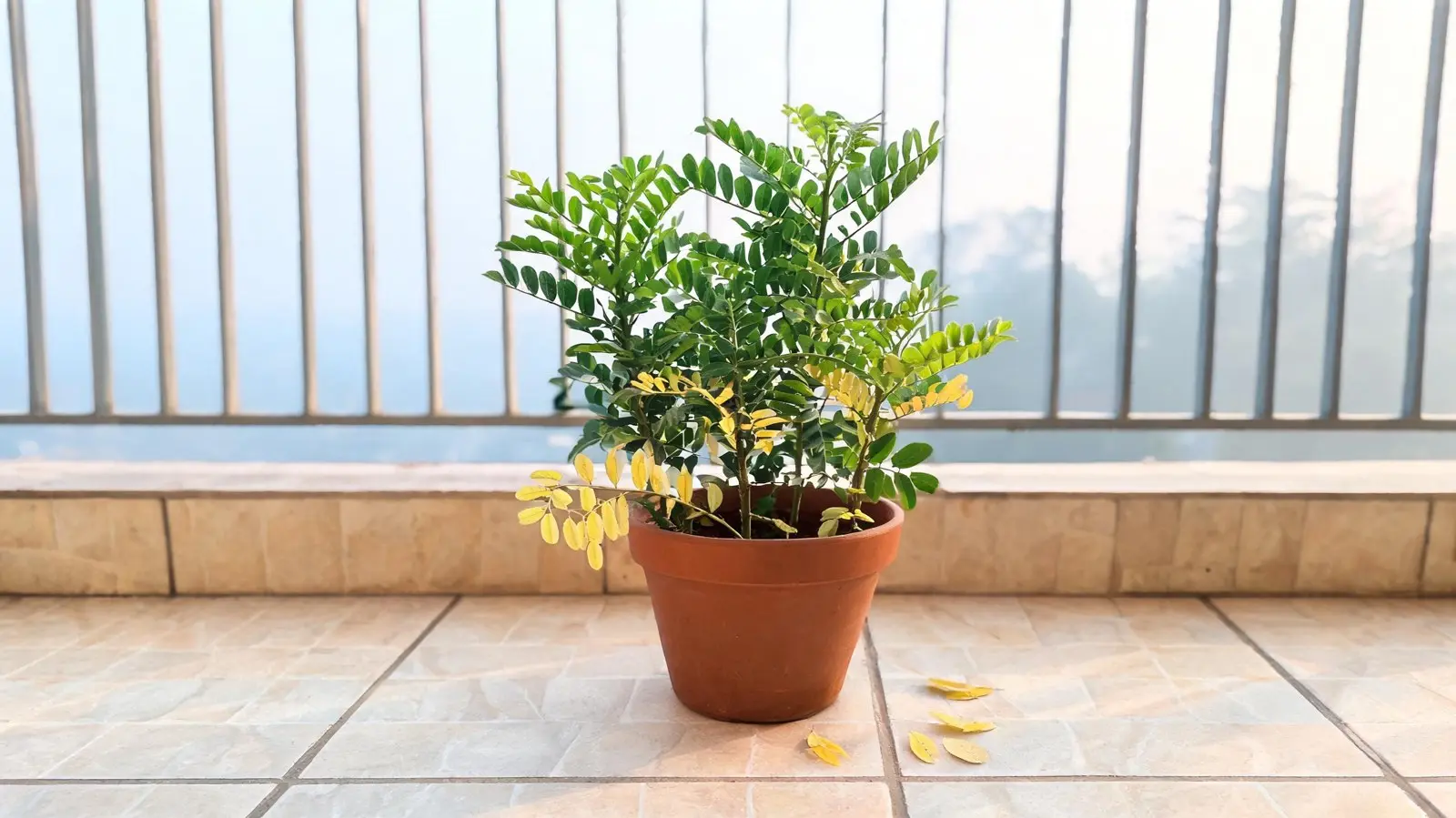
- Yellow, soft lower leaves.
- Drooping even though the soil is wet.
- Fungus gnats, white mould on soil, or a sour smell. See white fungus in plant soil.
Shaded and indoor plants, and plants in big plastic or glazed pots, can still be overwatered in summer. Read how to fix yellow leaves if you see these signs.
Water-saving tips
- Reuse RO reject water mixed with normal tap water, or water used to wash vegetables (without soap).
- Group pots so they shade each other.
- Use bigger pots for thirsty plants — they hold water longer.
- Try a simple drip bottle: a plastic bottle with a small hole in the cap, upside down in the soil, for weekend trips.
Plant-specific guides
- Tulsi plant drying: how to water and revive it
- How to grow mint in pots — mint needs more water than most herbs
- Growing tomatoes on a balcony
Check your plant's problem from a photo
If leaves are browning despite regular watering, it may be pests, sunscald or root problems. Upload a photo to our AI plant diagnosis tool to check.
Frequently asked questions
Should I water plants every day in summer?
Only those that dry out daily — usually small pots in full sun and vegetables. Indoor plants and succulents do not need daily water. Check the soil first.
Is it bad to water plants at night?
Evening watering at the soil is fine in summer. Avoid wetting leaves at night, as it encourages fungus.
How much water should I give a potted plant?
Enough that water drains out of the bottom. That means the whole root ball is wet.
Can I use cold fridge water for plants?
Use water at room temperature. Very cold water can shock roots in hot weather.
Why does water run straight out of my pot?
The soil has dried hard and shrunk away from the pot, or the plant is root-bound. Bottom-water it, then consider repotting after summer.