Short answer: the easiest winter flowers for Indian balconies and gardens are marigold (genda), petunia, calendula, pansy, dianthus, snapdragon, phlox, verbena, nasturtium, sweet alyssum and chrysanthemum (shevanti). In most of north and central India, sow seeds or buy seedlings from late September to November for flowers from December to March. Give them at least 5–6 hours of sun, well-draining soil and moderate water. In south India and the coasts, where winter is mild, many of these grow best from October to February.
Quick guide to winter flowers
| Flower | Sow / plant | Flowers | Sun | Note |
|---|---|---|---|---|
| Marigold (genda) | Sep–Oct | Nov–Feb | Full sun | Easiest; also deters some pests |
| Petunia | Oct–Nov (seedlings easier) | Dec–Mar | Full sun | Great for hanging pots |
| Calendula | Oct–Nov | Dec–Mar | Full sun | Hardy, edible petals |
| Pansy | Oct–Nov (seedlings) | Jan–Mar | Sun to light shade | Likes cool weather |
| Dianthus | Oct–Nov | Dec–Mar | Full sun | Compact, clove-like scent |
| Snapdragon | Oct–Nov | Jan–Mar | Full sun | Tall spikes; stake if windy |
| Phlox | Oct–Nov | Dec–Mar | Full sun | Colourful clusters |
| Verbena | Oct–Nov | Dec–Apr | Full sun | Spreads, good for edges |
| Nasturtium | Oct–Nov | Jan–Mar | Full sun | Sow directly; edible flowers |
| Sweet alyssum | Oct–Nov | Dec–Mar | Sun to part shade | Tiny, fragrant, fills gaps |
| Chrysanthemum (shevanti) | Cuttings in monsoon | Oct–Dec | Full sun | Buy budded plants for quick colour |
Timings are for north and central India; adjust a few weeks earlier or later for your region.
The easiest picks for beginners
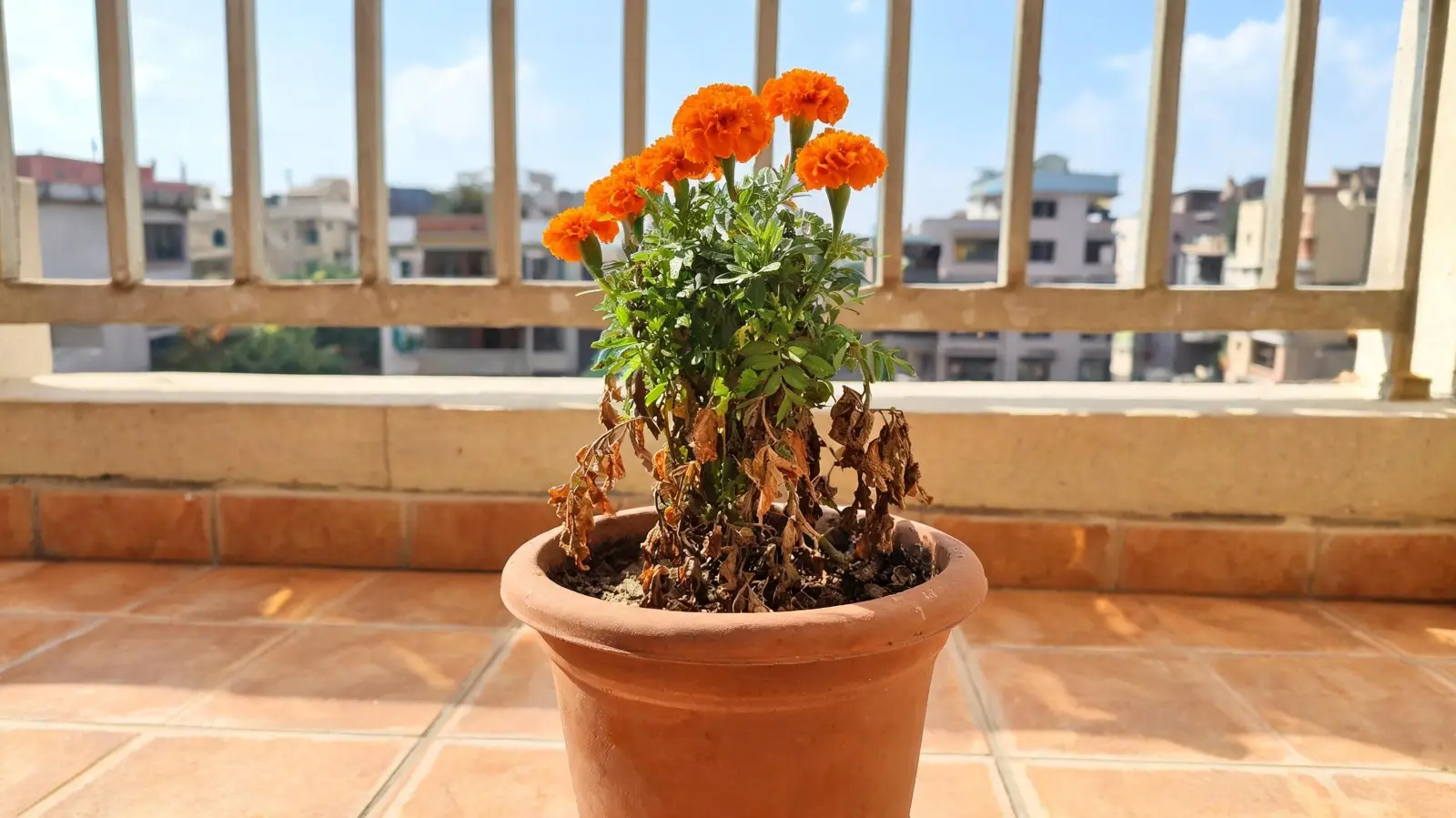
Marigold
Fast, forgiving and colourful. Sow seeds 0.5 cm deep, transplant when seedlings have 4–6 leaves, and pinch the tips once to get bushier plants. Remove dead flowers to keep new ones coming.
Calendula
Bright orange and yellow daisies that handle cold well. Grows easily from seed sown directly in pots. Watch for aphids on new buds.
Petunia
Seeds are tiny and slow, so beginners do better with nursery seedlings. Use hanging baskets or wide pots, give full sun, and avoid wetting the flowers.
Pansy and dianthus
Both love cool weather. Pansies tolerate a little shade; dianthus wants full sun. Both stay compact — ideal for small balconies.
How to grow winter flowers in pots
- Pot: 8–10 inch pots for single plants, wider troughs for groups. Drainage holes are essential.
- Soil: garden soil, cocopeat and compost in roughly equal parts.
- Sowing: sow fine seeds on the surface and press lightly; larger seeds 0.5–1 cm deep. Keep moist, not soggy, until they sprout.
- Transplanting: move seedlings to final pots when they have 4–6 true leaves, in the evening.
- Sun: at least 5–6 hours of direct sun. Winter flowers in shade grow leggy with few blooms.
- Watering: water when the top 2 cm is dry. Winter soil dries slowly; overwatering causes rot.
- Feeding: a handful of vermicompost every 3–4 weeks, and a potassium-rich feed (like a banana-peel or wood-ash-based organic feed) as buds form. See our fertiliser guide.
- Deadheading: pinch off faded flowers so the plant keeps blooming.
Planning a small winter balcony
A few pots, planned well, give more colour than many scattered ones:
- Back row (tall): snapdragons or marigolds in 10–12 inch pots, against the wall or railing.
- Middle (medium): calendula, dianthus and phlox.
- Front and edges (low, trailing): pansies, sweet alyssum and verbena spilling over pot edges.
- Hanging: petunias and nasturtiums in baskets on the sunniest side.
Stagger sowing by two to three weeks — one batch in October and another in November — so flowers keep coming through to March instead of all peaking together.
Saving seeds for next year
Marigold, calendula, nasturtium and phlox set seeds easily. Leave a few of the best flowers on the plant until they dry completely on the stem, then pick the dry heads, break them open, and store the seeds in a paper envelope in a cool, dry place. Seeds from hybrid varieties may not look exactly like the parent, but they still flower.
Common winter flower problems
- Aphids on buds and new growth — wash off with water, then neem spray (about 5 ml per litre with a few drops of soap) in the late morning on mild days.
- Powdery mildew on marigold and phlox in foggy weather — remove affected leaves and improve air flow. See common plant diseases.
- Damping-off (seedlings falling over) — use fresh, light seed mix and do not overwater.
- Frost damage in north India — cover pots with a cloth on frost nights. More in winter plant care.
Check your plant's problem from a photo
If buds drop or leaves spot, upload a photo to our free plant diagnosis tool. Got a flower and do not know its name? Use our plant identifier.
Frequently asked questions
Which flower blooms the longest in Indian winter?
Marigold, calendula, petunia and verbena flower for months with regular deadheading.
When should I sow winter flower seeds?
Late September to November in north and central India, once the monsoon has ended and nights begin to cool.
Can I grow winter flowers in shade?
Pansy and sweet alyssum handle light shade. Most others need at least 5–6 hours of sun.
Why are my winter flowers not blooming?
Usually too little sun or too much nitrogen-rich fertiliser. Move them to a sunnier spot and switch to a potassium-rich feed.
Can winter flowers survive summer?
Most are seasonal annuals and fade in March–April heat. Collect seeds from marigold and calendula for next year.