Short answer: If only the lowest leaf on your orchid is slowly turning yellow while new leaves keep growing, that is normal aging and nothing to worry about. If several leaves are yellowing or going soft, the usual cause is overwatering and root rot, followed by direct sun, cold drafts and old bark. Check the roots first: firm green or silvery roots are healthy; brown, mushy or hollow roots mean rot.
Want a second opinion? Upload a photo to our free plant diagnosis tool and it will point out signs of rot, sunburn or pests on the leaves.
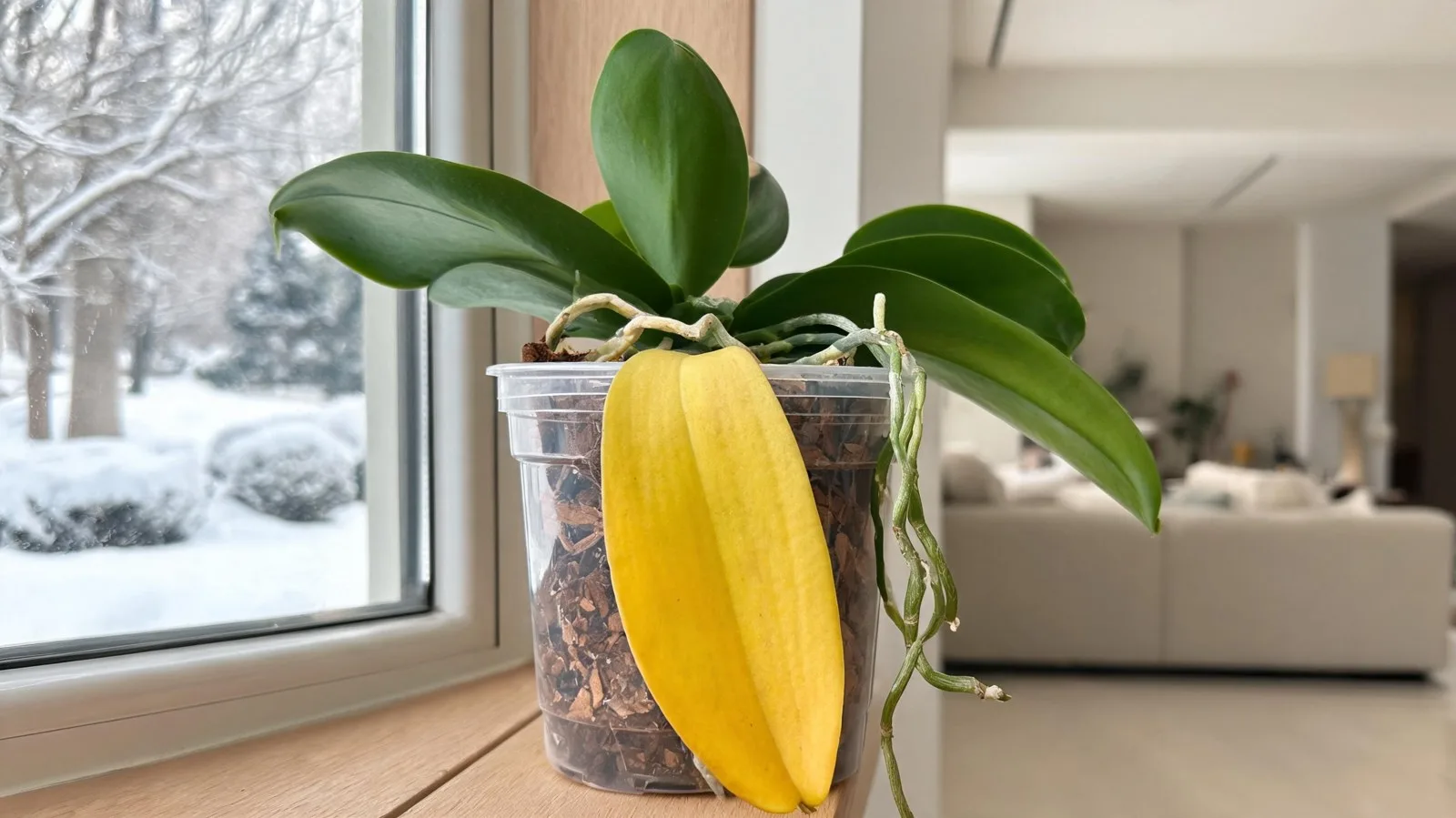
One yellow leaf at the bottom while the rest stay firm and green is usually just old age.
First: is one yellow leaf normal?
This guide is about the moth orchid (phalaenopsis), the orchid sold in most supermarkets, garden centers and hardware stores. A phalaenopsis keeps only a handful of leaves, and as it grows a new one from the center it often lets the oldest bottom leaf go. That leaf yellows slowly over a few weeks, then dries and falls off.
It is normal when only the lowest leaf is yellow, it stays fairly firm, and the upper leaves and visible roots look healthy. Leave it until it comes away with a gentle tug, or cut it off with clean scissors. If you are not sure your orchid is a phalaenopsis (dendrobiums, oncidiums and cymbidiums need different care), check it with our free plant identifier before changing your routine.
Orchid leaves turning yellow: symptom → likely cause
What you see
Most likely cause
Bottom leaf yellows slowly, new leaf growing
Natural aging (normal)
Several leaves yellow and soft, roots brown or mushy
Overwatering and root rot
Yellow at the base of the leaves, black or wet center
Crown rot (water left in the crown)
Leaves limp, wrinkled and leathery, roots gray and shriveled
Underwatering or roots already lost to rot
Pale yellow or white patch on the top of a leaf, later brown
Too much direct sun (sunburn)
Yellowing or pitting after sitting by a cold window
Cold drafts or chilled leaves
Yellow spots that turn brown or black and look wet
Bacterial or fungal leaf spot
Fine yellow speckles, white fluff or small bumps under leaves
Pests (spider mites, mealybugs, scale)
Whole plant pale yellow-green, slow growth
Lack of nutrients, or old bark that has broken down
1. Overwatering and root rot
This is the number one reason phalaenopsis leaves turn yellow indoors, and it gets worse in winter. In nature moth orchids grow on trees with their roots in open air. When the bark stays wet too long, the roots suffocate and rot, and the leaves yellow, soften and drop, often several at once.
Signs of rot: roots that are brown or black, mushy, or that slide off when you pinch them and leave only a thin string behind. A sour or musty smell from the pot and fungus gnats flying around it are also common clues. If you see tiny flies, our guide on how to get rid of fungus gnats in houseplants explains how to clear them.
How to fix it
Water only when the bark is almost dry and the roots inside a clear pot have turned silvery-green. In many homes that is about weekly in summer and every 10–14 days in winter.
Water thoroughly at the sink, let it drain completely, then put the pot back. Never leave the orchid standing in water inside a decorative cachepot.
If the roots are rotten, unpot it, cut off every soft or hollow root with sterilized scissors and repot in fresh orchid bark (see the step-by-step section below).
2. Crown rot
The crown is the center of the plant where the leaves meet. If water sits there, especially overnight in a cool room, rot can start at the base of the leaves. Leaves turn yellow from the base, go soft and may come off in your hand, and the center can turn brown or black.
How to fix it
Water the bark, not the leaves. If water gets into the crown, tip the plant gently or dab it dry with a paper towel.
Water in the morning so any splashes dry during the day.
If the center is already black and mushy, the growing point is usually lost; keep the crown dry and watch the base for a new side shoot.
3. Underwatering
Less common, but it happens near heating vents. Leaves go limp, wrinkled and leathery and may yellow, and the roots look gray and papery. An orchid that has lost its roots to rot looks just as thirsty, so check the roots before adding more water.
How to fix it
Soak the pot in room-temperature water for 10–15 minutes, drain well, and move the plant away from radiators and heat registers. Deep wrinkles may not fully smooth out, but new leaves will be normal.
4. Too much direct sun
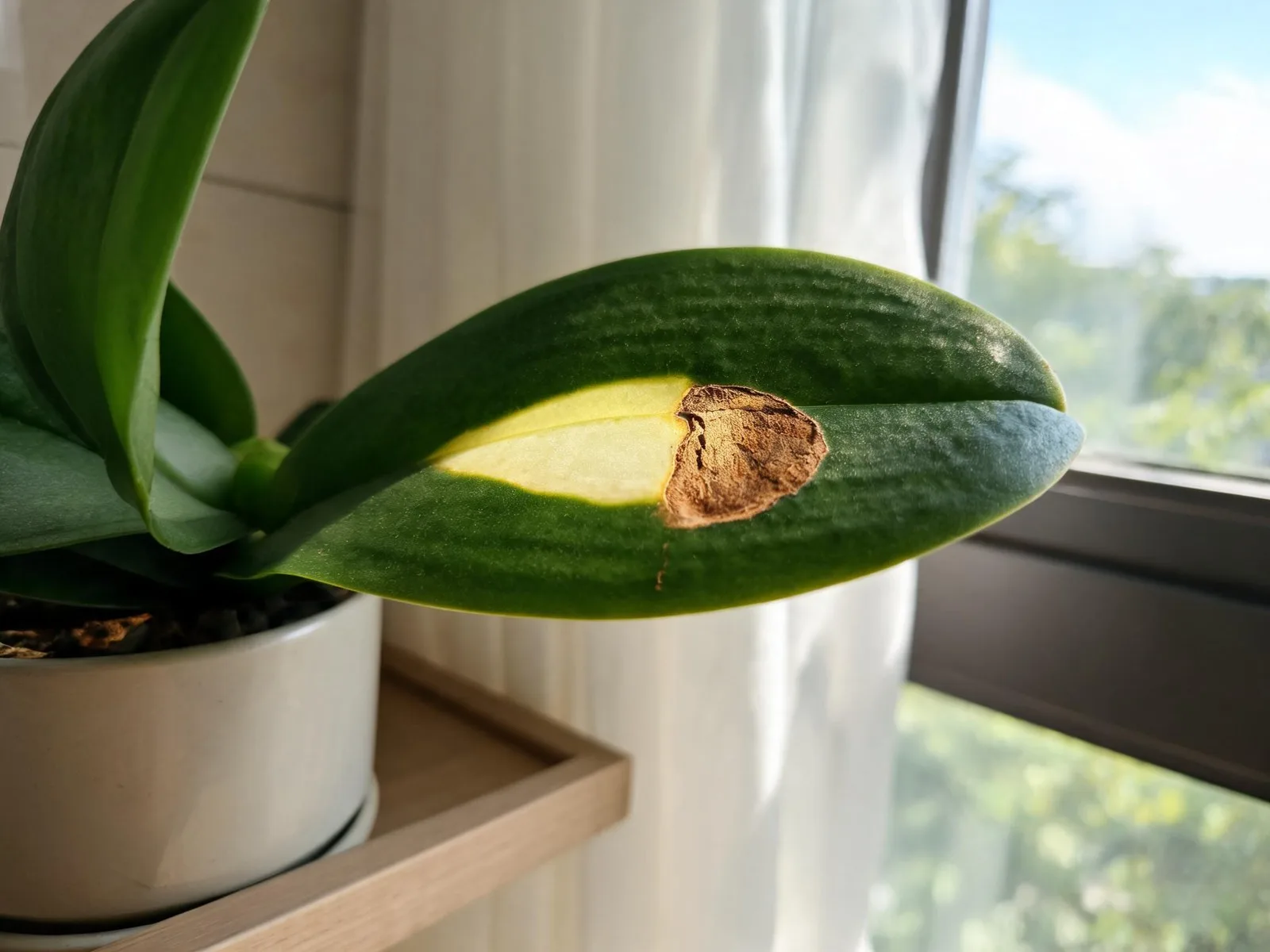
Phalaenopsis like bright light but not hot, direct sun. A leaf that gets too much sun develops a pale yellow or whitish patch on the side facing the window, which can later turn into a dry brown or black spot.
Sunburn shows up as a bleached yellow patch on the side that faces the glass.
How to fix it
An east-facing window is ideal. A south or west window works if the light is filtered by a sheer curtain or the plant sits a few feet back from the glass.
Do the hand test: hold your hand over the leaves at midday. A soft-edged shadow is good; a sharp, dark shadow means the light is too strong.
Sunburned areas won't turn green again, but leave the leaf on unless it rots; the green part still feeds the plant.
5. Cold drafts and chilly windowsills
In winter, the glass of a window can be much colder than the room, and leaves that touch it or sit in a cold draft can yellow, develop sunken pits or drop. Phalaenopsis grow best at about 65–80°F (18–27°C) during the day and should not get colder than about 60°F (15°C) at night. The same winter stress causes leaf drop on other holiday plants, as in our guide to poinsettia dropping leaves.
How to fix it
Keep leaves off the glass, move the plant back from the window on very cold nights, and keep it away from exterior doors, drafty windows and air blowing from heaters or AC vents.
6. Old bark, wrong pot and fertilizer problems
Orchid bark breaks down over time. After about one to two years it becomes fine and spongy, holds far too much water and starves the roots of air, even if your watering hasn't changed. Store-bought orchids are often packed in tight sphagnum moss, which also stays wet too long.
An orchid that is never fed can turn pale yellow-green overall, while too much fertilizer builds up salts that burn the roots.
How to fix it
Repot every one to two years, ideally after flowering, into fresh orchid bark in a clear pot with drainage holes.
Use an orchid fertilizer diluted as the label directs, only while the plant is actively growing.
Once a month, flush the pot with plain water for a minute to wash out salts. If you see white crust on the bark or rim, flush and skip feeding for a few weeks.
7. Leaf spot diseases and pests
Yellow spots that spread, turn brown or black, or look wet and sunken are usually a bacterial or fungal leaf spot. Fine yellow speckles with faint webbing point to spider mites, while white cottony clumps in the leaf joints are mealybugs and small brown bumps on leaves are scale. If you see a white powdery film rather than fluffy clumps, compare it with our guide to white powder on plant leaves.
How to fix it
For leaf spots: cut away the affected part with a sterilized blade, cutting a little into healthy tissue. Keep the leaves dry and improve air movement. Many growers dust the cut with ground cinnamon to help it dry.
For mealybugs and scale: wipe them off with a cotton swab dipped in rubbing alcohol (isopropyl), checking under leaves and in the leaf joints. Repeat weekly for a few weeks.
For spider mites: wipe both sides of the leaves and use an insecticidal soap labeled for houseplants.
Step-by-step: how to save an orchid with yellow leaves
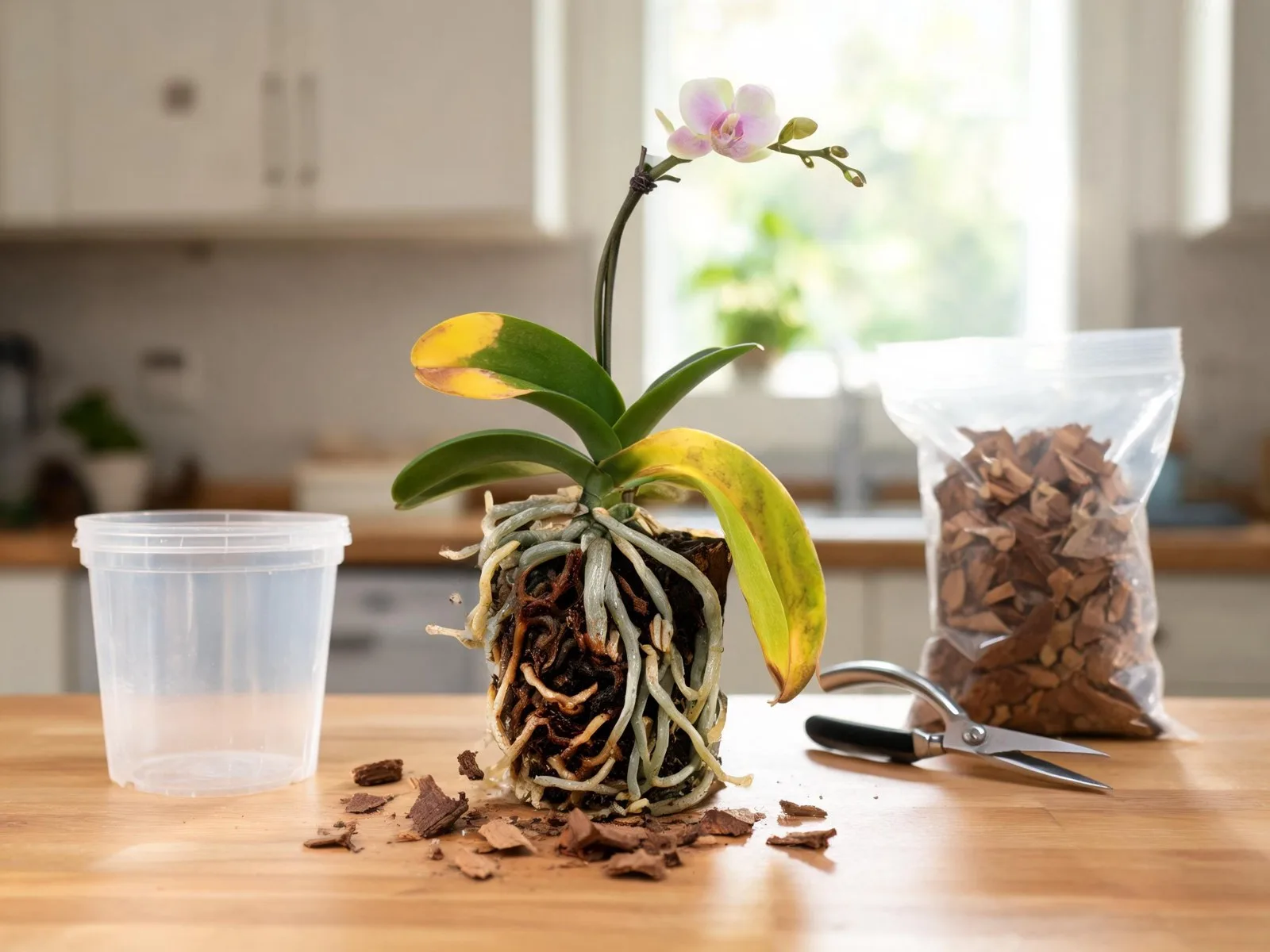
Check the roots. Slide the plant out of its pot. Firm green or silvery roots are healthy; brown, mushy or hollow roots are dead.
Trim dead roots with scissors wiped with rubbing alcohol. Keep every firm root, including aerial roots.
Remove all the old mix, whether broken-down bark or wet moss.
Repot loosely in fresh orchid bark, in a pot just big enough for the healthy roots, with drainage holes.
Wait a few days, then water thoroughly and drain. After that, water only when the roots turn silvery.
Keep it in bright, indirect light, away from cold glass and heaters, and don't fertilize until you see new root tips or a new leaf.
Firm green or silvery roots are healthy. Brown, mushy, hollow roots should be cut off before repotting.
When to repot, and when it can't be saved
Repot right away if the roots are rotting, the bark smells sour or has turned to mush, or the orchid is still in tight, wet moss. Otherwise, repot every one to two years after flowering.
An orchid usually recovers if it still has some firm roots and a firm center leaf, even after losing most older leaves, though it may take a year or more to flower again. It is unlikely to recover if the crown is black and mushy and no firm roots are left; check the base and flower spike for a keiki (baby plant) you can pot up on its own.
Good news for pet owners: the moth orchid (phalaenopsis) is listed as non-toxic to cats and dogs by the ASPCA. Keep fertilizer and rubbing alcohol out of reach, though.
Rot, sunburn and pest damage are easy to confuse. Take a clear photo of the leaves (and the roots if you can) in daylight and upload it to the free Plant Solutions plant diagnosis tool. It suggests the likely cause and what to do next, with no app to install.
Frequently asked questions
Should I cut off yellow orchid leaves?
If a leaf is fully yellow, you can cut it off with clean scissors or wait until it falls off on its own. If it is only partly yellow and still firm, leave it, because the green part still feeds the plant. Remove soft, rotting leaves right away so rot doesn't spread.
Can yellow orchid leaves turn green again?
No. A leaf that has turned yellow will not turn green again. Fix the cause so that new leaves stay healthy, and the old leaf can be removed once it is fully yellow.
How often should I water an orchid in winter?
Usually every 10–14 days in a heated home, but go by the roots and bark, not the calendar. Water when the bark is nearly dry and the roots look silvery, then drain fully. In a cool room an orchid needs water less often.
Why did my new orchid start turning yellow after I bought it?
Store orchids are often potted in tight, wet moss and may get chilled on the way home. Give it bright indirect light and a warm, draft-free spot, check the roots after a week or two, and repot into bark once it finishes flowering, or sooner if the roots are rotting.