Short answer: a marigold (genda) plant usually dries because of a water problem or a pest. If the soil stays wet and the stem near the soil turns dark and soft, it is root or stem rot from overwatering. If the soil is bone dry and the plant droops in the afternoon, it is underwatering or heat. Pale, speckled leaves with fine webs point to spider mites. And if your plant has already flowered for many weeks, it may simply be reaching the end of its life, because marigold is an annual.
Not sure which one you are looking at? Take a clear photo of the drying leaves and the base of the stem and check it with our free AI plant diagnosis tool, then match the result with the table below.
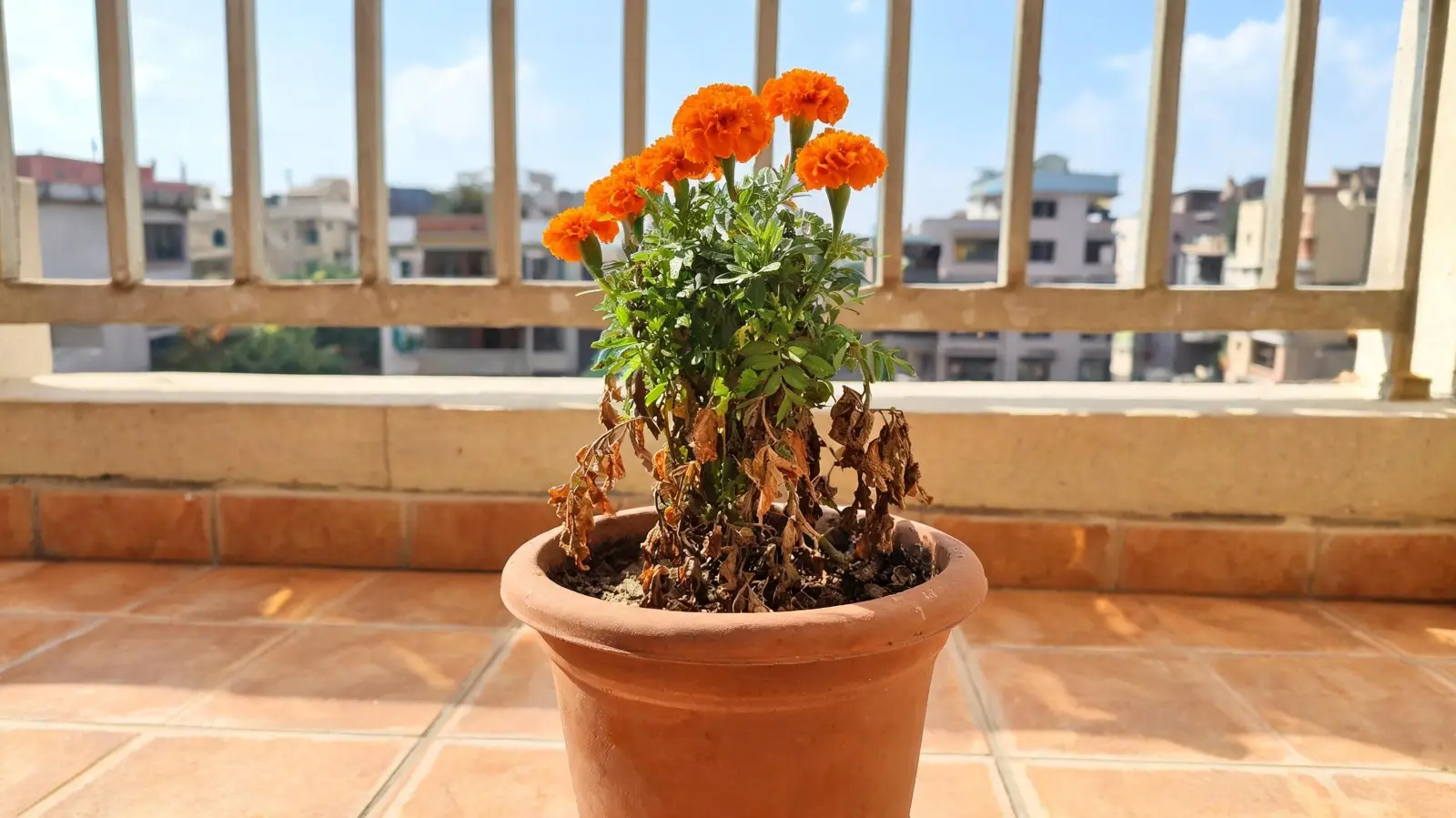
Marigold drying: symptoms and likely causes
| What you see | Most likely cause |
|---|---|
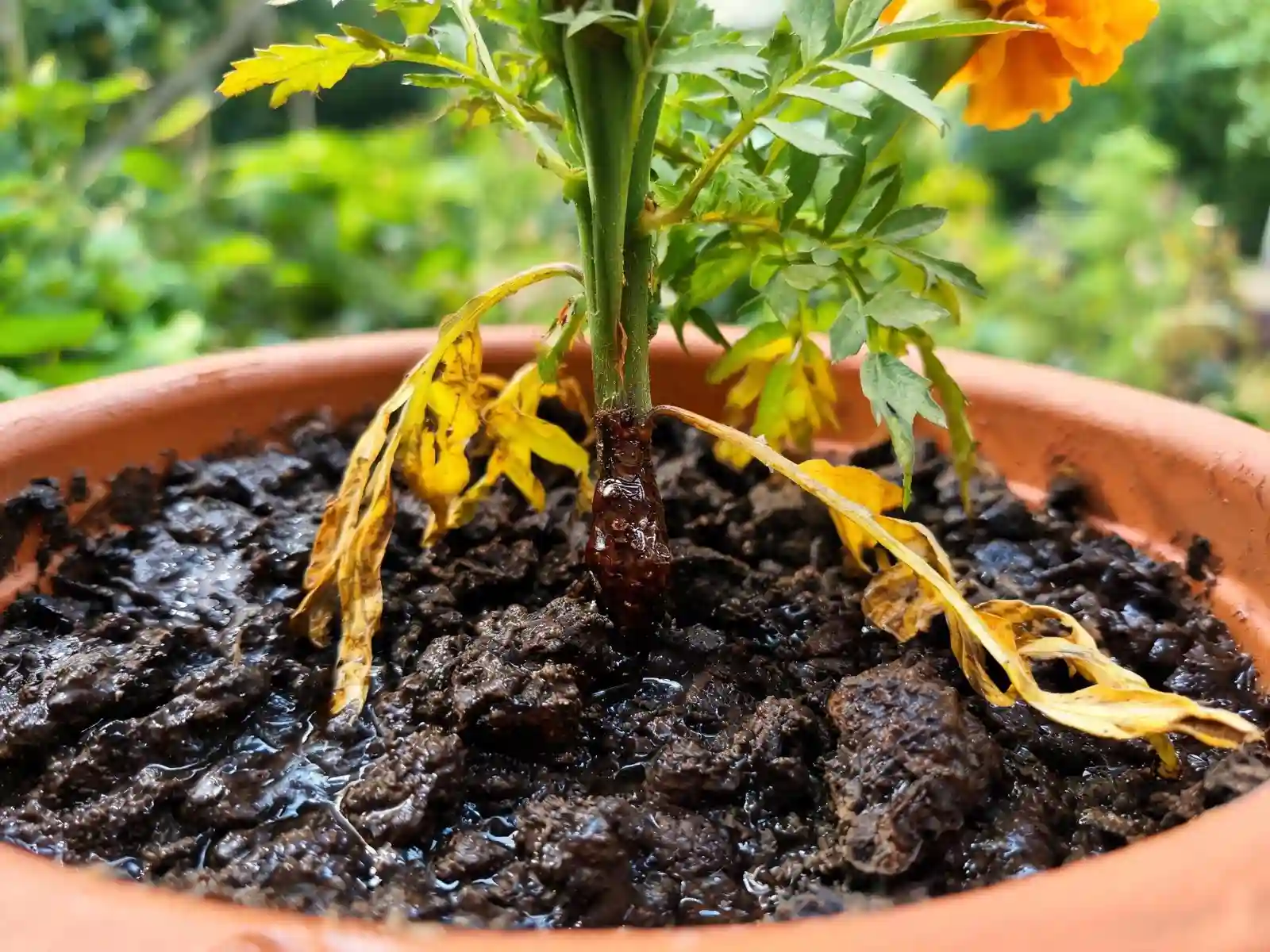
| Whole plant wilts even though the soil is wet; stem base dark, soft or shrunken | Root or stem (collar) rot from overwatering |
| Soil dry and pulling away from the pot; leaves limp, then crispy | Underwatering or heat stress |
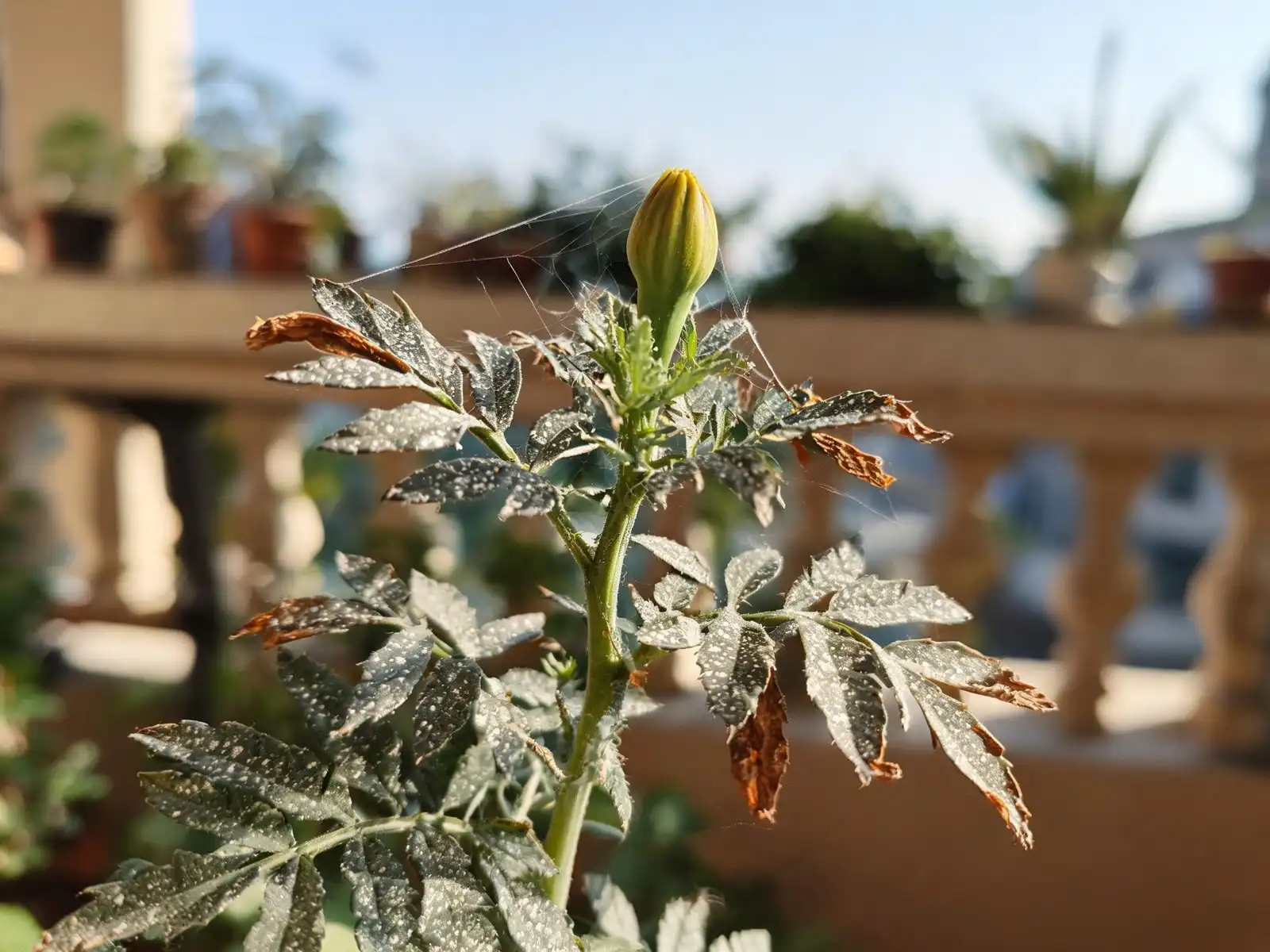
| Leaves look dusty, pale and speckled; fine webbing at the tips | Spider mites |
| Brown or black spots on leaves that spread until the leaf dries | Fungal leaf spot |
| White powdery coating on leaves | Powdery mildew |
| Flowers turn brown and mushy, sometimes with grey fuzz | Flower blight (grey mould) in damp weather |
| Plant flowered for months; now flowers are small and lower leaves dry one by one | Natural end of the annual life cycle |
Before you do anything, push a finger 2–3 cm into the soil and gently press the stem just above the soil line. These two checks alone separate most of the causes.
1. Overwatering and stem rot
This is the most common reason a healthy marigold suddenly collapses. Marigolds like soil that drains fast. When the pot has no drainage hole, the soil is heavy, or the plant is watered every day "just to be safe", the roots sit in wet soil and start to rot. Soil fungi can then attack the stem at the soil line. The stem turns dark brown or black, feels soft or looks pinched, and the plant wilts even though the soil is wet.
How to fix it
- Stop watering right away. Water again only when the top 2–3 cm of soil feels dry.
- Make sure the pot has a drainage hole and is not standing in a tray full of water.
- If the soil smells sour or stays wet for days, take the plant out, cut off black, mushy roots with clean scissors, and repot in fresh, loose soil mixed with sand or cocopeat.
- If the main stem is soft and black at the base, the plant usually cannot be saved. Take a few healthy top shoots as cuttings, remove the plant and do not reuse that soil for marigolds.
If you also notice white cottony growth on the soil surface, read our guide on how to treat white fungus in plant soil.
2. Underwatering and heat stress
Marigolds handle sun well, but small pots dry out fast, especially on a south- or west-facing balcony. The plant droops in the afternoon, lower leaves turn yellow and then crispy, and flower buds may dry before opening. Unlike rot, the stem stays firm and the soil is clearly dry.
How to fix it
- Water deeply until water comes out of the drainage hole, then let the top layer dry before the next watering.
- Water in the morning so the plant has moisture through the day.
- Add a thin layer of dry leaves or straw on the soil to slow down drying.
- Move very small pots into a bigger pot; one plant per 8–10 inch pot is a comfortable size.
3. Spider mites
Spider mites are tiny pests that suck sap from the underside of leaves. They love hot, dry, dusty weather. Leaves first look dull with tiny pale dots, then turn grey-yellow or bronze and dry up. In bad cases you will see fine webbing on the shoot tips and flower buds.
How to fix it
- Cut off and bin the worst affected shoots. Do not put them in compost.
- Spray the underside of the leaves with a strong stream of plain water to wash off mites and webs.
- Spray neem oil: about 5 ml neem oil and a few drops of liquid soap in 1 litre of water. Spray in the evening, covering the underside of the leaves.
- Repeat every 5–7 days for at least 3 rounds, because new mites keep hatching from eggs.
Spider mites attack many balcony plants. Our post on chilli plant leaves curling shows how they damage chillies too, so check nearby pots as well.
4. Fungal leaf spot, powdery mildew and flower blight
In damp or humid weather, and when plants are crowded, fungal problems show up. Leaf spot starts as small brown or black spots that grow and join until the leaf dries. Powdery mildew looks like white powder on the leaves. Flower blight (grey mould) makes flowers turn brown and mushy, often after rain, heavy dew or overhead watering.
How to fix it
- Remove spotted leaves and rotting flowers and throw them away.
- Water the soil, not the leaves and flowers.
- Give plants space so air moves between them, and keep them in full sun.
- For mild powdery mildew, follow the steps in our guide to white powder on plant leaves.
5. The plant is simply old
Marigold is an annual. It grows, flowers heavily for a few months, sets seed and then dies. If your plant has been blooming for a long time and the flowers are getting smaller while the lower leaves dry one by one, this is often the natural end of its life, not a disease.
What to do
- Keep removing faded flowers (deadheading) to get a few more weeks of blooms.
- Let a few healthy flower heads dry fully on the plant, then collect the seeds for your next sowing.
- Pull out the old plant once it stops flowering, refresh the soil with compost and sow again.
Looking for more colour this season? See our list of easy winter flowering plants in India.
How to save a drying marigold: step by step
- Check the soil. Wet soil means stop watering; very dry soil means water deeply.
- Check the stem base. Firm stem means the plant can recover. Black, soft stem means rot; take cuttings from healthy tops.
- Check the underside of leaves. Look for tiny moving dots, webs or spots.
- Trim the damage. Cut dry leaves, rotting flowers and badly infested shoots with clean scissors.
- Treat the cause. Neem spray for mites, better drainage for rot, regular watering for dry soil.
- Give full sun. Marigolds need at least 5–6 hours of direct sun to stay strong and flower well.
- Wait and watch. New green growth at the tips within 1–2 weeks means the plant is recovering.
Check your plant's problem from a photo
Symptoms often overlap. Upload a clear photo of the affected leaves to the free Plant Solutions diagnosis tool to get a likely cause and care steps in seconds. Not sure if your plant is French marigold, African marigold or something else? Use the plant identifier first.
Frequently asked questions
Why is my marigold plant drying from the bottom?
Lower leaves drying one by one is usually caused by irregular watering, overwatering that has damaged the roots, or simple old age. Check the soil and the stem base: wet soil with a soft stem means rot, dry soil means the plant needs deeper watering, and a long flowering run means the plant is ending its life cycle.
Can a dried marigold plant be revived?
If the stem is still firm and green inside when you scratch it lightly, and some tips are green, the plant can often recover once the cause is fixed. If the stem is black, soft or completely dry, it will not come back. Save seeds or take cuttings from any healthy shoots instead.
How often should I water marigold in pots?
There is no fixed schedule. Water when the top 2–3 cm of soil feels dry, and water until it drains from the bottom. In hot, dry weather this may be daily for small pots; in cool winter weather it may be every few days.
How much sun does a marigold plant need?
Marigolds grow and flower best in full sun, with at least 5–6 hours of direct sunlight a day. In shade they become tall and weak, flower less and are more likely to get fungal problems.
Is neem oil safe for marigold flowers?
Diluted neem oil (about 5 ml per litre of water with a few drops of soap) is widely used on marigolds. Spray in the evening, test on a few leaves first, and keep the spray away from children and pets. If you use the flowers for puja or garlands, rinse them well before use.