Short answer: a poinsettia drops its leaves when it gets cold (below about 50°F / 10°C, even for a few minutes on the way home), sits in a draft, gets too little light, or stays too wet or too dry. Move it to a bright spot away from vents and cold glass, keep it at 65–70°F (18–21°C), remove the foil sleeve, and water only when the top inch (2.5 cm) of soil feels dry.
Not sure which problem your plant has? Upload a photo to our free plant diagnosis tool and get a likely cause in seconds.
Why poinsettias drop leaves so easily
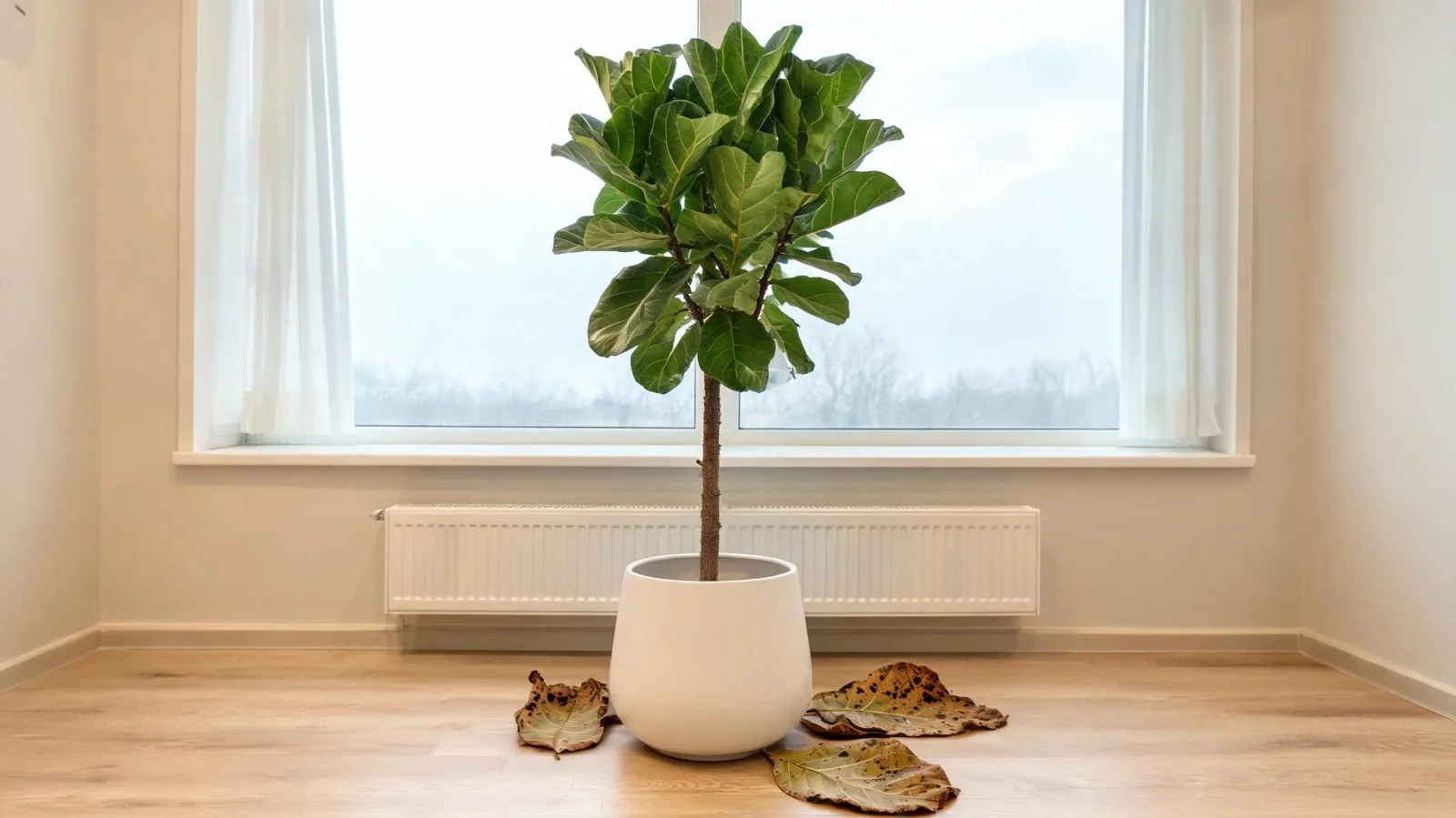
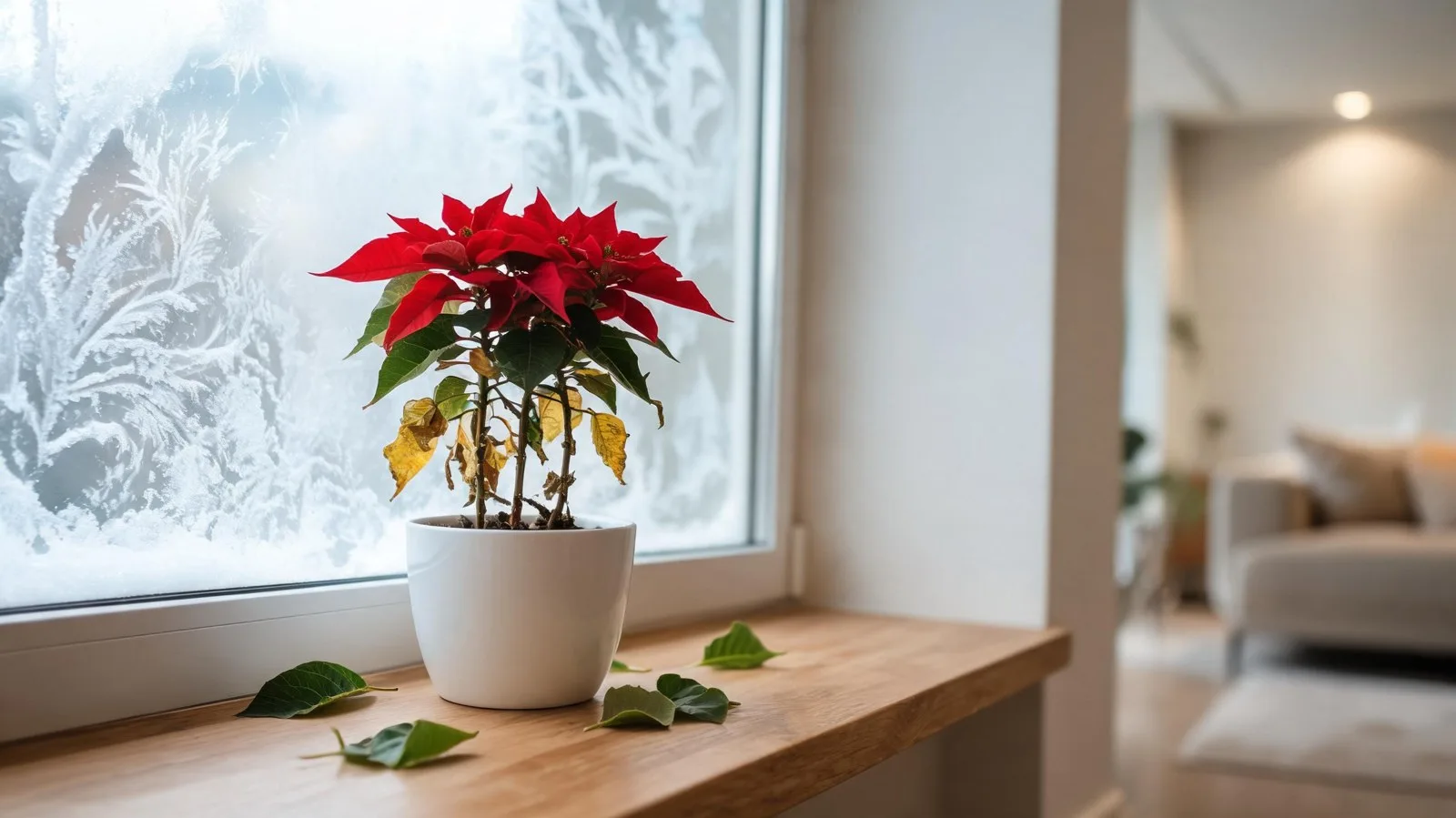
Poinsettias (Euphorbia pulcherrima) are tropical shrubs from Mexico. The plant you buy in November or December was grown in a warm, bright, humid greenhouse, then boxed, shipped, and sold in a store that is often drafty and dim. In a heated home in winter it faces cold windows, dry air and less light at once, and it reacts by shedding leaves, usually the lower green ones first. Once the cause is fixed, most plants with firm stems stabilize within a week or two.
Symptom → likely cause
| What you see | Most likely cause |
|---|---|
| Many green leaves fall within a day or two of bringing it home | Cold exposure during transport or near a cold window |
| Leaves wilt, then curl and drop; soil is bone dry | Underwatering |
| Lower leaves turn yellow, then drop; soil stays wet; water sits in the foil | Overwatering or poor drainage |
| Leaves drop on one side of the plant | Draft from a door, heat vent, radiator or fireplace |
| Slow, steady loss of lower leaves; stems stretch toward the window | Not enough light |
| Wilting even though the soil is wet; stems soft or dark at the base | Root rot |
| Sticky leaves, tiny white flying insects, speckled or yellow leaves | Whiteflies or other pests |
| Bracts and leaves fade and fall in late winter or spring | Natural end of the bloom season |
1. Cold shock
This is the number one reason a brand-new poinsettia drops its leaves. Temperatures below about 50°F (10°C) can damage the leaves, and even a short walk from the store to a cold car in winter can be enough. Leaves touching a cold window pane at night can also be chilled.
How to fix it:
- Keep the plant at 65–70°F (18–21°C) during the day and no lower than about 60°F (15°C) at night.
- Pull it a few inches back from the glass so no leaves touch the window, especially on frosty nights.
- When buying one, have it wrapped in a paper or plastic sleeve for the trip home and do not leave it in a cold car.
- Cut off leaves that are fully yellow or mushy; leave the rest. Damaged leaves will not recover, but new growth will be healthy once the plant is warm.
2. Drafts and heat sources
Hot, dry air from a forced-air vent, radiator or fireplace dries the leaves quickly, and a front door that keeps opening sends blasts of cold air across the plant. Either one causes leaves to wilt and drop, often on the side facing the draft.
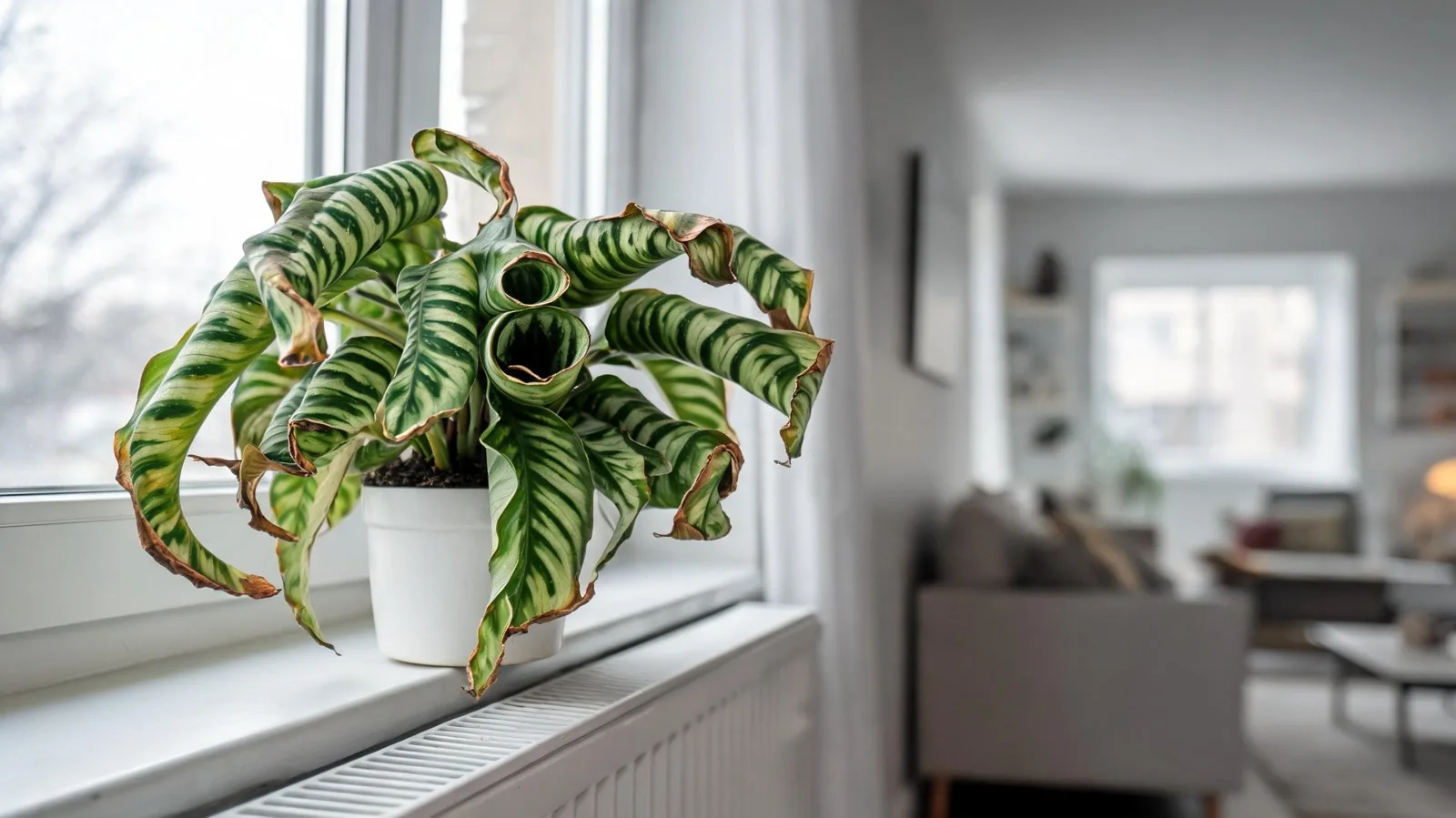
How to fix it: place the poinsettia where the temperature is steady: not on top of a radiator or TV, not beside an exterior door, and not in the direct path of a heating or AC vent. If the air is very dry, a humidifier nearby helps more than misting. Dry heat causes similar damage on other tropical plants, as in calathea leaves curling.
3. Overwatering and the foil sleeve trap
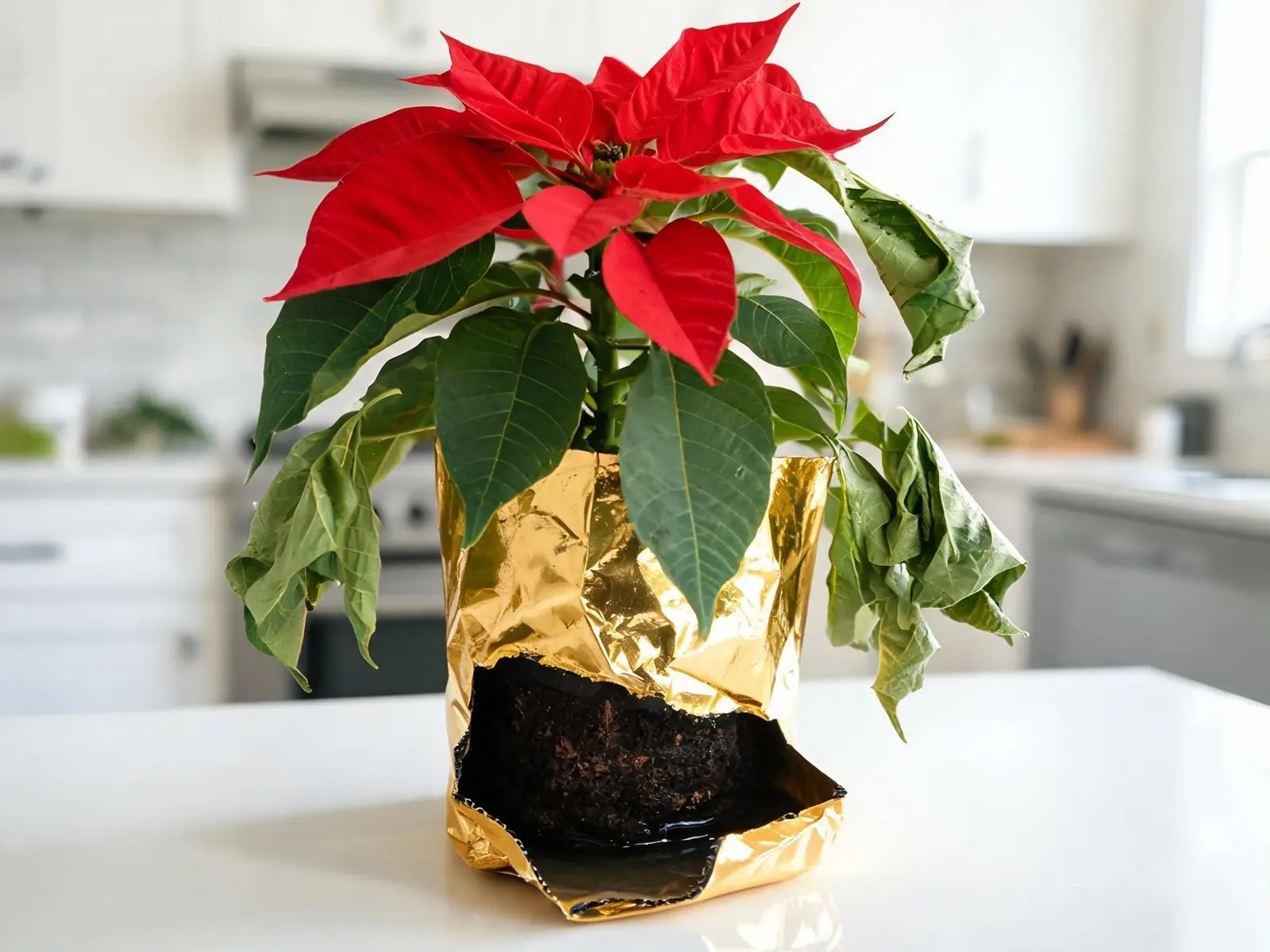
Most poinsettias are sold in a thin nursery pot wrapped in decorative foil or plastic. Water runs through the soil and collects inside the foil, so the bottom of the root ball sits in a puddle. Roots that cannot breathe stop taking up water, the lower leaves turn yellow, and then they fall.
How to fix it:
- Remove the foil, or cut a few holes in its base and stand the pot on a saucer.
- Water only when the top inch (2.5 cm) of soil feels dry to the touch. In a warm room this is often every 5–7 days, but always check the soil instead of following a fixed schedule.
- Water thoroughly at the sink until water drains out of the bottom, let it drip for 10–15 minutes, then put it back. Never let it stand in water.
Yellowing that follows overwatering looks similar on most houseplants; see yellow leaves on indoor plants for how to tell watering problems apart from light or nutrient problems.
4. Underwatering
Poinsettias in small pots in a heated room can dry out fast. When the soil goes completely dry, the leaves wilt and hang down. One serious wilt often leads to leaf drop a few days later, even after you water.
How to fix it: if the pot feels very light and the soil has pulled away from the sides, water slowly until it drains, wait a few minutes, then water again so the whole root ball is wet. Check the soil every couple of days from then on.
5. Not enough light
In winter, days are short and indoor light is weak. A poinsettia set on a coffee table in the middle of the room will slowly drop its lower leaves to match the light it can get.
How to fix it: give it the brightest indirect light you have, ideally near a south-, east- or west-facing window for at least six hours a day, keeping leaves off the cold glass. If your rooms are dim, a full-spectrum LED grow light placed about 12 inches (30 cm) above the plant for part of the day helps.
6. Root rot
If the soil has stayed soggy for days, the roots can rot. The plant then wilts and drops leaves even though the soil is wet, because the damaged roots cannot carry water up to the leaves.
How to fix it: slide the plant out of its pot and look at the roots. Healthy roots are white or light tan and firm. Rotted roots are brown, soft and may smell bad. If only some roots are affected, trim them off with clean scissors, repot into fresh, well-draining potting mix in a pot with drainage holes, and water lightly until new growth appears. If you also see white fuzzy growth on the soil surface, read how to deal with white fungus on soil.
7. Pests
Whiteflies are the most common poinsettia pest. You will see tiny white insects fly up when you touch the plant, and leaves may become sticky, speckled or yellow before they fall. Mealybugs (white cottony clumps) and fungus gnats (small dark flies around wet soil) also show up indoors.
How to fix it: isolate the plant, check the undersides of the leaves, and use yellow sticky traps for flying insects. Wipe or rinse off what you can, and treat with insecticidal soap following the label directions, repeating as directed. Letting the top of the soil dry between waterings is the best way to control fungus gnats.
Natural leaf drop after the holidays
A poinsettia's colorful "petals" are actually bracts (modified leaves). The real flowers are the small yellow-green buds in the center. Once those flowers drop, usually in late winter, the plant gradually loses its bracts and some leaves. This is normal and not a sign that you did something wrong.
Many people treat poinsettias as seasonal plants. If you want to keep yours, cut the stems back to about 4–6 inches (10–15 cm) in spring, keep it in bright light, and start feeding it with a balanced houseplant fertilizer once new growth appears. Getting it to color up again next winter requires about 14 hours of complete darkness every night for roughly 8–10 weeks starting in early fall.
Step-by-step: how to save a poinsettia that is dropping leaves
- Feel the soil 1 inch (2.5 cm) down. Note whether it is soggy, slightly moist or bone dry.
- Remove the foil sleeve and pour out any trapped water.
- Water thoroughly only if the top inch is dry; otherwise wait.
- Move the plant to a bright spot at 65–70°F (18–21°C), away from vents, radiators, doors and cold window glass.
- Check the roots if the plant wilts while the soil is wet. Trim rotten roots and repot if needed.
- Look under the leaves for whiteflies or mealybugs and treat early.
- Do not fertilize while it is in bloom and stressed. Feeding will not stop leaf drop.
- Give it 1–2 weeks. If the stems stay firm and no new leaves drop, the plant has stabilized.
For a plant that has lost most of its leaves, our guide on how to save a dying plant walks through emergency triage.
When it can't be saved
A poinsettia is usually beyond saving if the stems are soft, black or shriveled at the base, all of the roots are brown and mushy, or every leaf and bract has fallen and the stems are no longer green when you scratch them lightly with a fingernail. In that case it is better to compost it and start fresh with a healthy plant next season.
Are poinsettias toxic to pets?
Poinsettias are listed as toxic to cats and dogs by the ASPCA, but the effects are usually mild. The milky sap can irritate the mouth and stomach and may cause drooling or vomiting. The sap can also irritate skin, so wear gloves when trimming. Keep the plant and fallen leaves out of reach of pets and small children, and call your vet if a pet eats a large amount.
Check your plant's problem from a photo
If you are still not sure what is causing the leaf drop, take a clear photo of the whole plant plus a close-up of a damaged leaf and run it through our free plant diagnosis tool. If you received a holiday plant and are not sure what it is, the plant identifier can tell you from a single photo.
Frequently asked questions
Why is my new poinsettia dropping leaves?
Most new poinsettias drop leaves because they were chilled on the way home or placed in a cold or drafty spot. Overwatering inside a foil sleeve is the second most common cause. Keep it warm, bright and in a pot that drains.
Will poinsettia leaves grow back?
Fallen leaves do not regrow in the same spot, but a healthy plant will push out new leaves from the stems once conditions improve, especially in spring when it starts actively growing.
How often should I water a poinsettia?
Water when the top inch (2.5 cm) of soil is dry, which is often about once a week in a heated home. Always let excess water drain away and never let the pot sit in water.
Is it normal for poinsettias to lose leaves after Christmas?
Yes. After the holidays the small flowers in the center drop and the plant slowly loses bracts and some leaves. This seasonal decline is normal and does not mean the plant is dying.
Can a poinsettia recover from cold damage?
Often, yes. Leaves that were chilled will fall or stay damaged, but if the stems are still firm the plant can recover and grow new leaves once it is kept above 60°F (15°C).