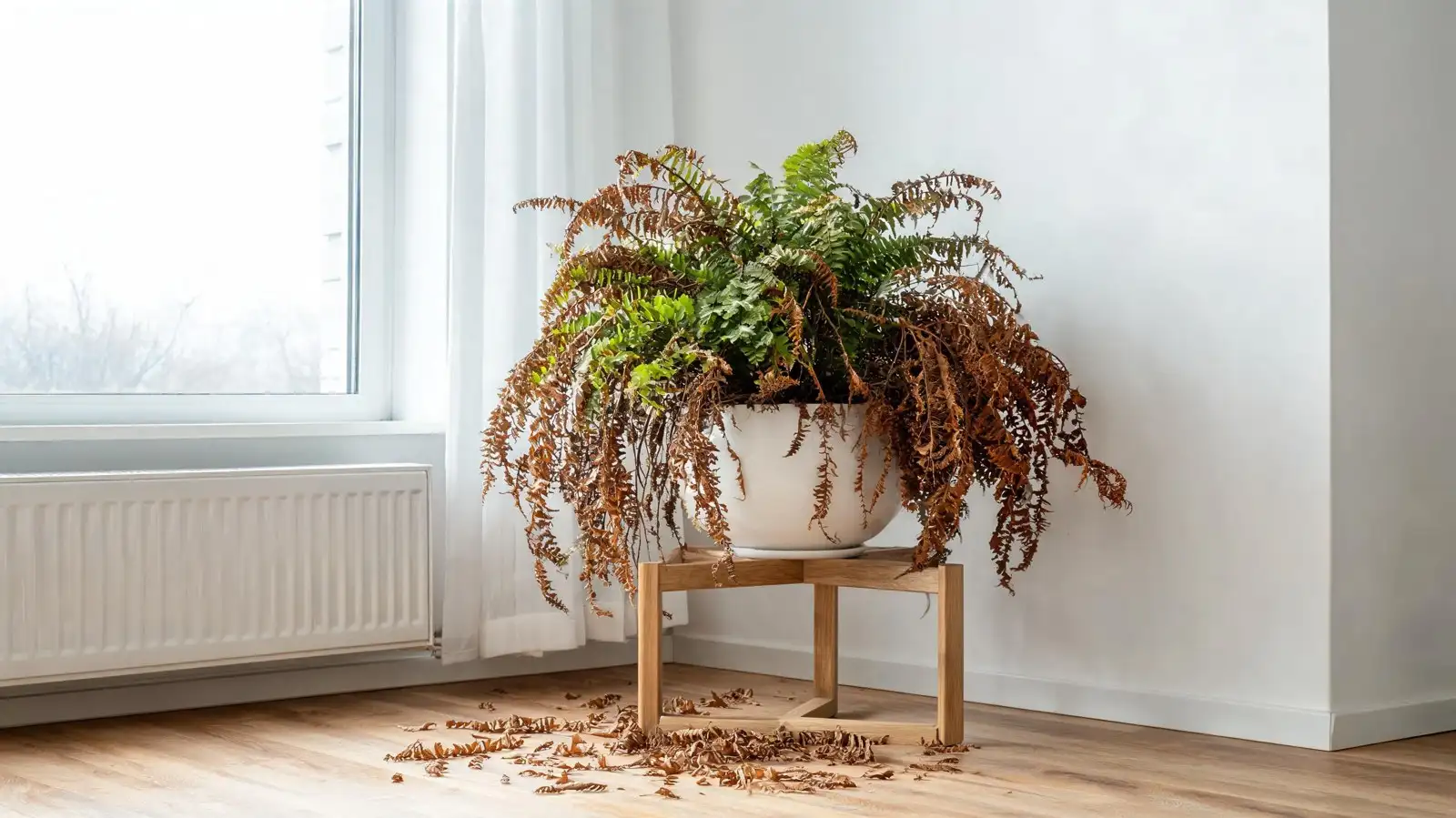
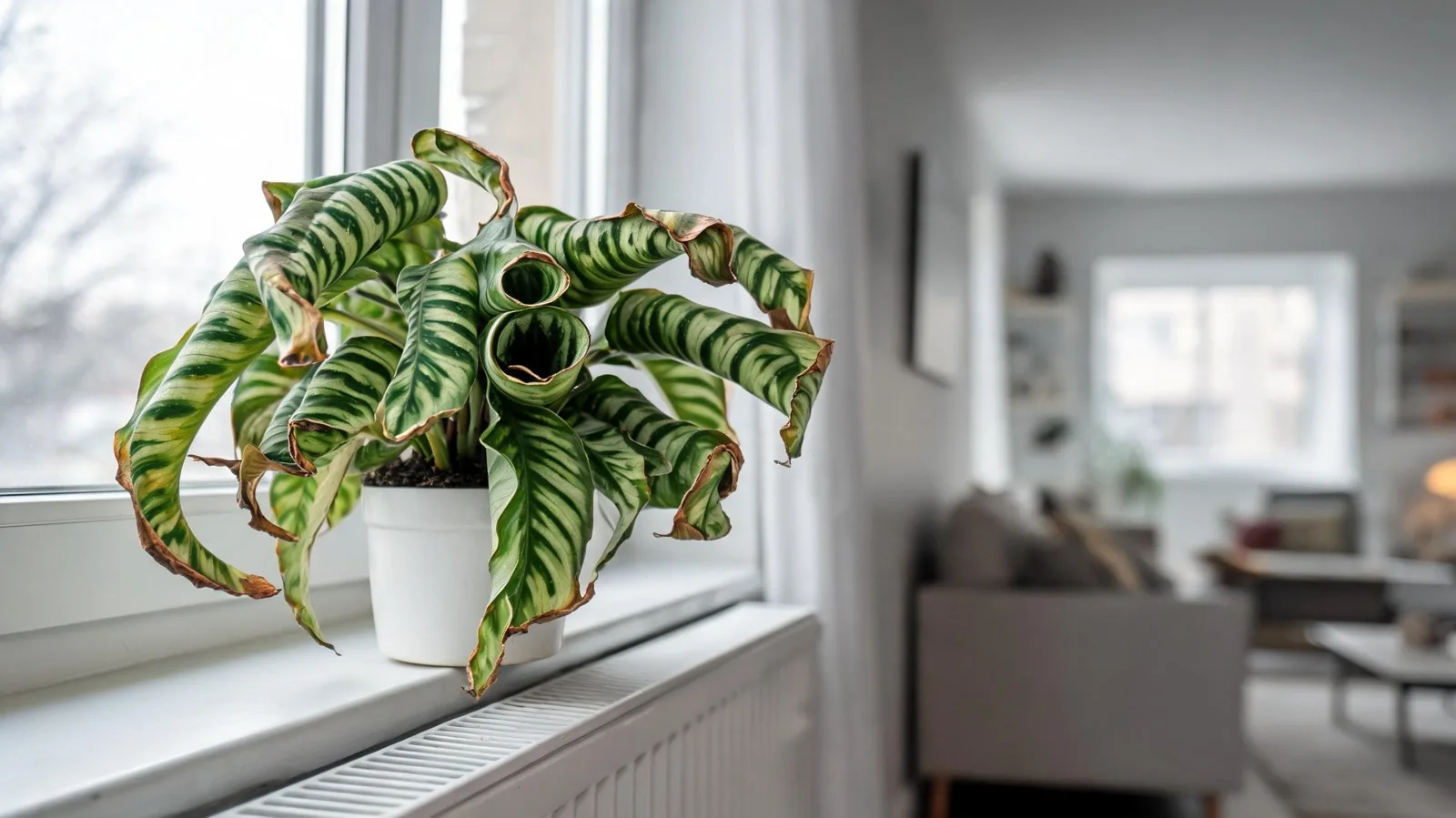
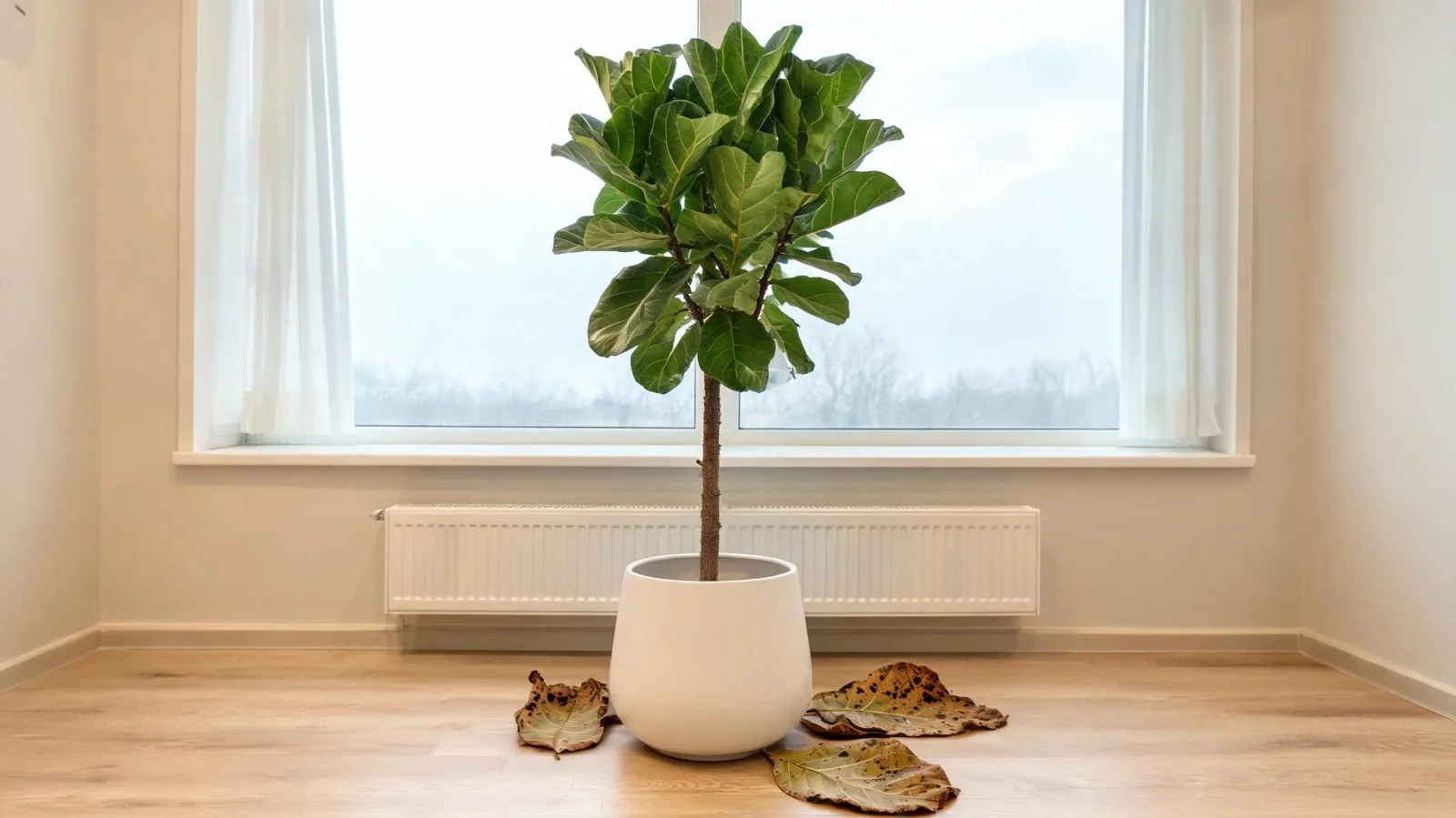
Short answer: a Boston fern turns brown indoors mostly because the air is too dry, the soil dried out, or the plant is sitting in a cold draft or next to a heater. In winter, central heating can drop indoor humidity well below what ferns like, so the leaflets crisp up first. Fix the watering and humidity, trim the dead fronds, and new green growth usually follows within a few weeks.
Not sure it is a humidity problem? Upload a photo to our free plant diagnosis tool and it will point you to the most likely cause in seconds.
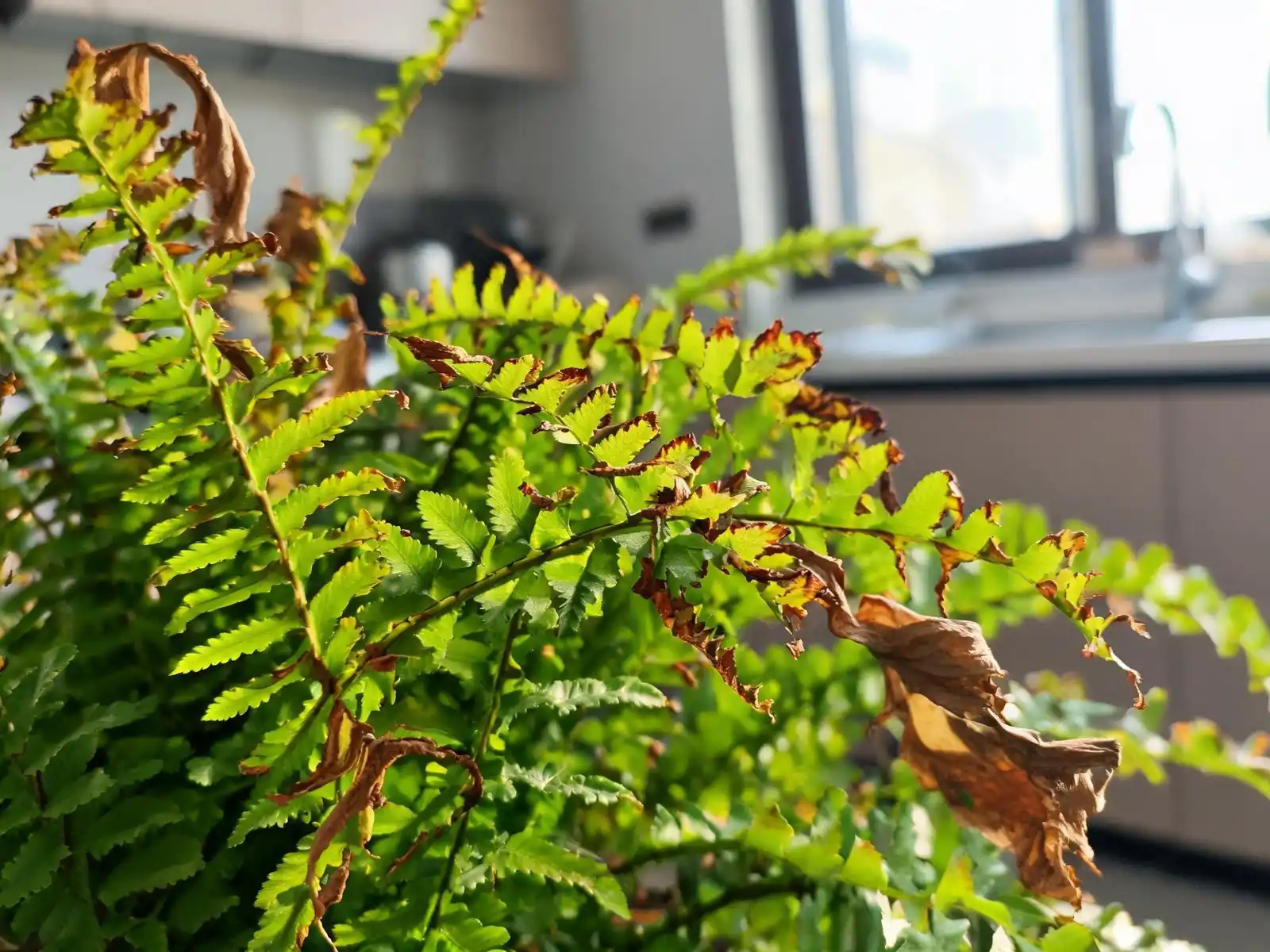
Crispy brown leaflet tips are the classic sign of dry indoor air or soil that dried out between waterings.
What the brown pattern tells you
Where the brown shows up is your best clue.
What you see
Most likely cause
Crispy brown tips and edges all over the plant
Low humidity (dry air from heating)
Whole fronds turn brown and leaflets shed onto the floor
Soil dried out completely, or shock after moving indoors
Brown or yellow fronds, soggy soil, sour smell
Overwatering or root rot
Brown, limp patches on fronds touching a cold window
Cold draft or chill damage
Pale, bleached fronds that then go brown and crisp
Too much direct sun
Brown tips plus a white crust on the soil or pot rim
Fertilizer or mineral salt buildup
Brown speckling, fine webbing or tiny white cottony spots
Pests (spider mites, mealybugs, scale)
Only a few old fronds at the base turn brown
Normal aging
1. Dry air from central heating
Boston ferns come from humid, sheltered places and grow best with humidity around 50% or higher. A heated home in winter can sit far below that, especially near forced-air vents and radiators. The fronds lose water faster than the roots can replace it, so the tips and edges dry out and turn brown first.
How to fix it:
Move the fern at least 3–4 feet (about 1 m) away from heating vents, radiators, space heaters and fireplaces.
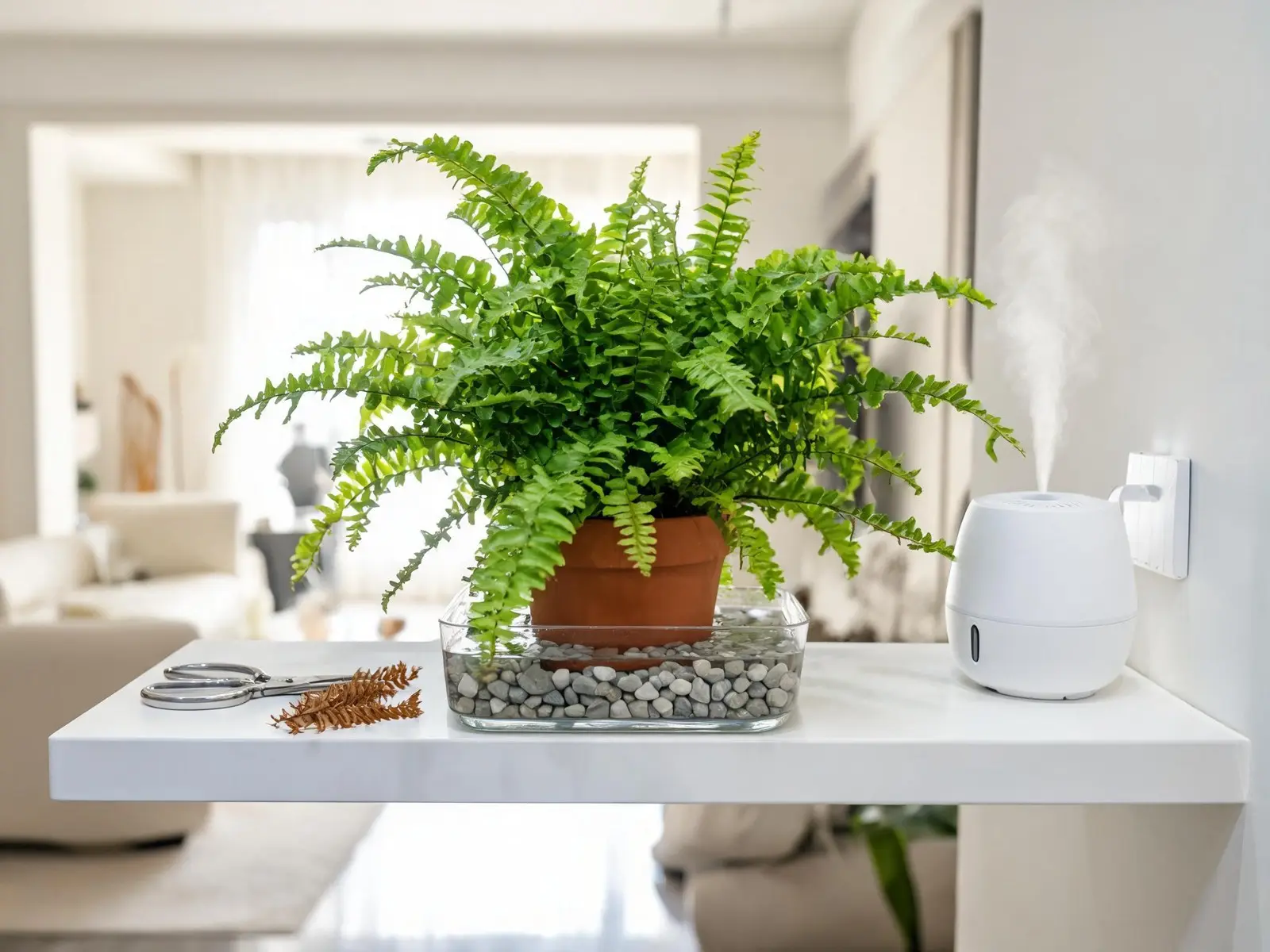
Run a small cool-mist humidifier nearby. This is the most reliable way to raise humidity in a dry room.
Group it with other plants, or set the pot on a tray of pebbles and water (keep the pot base above the waterline).
Misting gives only a short boost and is not enough on its own in a dry winter room.
Calatheas react to dry winter air in a very similar way, so if you grow both, our guide to calathea leaves curling covers the same humidity fixes from a different angle.
2. The soil dried out
Boston ferns do not like to dry out. If the root ball goes bone-dry even once, whole fronds can brown and the small leaflets start dropping all over the floor. Indoor heating dries potting mix faster than you might expect, and hanging baskets dry out fastest of all.
How to fix it:
Check the soil every few days. Water when the top inch (2–3 cm) feels just dry to the touch, and aim to keep the mix evenly moist, never soggy.
Water slowly until it drains from the bottom, then empty the saucer.
If the root ball has shrunk away from the pot and water runs straight through, soak the whole pot in a sink or bucket of room-temperature water for 20–30 minutes, then let it drain well.
3. Overwatering and root rot
The opposite mistake causes browning too. Ferns use less water in winter because light levels and growth slow down. A pot without drainage holes, or a decorative cover pot that collects water, keeps the roots wet. Roots then rot, can no longer take up water, and the fronds go brown or yellow even though the soil is wet.
How to fix it:
Make sure the pot has drainage holes, and never leave it standing in water.
Let the top inch (2–3 cm) dry slightly before watering again.
If the soil smells sour, ease the plant out and check the roots. Healthy roots are firm and light-colored; rotten roots are dark, mushy and fall apart. Trim rotten roots with clean scissors and repot into fresh, well-draining potting mix.
Boston ferns are happiest between about 60–75°F (16–24°C). Fronds pressed against a cold window pane, or a spot next to a door that opens to winter air, can get chilled and develop brown, limp or dark patches. Temperatures below about 50°F (10°C) can seriously damage the plant.
How to fix it: pull the fern back a few inches from the glass on cold nights, keep it away from exterior doors and drafty windows, and do not leave it in an unheated porch or sunroom over winter.
5. Shock after moving indoors
Ferns that spent summer on a porch or patio often brown and shed leaflets for a few weeks after coming inside, because of the sudden drop in light and humidity. This is stress, not a death sentence.
How to fix it: give the plant the brightest indirect light you have, keep the soil evenly moist, add humidity, and be patient. Trim the browned fronds and wait for new growth from the center of the crown.
6. Too much direct sun
Strong direct sun through a south- or west-facing window can bleach fronds pale and then scorch them brown.
How to fix it: move the fern a few feet back from a sunny window or filter the light with a sheer curtain. An east-facing window or a bright north-facing window is usually ideal. If your home is dark, a full-spectrum grow light for 10–12 hours a day can help keep the fern green through winter.
7. Fertilizer and mineral salts
Ferns are light feeders. Too much fertilizer, or feeding through winter while growth is slow, lets salts build up in the soil. These salts draw moisture out of the roots and show up as brown tips, sometimes with a white crust on the soil surface or pot rim.
How to fix it: stop fertilizing from late fall to early spring. Flush the pot by running plenty of water through it and letting it drain fully. In spring and summer, feed with a balanced liquid houseplant fertilizer at half strength about once a month. If your tap water is very hard, try rainwater or distilled water. If you see a fuzzy white layer on the soil rather than a hard crust, that is mold, and our guide to treating white fungus in plant soil explains what to do.
8. Pests that love dry air
Spider mites thrive in warm, dry rooms, which makes winter their favorite season. Look under the fronds for fine webbing, tiny moving dots or spreading brown speckles. Mealybugs look like bits of white cotton; scale looks like tan bumps on stems.
How to fix it: isolate the fern from other plants, rinse it well in the shower with lukewarm water, and treat with insecticidal soap, following the label directions. Repeat every 5–7 days for a few weeks to catch new hatchlings. Raising humidity also helps keep spider mites away. Be careful when inspecting fern fronds: the brown dots in neat rows on the underside of some leaflets are usually spores, which are normal and not pests.
Step-by-step: how to revive a brown Boston fern
Diagnose first. Check the soil with your finger, look under the fronds for pests, and note where the fern is sitting (vent, window, radiator). If you are unsure, run a photo through the free plant diagnosis tool.
Trim the dead growth. Cut fully brown fronds off at the base with clean scissors. Brown fronds will not turn green again. Fronds that are only partly brown can stay; you can snip off just the brown tips to tidy them.
Fix the watering. Soak a dried-out root ball, or let a soggy one drain and dry slightly. From now on keep the mix evenly moist.
Move it to a better spot. Bright indirect light, 60–75°F (16–24°C), and away from heat sources and cold glass.
Raise humidity. Add a humidifier or pebble tray, or group it with other plants.
Pause fertilizer until spring, and flush the soil if you see salt crust.
Wait for new growth. Healthy new fronds unfurl from the center as tight coils called fiddleheads. Seeing them means the roots are working again.
Trimming dead fronds and adding humidity is usually enough to get a winter-stressed fern growing again.
When to repot, and when it can't be saved
Repot if roots are circling the bottom of the pot or poking out of the drainage holes, if water runs straight through without soaking in, or if the soil stays soggy and smells sour. Spring is the best time. Move up only one pot size, about 1–2 inches (2–5 cm) wider, use fresh potting mix that holds moisture but drains well, and make sure the new pot has drainage holes.
It may not be saved if every frond is brown and the crown at the soil surface feels soft or mushy, or if the roots are almost all dark and rotten. Before giving up, check the center of the crown. If it is still firm and you can see any green fiddleheads, cut back all the dead growth, fix the care and give it a few weeks. A firm crown often pushes out new fronds.
Not sure your fern is actually a Boston fern? Several ferns sold as houseplants look alike but have slightly different needs. Our free plant identifier can confirm the species from a single photo.
Is a Boston fern safe for cats and dogs?
Yes. The ASPCA lists Boston ferns as non-toxic to cats and dogs. Asparagus fern, despite the name, is not a true fern and is toxic to pets, so identify the plant if you are unsure. Keep sprays and fertilizers out of reach of pets and children.
Check your plant's problem from a photo
Brown fronds often have more than one cause, such as dry air plus a dried-out root ball. Photograph the worst fronds and the soil surface in daylight and upload it to the free Plant Solutions diagnosis tool for care steps.
Frequently asked questions
Should I cut the brown fronds off my Boston fern?
Yes. Fully brown fronds will never turn green again, so cut them off at the base with clean scissors. This tidies the plant and lets light reach the center, where new fronds grow. Fronds that are mostly green can stay.
How often should I water a Boston fern in winter?
There is no fixed schedule because it depends on your pot, light and heating. Check the soil every few days and water when the top inch (2–3 cm) feels just dry. The goal is evenly moist soil that never dries out completely or stays soggy.
Does misting help a Boston fern?
Only briefly. Misting raises humidity for a few minutes, so a humidifier, pebble tray or grouping plants works much better in a heated home.
Why is my Boston fern dropping tiny leaves everywhere?
Shedding leaflets usually means the soil dried out, the air is very dry, or the fern is adjusting after being moved indoors or to a darker spot. Keep the soil evenly moist, raise humidity and give it bright indirect light.
Can a Boston fern recover from turning brown?
In most cases, yes. As long as the crown is firm and the roots are healthy, a Boston fern will grow new fronds once you fix the cause. Expect to see new fiddleheads within a few weeks, with faster growth once spring arrives.