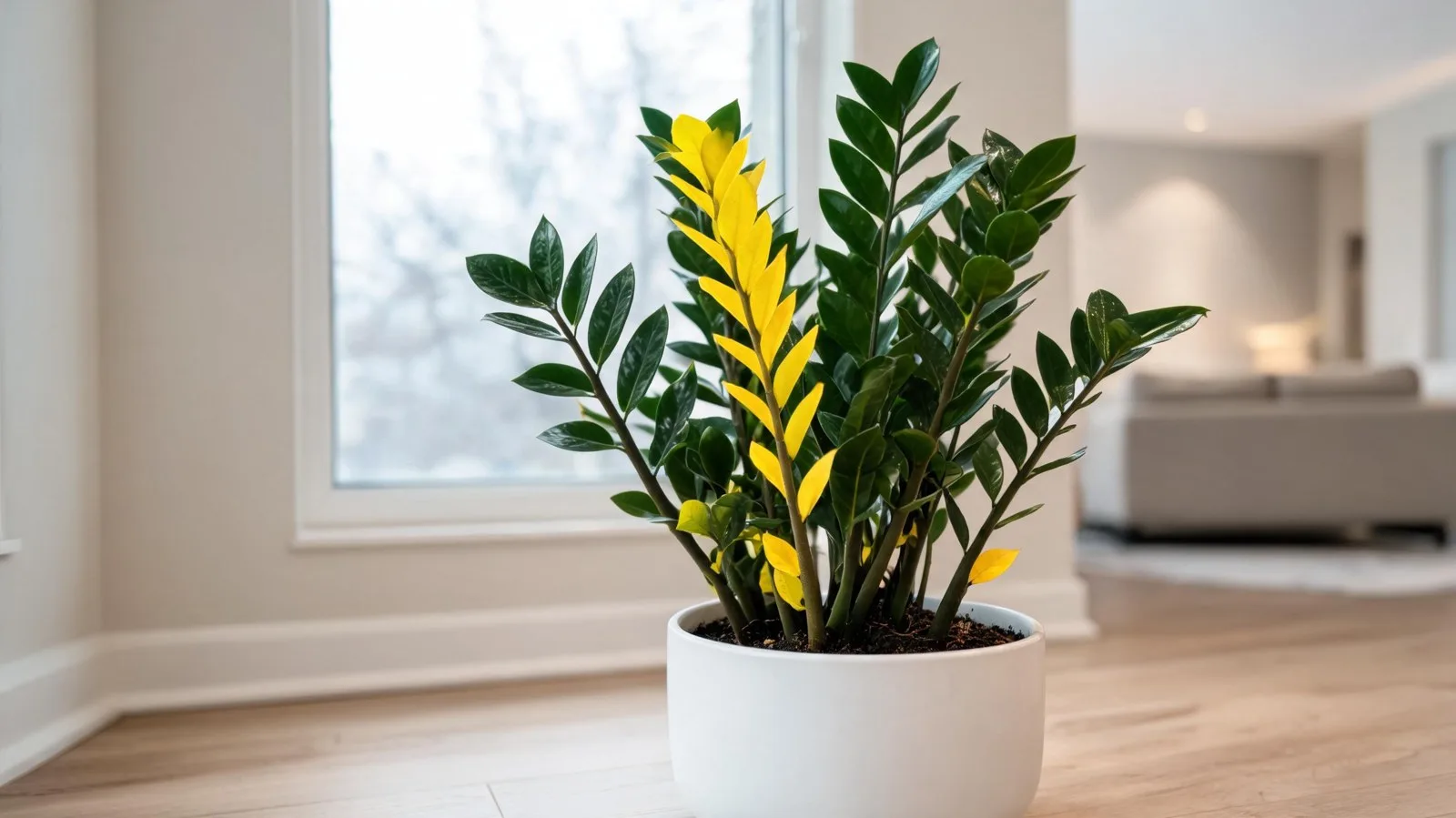
Short answer: ZZ plant leaves usually turn yellow because the soil stays wet for too long. ZZ plants store water in thick, potato-like rhizomes under the soil, so they need far less water than most houseplants, especially in winter when light is low and growth slows. If the yellow leaves are soft and the soil is damp, stop watering and check the roots. If only one or two old leaflets at the bottom are yellow and the rest of the plant looks firm and glossy, that is normal aging.
Not sure which problem you have? Upload a photo to our free plant diagnosis tool and get a likely cause in seconds.
Yellow leaflets on a ZZ plant are most often a sign of soil that stays wet too long, especially in winter.
Quick check: what the yellow leaves are telling you
What you see
Most likely cause
First thing to do
Yellow leaflets that feel soft, soil still damp days after watering
Overwatering
Stop watering and let the soil dry completely
Yellow stems, mushy or dark base, sour smell from the soil
Root and rhizome rot
Unpot, cut away soft rhizomes, repot in dry mix
Yellowing that starts after you moved the plant to a darker corner
Too little light combined with wet soil
Move it closer to a bright window, water less
Yellow or pale patches with brown, crispy spots on the side facing the window
Sunburn from direct sun
Move it out of strong direct afternoon sun
Leaflets yellow, then wrinkle and curl; soil bone dry for weeks
Underwatering (rare)
Water thoroughly until it drains
Yellow, droopy or blackened leaflets near a cold window or door
Cold damage or drafts
Keep it above 60°F (15°C) and away from cold glass
Yellow tips or edges after feeding
Too much fertilizer
Flush the soil with water and stop feeding
One or two old bottom leaflets yellow, rest healthy
Normal aging
Nothing; remove them when they fall
1. Overwatering (the most common cause)
A ZZ plant (Zamioculcas zamiifolia) comes from dry regions of eastern Africa and is built to survive drought. Its rhizomes and thick stems hold a large reserve of water. When the soil stays wet, the roots cannot get air, and the plant shows it by turning its leaflets yellow, usually starting at the bottom of the stems. The leaflets often feel soft rather than crispy.
Winter makes this much worse. With shorter days and less light, a ZZ plant uses very little water, so a watering routine that worked in summer can keep the pot soggy for weeks in December or January.
How to fix it:
Stop watering. Push a finger or a wooden chopstick deep into the pot. Only water again when the soil is dry all the way down, not just on top.
In winter, that often means watering roughly once every 3–4 weeks, or even less in a cool, dim room. In spring and summer it may be every 2–3 weeks. Let the soil, not the calendar, decide.
Make sure the pot has a drainage hole. If it sits inside a decorative cachepot, empty any water that collects in the bottom after watering.
Remove leaflets that have turned fully yellow. They will not turn green again.
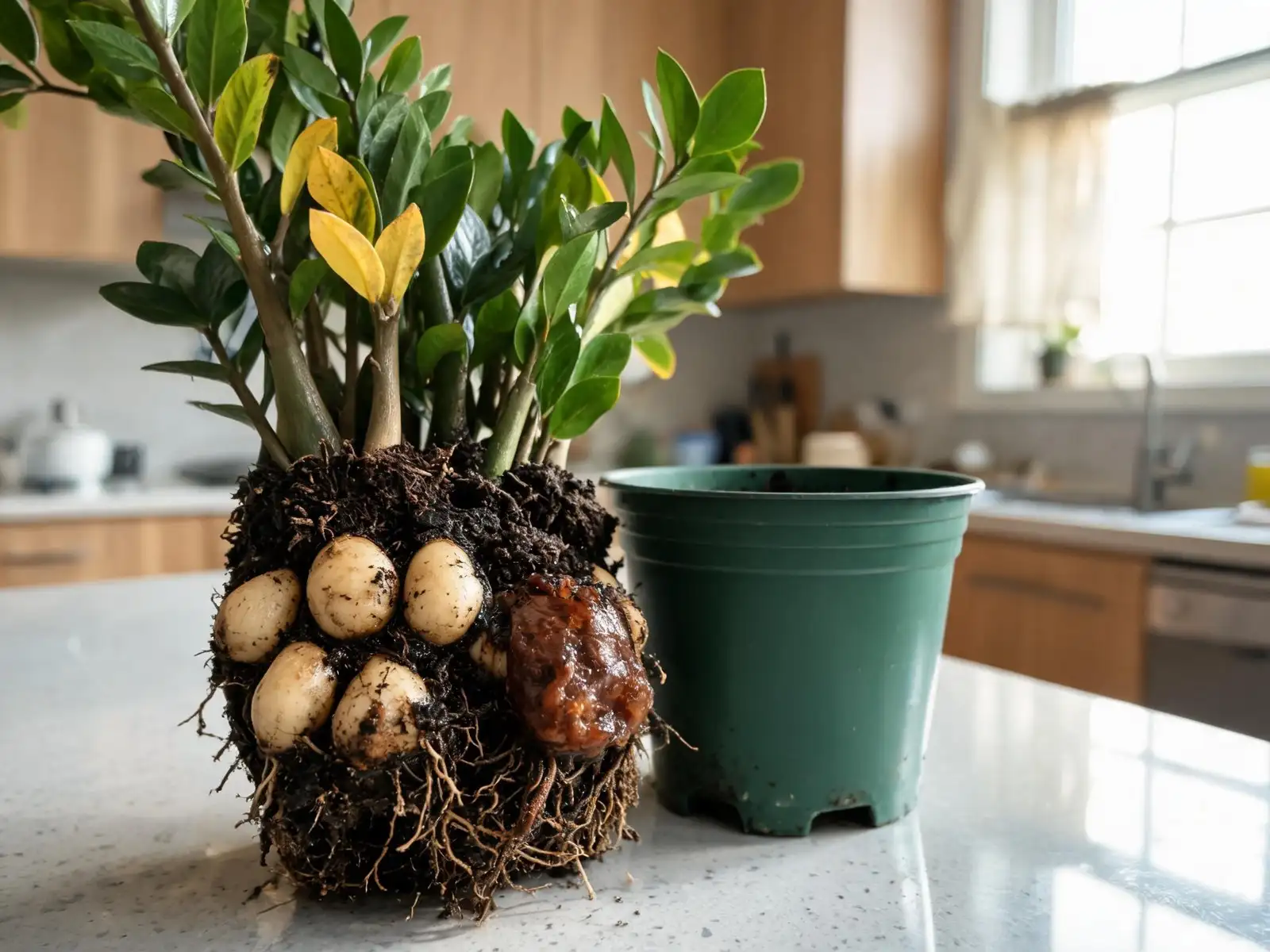
Overwatering that goes on for weeks can lead to rot. This is the cause to rule out first if whole stems are turning yellow, the base of a stem feels soft or looks dark and wet, or the soil smells sour or musty. Rot spreads from the roots upward, so by the time you see yellow stems, the damage below the soil can be significant.
Healthy ZZ rhizomes are firm and pale. Brown, soft or hollow ones are rotting and should be cut away.
How to fix it:
Slide the plant out of its pot and gently remove the wet soil so you can see the rhizomes and roots.
Healthy rhizomes are firm and pale, and healthy roots are light colored. Rotten parts are brown or black, soft and often smell bad.
With clean, sharp scissors or a knife, cut away all soft, rotten rhizomes, roots and stems. Cut back into firm, healthy tissue.
Let the cut surfaces air-dry for several hours, or up to a day, so they can callus.
Repot into fresh, dry, fast-draining mix (for example regular potting mix with about a third perlite or pumice, or a cactus and succulent mix) in a clean pot with a drainage hole.
Wait about a week before watering lightly, then go back to the "dry all the way down" rule.
The same rot pattern is common in other water-storing plants; our guide to snake plant leaves falling over covers it from another angle.
3. Too little light
ZZ plants are famous for tolerating low light, but tolerating is not the same as thriving. In a dark corner, the plant grows very slowly and uses almost no water, so the soil stays wet much longer. Low light on its own usually causes slow growth and stretched, leaning stems rather than yellowing, but low light plus regular watering is a classic recipe for yellow leaves.
How to fix it:
Move the plant to bright, indirect light, such as a few feet from an east or north-facing window, or near (not directly in) a south or west window.
In dark winter months, a basic LED grow light for several hours a day helps if the plant is far from a window.
Whatever the light level, match your watering to it: the darker the spot, the less water it needs.
The opposite problem shows up as yellow or bleached, washed-out leaflets, sometimes with brown, dry, crispy patches, mainly on the side facing the window. This tends to happen when a plant used to indirect light is moved suddenly into strong direct sun, or sits right against hot glass in summer.
How to fix it: move the plant back a few feet from the window or filter the light with a sheer curtain. Sun-scorched leaflets will not recover, but new growth will be healthy. Some gentle morning sun is fine for most ZZ plants.
5. Underwatering
Because ZZ plants store so much water, underwatering is far less common than overwatering. It happens when a plant goes many weeks, often a month or more in summer, without water. The leaflets yellow, then wrinkle, curl and drop, and the soil pulls away from the sides of the pot.
How to fix it: water slowly and thoroughly until water runs out of the drainage hole, then let the pot drain completely. If the soil is so dry that water runs straight through, water again after 10–15 minutes. Then go back to watering whenever the soil is fully dry.
6. Cold drafts and low temperatures
ZZ plants like normal room temperatures, roughly 60–80°F (15–27°C). Below about 50°F (10°C) they can be damaged. In winter, leaves that touch a cold window pane or sit near a drafty door or an air conditioner can turn yellow, droop or develop dark, water-soaked patches. Cold soil also stays wet longer, which raises the risk of rot.
How to fix it: keep the plant a few inches away from cold glass, away from exterior doors and out of the path of AC vents. If it spent time near a cold window, check the soil and roots too, since cold damage and overwatering often happen together.
7. Too much fertilizer
ZZ plants are light feeders. Too much fertilizer can burn the roots, causing yellowing leaf tips and edges or a white crust on top of the soil.
How to fix it: flush the pot by running plenty of water through it and letting it drain fully, then let the soil dry before watering again. Do not feed in winter. In spring and summer, a balanced houseplant fertilizer at half strength once a month or less is plenty.
Is some yellowing normal?
Yes. Like all plants, a ZZ plant gradually sheds its oldest leaflets, usually at the bottom of older stems. If one or two leaflets yellow now and then, the rest of the plant is firm and glossy, and new shoots are appearing from the soil, there is nothing to fix. Wait until the leaflet comes away easily or snip it off. Sudden yellowing across many stems at once is not normal and points to one of the causes above.
Step-by-step: how to save a ZZ plant with yellow leaves
Check the soil. Push a chopstick or finger deep into the pot. If it comes out damp, stop watering immediately.
Check the base of the stems. Squeeze gently just above the soil. Firm is good; soft or dark means possible rot.
Unpot if you suspect rot. Inspect the rhizomes and roots, cut away anything soft or brown, let the cuts dry and repot in fresh, dry, gritty mix.
Remove fully yellow leaflets and dead stems so you can see whether new damage appears.
Fix the spot. Bright, indirect light, away from cold windows, drafts and heating vents, and above 60°F (15°C).
Reset your watering. Water only when the soil is dry all the way through, then water thoroughly and let it drain.
Be patient. ZZ plants grow slowly, especially in winter. Judge recovery by firm stems and new shoots in spring, not by the old yellow leaves.
When to repot, and when it can't be saved
Repot a ZZ plant when rot is present, when the soil stays wet for weeks because it is heavy and compacted, or when the rhizomes have filled the pot so tightly that it bulges or cracks. Otherwise, repotting every few years in spring is enough, into a pot only slightly larger than the root mass. An oversized pot holds extra wet soil and makes overwatering more likely.
A ZZ plant is often more salvageable than it looks. As long as at least one rhizome is firm and healthy, it can regrow new stems after you cut away the rotten parts. If every rhizome is soft, hollow or black, the plant cannot be saved as it is. In that case, take any firm, green stems or leaflets and propagate them: stem cuttings can root in water, and leaflets pushed into slightly moist, gritty mix can form tiny new rhizomes. Both methods are slow and can take months.
Not sure if your plant is a ZZ or a similar-looking plant? Check it with our free plant identifier before changing its care.
Pet safety
ZZ plants are toxic to cats and dogs if chewed or eaten. They contain calcium oxalate crystals, which can irritate the mouth and cause drooling, vomiting or pawing at the mouth. Keep the plant out of reach of pets and young children, wear gloves or wash your hands after handling cut stems and rhizomes, and contact your vet if a pet chews on it.
Check your plant's problem from a photo
Yellow leaves can come from more than one cause at once, such as low light plus wet soil. If you are unsure, take a clear photo of the whole plant and a close-up of the yellow leaflets, and upload them to our free plant diagnosis tool for a likely cause and next steps.
Frequently asked questions
Should I cut yellow leaves off my ZZ plant?
Yes. A fully yellow leaflet will not turn green again. Remove it by hand when it comes away easily, or snip it off. If a whole stem has turned yellow, cut it off near the soil line with clean scissors.
Can a yellow ZZ plant leaf turn green again?
No. Once a leaflet has turned yellow, the plant has stopped supporting it. Leaflets that are only slightly pale may hold on, but the goal is healthy new growth, not reviving old leaves.
How often should I water a ZZ plant in winter?
Only when the soil is completely dry all the way down. In many homes that is about once every 3–4 weeks in winter, and less in a cool or dim room. It is always safer to water a ZZ plant too little than too much.
Why is my ZZ plant turning yellow after repotting?
Repotting can disturb the roots, and fresh potting mix often holds more moisture than the plant is used to. Keep it in bright, indirect light and wait until the new soil is fully dry before watering. A few yellow leaflets after repotting are common; soft, yellow stems are a sign to check for rot.
Do ZZ plants need humidity?
No. ZZ plants handle normal indoor humidity, including the dry air from winter heating, much better than ferns or calatheas. There is no need to mist them, and misting does not fix yellow leaves.
Is my ZZ plant dying if the stems are yellow?
Not necessarily. Yellow stems mean that part of the plant is failing, often because of wet soil or rot. Check the rhizomes: as long as some are firm and healthy, the plant can recover and send up new shoots once conditions improve.