Short answer: A string of pearls that is dying indoors is most often being overwatered, especially in winter when it grows slowly and the soil stays wet for weeks. Mushy, see-through or brown pearls and dark stems at the soil line mean rot; flat, wrinkled pearls on dry soil mean thirst; a bald top and long gaps between pearls mean too little light. Check the soil and the stems near the pot rim first, then follow the fixes below.
Not sure what you are looking at? Upload a photo to our free plant diagnosis tool and it will flag signs of rot, sunburn or pests on the strands.
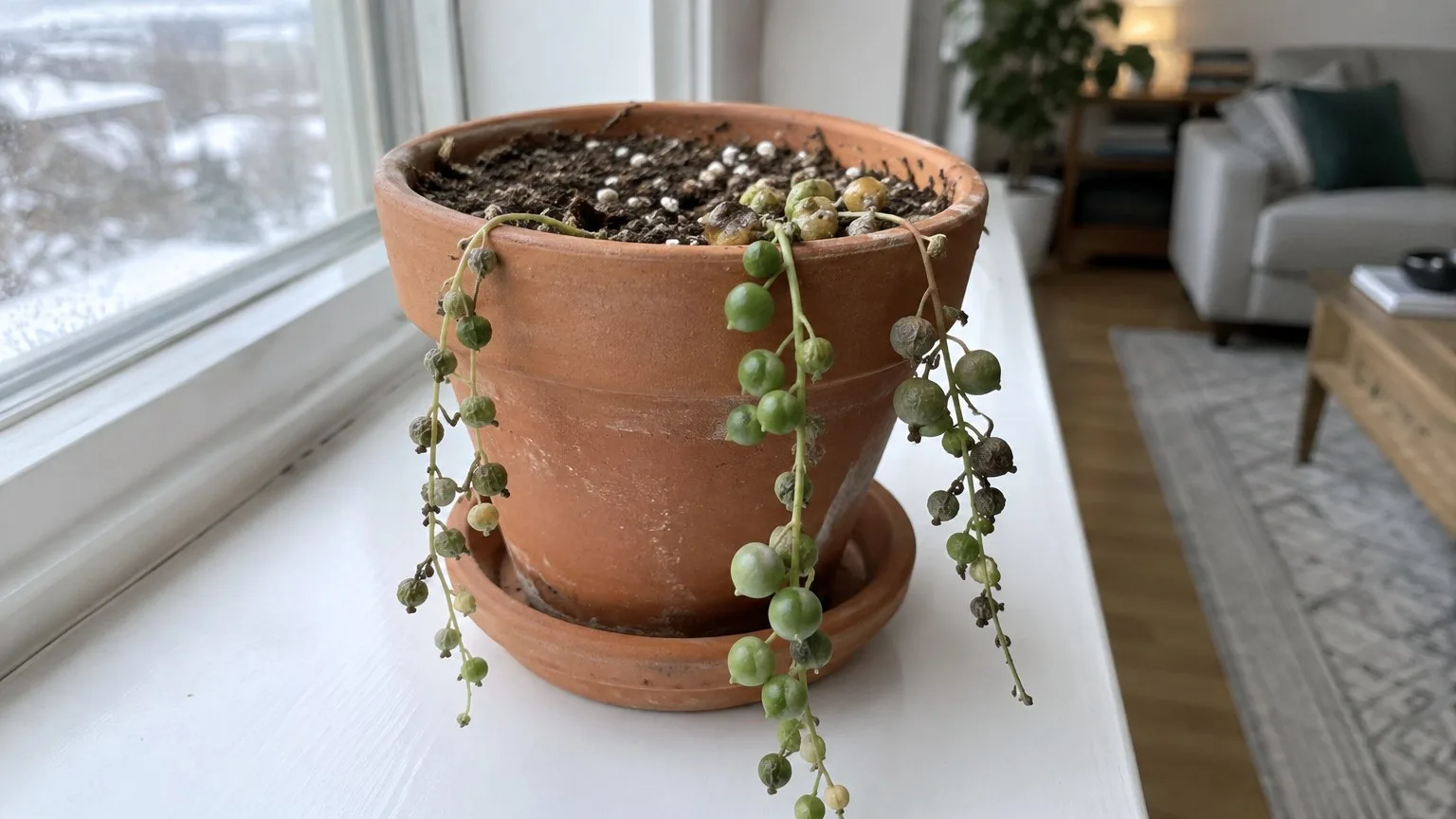
Thin strands, shriveled pearls and a bare top are the classic signs of a struggling string of pearls.
Match the symptom to the cause
String of pearls (Curio rowleyanus, often sold as Senecio rowleyanus) is a trailing succulent whose pearls are water-storage leaves, so they tell you most of what is wrong.
What you see
Most likely cause
First thing to do
Soft, translucent, yellow or brown pearls; black or brown stems near the soil; sour smell
Overwatering and root rot
Stop watering, check roots, take cuttings from healthy strands
Flat, wrinkled or pointed pearls on bone-dry soil; strands feel limp
Underwatering
Water thoroughly until it drains, then let excess run off
Long bare stem between small pearls; strands thin; top of pot bald
Not enough light
Move to the brightest window or add a grow light
Top of the pot dying while the long strands still look fine
Bald crown (old stems dying back, nothing rooting in)
Coil strands back onto the soil to root
Pearls suddenly mushy and dark after sitting by a window or door
Cold damage
Move away from cold glass and drafts; trim damaged parts
Pale, bleached or reddish-brown patches on one side
Sunburn from sudden strong sun
Shift to bright light with only gentle direct sun
White cottony clumps where stems meet pearls; sticky residue
Mealybugs
Isolate, dab with rubbing alcohol, repeat weekly
Soil stays wet for more than a week; deep plastic pot; dense mix
Wrong pot or soil
Repot into a shallow terracotta pot with gritty mix
1. Overwatering and root rot
This is the number one killer indoors. The roots are fine and shallow, so a deep pot of regular potting soil holds water below where they can use it, and in winter the plant uses even less. The roots suffocate and rot travels up the stems.
Signs: pearls turning soft, translucent or yellow-brown, stems near the soil going dark and thin, strands falling away from the pot when you lift them, and soil that still feels damp days after watering.
How to fix it:
Stop watering immediately and move the plant to bright light.
Gently lift the plant out of the pot. Healthy roots are pale and firm; rotted roots are brown or black, mushy and pull away easily.
If only some roots are rotten, cut them off with clean scissors, let the plant sit out of soil for a few hours, then replant in fresh, dry, gritty mix and wait about a week before watering.
If the stems at the soil line are black and soft, the base cannot be saved. Take cuttings from the healthy strands instead (see the step-by-step section below).
A shallow pot of fast-draining mix can dry out completely, especially near a heating vent or radiator.
Signs: pearls lose their round shape and look deflated, wrinkled or come to a point, and the soil is dry all the way down.
How to fix it: water slowly and thoroughly until water runs out of the drainage hole, then let the pot drain fully. For very dry soil that repels water, set the pot in a bowl of water for 10–15 minutes, then lift it out and drain. Pearls usually plump up within a few days. After that, water whenever the top 1–2 inches (2–5 cm) of mix are dry, which in winter often means every few weeks rather than every week.
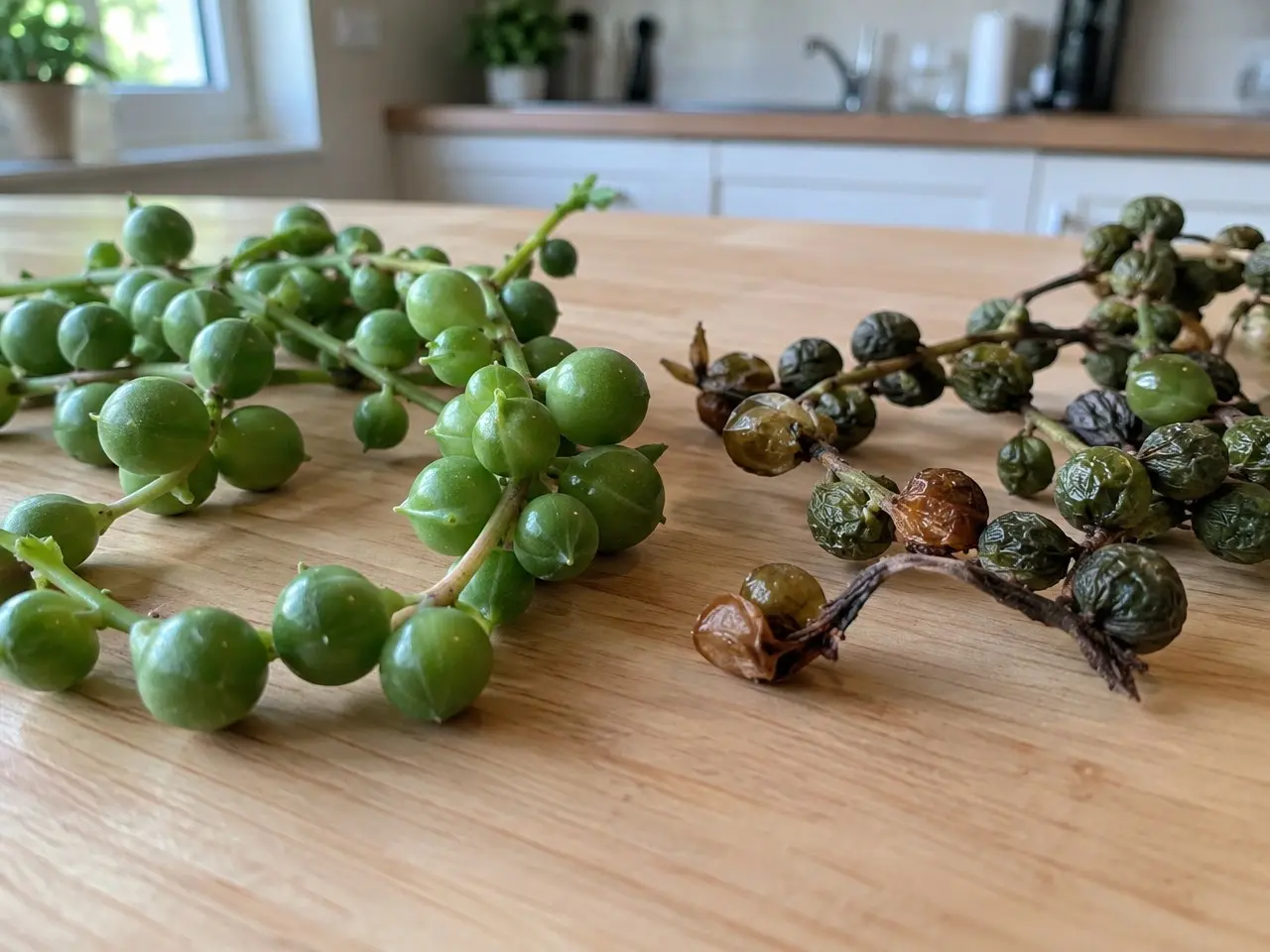
Plump, round pearls are healthy; wrinkled pearls are thirsty; soft brown, see-through pearls are rotting.
3. Not enough light
Indoors, string of pearls needs very bright light. A few feet back from a window, or a north-facing window in winter, is usually not enough.
Signs: the stem between pearls gets longer, new pearls are smaller and paler, strands thin out, and the top of the pot looks bare. Low light also makes rot more likely, because the soil dries more slowly.
How to fix it: place the plant right at a bright window. In the Northern Hemisphere, a south- or west-facing window works well in winter, and an east window gives gentle morning sun. If you do not have a bright window, a full-spectrum LED grow light 6–12 inches (15–30 cm) above the plant for 12–14 hours a day makes a big difference. Stretched growth will not shrink back, but new growth will be compact. Our guide to why succulents stretch and how to fix it explains this in more detail.
4. Bald top (dying crown)
Many plants look full when you buy them, then go bald on top while the strands get longer. Older stems at the center naturally die back, and in a hanging pot the strands never touch soil to root and refill the crown.
How to fix it: gently coil a few healthy strands back on top of the soil and press them lightly onto the surface, or pin them with a bent paper clip. Stems in contact with soil send down roots from the nodes, usually within a few weeks in bright light. You can also snip 4–6 inch (10–15 cm) cuttings and lay them on the soil surface. This is the single best way to keep the plant full.
5. Cold damage and drafts
A cool winter spot around 50–60°F (10–15°C) is fine and can even encourage its small white flowers, but frost or cold window glass can turn pearls mushy and dark almost overnight.
How to fix it: keep the plant above about 50°F (10°C), and make sure strands are not pressed against freezing window glass or near a door that opens to the outside. Trim off any mushy, damaged parts and keep the soil on the dry side while it recovers, because cold plus wet soil is the fastest way to rot.
6. Sunburn
Sunburn happens when a plant moves from a dim spot straight into strong afternoon sun. Pearls develop pale, bleached or reddish-brown patches on the side facing the window.
How to fix it: give bright light with only gentle direct sun, such as morning sun, and introduce stronger light gradually over a week or two. Burned pearls will not turn green again, but new growth will be fine.
7. Mealybugs and aphids
Mealybugs look like small white cotton tufts where stems meet pearls and leave sticky residue. Aphids are tiny green or black insects on new growth.
How to fix it: move the plant away from other houseplants. Dab mealybugs with a cotton swab dipped in 70% rubbing alcohol, and rinse aphids off with a gentle spray of lukewarm water while holding the soil in place. Check again every 5–7 days for a few weeks, because eggs hatch after the first round. Insecticidal soap labeled for houseplants is another option; test it on one strand first.
8. The wrong pot or soil
A deep plastic pot, a pot with no drainage hole, or heavy peat-rich soil keeps the roots wet too long even with careful watering.
How to fix it: use a shallow, wide pot with a drainage hole. Terracotta is ideal because it breathes and dries faster. Use a cactus and succulent mix, ideally with extra perlite or pumice (roughly one part grit to two parts mix). Empty any saucer or decorative outer pot 15 minutes after watering.
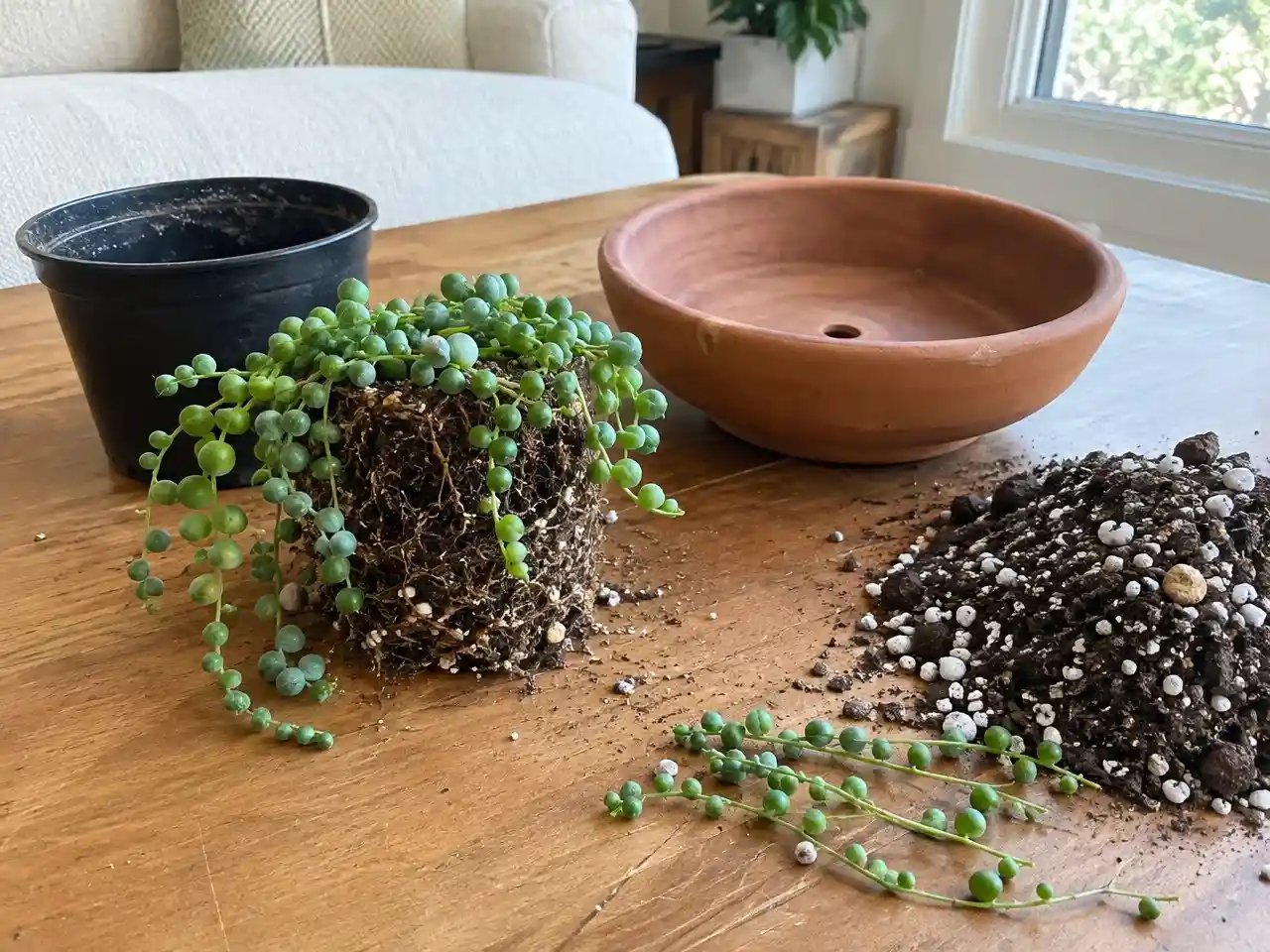
Repotting into a shallow terracotta pot with gritty cactus mix is the best long-term fix for soggy soil.
Step by step: how to save a dying string of pearls
Diagnose. Feel the soil 1–2 inches (2–5 cm) down and squeeze a few pearls. Wet soil plus soft pearls means rot; dry soil plus flat but firm pearls means thirst.
Check the base. Look at the stems right where they enter the soil. Green and firm means the base can be saved; black, brown and soft means it cannot.
Cut healthy strands. With clean scissors, take 4–6 inch (10–15 cm) cuttings from the firmest, greenest strands. Remove the pearls from the bottom 1 inch (2–3 cm) of each cutting.
Let them dry. Leave cuttings on a paper towel for a day so the cut ends seal.
Plant shallow. Fill a small shallow pot with dry, gritty succulent mix. Either push the bare stem ends just under the surface or lay whole strands flat on top, so stems touch the soil.
Light, then water. Place in very bright light. Mist the soil surface lightly or give a small drink every few days only once it is dry, until roots form in about 2–4 weeks. A gentle tug that meets resistance means they have rooted.
Back to normal care. Once rooted, water thoroughly only when the top inch or two is dry, and keep the plant in the brightest spot you have.
If you are not completely sure your plant is a true string of pearls rather than a look-alike such as string of dolphins or string of bananas, check it with our free plant identifier. Their care is similar, but it helps to know exactly what you are growing.
When it can't be saved (and what to do instead)
If every strand is mushy and the stems are black from the soil up, the plant has gone too far. But if you can find even a few firm strands, cuttings root easily and often look fuller within a few months than the original plant. Throw away the old soil.
Repot a healthy plant every year or two in spring, or sooner if the soil stays wet, smells sour or has broken down into a dense mud.
Winter care routine that keeps it alive
Give it the brightest window you have (or a grow light for 12–14 hours a day), water only when the top 1–2 inches (2–5 cm) are dry, keep it between 50–75°F (10–24°C) away from cold glass and heat vents, skip misting, and do not fertilize until spring.
Pet safety: string of pearls is considered toxic to cats and dogs if chewed, and can cause vomiting, drooling or diarrhea. Hang it out of reach of curious pets and small children. Trailing strands are very tempting to cats.
Still unsure what is wrong after reading this? Take a clear photo in daylight showing the pearls and the base of the stems, and run it through our free plant problem checker for a quick diagnosis.
Frequently asked questions
Why is my string of pearls shriveling even though I water it?
If the pearls are shriveled but the soil is often wet, the roots have probably rotted and can no longer take up water, so the plant looks thirsty. Check the roots and stems at the soil line. If they are dark and soft, take cuttings from healthy strands and restart in dry, gritty mix.
How often should I water string of pearls in winter?
There is no fixed schedule, because it depends on light, temperature and pot size. Water when the top 1–2 inches (2–5 cm) of mix are dry and the pearls are just starting to lose their roundness. In a cool, bright room that is often every 3–4 weeks in winter.
Can a string of pearls recover from root rot?
The original base often cannot if the stems are black at the soil line, but the plant can almost always be saved through cuttings. Any firm, green strand can root in a shallow pot of dry succulent mix within a few weeks.
Why is my string of pearls bald on top?
Old stems at the center die back and hanging strands never root again. Coil a few strands onto the soil or plant cuttings on top, and give brighter light.
Should I mist my string of pearls?
No. It is a succulent adapted to dry air, so misting does not help and can keep the crown damp. Normal indoor humidity, even with central heating, is fine.