Short answer: A rubber plant (Ficus elastica) usually drops leaves because something changed suddenly: it was moved, it got less light, it sat in a cold draft, or its watering went wrong (most often soggy soil in winter). Yellow leaves that fall from the bottom point to overwatering or low light; green leaves that drop suddenly point to shock from cold or a move. Fix the cause, keep conditions steady, and new leaves will follow in spring.
Not sure which problem you have? Upload a photo to our free plant diagnosis tool and get a likely cause in seconds.
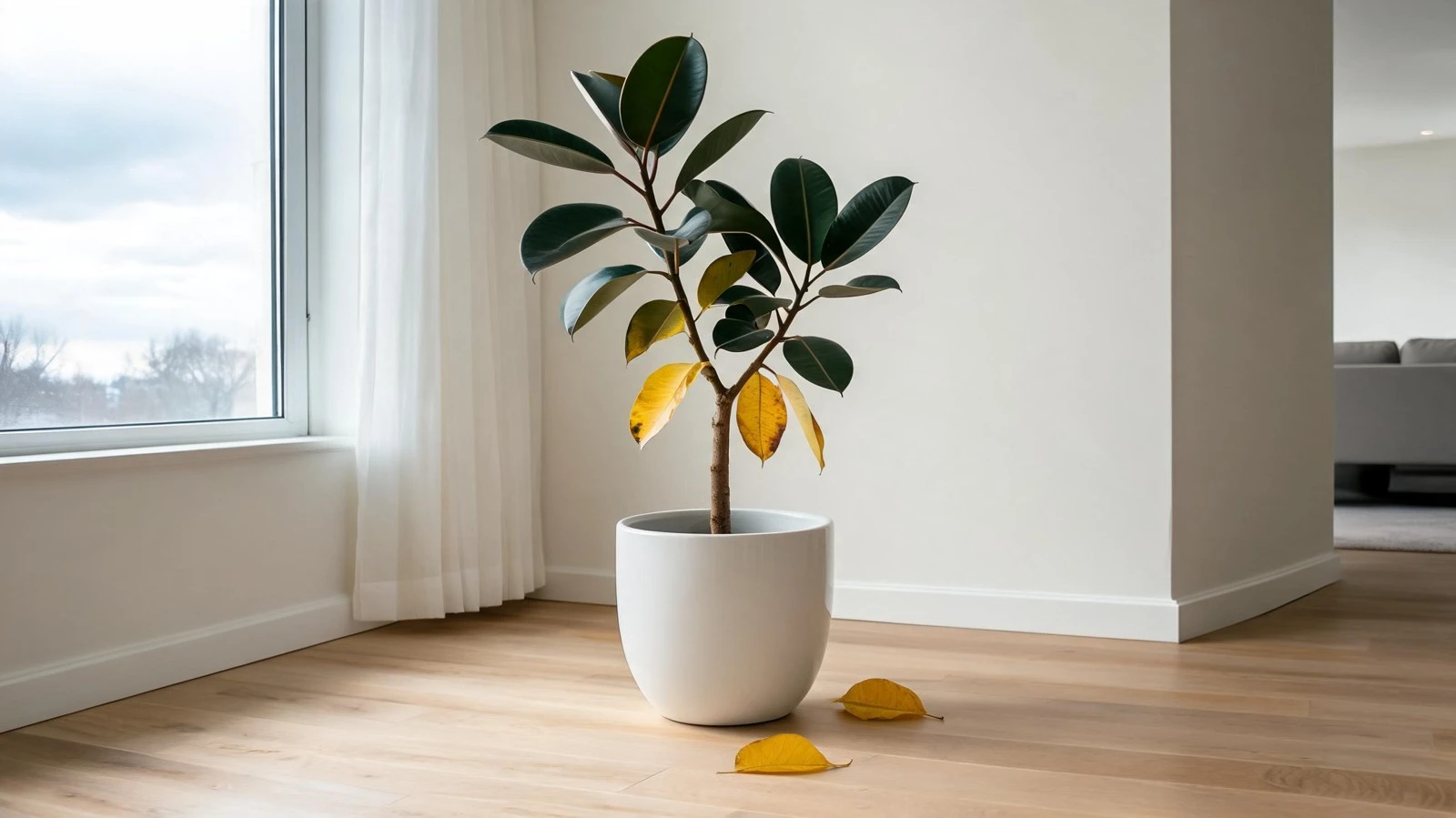
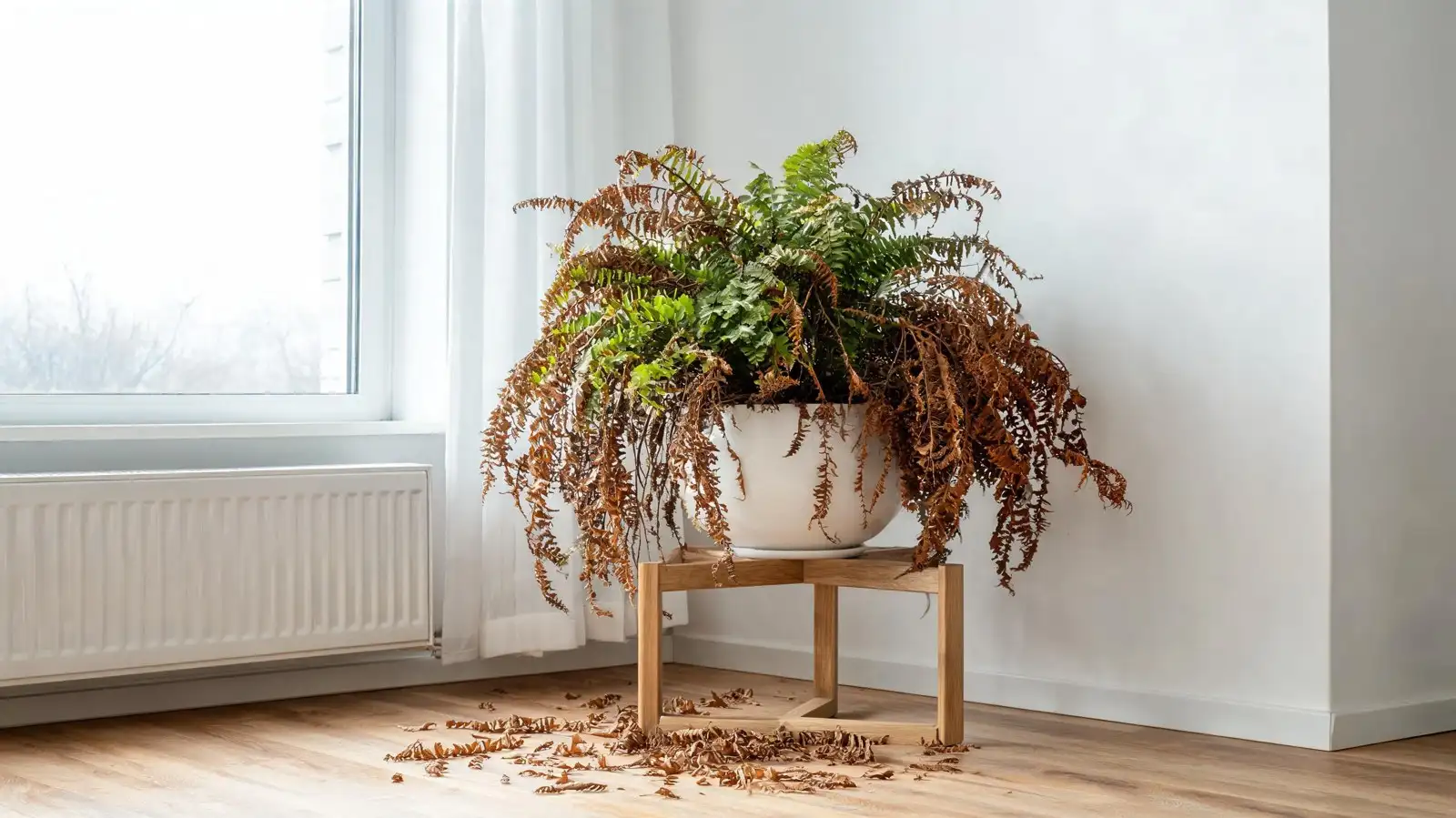
Lower leaves yellowing and falling is the most common rubber plant complaint in winter.
Quick check: what the leaf drop is telling you
What you see
Most likely cause
First thing to do
Green leaves dropping suddenly, days after a move
Shock from a change in light or location
Leave it in one bright spot and stop moving it
Lower leaves turn yellow, then fall; soil stays wet
Overwatering or poor drainage
Let the top 2 inches (5 cm) dry before watering
Leaves droop, curl or go crispy, then fall; soil bone dry
Underwatering
Water deeply until it drains
Leaves drop on the side facing a window or door
Cold drafts
Move it away from cold glass and doors
Bare lower stem, small new leaves, plant leaning to the window
Not enough light
Move closer to a bright window or add a grow light
Brown crispy edges, leaves dropping near a heater
Hot, dry air from heating
Move away from vents and raise humidity
Sticky leaves, small brown bumps or fine webbing
Scale, mealybugs or spider mites
Isolate and treat the pests
One old bottom leaf yellows now and then, rest healthy
Normal aging
Nothing; just remove it
1. Sudden changes in light or location
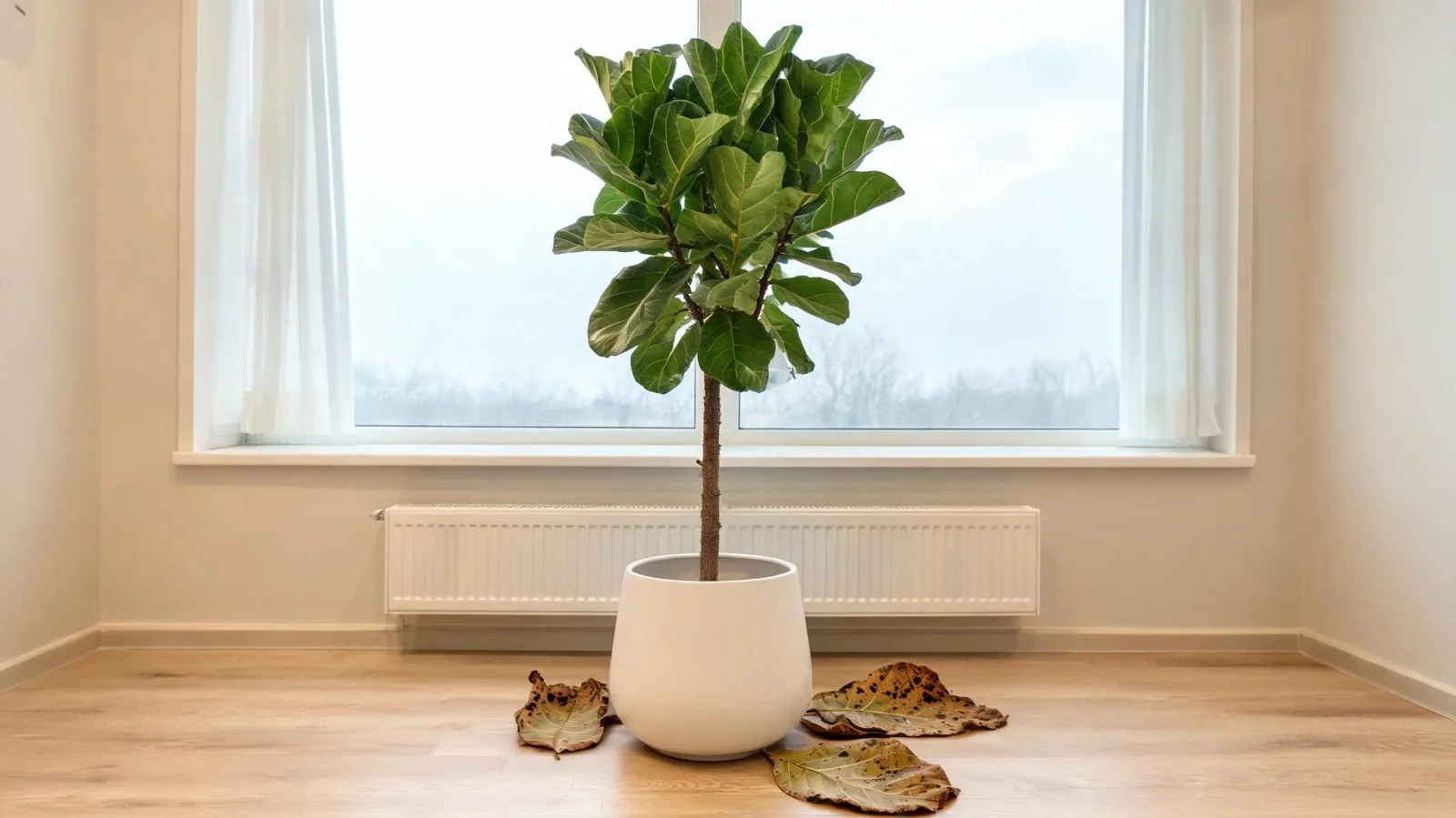
Rubber plants, like their close relative the fiddle leaf fig, dislike change. Bringing one home from a bright greenhouse, moving it to another room, or bringing it back inside after a summer outdoors can trigger leaf drop within days to a couple of weeks. The leaves that fall are often still green. If this sounds familiar, our guide to fiddle leaf fig dropping leaves covers the same stress response in another ficus.
How to fix it
Pick one bright spot with plenty of indirect light and leave the plant there.
Do not repot, fertilize or prune while it is adjusting; that adds more stress.
Water normally and be patient. A plant with healthy roots usually settles in a few weeks.
2. Overwatering and soggy soil
This is the most common cause of leaf drop in winter. Shorter days and cooler rooms slow the plant down, so it uses far less water than in summer. If you keep the same watering routine, the roots sit in wet soil, start to suffocate and can rot. The usual sign is lower leaves turning yellow before they fall, sometimes with a musty smell from the pot or fungus gnats flying around it. If you see gnats, see how to get rid of fungus gnats in houseplants.
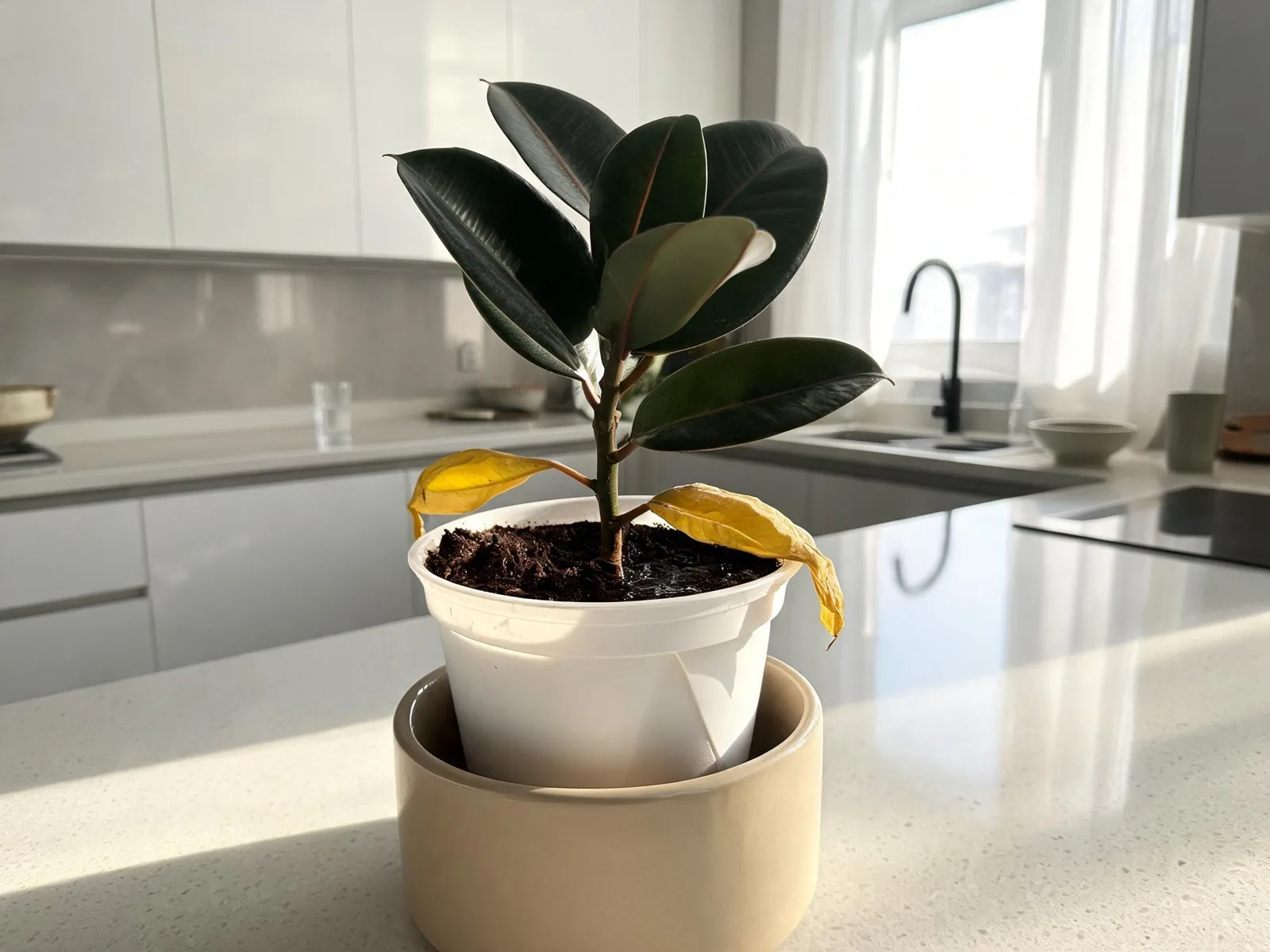
Lift the plant out of its cover pot: water pooling at the bottom is a common hidden cause.
How to fix it
Push a finger into the soil. Water only when the top 2 inches (5 cm) are dry; in winter that may be every two to three weeks.
Make sure the pot has drainage holes. Empty any water left in the saucer or decorative cover pot after 15–20 minutes.
If the soil stays wet for more than a week, or the plant keeps losing leaves, check the roots (see the step-by-step section below).
3. Underwatering
Rubber plants store some water in their thick leaves, but they still dislike drying out completely. A thirsty plant shows soft, drooping or curling leaves first, then the lower leaves crisp up and fall. Central heating dries soil faster than many people expect, especially in a small pot.
How to fix it
Water slowly until water runs out of the drainage holes, then let the pot drain fully.
If the soil has shrunk away from the pot edge and water runs straight through, soak the pot in a sink of water for 20–30 minutes, then drain.
Check the soil weekly so you catch it before it dries out completely again.
4. Cold drafts and low temperatures
Rubber plants are happiest between about 60–80°F (15–27°C). Cold air is a classic winter trigger for leaf drop: a pot touching a frosty window, a spot by an often-opened front door, or a room that gets much colder at night. Temperatures below roughly 50°F (10°C) can cause damage and sudden leaf loss.
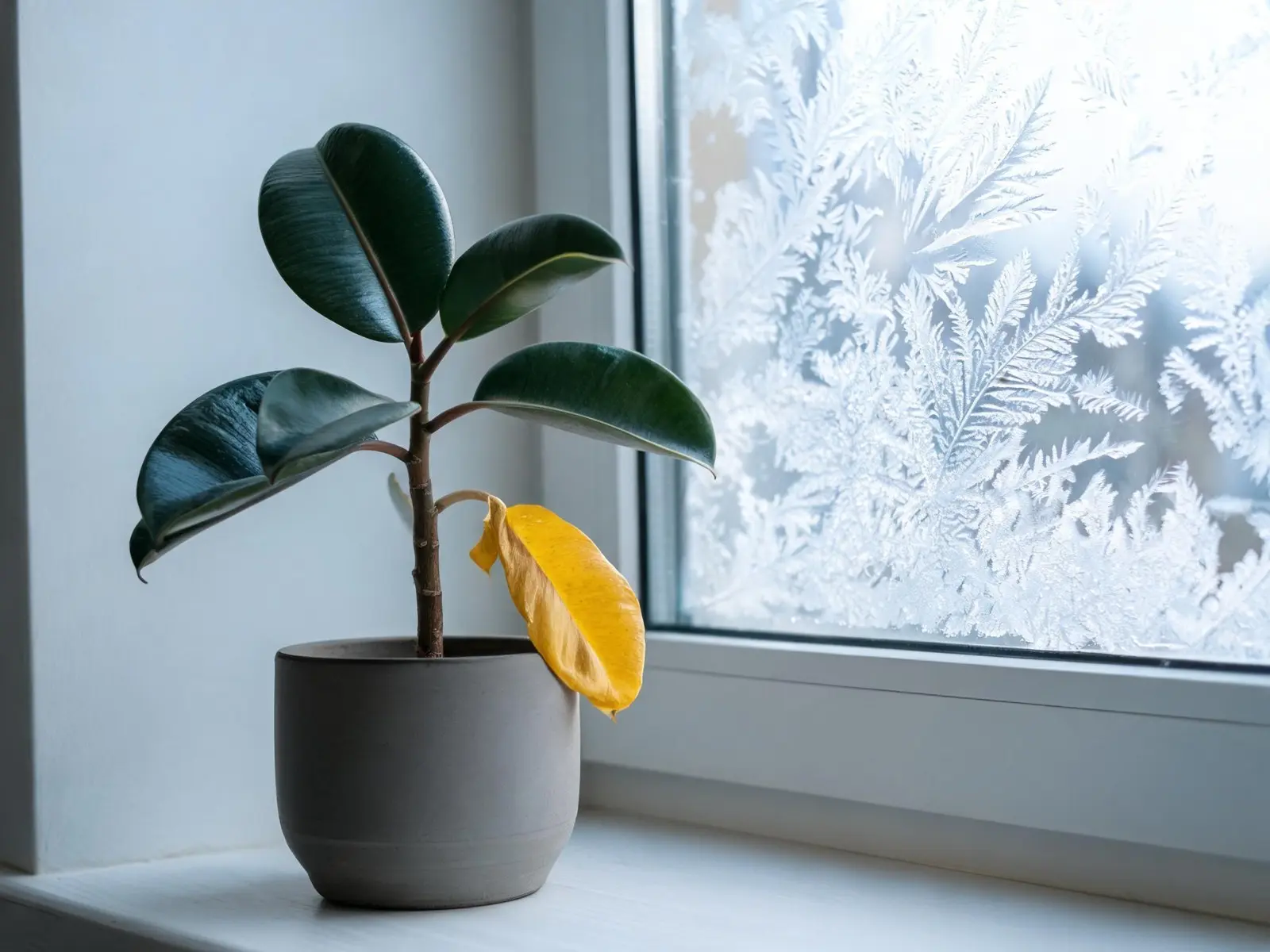
Leaves touching cold glass in winter often yellow and drop.
How to fix it
Keep leaves from touching window glass, and move the plant a foot or two (30–60 cm) back from drafty windows on cold nights.
Avoid spots next to exterior doors, drafty hallways and air conditioning vents.
Do not move it into a dark corner to escape the cold; find a spot that is both bright and warm.
5. Not enough light
In low light a rubber plant cannot support all its leaves, so it sheds the oldest ones at the bottom. Over time you get a bare stem, smaller new leaves and a plant leaning toward the window. Winter makes this worse because days are short and the sun is low. Rubber plants tolerate medium light but grow best in bright, indirect light.
How to fix it
Place it near a bright window. An east window, or a few feet back from a south or west window, works well in most homes.
In dark rooms or northern winters, a full-spectrum LED grow light placed above the plant for 10–12 hours a day makes a real difference.
Rotate the pot a quarter turn every week or two so all sides get light.
Wipe dust off the leaves with a damp cloth so they can use the light they get.
6. Dry heat from radiators and vents
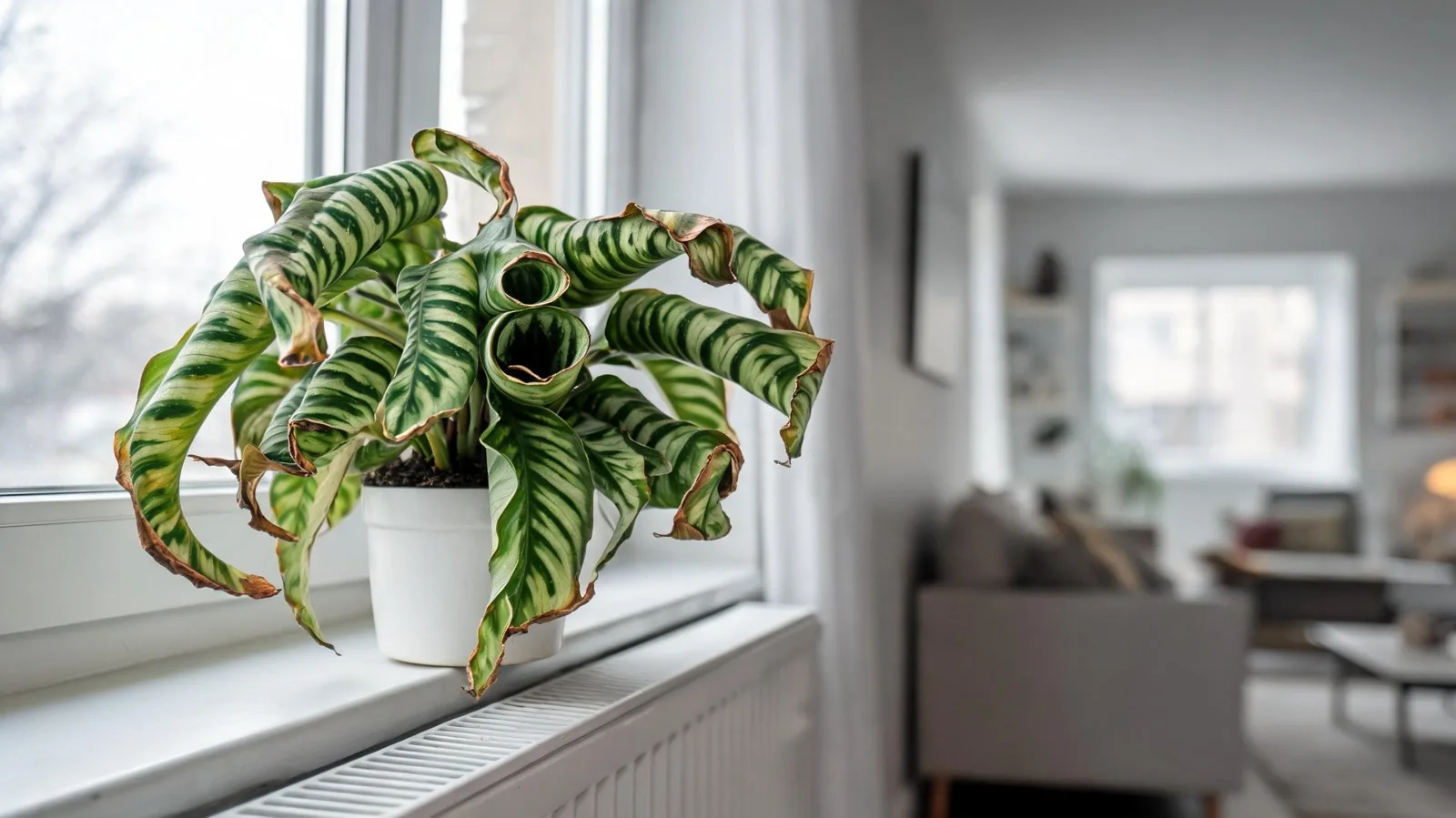
Forced-air heating and radiators make indoor air very dry and can blow hot air straight onto leaves. That leads to brown, crispy edges and leaf drop, and it also favors spider mites.
How to fix it
Keep the plant several feet away from heating vents, radiators, fireplaces and space heaters.
Run a humidifier nearby, or group plants together, to raise humidity. Misting helps only briefly.
Check moisture more often in heated rooms, but still water only when the top 2 inches (5 cm) are dry.
7. Pests: scale, mealybugs and spider mites
Pests weaken the plant and can cause yellowing and leaf drop. Look under leaves and along stems for small brown or tan bumps (scale), white cottony clumps (mealybugs), or fine webbing with tiny speckles on the leaves (spider mites). Sticky residue on leaves or the floor is another clue. If you see a white coating that wipes off like dust, it may be something else; see our guide to white powder on plant leaves.
How to fix it
Move the plant away from your other houseplants.
Wipe off scale and mealybugs with a cotton swab dipped in rubbing alcohol, or with a cloth and soapy water.
Spray all leaf surfaces with insecticidal soap or neem oil following the label, and repeat every 7–10 days for a few weeks, since eggs hatch after the first treatment.
For spider mites, rinse the leaves in the shower and raise humidity.
Is some leaf drop normal?
Yes. A rubber plant will occasionally drop one of its oldest, lowest leaves, especially in winter. If it is one leaf every few weeks and the top of the plant keeps producing healthy, glossy leaves, there is nothing to fix. Several leaves in a week, leaves dropping from the middle or top, or yellowing on new growth means something is wrong.
Step-by-step: how to stop a rubber plant losing leaves
Check the soil first. Push a finger 2 inches (5 cm) in. Wet means stop watering; bone dry means water deeply.
Check the drainage. Lift the plant out of any cover pot and pour away standing water. Make sure the inner pot has holes.
Check the spot. Is it near cold glass, a door, a vent or a heater? Is it too dark? Move it once to a bright, steady, draft-free place.
Inspect for pests under leaves and along the stem, and treat if you find any.
Check the roots if the soil stays wet or leaves keep falling. Slide the plant out. Healthy roots are firm and light colored. Brown, mushy, smelly roots mean root rot.
Remove fallen and fully yellow leaves so you can see whether new drop is still happening.
Hold off on fertilizer until spring growth starts. Feeding a stressed plant in winter does not help it recover.
Wait. Leaves that already fell will not grow back in the same spot, but new leaves will grow from the top and from new branches once conditions are right.
Still not sure which cause fits your plant? Check your plant's problem from a photo with our free diagnosis tool, and if you are not sure whether your plant is really a rubber plant (Ficus elastica) or a look-alike such as a baby rubber plant (Peperomia), try the plant identifier first, because their care is different.
When to repot, and when it can't be saved
Repot only when the plant is root-bound (roots circling the pot or growing out of the holes) or when you find root rot. Spring is the best time for routine repotting, but root rot needs action right away. Trim off soft, brown or smelly roots with clean scissors, then replant in fresh, well-draining indoor potting mix in a pot only 1–2 inches (2–5 cm) wider than the root ball, with drainage holes. Water lightly and keep it in bright, indirect light.
It can usually be saved if the stem is firm and some roots are white and firm, even if most leaves have fallen. A bare stem can push out new leaves or side branches in spring. It is unlikely to recover if the main stem is soft, shriveled or black at the base and almost all roots are mushy. In that case, take a cutting from any healthy, firm top section with a few leaves and root it in water or moist potting mix in a warm, bright spot.
Pet safety
Rubber plants (Ficus elastica) are considered toxic to cats and dogs. The milky sap can irritate the mouth, stomach and skin. Keep the plant and any fallen leaves away from pets, and wear gloves when pruning or repotting, since the sap can also irritate human skin.
Frequently asked questions
Why is my rubber plant dropping leaves in winter?
Winter brings less light, cold drafts near windows, dry air from heating and slower water use. Most winter leaf drop comes from watering too often for the season, sitting too close to cold glass, or a dim spot. Water less, keep it bright and away from drafts and heaters.
Will rubber plant leaves grow back?
Not in the same spot. A fallen leaf leaves a scar on the stem. The plant will grow new leaves from the top and from side branches once it is healthy and spring arrives. Pruning the top in spring can encourage a bushier plant.
Should I remove yellow leaves from my rubber plant?
Yes, once a leaf is mostly yellow it will not turn green again. Gently pull or cut it off. This keeps the plant tidy and makes it easier to see whether new problems are appearing.
How often should I water a rubber plant in winter?
There is no fixed schedule. Water when the top 2 inches (5 cm) of soil are dry, which in many homes means every two to three weeks in winter and more often in summer. Always let excess water drain away.
Why is my new rubber plant dropping leaves?
A newly bought plant often drops a few leaves as it adjusts from bright nursery conditions to a dimmer home, especially if it was carried through cold air. Give it a bright, steady spot, water only when needed and avoid repotting for a few weeks.