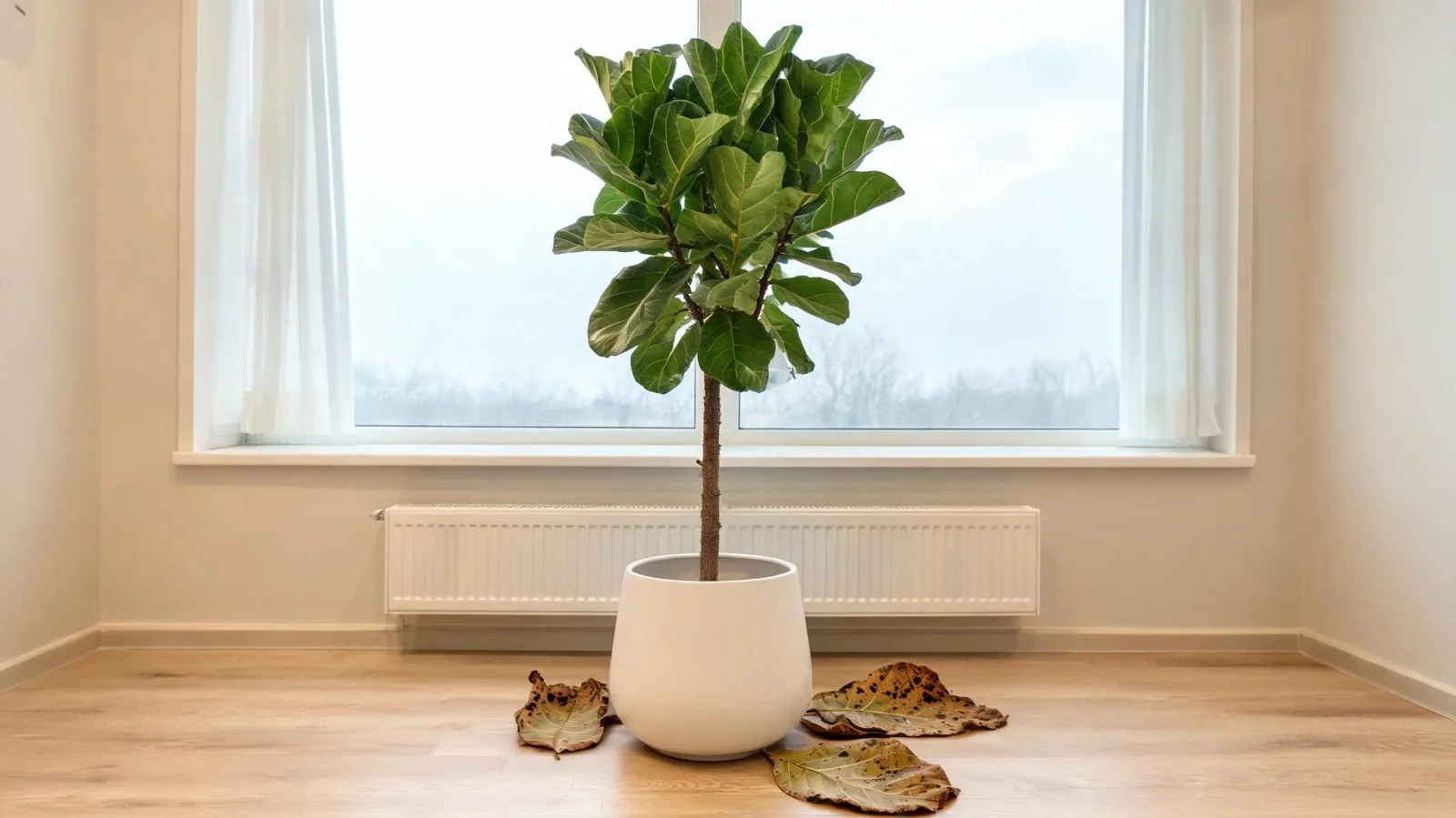
Short answer: a fiddle leaf fig drops leaves when something in its routine changes suddenly. The most common causes are a move to a new spot, cold drafts, overwatering (especially in winter), too little light, and dry air from central heating. Brown, soft spots before the leaf falls usually point to too much water; crispy, curled leaves point to too little water or dry air.
Not sure which one it is? Upload a photo to our free plant diagnosis tool and get a likely cause in seconds, then use the fixes below.
Quick diagnosis: what the leaves are telling you
| What you see | Most likely cause |
|---|---|
| Healthy-looking green leaves dropping within days of a move | Shock from a new location |
| Leaves dropping on the side facing a window or door, sometimes with dark patches | Cold drafts or cold glass |
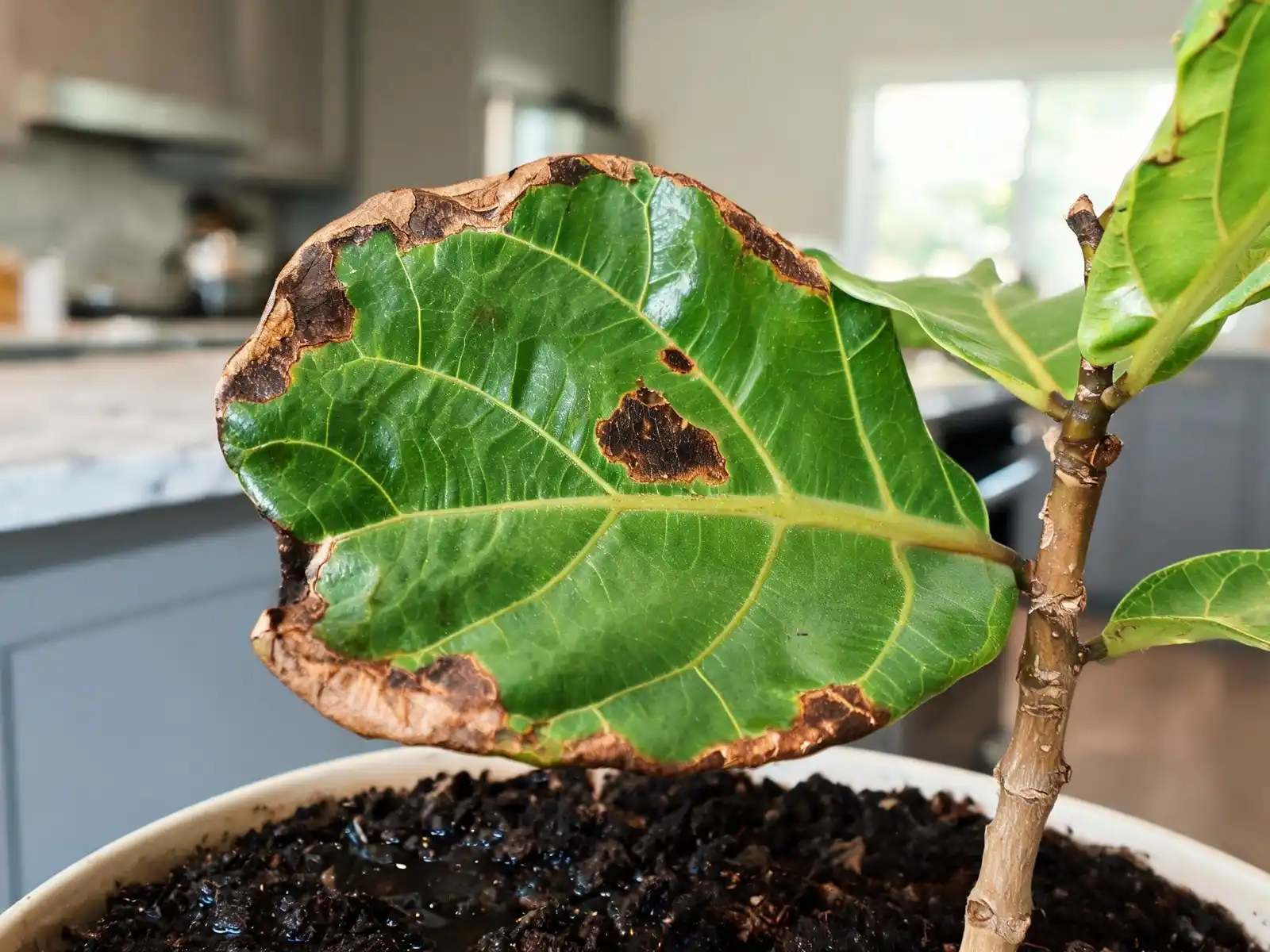
| Dark brown spots (often starting mid-leaf), yellowing lower leaves, soil that stays wet | Overwatering or root rot |
| Leaves droop, curl and turn crispy brown at the edges, soil pulls away from the pot | Underwatering |
| Lower leaves fall one by one, plant leans toward the window, little new growth | Not enough light |
| Crispy brown edges, worse on the side near a heater or vent | Dry air or heat from radiators and vents |
| Tiny dots, fine webbing, sticky residue or white fluff on leaves | Pests (spider mites, scale, mealybugs) |
| Only the very lowest leaf yellows and falls now and then; top is growing | Normal aging |
1. Shock from being moved
Fiddle leaf figs are famous for dropping leaves after a change of light, temperature or humidity. A trip home from the store, a new room, or bringing the plant back indoors after summer outside can all trigger it. The leaves often look green and healthy as they fall.
How to fix it
- Pick one bright spot and leave the plant there. Moving it around to "find a better place" usually causes more drop.
- Do not repot, fertilize or prune a plant that is already in shock. Change one thing at a time.
- Keep watering normally (only when the top soil is dry). Leaf drop from shock usually slows within a few weeks once the plant settles.
2. Cold drafts and cold windows
This is the number one winter cause. Fiddle leaf figs are tropical and do best at roughly 60–75°F (15–24°C). Leaves that touch cold window glass, or a plant beside an often-opened front door or a drafty window, can develop dark patches and drop. Temperatures below about 50°F (10°C) can damage the plant.
How to fix it
- Pull the pot a foot or so (about 30 cm) away from the glass in winter so no leaves touch it.
- Keep it away from exterior doors, AC units and drafty windows.
- If you have a cold room at night, move the plant to a warmer bright room for the season rather than shuffling it daily.
Holiday plants react to drafts the same way. If you also grow one, see why Christmas cactus buds fall off in winter.
3. Overwatering and root rot
In winter the plant grows slowly and uses far less water, so the same watering schedule that worked in summer can leave the soil wet for weeks. Roots sitting in soggy soil run out of oxygen and start to rot. Signs are dark brown spots on leaves (often starting in the middle of the leaf or along the edges), lower leaves yellowing and dropping, and soil that smells sour.
How to fix it
- Push a finger into the soil. Only water when the top 1–2 inches (2–5 cm) are dry. In winter that may mean every 2–3 weeks instead of weekly.
- Use a pot with drainage holes and empty the saucer or cachepot 15–30 minutes after watering.
- If the soil stays wet for more than a week or smells bad, slide the plant out and check the roots (see the step-by-step section below).
If you see white mold on top of wet soil, that is another sign it is staying too damp. Here is how to treat white fungus in plant soil.
4. Underwatering
Less common than overwatering, but it happens, especially near a heater that dries the pot out fast. Leaves droop, curl, go crispy and light brown at the edges, then fall. The soil may shrink away from the sides of the pot.
How to fix it
- Water slowly and deeply until water runs out of the drainage holes. If the root ball is very dry and water runs straight through, water again after 10 minutes.
- Check the soil every few days; do not let it dry out completely all the way down.
5. Not enough light
Short winter days and low sun can leave a fiddle leaf fig starving for light. It responds by shedding its lowest, oldest leaves first, leaning toward the window, and putting out small new leaves far apart on the stem.
How to fix it
- Give it the brightest spot you have: a few feet from a large east, south or west window, ideally with several hours of bright, indirect light a day. Gentle morning sun is fine.
- Rotate the pot a quarter turn every couple of weeks so all sides get light.
- In dark homes, a full-spectrum LED grow light placed above the plant for 10–12 hours a day makes a big difference in winter.
- Wipe dust off the leaves with a damp cloth so they can use the light they get.
If your home simply does not get much light, a hardier plant may suit that spot better. See our list of indoor plants for low-light homes.
6. Dry air and heat from radiators or vents
Central heating can drop indoor humidity well below what a tropical plant likes, and hot air blowing straight on the leaves dries them fast. You will see crispy brown edges first, usually on the side facing the heat source, then leaf drop.
How to fix it
- Move the plant so no radiator, baseboard heater or forced-air vent blows directly on it.
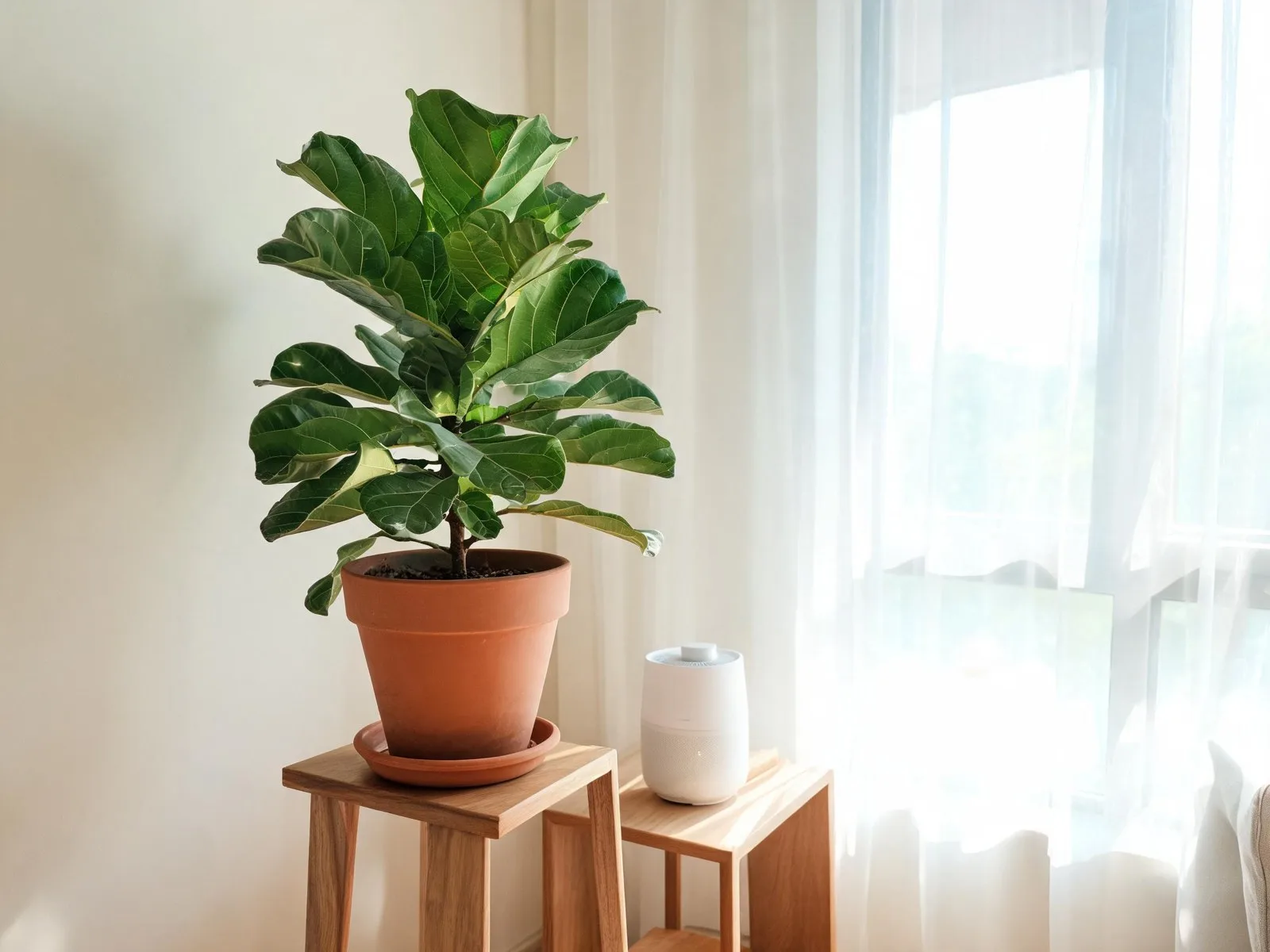
- Run a humidifier nearby in winter. Around 40–60% humidity is comfortable for the plant (and for you).
- Misting only raises humidity for a few minutes, so do not rely on it.
7. Pests
Spider mites love warm, dry winter air. Scale and mealybugs also attack fiddle leaf figs. A heavy infestation weakens the plant until it starts dropping leaves.
How to fix it
- Check the undersides of leaves and the stems: look for fine webbing and tiny moving dots (spider mites), brown bumps (scale) or white cottony clumps (mealybugs).
- Wipe leaves on both sides with a damp cloth, or give the plant a lukewarm shower.
- Treat with insecticidal soap or neem oil, following the product label, and repeat every 5–7 days for a few weeks because eggs hatch after the first treatment.
- Isolate the plant from your other houseplants until it is clear.
8. Normal aging
If only the very lowest leaf yellows and falls now and then while the top keeps growing, that is normal. Nothing needs fixing.
Step-by-step: how to stop the leaf drop
- Check the soil first. Push a finger in 2 inches (5 cm). Wet = stop watering. Bone dry = water deeply.
- Check the spot. Is it touching cold glass, near a door, or in the path of a heater or vent? Move it to a bright, stable spot and leave it there.
- Look for pests under the leaves and along the stems. Treat if you find any.
- If the soil has been wet for over a week, check the roots. Tip the plant out. Healthy roots are firm and light colored; rotten roots are dark, mushy and smell bad.
- Trim rotten roots with clean scissors, then repot into fresh, well-draining potting mix (indoor mix with added perlite or bark works well) in a pot with drainage holes, no more than 2 inches (5 cm) wider than the root ball.
- Remove badly damaged leaves that are mostly brown; leaves that are only a little spotted can stay and keep feeding the plant.
- Skip fertilizer until spring, when the plant starts growing again.
- Be patient. New leaves come from the top and from new branches. Expect slow recovery through winter and a growth spurt in spring.
When to repot, and when it can't be saved
Repot in spring or early summer if roots are circling the bottom of the pot or growing out of the drainage holes. The only time to repot in winter is an emergency, such as root rot.
A fiddle leaf fig that has lost most of its leaves can often still recover. Gently scratch the bark on the stem with a fingernail: green and moist underneath means that part is alive. The plant is likely past saving if the base of the stem is soft and mushy, or nearly all the roots are rotten. In that case, you can try rooting a healthy top cutting in water or moist potting mix instead.
Pet safety: fiddle leaf figs are toxic to cats and dogs. The milky sap can irritate the mouth and stomach if chewed, and can irritate skin, so wear gloves when pruning and keep fallen leaves off the floor.
Check your plant's problem from a photo
Leaf drop can have more than one cause at once, for example low light plus overwatering. Take a clear photo of a damaged leaf and the whole plant and run it through the free Plant Solutions diagnosis tool. Not sure your plant is really a fiddle leaf fig and not a rubber plant or another ficus? Check it first with the free plant identifier, because care needs differ.
Frequently asked questions
Why is my fiddle leaf fig dropping healthy green leaves?
Green leaves falling off is usually shock from a sudden change: a new spot, a cold draft, a big swing in temperature, or a heavy watering after the soil was very dry. Keep the plant in one bright, warm place and water only when the top soil is dry.
Will my fiddle leaf fig grow its leaves back?
Leaves usually do not grow back in the same spot on the stem where one fell. New leaves come from the growing tip and from new branches. With good light and care, most plants fill out again over the next growing season.
How often should I water a fiddle leaf fig in winter?
There is no fixed schedule. Water when the top 1–2 inches (2–5 cm) of soil are dry. In a cool, low-light winter room that may be every 2–3 weeks; near a heater it may be more often.
Is it normal for a fiddle leaf fig to lose leaves in winter?
Losing an occasional lower leaf is normal. Losing several leaves in a few weeks is a sign of stress, most often from cold drafts, too little light or soil that stays wet too long.
What temperature is too cold for a fiddle leaf fig?
Aim to keep it above 60°F (15°C). Below about 50°F (10°C) the plant can be damaged, and even short cold drafts from a door or window can cause leaf drop.