Short answer: in most of India, sow tomato seeds in September–October (or January–February in the north), transplant seedlings into a pot of at least 12–15 litres when they are 10–15 cm tall, and give them 6–8 hours of direct sun. Water deeply and evenly when the top 2–3 cm is dry, stake the plant early, and feed compost every 3 weeks with a potassium-rich feed once flowering starts. Expect the first ripe tomatoes around 2–3 months after transplanting.
Best time to grow tomatoes
Tomatoes set fruit best when days are warm and nights are mild. Very hot weather (above about 35°C) and frosty nights both cause flowers to drop.
- North India: sow in September–October for a winter–spring crop (protect from frost), or January–February for a spring crop before the heat.
- South and coastal India: most of the year except peak summer and heavy monsoon; September–January is ideal.
Choose a variety
- Cherry tomatoes: the easiest and most productive in pots.
- Determinate (bush) varieties: compact, fruit over a shorter period — good for small balconies.
- Indeterminate (vine) varieties: keep growing and fruiting for months but need tall support.
Pot and soil
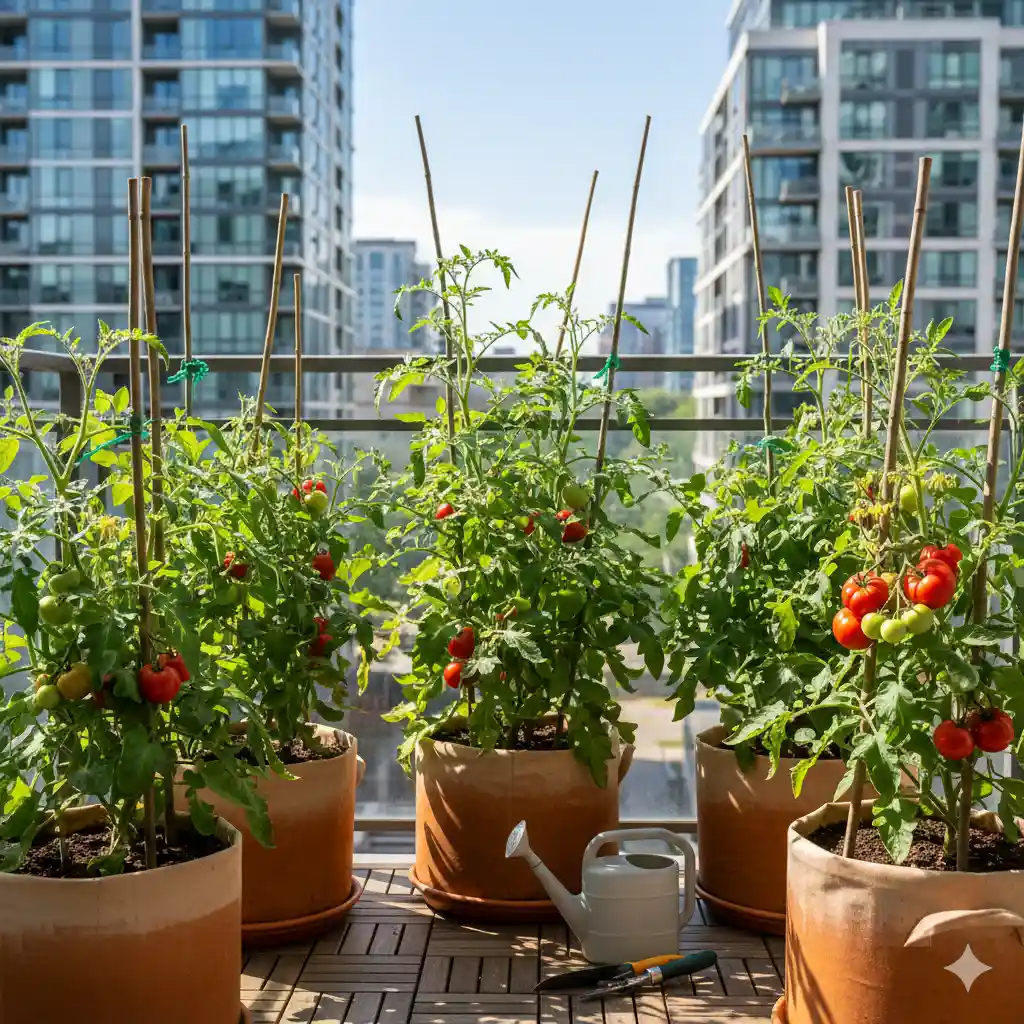
- Pot: at least 12 inches wide and deep (12–15 litres); 15–20 litres is better for big varieties. Grow bags work very well. Drainage holes are essential.
- Soil: garden soil, cocopeat and vermicompost in roughly equal parts, plus a tablespoon or two of bone meal and neem cake.
Compare containers in our guide to choosing pots.
Step-by-step: from seed to harvest
- Sow: sow seeds 0.5 cm deep in a tray of seed mix. Keep moist and warm; they sprout in about 5–10 days.
- Grow seedlings: give bright light as soon as they sprout, or they will become thin and floppy.
- Transplant: at 10–15 cm tall (about 4–6 weeks), plant one seedling per pot in the evening. Bury the stem deeper, up to the first true leaves — tomatoes grow extra roots along the buried stem.
- Stake early: push a strong stick or bamboo next to the plant at transplanting so you do not damage roots later. Tie loosely as it grows.
- Sun: place in the sunniest spot — 6–8 hours of direct light.
- Water: water deeply when the top 2–3 cm is dry. Keep moisture even; mulch helps. Avoid wetting the leaves.
- Feed: vermicompost every 3 weeks; when flowers appear, add a potassium-rich organic feed every 2–3 weeks. See our fertilizer guide.
- Prune (vine types): pinch out side shoots that grow between the main stem and a leaf branch, keeping 1–2 main stems. Remove yellow lower leaves touching the soil.
- Help pollination: on enclosed balconies, gently shake the flower clusters every morning.
- Harvest: pick when fully coloured and slightly soft, or at first blush and let them ripen indoors.
Making the most of a small balcony
- Choose cherry or compact bush varieties; one well-grown plant per pot beats three crowded ones.
- Put the tomato pots on the sunniest side, and use the shadier spots for herbs like mint.
- Train vine types upward on a string or tall stake tied to the railing, so they use height instead of floor space.
- Grow a few marigolds nearby to bring in pollinators.
- Sow a second batch three to four weeks after the first so the harvest continues longer.
Common tomato problems
| Problem | Likely cause | Fix |
|---|---|---|
| Flowers dropping | Heat, cold nights, uneven watering, too much nitrogen | Steady watering; afternoon shade in heat; shake flowers; less nitrogen |
| Dark, sunken bottom on fruit | Blossom end rot (calcium not reaching fruit, usually from uneven watering) | Water evenly; mulch; add crushed eggshell or bone meal to soil for future |
| Fruit cracking | Heavy watering after dry spells | Keep soil evenly moist |
| Brown patches with rings on lower leaves | Early blight (fungus) | Remove affected leaves; mulch; keep leaves dry |
| Fast-spreading dark patches in wet weather | Late blight | Remove infected parts at once; remove badly infected plants |
| Curled, yellow, stunted leaves | Whiteflies spreading leaf curl virus, or heat | Control whiteflies with yellow sticky traps and neem; remove virus plants |
| Holes in fruit | Fruit borer caterpillars | Pick and destroy affected fruit; check plants regularly |
More on blight and other diseases in 10 common plant diseases and monsoon plant diseases.
Check your plant's problem from a photo
Tomato leaves show problems quickly. Upload a close photo of the affected leaves or fruit to our free plant diagnosis tool for the likely cause and treatment.
Frequently asked questions
How long do balcony tomatoes take to fruit?
About 2–3 months after transplanting, depending on the variety and weather. Cherry tomatoes are usually fastest.
How much sun do tomatoes need?
At least 6 hours of direct sun; 8 is better. With less, plants grow tall with few fruits.
Can I grow tomatoes in summer in India?
It is difficult in peak heat as flowers drop. Use heat-tolerant varieties, afternoon shade and steady watering if you try.
How often should I water tomato plants in pots?
When the top 2–3 cm is dry — often daily in warm weather for large plants. Uneven watering causes cracking and blossom end rot.
Can I grow tomatoes from store-bought tomato seeds?
Yes, seeds from ripe tomatoes often sprout, but hybrid fruits may not grow true. Wash and dry the seeds before sowing.