Rainy Season Care for Outdoor Plants in India: Complete Guide for Healthy Monsoon Gardening
A naturally written, 1000+ word, human-style guide on how to care for outdoor plants during the rainy season in India. Learn watering rules, soil fixes, fungal prevention, and monsoon-specific plant care tips. Includes low-competition long-tail keywords for faster ranking.
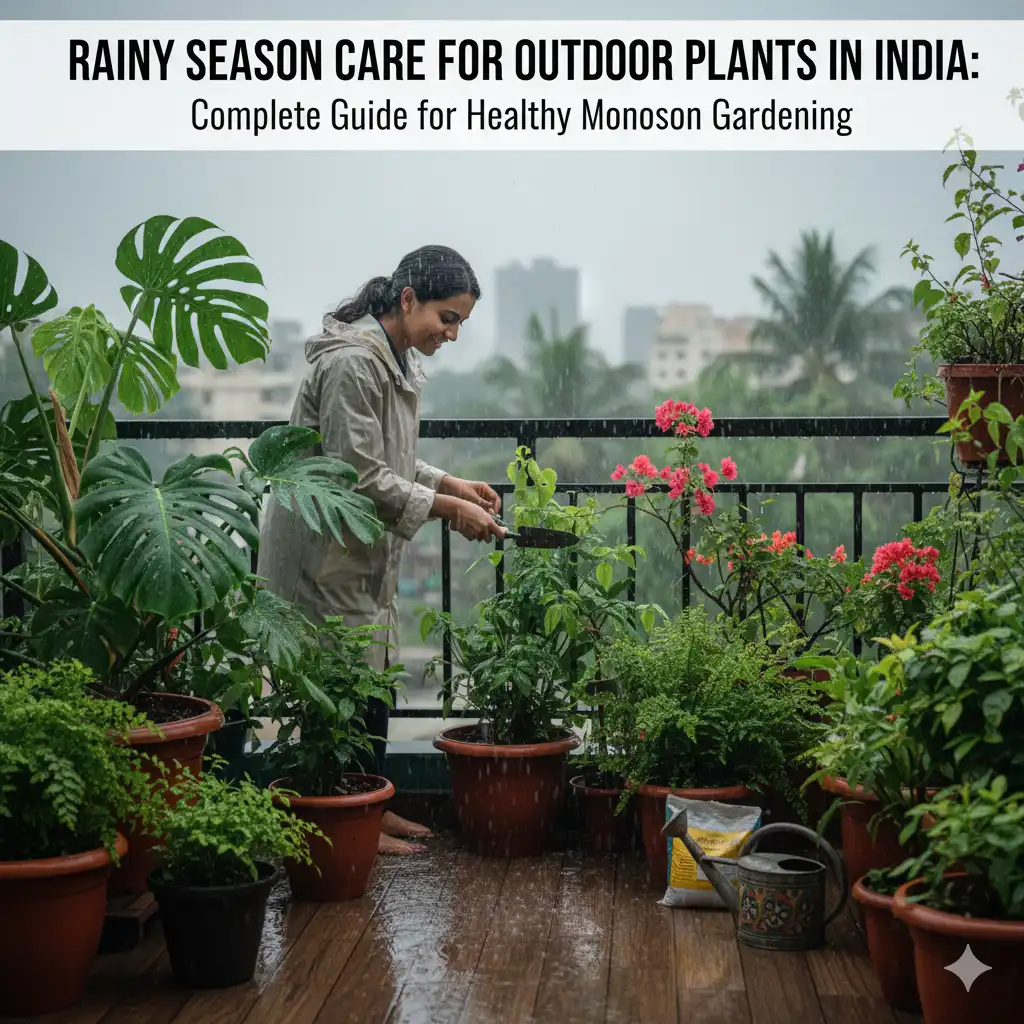
Rainy Season Care for Outdoor Plants in India (Monsoon Plant Protection Guide)
The rainy season brings fresh air, greener surroundings, and natural growth for plants. But it also brings problems like fungus, pests, waterlogging, yellow leaves, root rot, and soil nutrient loss. Many Indian plant owners get confused about how to manage outdoor plants during monsoon because the weather changes suddenly. One day it rains non-stop, and the next day it becomes humid and warm.
This guide is written in simple, naturally flowing English for Indian readers. It covers everything you need to know about rainy season care for outdoor plants — including drainage, watering, fungal control, sunlight rules, repotting, soil care, and low-maintenance monsoon-friendly plants.
Why Plants Need Special Care During Rainy Season
Too much water and humidity create the perfect environment for diseases. Rainwater is great for plants, but constant moisture weakens the soil and roots. The main challenges during monsoon include:
- Excess water leading to root rot
- Fungal infections on leaves and stems
- Soil becoming compact and losing nutrients
- Pest attacks like snails, slugs, mealybugs
- Overgrowth of weeds
- Less sunlight due to cloudy days
With simple adjustments, you can protect your outdoor garden and help your plants stay strong throughout the rainy months.
1. Fix Drainage First — The Most Important Monsoon Rule
Most plant deaths in the rainy season are caused by waterlogging. When soil stays wet for too long, roots suffocate and begin to rot.
Best drainage tips:
- Make sure every pot has multiple drainage holes.
- Add 20–30% sand, perlite, or small stones to improve airflow.
- Use raised stands to keep pots above ground level.
- Avoid using dishes or plates under pots during monsoon.
Good drainage = healthy plants, especially during heavy rainfall.
2. Reduce Watering — Nature Is Already Watering for You
Many people continue their regular watering routine even during monsoon. This leads to overwatering and fungal diseases.
Follow this rule: Only water when the top 2–3 cm of soil becomes dry.
Succulents, snake plants, and desert plants may need watering only once in 10–20 days during rainy season.
3. Avoid Fertilizing in Rainy Season
Plants slow down nutrient absorption during monsoon due to constantly wet soil. Applying fertilizer at this time can damage roots or burn them.
Correct approach:
- Avoid chemical fertilizers during peak monsoon.
- Use only mild compost if necessary.
- Start fertilizing again after rains reduce (August–September).
This single step can prevent many plant health issues.
4. Protect Plants From Heavy Rains
Some plants enjoy rainwater, but too much rainfall can break stems, wash away soil, and damage flowers.
Monsoon protection ideas:
- Move sensitive plants under shade nets or verandas.
- Use temporary plastic sheets during heavy rainfall spells.
- Place pots near walls to protect from strong winds.
Plants like hibiscus, rose, bougainvillea, and adenium need controlled exposure to rain.
5. Increase Sunlight Exposure Whenever Possible
Because monsoon days are cloudy, plants do not get enough sunlight. This results in weak stems, dull leaves, and slow growth.
To fix low sunlight:
- Place plants in the brightest outdoor spot.
- Rotate pots weekly for even growth.
- Expose plants to morning sun whenever available.
Even 1–2 hours of sunlight makes a huge difference during monsoon.
6. Fungal Infection Prevention — A Must in Rainy Season
Fungal diseases like powdery mildew, leaf spot, and root rot increase during monsoon because humidity stays high.
Prevention tips:
- Spray neem oil once every 10–12 days.
- Avoid overhead watering (wet leaves attract fungus).
- Remove yellow, infected, or damaged leaves immediately.
- Ensure proper air circulation between pots.
Neem oil + good airflow = a strong shield against most monsoon diseases.
7. Handle Soil Compaction & Nutrient Loss
Rainwater often washes away nutrients from pots. Soil becomes compact and suffocates roots.
Fix this:
- Loosen topsoil gently every 10–12 days.
- Add a little compost or cocopeat to refresh soil texture.
- Avoid deep digging — it damages root systems.
Healthy soil helps plants absorb nutrients better during monsoon months.
8. Keep Pests Away — Especially Snails & Slugs
Rainy season attracts snails, slugs, mealybugs, and ants. These pests can destroy leaves overnight.
Keep pests under control:
- Place copper tape around pots to stop snails.
- Use neem oil spray for mealybugs.
- Keep the area clean to avoid ant infestations.
- Remove dead leaves to prevent pests from hiding.
Checking plants regularly is the easiest way to stop pest damage early.
9. Prune & Trim Before Heavy Monsoon Arrives
Pruning helps plants stay healthy and reduces fungal risk.
Important pruning tips:
- Remove dead or weak stems.
- Cut off infected or broken branches.
- Shape the plant to allow airflow and sunlight inside.
Do not prune too aggressively during peak rainy season — only light trimming is recommended.
10. Repot Only If Necessary
Repotting in rainy season is not ideal because roots are sensitive due to moisture.
Repot only when:
- The pot is broken
- The plant is severely root-bound
- The soil is rotten or infected
Otherwise, wait for September–October to repot safely.
Best Plants for Rainy Season (Low-Maintenance Options)
Some plants naturally grow well during monsoon. These are great choices if you want an easy outdoor garden:
- Hibiscus
- Money plant
- Spider plant
- Bougainvillea
- Aloe vera
- Jade plant
- Areca palm (limited rain exposure)
- Rose (needs partial protection)
These plants handle moisture well and are less prone to fungal issues.
Low-Competition Long-Tail Keywords (SEO Friendly)
- rainy season care for outdoor plants India
- how to protect plants in monsoon
- outdoor plant care in rainy season tips
- monsoon gardening guide India
- rainy season plant problems and solutions
Conclusion
The rainy season can be both a blessing and a challenge for outdoor plants. With proper drainage, controlled watering, sunlight exposure, fungal protection, and soil care, your plants can stay strong and healthy throughout the monsoon. Most plant problems happen due to overwatering, poor drainage, and lack of sunlight — fix these issues, and your outdoor garden will thrive beautifully.
Once you understand these simple monsoon care rules, taking care of plants during rainy season becomes easy and stress-free.